Cookies are small text files that are placed on your computer by
websites that you visit. They are widely used in order to make
websites work, or work more efficiently, as well as to provide
information to the owners of the site.
Here is a list of cookies this site uses:
Cookie name
Description
existing_user
Stores the email address used to previously log into the site, used to prefill forms like on the reset password screen
authchallenge
Authentication security checks
hcart
Stores the anonymous customer\'s cart token. If items are added to the card while not logged in, if you log in the items will be added to the customer\'s existing cart
hannants
Stores the session information while you remain on the site
pricer
Stores if the export or eu prices is selected on the catalogue page
hidefilter
Stores if the search filter panel is hidden or shown
AWSELB
Stores which server you\'re connected to so to access the same server while you navigate around the site
Lun Class Ekranoplan Soviet GEV
Soviet 'Ground Effect Vehicle' developed during the Cold War. 8-engined hybrid seaplane capable of skimming the water's surface at 16-32 feet unseen by radar. Armed with six anti-ship missiles mounted on the spine.
Full cockpit, detailed rear gunner's emplacement, six Moskit missile launch tubes. Choice of 3 markings
'Marston Mat' Pierced Steel Plank (PSP). 225mm(W) x 225mm(H) 9inches(W) x 9inches(H)
'Marston Mat', was a very common covering used for makeshift runways, parking areas and other military uses where rough ground was prevalent. Each panel measured 1 ft 7.5 in by 11 ft 9.75 in, and interlocked with its neighbour by a series of flat 'T' hooks and slots along each of the longest sides, which allowed a degree of flexibility of m...
RAF Coningsby, Lincolnshire, United Kingdom, 2005-2021. 225mm(W) x 225mm(H) 9inches(W) x 9inches(H)
RAF Coningsby was built in the late 1930's and after officially opening in November 1940, became operational in February 1941. No. 106 Squadron was the first unit to begin offensive operations from the base flying Handley Page Hampden's. A second unit, No. 97 Squadron, arrived in April equipped with Avro Manchester's, and in ...
Wood Planked Revetment, Great War and Second World War 225mm(W) x 225mm(H) 9inches(W) x 9inches(H)
Wooden planked revetments were used by all sides during the Great War and Second World War, but were most notably common in Luftwaffe use. Quickly laid down, they did not follow a standardised pattern, size, shape or design. Sometimes, they consisted of simple planked hard standings as in this set, or more elaborate affairs wi...
USS Nimitz (CVN-68), No. 2 Elevator, 2020 225mm(W) x 225mm(H) 9inches(W) x 9inches(H)
Named after Chester W. Nimitz, the ship was launched in May 1972 and commissioned in May 1975, originally as CVAN-68 and thereafter CVN-68. Her first deployment was to the Mediterranean in July 1976 and she returned to the United States in February the following year. This was followed by further deployments to the Mediterranean, firstly i...
RAF Wildenrath, West Germany, 1967. 225mm(W) x 225mm(H) 9inches(W) x 9inches(H)
Construction of RAF Wildenrath began in 1950, with the station coming onto 'active' status in 1952. It was the first of four 'clutch' bases operated by the RAF in West Germany; the others being Geilenkirchen, Bruggen and Laarbruch.
From 1953, the first units to operate from Wildenrath were Nos. 67 and 71 Squadrons flying North-American F-86E ...
RAF Marham, Norfolk, United Kingdom, 2018-. 225mm(W) x 225mm(H) 9inches(W) x 9inches(H)
RAF Marham can trace its history back to 1916 when it started service as a night landing ground near RNAS Narborough, and also as an airfield to launch defensive operations against German Zeppelin attacks against Norfolk. The first unit stationed here was No. 51 Squadron, Royal Flying Corps flying Royal Aircraft Factory B.E.2 and B.E.12'...
USS Enterprise (CV-6), 250N Blue Flight Deck Stain, November 1943. 337mm(W) x 225mm(H) 13 inches x 9 inches(H)
The Enterprise was one of three Yorktown-class carriers, the others being the Yorktown (CV-5) and Hornet (CV-8). She was laid down on July 16th 1934, and launched on October 3rd, 1936, and was the seventh ship to that date to be named Enterprise.
Nicknamed The Big E, the Enterprise was commissioned in May 1938 a...
RAF Coltishall, Norfolk, United Kingdom, 1950's-1970's. 438mm(W) x 225mm(H) 17 inches x 9 inches(H)
Scottow Aerodrome was built in 1939. Renamed Coltishall, it was activated in May 1940 and one of the first units to operate from the station was No. 242 Squadron flying the Hawker Hurricane and led by Douglas Bader. 242 Squadron left for RAF Duxford shortly afterwards. The station became a night fighter base for most of the r...
Desert- Blurred. 225mm(W) x 225mm(H) 9inches(W) x 9inches(H)
This base can be used for a number of applications and theatres involving civil and military aviation from the Great War (Egypt, Mesopotamia, Palestine etc), through to the Second World War (Middle East, Persia), the Cold War (Middle East and Iran/Iraq conflicts, Indo-Pakistan conflicts etc), to the present day (Gulf Wars, Middle East wars, United States adversary...
RAF Scampton, Lincolnshire, United Kingdom, 2000-2021- Main runway- blurred. 225mm(W) x 225mm(H) 9inches(W) x 9inches(H)
RAF Scampton's location can trace its ancestry back to the Great War when, named Home Defence Flight Station Brattleby, it served as a landing field for the Royal Flying Corps. From here operated No. 3 Squadron 'A' Flight equipped with the Royal Aircraft Factory F.E.2b albeit briefly in the anti-Zeppelin ...
RAF Waddington, Lincolnshire, United Kingdom, 1960s. 225mm(W) x 225mm(H) 9inches(W) x 9inches(H)
RAF Waddington began as a training base for the Royal Flying Corps in 1916. Between this time and 1919, the station was home to a number of squadrons both under RFC, and later, RAF control. Nos. 82, 97, 105, 117 and 123 Squadrons RFC between 1917 and 1918, and Nos. 23, 203 and 204 Squadrons RAF throughout 1919 were based at Wad...
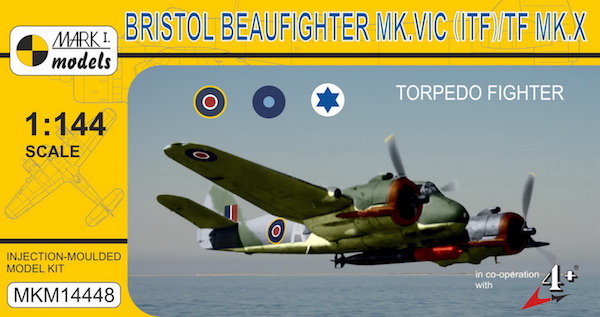
Bristol Beaufighter Mk.VIC (ITF) & TF Mk.X Torpedo Fighter (RAF, Israeli AF)
The Bristol Beaufighter was a British long-range heavy fighter, developed from the Beaufort torpedo bomber and first flown in July 1939. It became an efficient fighter and also night-fighter, employing the then novel AI radar. The Beaufighter was a two-seat (three seats on later TF Mk.Xs), twin engine, all-metal mid-wing cantilever monoplane, fitte...




 Advanced Search