Cookies are small text files that are placed on your computer by
websites that you visit. They are widely used in order to make
websites work, or work more efficiently, as well as to provide
information to the owners of the site.
Here is a list of cookies this site uses:
Cookie name
Description
existing_user
Stores the email address used to previously log into the site, used to prefill forms like on the reset password screen
authchallenge
Authentication security checks
hcart
Stores the anonymous customer\'s cart token. If items are added to the card while not logged in, if you log in the items will be added to the customer\'s existing cart
hannants
Stores the session information while you remain on the site
pricer
Stores if the export or eu prices is selected on the catalogue page
hidefilter
Stores if the search filter panel is hidden or shown
AWSELB
Stores which server you\'re connected to so to access the same server while you navigate around the site
Heinkel He-219A-7 'Night Fighter' includes a small fret with photo-etched parts (aerials, cockpit seats and other details (designed to be used with Mark I Models kits)
LTD RE-RELEASE!!! Westland Wessex 'Special Schemes' Westland Wessex HC.2/HCC.4/HU.5/Mk.52 Special schemes' (Royal Air Force, Royal Navy, Iraq, Uruguay)
A British licence development of the Sikorsky S-58, the Westland Wessex was a general purpose duties all-metal helicopter produced by Westland Aircraft Ltd.
The Wessex HC.2 was designed for battlefield tactical support, troop-carrying and casualty evacuation. Powered by t...
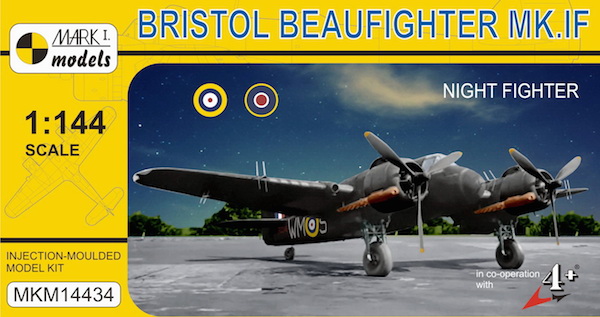
Bristol Beaufighter Mk.IF 'Night Fighter' The Bristol Beaufighter was a British long-range heavy fighter, developed early in 1939 from the Beaufort torpedo bomber. It became an efficient night-fighter, employing the then novel AI radar. Following short-term development the first prototype flew in July 1939 and the first aeroplanes reached the squadrons in the summer of the next year.
The Beaufighter was a two-seat, twin engin...
RE-RELEASED! Bristol Beaufighter Mk.IC 'Coastal Patrol'
The Bristol Beaufighter was a British heavy fighter, developed from the Beaufort torpedo bomber and its first prototype flew in July 1939. The first Beaufighter variants-the Mk.IF and Cs-were high performance fighters and long-range fighters, respectively, while the former Mark also became an efficient night-fighter, employing the then novel AI radar.
The Beaufight...
Re-released! Bristol Beaufighter Mk.VIF/C 'Formidable Fighter' (RAF, RAAF)
The Bristol Beaufighter was a British heavy fighter, developed from the Beaufort torpedo bomber and its first prototype flew in July 1939. The first Beaufighter variants the Mk.IF and Cs were high performance fighters and long-range fighters, respectively, while the former Mark also became an efficient night-fighter, employing the then novel AI radar...
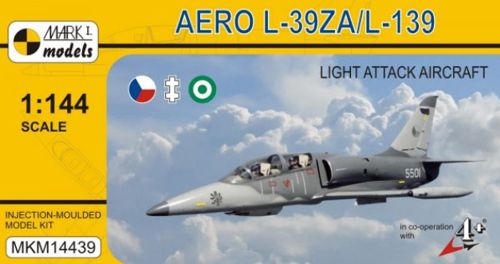
Aero L-39ZA/L-139 Albatros 2000 The L-39 Albatros, a high-performance second-generation jet trainer, was developed by the Aero Vodochody aircraft company in Czechoslovakia during the 1960s. It is a two-seat, all-metal monoplane powered by an Ivchenko AI-25 turbofan engine. Becoming the most widely used jet trainer, until today about 2,800 L-39s have served with more than thirty air forces around the world.
The L-39ZA is an up...
Aero L-39MS/L-59 'Super Albatros' Contrary to our previous Aero L-39 kits, this model includes resin fuselage parts (plus some other small ones) to reflect this variant's differences (new fuselage shape and new horizontal surfaces). The cockpit canopy is made using vacu-formed technology (made for us by Rob Taurus).
The L-39 Albatros, a high-performance second-generation jet trainer, was developed by the Aero Vodochody aircra...
Bristol Beaufighter Mk.VI Late 'Dihedral Tailplane' (RAF, RAAF, USAAF)
The Bristol Beaufighter was a British heavy fighter, whose first prototype flew in July 1939. The first Beaufighter variants-the Mk.IF and Cs-were high performance fighters and long-range fighters, respectively, while the former Mark also became an efficient night-fighter, employing the then novel AI radar.
The Beaufighter was a two-seat, twin engi...
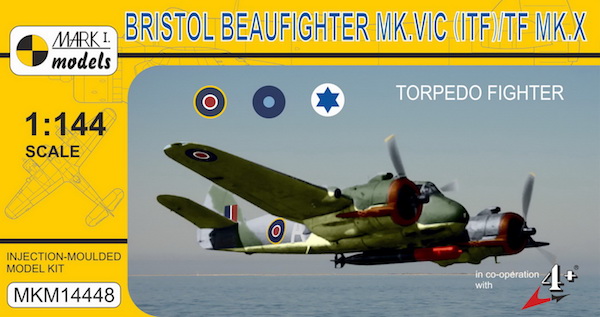
Bristol Beaufighter Mk.VIC (ITF) & TF Mk.X Torpedo Fighter (RAF, Israeli AF)
The Bristol Beaufighter was a British long-range heavy fighter, developed from the Beaufort torpedo bomber and first flown in July 1939. It became an efficient fighter and also night-fighter, employing the then novel AI radar. The Beaufighter was a two-seat (three seats on later TF Mk.Xs), twin engine, all-metal mid-wing cantilever monoplane, fitte...
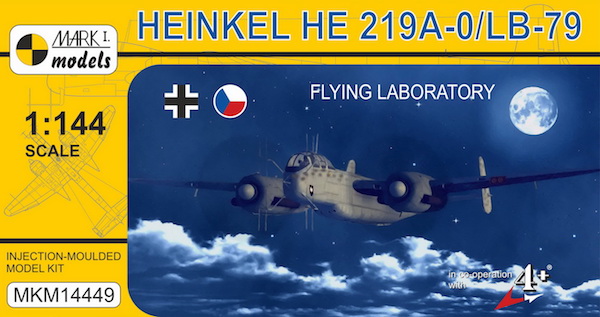
Heinkel He-219A-0/LB-79 'Flying Laboratory' (Luftwaffe, Czechoslovak AF)
The He-219 Uhu was a German heavy night fighter, employing a number of the then novel radar and antennae equipment, and was the first operational HYPERLINK "http://en.wikipedia.org/wiki/Military_aircraft" \o "Military aircraft" military aircraft to be fitted with HYPERLINK "http://en.wikipedia.org/wiki/Ejection_seat" \o "Ejection seat" ejection seats...
Bristol Beaufighter Mk.IF/VIF 'No.68 Sq. RAF'
The Bristol Beaufighter was a British heavy fighter, whose first prototype flew in July 1939. The Mk.IF was a high performance fighter and efficient night-fighter employing the then novel AI radar. It was a two-seat, twin engine, all-metal mid-wing cantilever monoplane, fitted with a retractable undercarriage. It was powered by two Hercules radial engines and the armament consi...
Bristol Beaufighter Mk.X/Mk.XI/Mk.21 'RAAF Service'
The Bristol Beaufighter was a British long-range heavy fighter, developed from the Beaufort torpedo bomber and first flown in July 1939. It became an efficient fighter and also night-fighter, employing the then novel AI radar.
The Beaufighter was a two-seat (three seats in later TF Mk.Xs), twin engine, all-metal mid-wing cantilever monoplane, fitted with a retractable u...
Gloster Gladiator Mk.I Last Biplane Fighter (decals for RAF, Belgian AF, Chinese Nationalist AF)
The Gloster Gladiator was a British-built biplane fighter developed from the Gauntlet and its prototype, designated SS.37, flew in September 1934. Following testing and minor modifications the first production model, the Mk.I, was delivered from July 1936 and became operational in January 1937.
The Gladiator Mk.I was a single-...
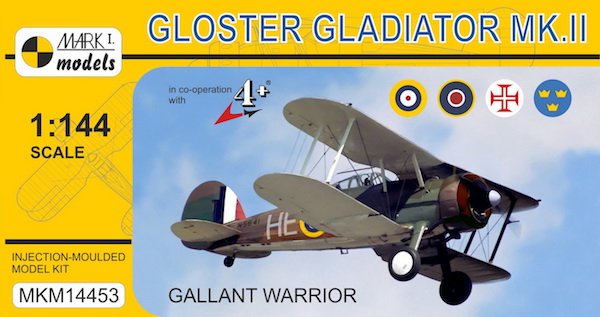
Gloster Gladiator Mk.II Gallant Warrior (decals RAF, Portuguese AF, Swedish AF)
The Gloster Gladiator was a British-built biplane fighter developed from the Gauntlet and its prototype, designated SS.37, flew in September 1934. The first production model was the Mk.I, which became operational in January 1937. An improved Mk.II version followed in 1938 and eventually 270 aircraft of this Mark were built.
The Gladiator Mk.II...
Gloster Gladiator Mk.I/Mk.II/J8 Foreign Service (Swedish AF, Latvian AF, Soviet AF, Luftwaffe)
The Gloster Gladiator was a British-built biplane fighter developed from the Gauntlet and its prototype, designated the SS.37, flew in September 1934. The first production model was the Mk.I, which became operational in January 1937. An improved Mk.II version followed in 1938 and eventually 270 aircraft of this Mark were built.
...
Gloster Sea Gladiator 'Malta Defender' (decals RAF, FAA)
The Gloster Gladiator was a British-built biplane fighter developed from the Gauntlet and its prototype, designated SS.37, flew in September 1934. The first production model was the Mk.I, which became operational in January 1937. An improved Mk.II version followed in 1938 and eventually 270 aircraft of this Mark were built. A modified Mk.II, the Sea Gladiator, was dev...
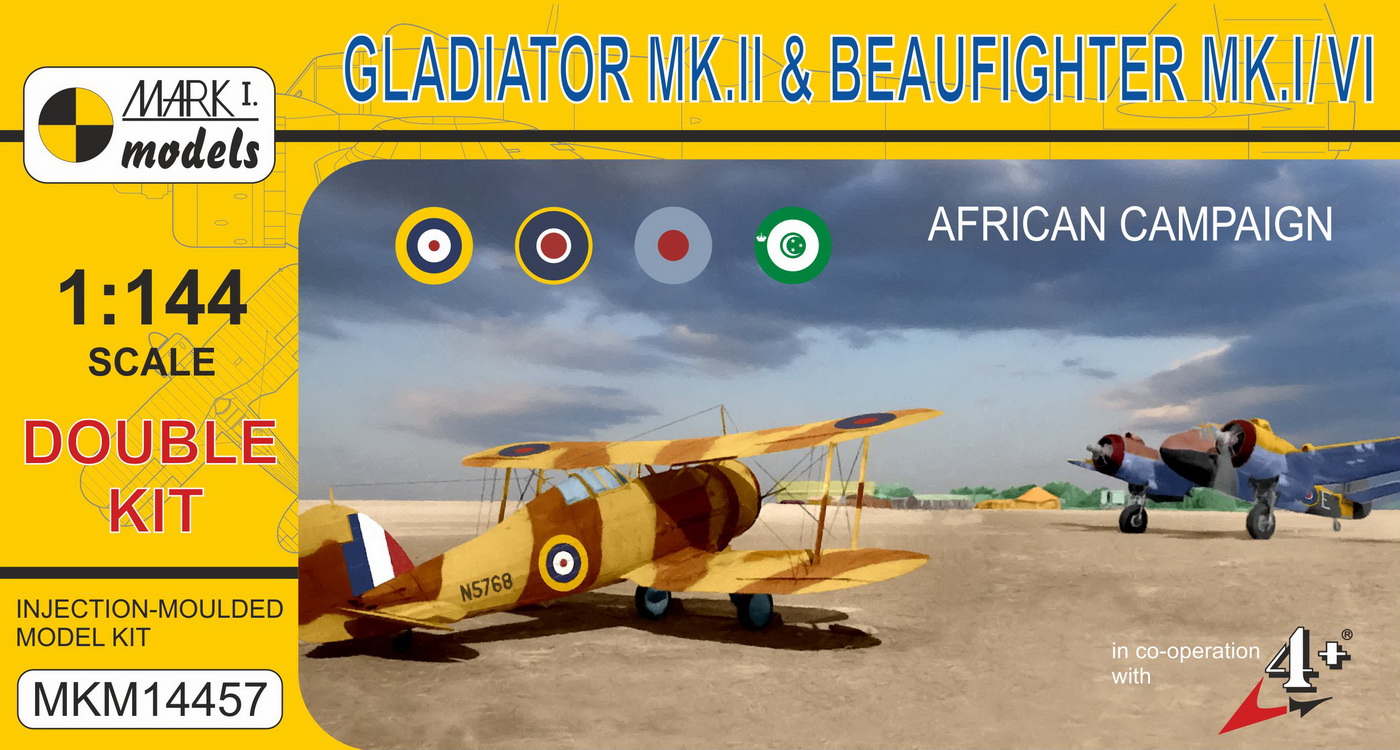
Gloster Gladiator Mk.II & Bristol Beaufighter Mk.IC/Mk.VIF 'North Africa' (double kits) The North African Campaign of WWII took place from June 1940 to May 1943. It included campaigns fought in the Libyan and Egyptian deserts, in Morocco, Algeria and Tunisia.
Both the Gladiator and Beaufighter aeroplanes were engaged in aerial battles over these territories.
The Bristol Beaufighter was a British heavy fighter, whose first pr...
Dornier Do-17Z-2/3 'Western Front'
The Do 17 was a German light bomber, designed in the early 1930s. It was originally intended as a fast six-passenger mail plane and its V1 prototype flew in November 1934. Following tests and design improvements in-line and radial engine powered aircraft were evolved, represented by the Do 17E/F and Do 17K/M/P, respectively. The most recognised and mass-produced variant was the Do 17Z series...
Dornier Do-17Z-2 'Balkan Operations' The Do 17 was a German light bomber, designed in the early 1930s. It was originally intended as a fast six-passenger mail plane and its V1 prototype flew in November 1934. Following tests and design improvements in-line and radial engine powered aircraft were evolved, represented by the Do 17E/F and Do 17K/M/P, respectively. The most recognised and mass-produced variant was the Do 17Z serie...
Curtiss P-36 Hawk 'USAAC' (2in1 = 2 kits in 1 box) (USAAC)
The Curtiss P-36 Hawk, the firm's Model 75, was an American-designed and built fighter aircraft of the mid-1930s. Two variants, the P-36A and C, were produced in 1938-39 for the U.S. Army Air Corps, with the production totalling 210 aircraft (last 30 a/c were completed as P-36Cs).
It was a single-seat, all-metal low-wing monoplane with fabric-covered control surfa...
Curtiss H-75/Mohawk III 'French & British Fighter' (2in1 = 2 kits in 1 box)
(French AF, RAF)
The Curtiss-Hawk H-75 was the export version of the American P-36 Hawk (Curtiss Model 75) fighter of the mid-1930s. The French took delivery of some 330 aircraft, designated the H-75A-1, A-2 and A-3, with the first planes entering service in the spring of 1939. They were modified for French Air Force usage and fitted with differe...
de Havilland Vampire FB.5/FB.52 Commonwealth Service (2in1 = 2 kits in 1 box)
(RAF, RAuxAF, RCAF, SAAF)
The de Havilland Vampire was a British jet fighter developed during WWII. It was the second jet, after the Gloster Meteor, operated by the RAF. The Vampire Mk.5, which flew in June 1948, was a fighter-bomber modified from a Vampire F.3 fighter.
It was a single-seat monoplane aircraft, of a combined wood-and-metal cons...
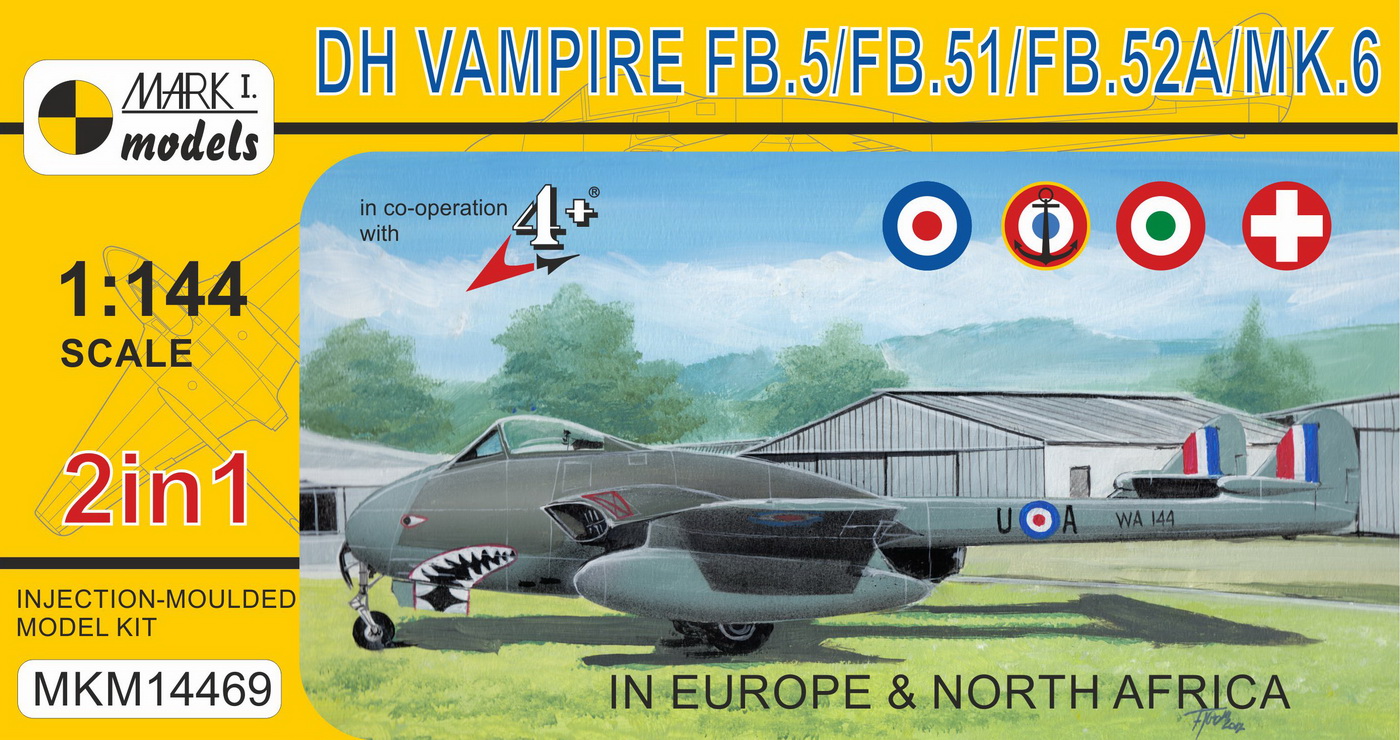
de Havilland Vampire FB.5/FB.51/FB.52A/Mk.6 In Europe & North Africa (2in1 = 2 kits in 1 box)
(RAF, French Navy, Italian AF, Swiss AF)
The de Havilland Vampire was a British jet fighter developed during WWII. It was the second jet, after the Gloster Meteor, operated by the RAF. The Vampire Mk.5, which flew in June 1948, was a fighter-bomber modified from a Vampire F.3 fighter.
It was a single-seat monoplane aircraft, of...
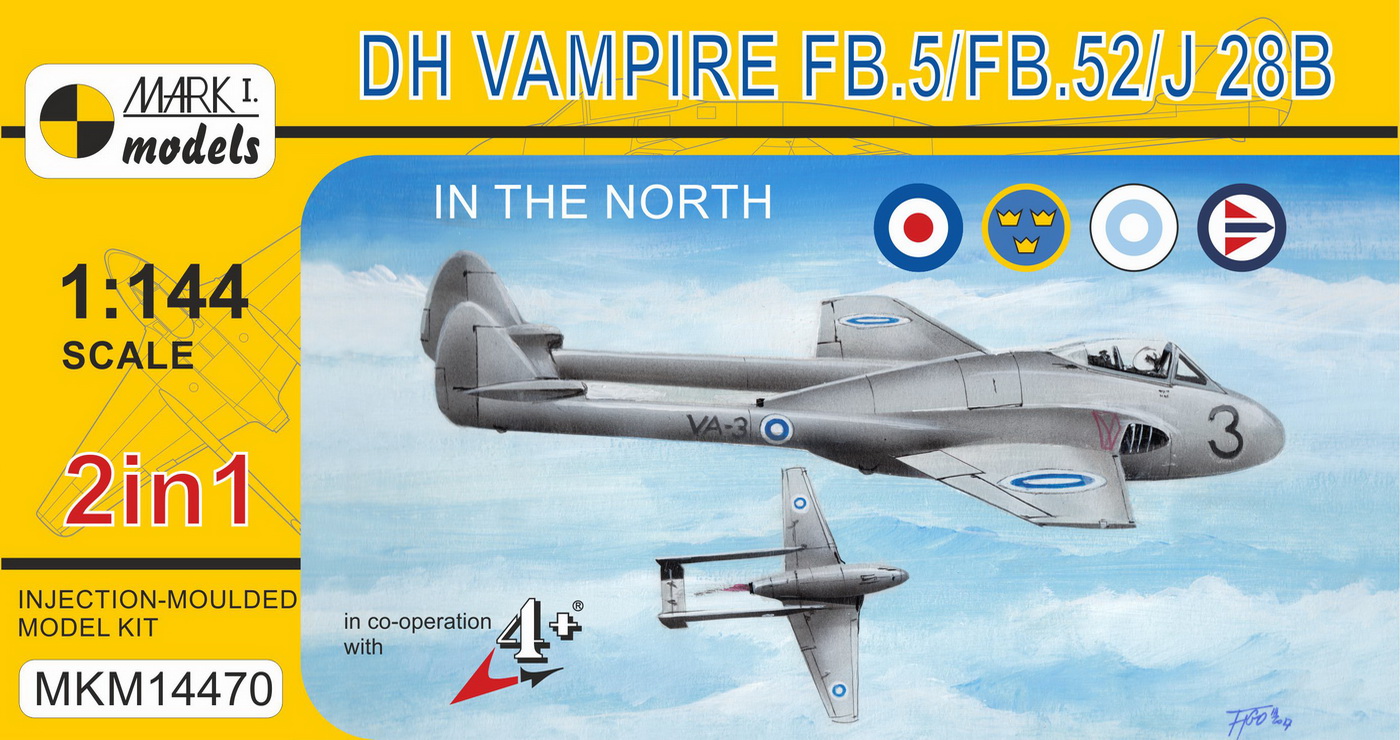
de Havilland Vampire FB.5/FB.52/J 28B In the North (2in1 = 2 kits in 1 box)
(RAuxAF, Swedish AF, Finnish AF, Norwegian AF)
The de Havilland Vampire was a British jet fighter developed during WWII. It was the second jet, after the Gloster Meteor, operated by the RAF. The Vampire Mk.5, which flew in June 1948, was a fighter-bomber modified from a Vampire F.3 fighter.
It was a single-seat monoplane aircraft, of a combined ...
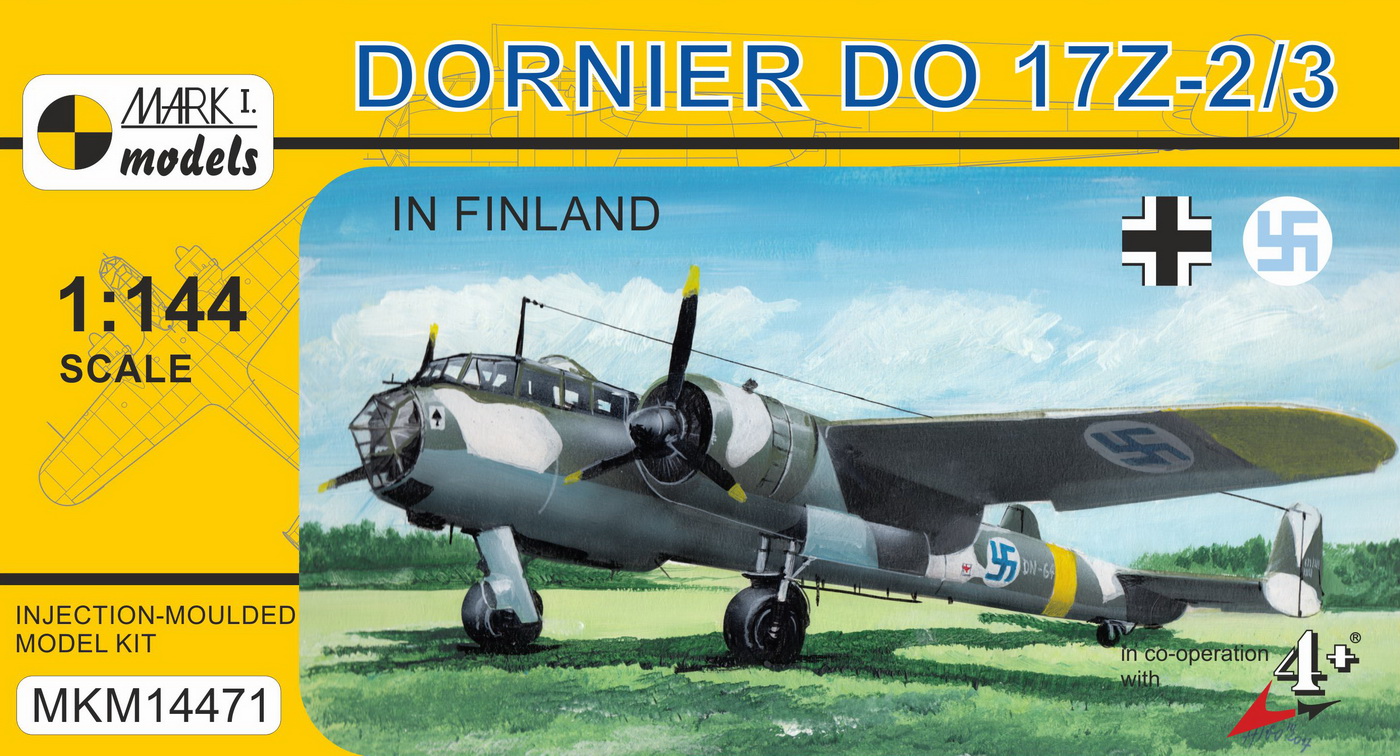
Dornier Do-17Z-2/3 'In Finland' The Do-17 was a German light bomber, designed in the early 1930s. It was originally intended as a fast six-passenger mail plane and its V1 prototype flew in November 1934. Following tests and design improvements in-line and radial engine powered aircraft were evolved, represented by the Do-17E/F and Do-17K/M/P, respectively. The most recognised and mass-produced variant was the Do 17Z series, wi...




 Advanced Search