Cookies are small text files that are placed on your computer by
websites that you visit. They are widely used in order to make
websites work, or work more efficiently, as well as to provide
information to the owners of the site.
Here is a list of cookies this site uses:
Cookie name
Description
existing_user
Stores the email address used to previously log into the site, used to prefill forms like on the reset password screen
authchallenge
Authentication security checks
hcart
Stores the anonymous customer\'s cart token. If items are added to the card while not logged in, if you log in the items will be added to the customer\'s existing cart
hannants
Stores the session information while you remain on the site
pricer
Stores if the export or eu prices is selected on the catalogue page
hidefilter
Stores if the search filter panel is hidden or shown
AWSELB
Stores which server you\'re connected to so to access the same server while you navigate around the site
Messerschmitt Me-210/Messerschmitt Me-410B-2/U4 colours and markings. Designed in accordance with the 'Zerstorer' (heavy fighter-bomber) concept just prior WWII, the Me 210 was, however, a failure in terms of flying characteristics. Following extensive modifications, its successor, the Me 410 Hornisse (Hornet), was produced in substantial numbers and many variants and saw operational service in Italy and North Africa, and over Germany and Central Europe. The improved Me 210 was also licence-built in Hungary. The publication has 28 pages, including a total of 49 overall and detailed photographs, 12 pages with colour camouflage schemes and their description. Text in English. A comprehensive decal sheet is added for modellers' convenience. Following aircraft are depicted on each decal sheet: Luftwaffe (7x), Royal Hungarian Air Force (1x), Royal Air Force (2x), Soviet Air Force (1x) and Imperial Japanese Army Air Force (1x).
Messerschmitt Me-210/Me-410B-2/U4/Me-410A-1/U-2 & U4 colours and markings. Designed in accordance with the 'Zerstorer' (heavy fighter-bomber) concept just prior WWII, the Me 210 was, however, a failure in terms of flying characteristics. Following extensive modifications, its successor, the Me 410 Hornisse (Hornet), was produced in substantial numbers and many variants and saw operational service in Italy and North Africa, and over Germany and Central Europe. The improved Me 210 was also licence-built in Hungary. The publication has 28 pages, including a total of 49 overall and detailed photographs, 12 pages with colour camouflage schemes and their description. Text in English. A comprehensive decal sheet is added for modellers' convenience. Following aircraft are depicted on each decal sheet: Luftwaffe (7x), Royal Hungarian Air Force (1x), Royal Air Force (2x), Soviet Air Force (1x) and Imperial Japanese Army Air Force (1x). Messerschmitt Me-410 Hornisse
Imperial Armour: Modelling AFVs of the Japanese Army 1939-2020. 84 pages. Since the 1930s the armed forces of Japan have deployed a wide range of armoured fighting vehicles from diminutive tankettes to modern, state-of-the-art Main Battle Tanks. This new 84-page book from Guideline Publications and the team that bring you Military Modelcraft International presents a series of step-by-step guides and reference articles on Japanese AFVs from 1939 to the present day. Using kits from Dragon, Finemolds and Tamiya, some of the best modellers from the MMI stable go through construction, detailing, and painting and weathering, while in-depth reference articles look at Japanese armour in World War II and today. As well as collecting and reimagining some of the best features on the topic from MMI over the past decade and more, the book has new content that will both inspire and inform anyone wanting to tackle their own Japanese armour project.
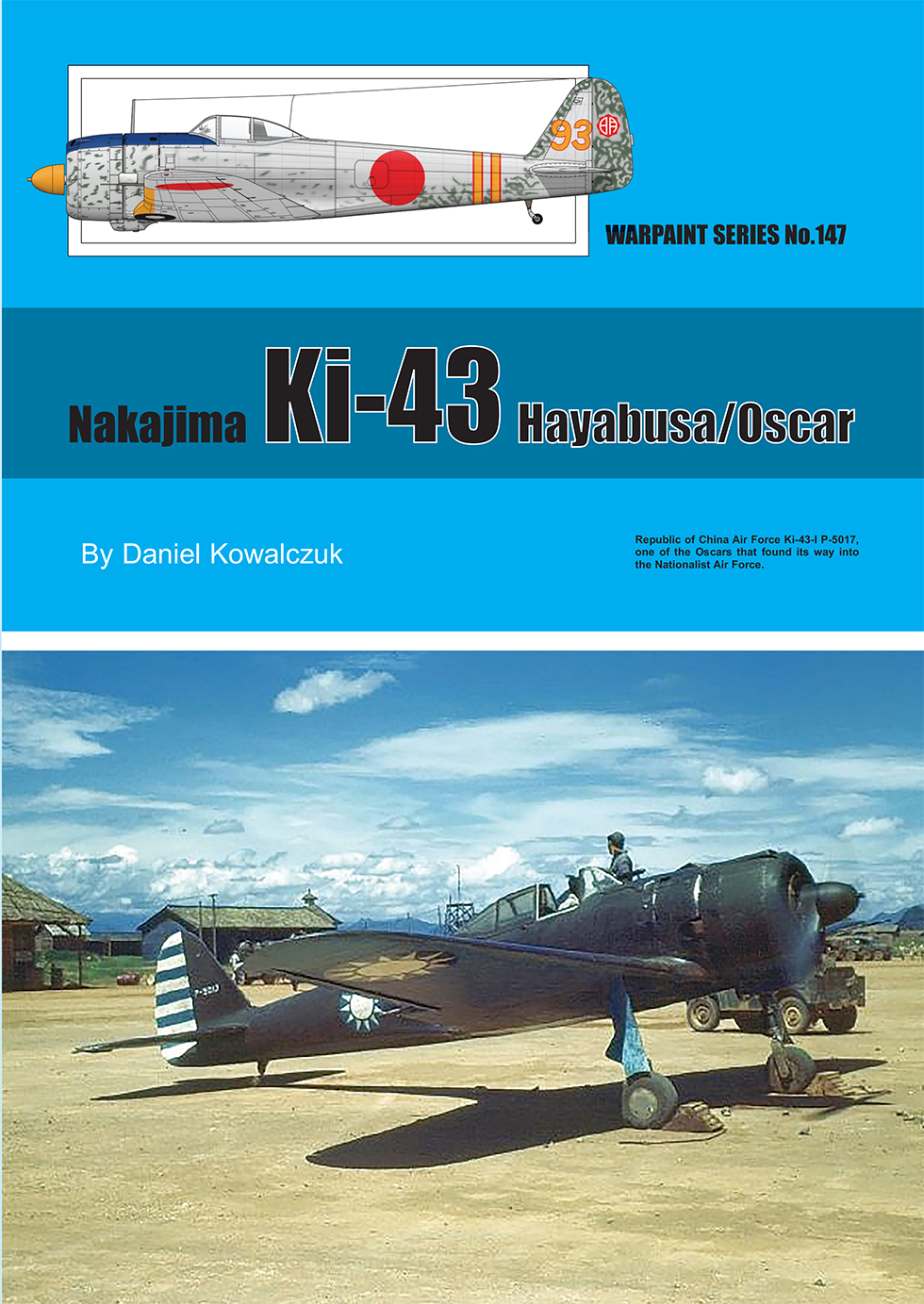
Nakajima Ki-43 Hayabusa
By Daniel Kowalczuk
One of the great unsung fighters of the Imperial Japanese Army Air Force was Nakajima's Ki-43 Hayabusa (Peregrine Falcon). Codenamed 'Oscar' by the Allies, the aircraft was frequently mistaken for the Navy's A6M2 Zero by those encountering it in combat, to the extent that it was widely referred to by its adversaries as the 'Army 0'.
Highly regarded in Japan, where it was much more widely recognised than the Zero, the Ki-43 was the only Japanese fighter from the Pacific War to see active service with other air forces, being supplied to both Thailand and Manchukuo by the Japanese, but also seeing use by France in Indochina, and by the air forces of Indonesia, the Republic of China, and North Korea, who pressed abandoned but airworthy airframes into service, some of which survived into the early 1950s.
Author Daniel Kowalczuk has compiled a compelling narrative that puts the aircraft in context, describes its development and active service history in detail, and explains how it came to be so widely regarded by the Japanese-so much so that it is the aircraft of choice for producers of Anime rather than its better known contemporary.




 Advanced Search
 1
1