



 Advanced Search
« Go back« Go backPrevious Product (AH70095)Next Product (AX06107A)
First To Fight Kits FTF136
- Description:
-
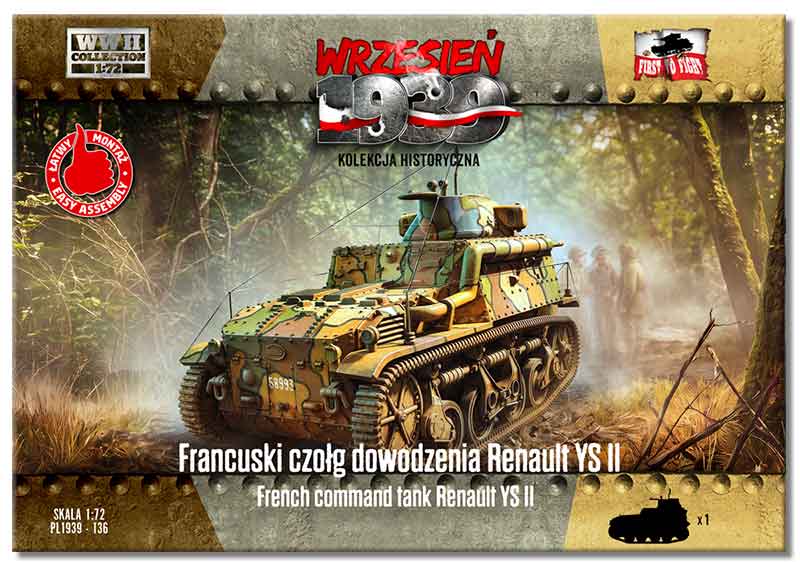
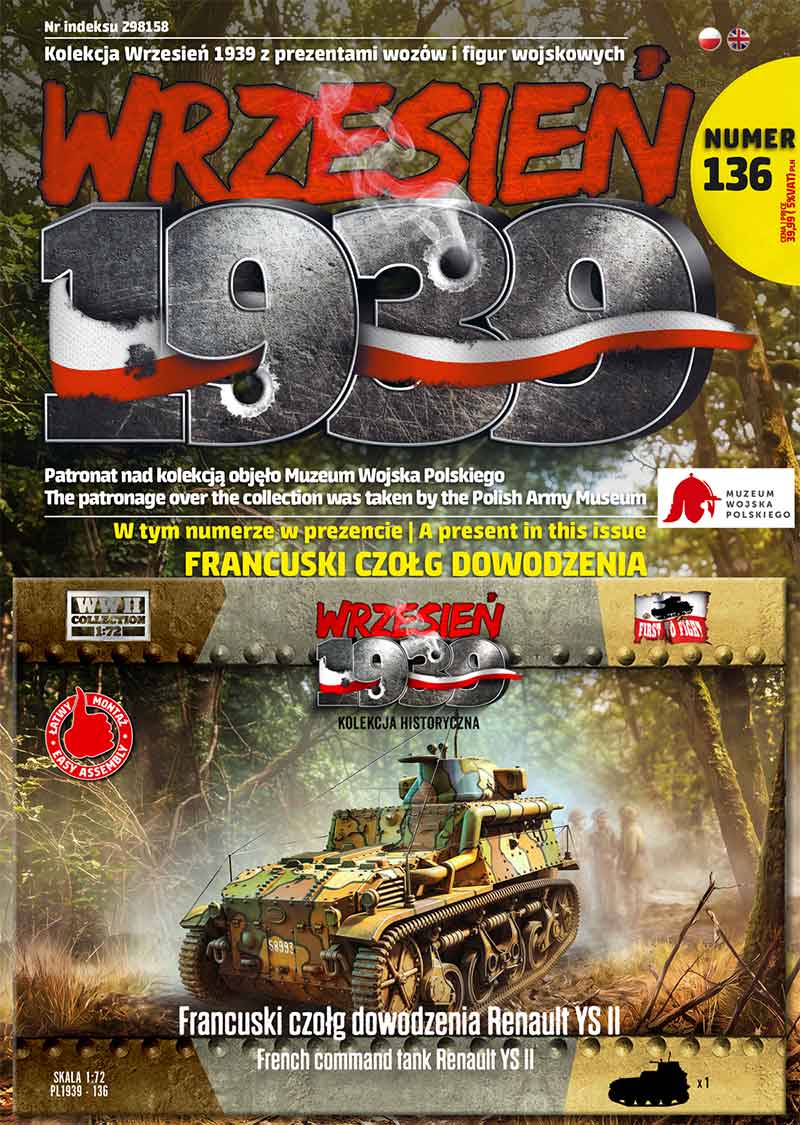
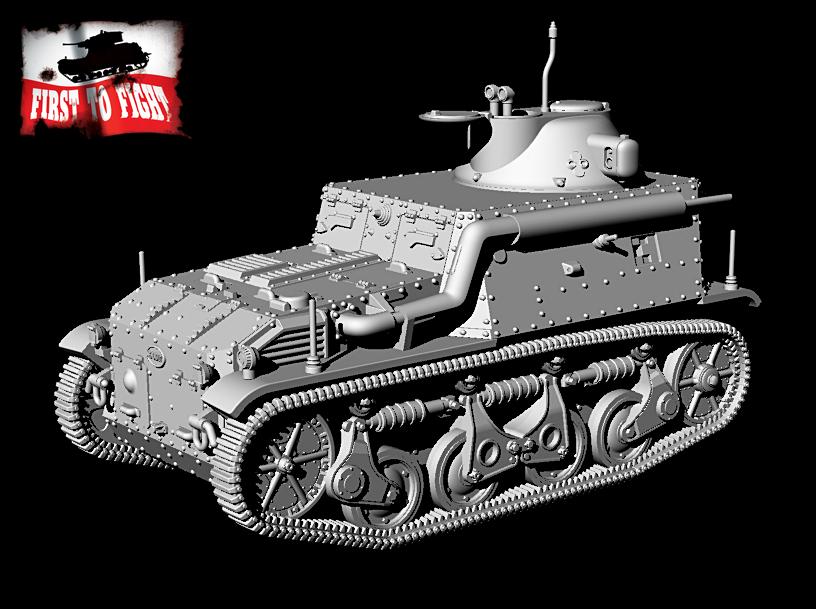
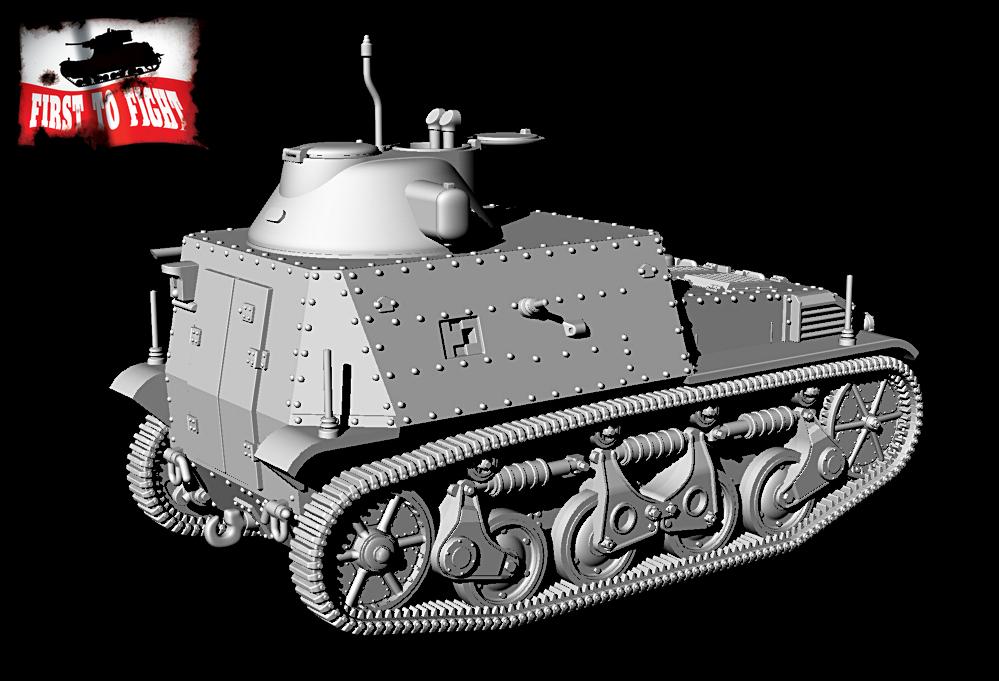
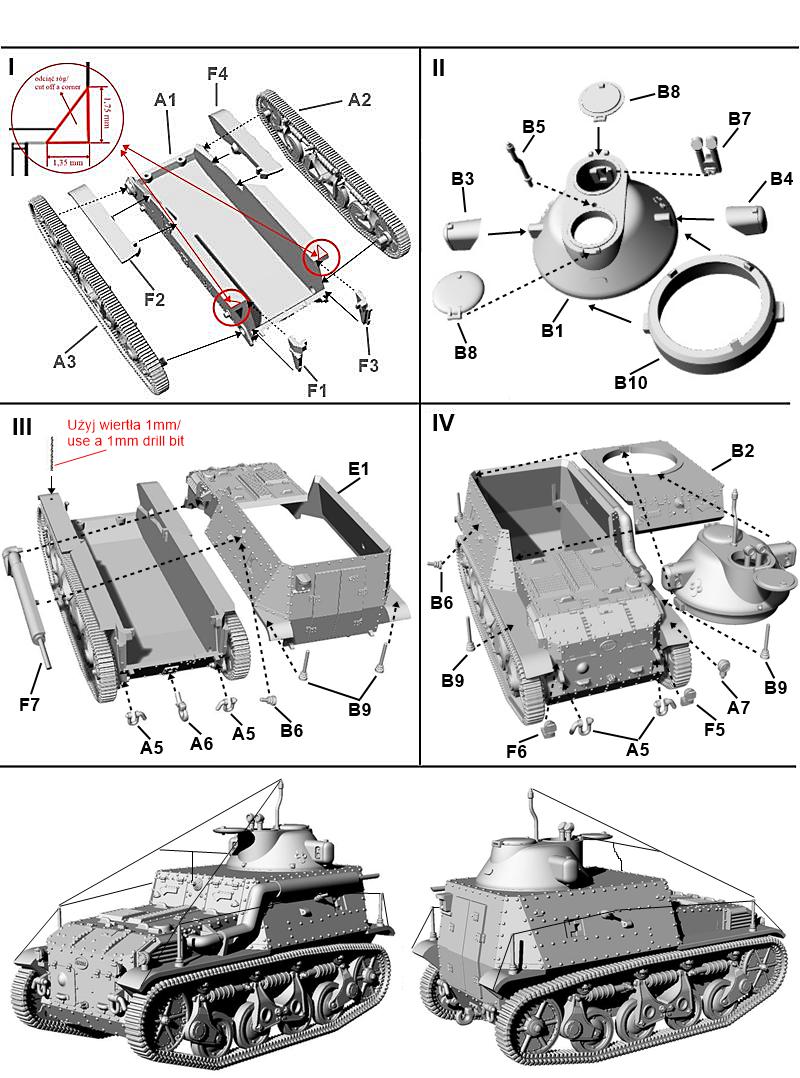
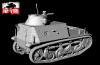
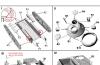
French command tank Renault YS II
will be available from October 29, 2026
Attention!!! The booklet is in Polish and English. - Manufacturer:
- First To Fight Kits
- Code Number:
- FTF136
- Scale:
- 1:72
- Item type:
- Military vehicle kits (injection)
- Price:
- £9.99
- Order Quantity:
- Quantity In Stock:
 5+
- Availability:
- This will usually be dispatched within 24/48 hours of receiving your order
- Last Delivered to Stock:
- 06/11/2026
- Wish List:
- Department:
- New Arrivals
GPSR information:- Manufacturer Email:
- [email protected]
- Manufacturer Address:
- First to Fight Sp. z o.o. , , ul. Jana Bu?haka 11 , , 01-472 Warszawa
Here are some books and decals you might find useful for this kit
Found 3 related products
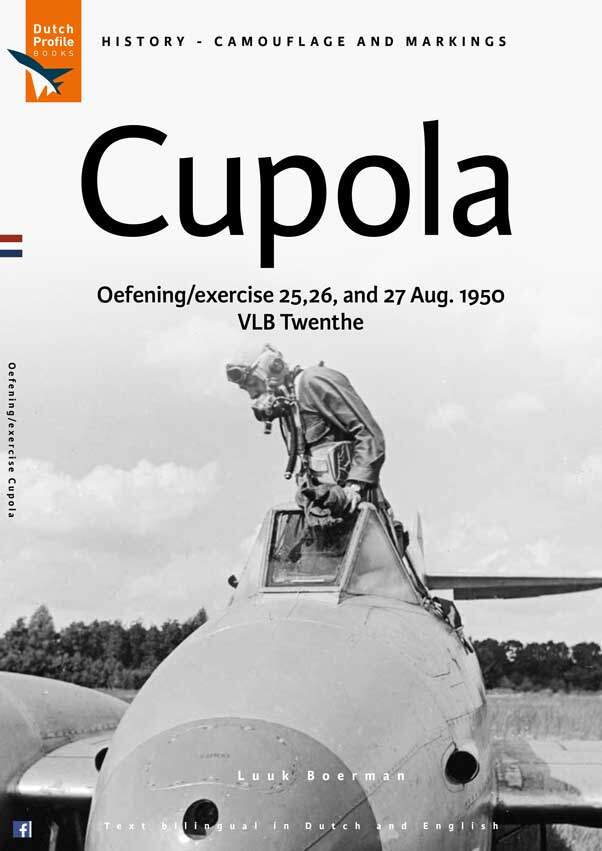 | Dutch Profile - DDP80 - No Scale | Exercise Cupola. Introduction. This publication finds its origin in a photographic album that was specially made for the C-LV of the Netherlands Air Force, and was presented to him in 1950 by the OC NethAF airbase Twenthe. Practically all photographs have been made by the photographic section of aforementioned airbase and relate to the Western Union Air Defence Exercise Cupola, which was held on August the 25th until the 27th, 1950. This was the first large-scale exercise of the combined Western air forces. For this occasion the air forces of Great Britain and the United States were controlled by the air staffs of France, Belgium, and the Netherlands. This particular exercise was intended to check out the air defence systems of these various countries. The attackers were called 'Blueland', while the defenders were dubbed 'Whiteland'. Large formations Meteors, Vampires, Mosquito night fighters and Mosquitoes of the British Air Forces of Occupation, together with Wellingtons and Mosquitoes of RAF Flying Training Command, made up the attacking forces. During this exercise various European cities were 'attacked' by Washingtons of the RAF and B-29s and B-50s of the USAF. Based at Twenthe airfield were Meteors of the Horsham St. Faith Wing of 12 Group RAF Fighter Command, which consisted of Meteor F.Mk.4s of No. 74 Sqn, No. 245 Sqn (not in Twenthe), No. 257 Sqn, and No. 263 Sqn. The LSK, the Dutch air force (not Royal at that time), was represented by Meteor F.Mk.4s of 323 Jacht Squadron-the unit which was responsible for gunnery training at the time-under command of kpt vl Jan van Arkel. For this exercise 322 JachtSquadron was reformed and re-equipped with Spitfires. These fighter planes were transferred from Twenthe air force base to naval air station Valkenburg, from which they operated during the exercise. Commanding officer of 322 JachtSquadron was kpt vl H.C. Asjes. RAF Vampires of No. 5 Sqn were stationed at Gilze-Rijen airfield. No anti-aircraft guns were involved in this exercise, but fire control units however did participate. Overall command of this exercise rested with Air Chief Marshal Sir James Robb KBE, CB, DSO, DFC, AFC, Commander-in-Chief Air Forces Western Europe. OC of the RAF detachment on Twente airfield was Group Captain K.K.B. Cross CBE, DSO, DFC. Other units of RAF Fighter Command were-among others-stationed at the French airbase Coulommiers, a few miles east of Paris. These units were under the command of Wing Commander D.C. Stapleton CBE, DFC, AF More | Aircraft books | Future Releases | £17.99 | |
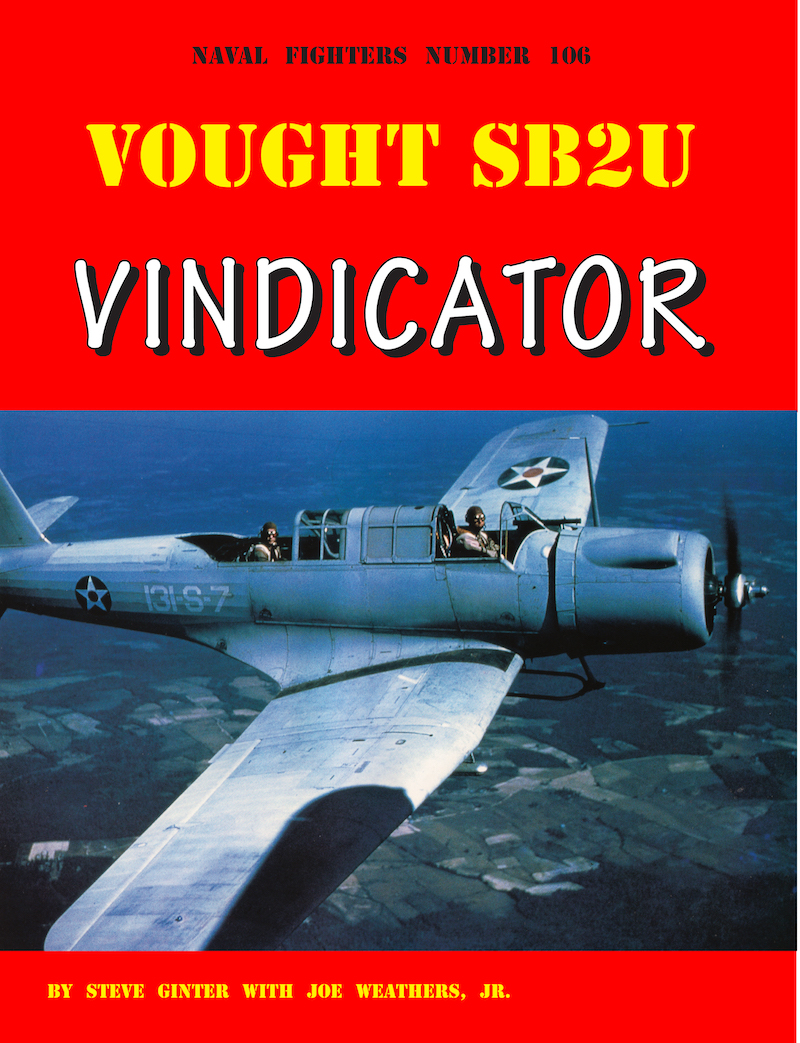 | Naval Fighters - NF106 - No Scale | Vought SB2U Vindicator by Steve Ginter with Joe Weathers, Jr. 248-pages, 89-color photos, 22-duotone photos, 506 b&w photos and 25-drawings. The Vought SB2U Vindicator Scout Bomber was the Navy's second production carrier monoplane to fly after the Douglas TBD and for a time was the fastest aircraft in the Navy's inventory. The extremely clean aircraft was a unique blend of the old stick-and-rudder fabric covered construction and that of the new all-metal monoplanes that followed. About half the aircraft was metal skined and half fabric covered and each fuselage structure was individually hand made from steel tubing. The SB2U was built in three models. The very simular SB2U-1 and SB2U-2 for the US Navy, and the long range SB2U-3 for the Marines. Aircraft were also supplied to France and the United Kingdom and are covered in the book. Equipped with folding wings and capable of carrying a 1,000 lb bomb, they were in service from 1938 to 1943. By the time of the Pearl Harbor attack, the Navy Vindicators had all been assigned to the Atlantic fleet, but the Marine SB2U-3 were on the East Coast and at Pearl Harbor and aboard the Lexington for delivery to Midway. The VMSB-241 Vindicators at Midway saw the planes only combat on 4-to-6 June 1942 during the Battle of Midway and Henderson Field was named after the squadron CO who lost his life during the squadron's attack on the Japanese fleet on 4 June. Maj Hendersons replacement Maj Norris was also lost on 4 June during the squadron's 2nd attack. On 5 june, Capt Fleming was also lost during his attack on the cruiser Mikumo, for which he received the Medal of Honor for his actions. This book has extensive first person narative from Vought test pilots and USN/USMC pilots as well as the French V-156-F commander gathered by Joe Weathers in 1966 through 1974 when their minds were still sharp and their memories strong. All of which are gone today. A truly interesting read. More | Aircraft books | Catalogue | £43.99 | |
 | Print Scale - PSL72046 - 1:72 | Spads 1. SPAD Xll S444 of Lt Gabriel Guerin, SPA15, Spring 1918 2. SPAD Vll S401 of Lt. Albert Deullin, SPA73, Bergues, July 1917 3. SPAD XVll S694 of Lt Francois Battesti, SPA73, October 1918 4. While Gorman de Freest Larner was flyind with the French Escadrille SPA 86, a fellow pilot plunged to his death in this SPAD S.Vll, No 13 accidentaly shot down by friendly fire (Bruce Robertson) 5. SPAD Xlll S4830 of Lt Michel Joseph Callixte Marie Coiffard, SPA 154, October 1918 6. SPAD Xll (serial unknown) of Lt Marcel Hugues, SPA95, May 1918 7. Spad Xlll (S.2xxx) 'I' S/Lt Bourjade, Spa 152, Soudee-Sainte-Croix July 1918 8. SPAD Xll Charles J Biddle, commander of the 13th Aero Sguadron.It is shown here undergoing ground testing in October 1918 9. Spad XIII (S.4764) you Sgt Levy, N 561, Lido (Italie) september 1918 10. Spad XIII S 15202 of Lt Frank LukeJr, 27th Aero Sguadron, September 1918 11. Spad XIII S15137 of Lt David E Putnam139th Aero Sguadron, september 1918 12. Leslie Rummell sits in the cockpit of SPAD Xlll S7650 '14', which was normally flown by 1Lt Ralph L Hartmann, while Chester Wright leans on the lower wing. Rummell was credited with six victories while Wright, with nine, was the highest scorer of the 93rd Aero Sguadron More | Aircraft decals (military) | Catalogue | £15.99 |
Hannants Search Engine
Convert Currency
Copyright © 2001-2026 H. G. Hannant Limited. All rights reserved. | Website by Dessol
Privacy Policy | Cookie Information | Switch to Mobile Version