



 Advanced Search
 « Go back« Go backPrevious Product (ICM24023)Next Product (ICM24026)
ICM UA ICM24024

- Description:
-
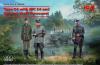
Type G4 with MG34 and German Staff Personnel USUALLY £38.99. TEMPORARILY SAVE 1/3RD!!! Best to be used with ICM paint set ICM3038 The Air Assault Forces of Ukraine were created in 2017 on the basis of the existing Highly Mobile Landing Troops, which at that time already had its own separate command.
The personnel of the Wehrmacht officer corps were distinguished by their high standards. At the beginning of World War II, it represented a unique, corporately closed organization with its own notions of officer honor and moral principles. Many of them were former officers of the Imperial German Army. Staff officers played a significant role in the Wehrmacht, enjoying special attention and fulfilling crucial roles in directing operations at all s[+] More... - Manufacturer:
- ICM UA
- Code Number:
- ICM24024
- Scale:
- 1:24
- Item type:
- Car kits (injection)
- Price:
- £21.66
- Order Quantity:
- Quantity In Stock:
 5+
5+
- Quantity Available At This Price:
- 5
- Availability:
- This will usually be dispatched within 24/48 hours of receiving your order
- Wish List:
- Department:
- Special Offers
Here are some books and decals you might find useful for this kit
Found 5 related products
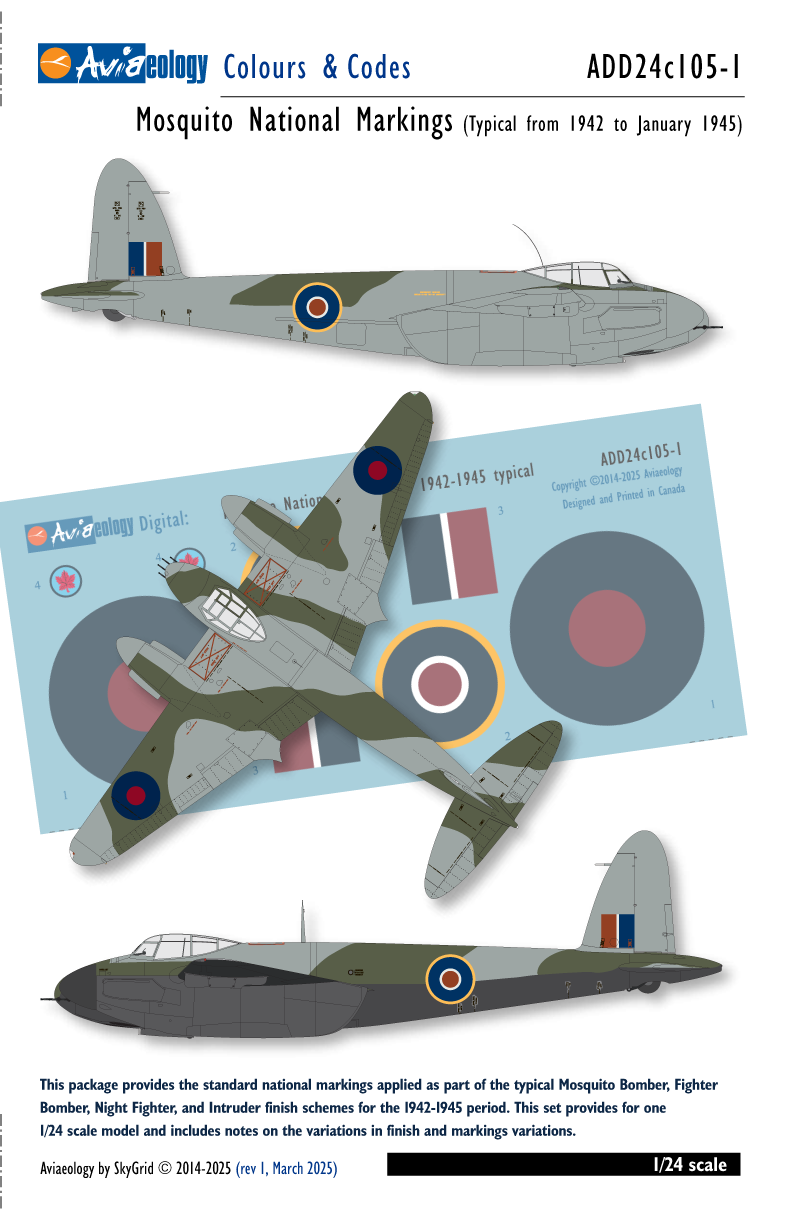 | Aviaeology - ADD24C105-1 - 1:24 | de Havilland Mosquito National Markings-1942-1945 (Type B upper wing roundels) Descriptive text: This package provides the standard national markings used on all RAF Mosquitoes in service in UK and continental European Commands from 1942 to 1945 (when the upper wing roundels changed). This set provides for one 1/24 scale model, with a clearly-illustrated markings placement guide, related scheme variations notes, and general decaling preparation / application guide. ADD24c105-1-Mosquito National Markings (1942-1945)-24th scale Colours & Codes. The most prolific variant of the national markings used on all RAF Mosquitoes in service in UK and continental European Commands from 1942 to 1945 (when the upper wing roundels changed). More | Aircraft decals (military) | Catalogue | £8.40 | |
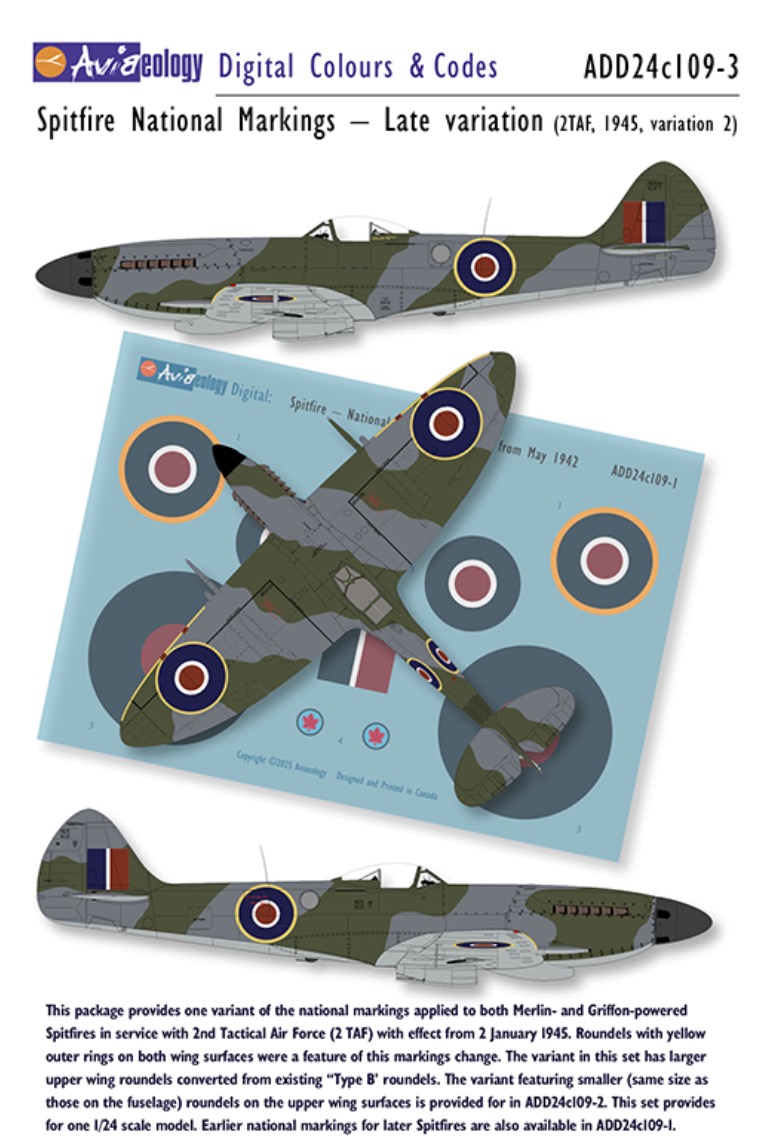 | Aviaeology - ADD24C109-3 - 1:24 | Supermarine Spitfire National Markings-Late (2TAF, 1945, variation 2, large upper wing roundels) This package provides one variant of the national markings applied to both Merlin- and Griffon-powered Spitfires in service with 2nd Tactical Air Force (2 TAF) with effect from 2 January 1945. Roundels with yellow outer rings on both wing surfaces were a feature of this markings change. The variant in this set has the larger upper wing roundels which were a simple conversion of existing "Type B" or "Type C" roundels. (see Aviaeology ADD24c109-2 for the smaller 2TAF 1945 variant). Standard national markings with National Markings II ("Type B" roundels) for later Spitfires are also available in ADD24c109-1. This set provides for one 1/24 scale model. - Available as a Basic set or as a Combo set with the Spitfire airframe stencil data markings set (sold separately as ADD24s109) included. The Combo results in a discount over buying these separately. More | Aircraft decals (military) | New Arrivals | £9.30 | |
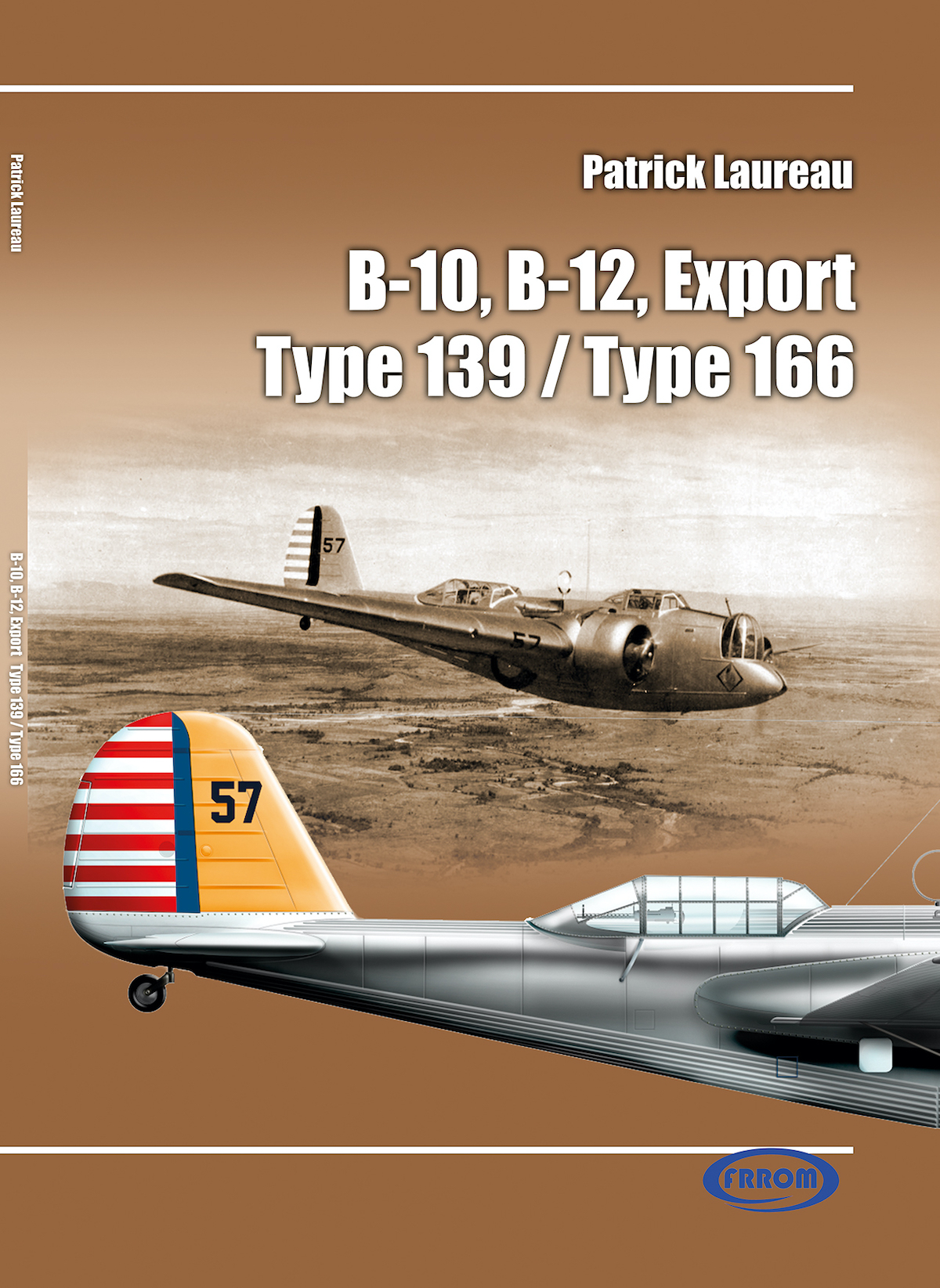 | Frrom-Azur - FRBOOK - 1:72 | "Martin Type 166, B-10, B-12, export versions / Type 139 & Type 166", by Patrick Laureau, a well known aviation historian, 84 pages, more than 90 B&W photos, 40 profiles and plans. In english Great to help with building the recent kits FR0060 / FR0061 (and older kits). Believed to be the first book covering the different types (including Type 166) and the different countries (USA, China, Argentine, Netherlands in East Indies, and a few words on Turkey and Siam) More | Aircraft books | Catalogue | £24.00 | |
 | Guideline Publications - GPSAMCC9 - No Scale | Combat Colours No.9 - Nicholas Millman Mitsubishi Zero - Type 0 Carrier Fighter (A6M) 'Zeke' in World War Two. No.9 in the series charts the colour schemes and markings worn by this iconic Japanese naval fighter which saw service throughout the whole of the Pacific War from 1940 in China, to the final defence of the homeland in 1945. Structured chronologically by variant, it covers the development from the A6M1 to A6M7/8, including the floatplane Nakajima A6M2-N 'Rufe' and the A6M2-K Zero two-seat trainers, with colour profiles, four-views and illustrations. It includes in detail examples of all the main schemes worn by the Zero and their colours [A6M5c] More | Aircraft books | Catalogue | £16.00 | |
 | Warpaint Series - WPS85 - No Scale | Supermarine Scimitar By Tony Buttler AMRAeS. The Supermarine Scimitar was the first swept-wing, twin-engined, single-seat jet aircraft to serve with the Royal Navy and it was also the last all-new fighter type to be designed and built by Supermarine. It evolved from a straight wing design called the Supermarine Type 508, passed through a swept wing development called the Type 525 and then matured into a service aeroplane. When the aircraft entered service it was the largest and heaviest aircraft yet to land on a British aircraft carrier. In the end well under a hundred examples were built and the type's career was relatively quiet, but the Scimitar was an immensely strong and a spectacular-looking aircraft, an incredibly fast and noisy one as well, and it gave the Royal Navy a nuclear capability. In fact the Scimitar took on much of the Navy's conventional and nuclear strike operations but fortunately was never called upon to deliver any type of weaponry in anger. The story is quite fascinating. More | Aircraft books | Catalogue | £14.00 |
Hannants Search Engine
Convert Currency
Copyright © 2001-2026 H. G. Hannant Limited. All rights reserved. | Website by Dessol
Privacy Policy | Cookie Information | Switch to Mobile Version