



 Advanced Search
 « Go back« Go backPrevious Product (MACHGP092)Next Product (MACHGP090)
Mach 2 MACHGP091

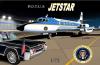
- Description:
- Lockheed Jetstar P.O.T.U.S.
- Manufacturer:
- Mach 2
- Code Number:
- MACHGP091
- Scale:
- 1:72
- Item type:
- Aircraft kits (injection)
- Price:
- £23.33
- Order Quantity:
- Quantity In Stock:
 5+
5+
- Availability:
- This will usually be dispatched within 24/48 hours of receiving your order
- Wish List:
- Department:
- Catalogue
GPSR information:- Manufacturer Email:
- [email protected]
- Manufacturer Address:
- Didier Palix 17 Rue Emile Combes Houiles France
Here are some books and decals you might find useful for this kit
Found 6 related products
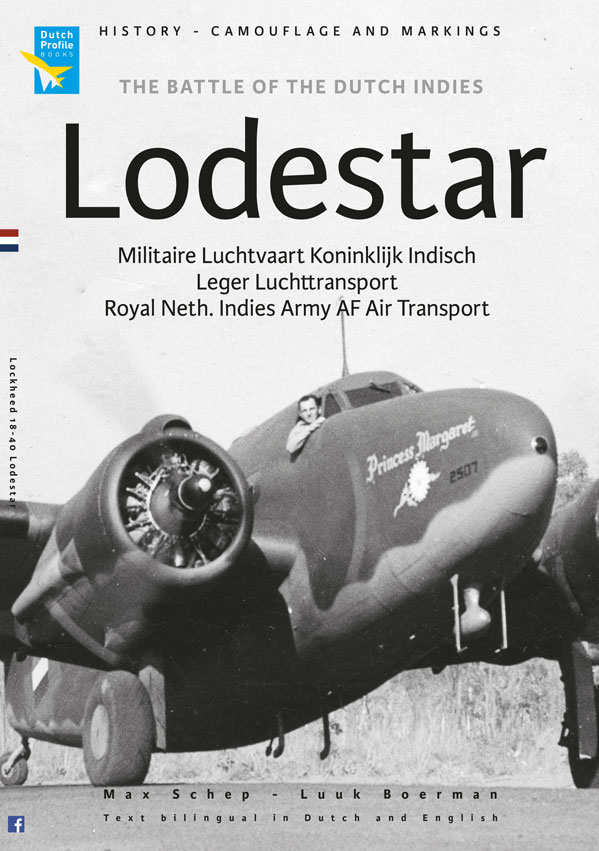 | Dutch Profile - DDP71 - No Scale | Lockheed Lodestar ML-KNIL/RNEIAAF More | Aircraft books | Catalogue | £15.99 | |
 | MA Publications - MAE07 - No Scale | Building the Republic P-47D Thunderbolt. The Republic P-47 Thunderbolt Big, powerful, and truly a juggernaut of an aircraft, resulting in its appropriate nickname 'Jug', the Republic P-47 Thunderbolt was one of the really great warplanes of its generation. Alongside the superlative North-American P-51 Mustang and the twin-engined Lockheed P-38 Lightning, it was one of the three principal fighter types which the US Army Air Forces (USAAF) successfully operated in the later stages of World War Two. The initial production version was the P-47B, and examples of this type started to reach the USAAF's 56th Fighter Group in June 1942. The first really combat-ready model was the refined and slightly longer P-47C, which entered service later in 1942. Like all front-line P-47 versions it packed a formidable punch of four 0.5in M2 Browning machine guns in each wing, although early models did not carry the wing pylons that became so important later in the Thunderbolt's combat career. The first P-47C examples to reach Britain for the US Eighth Army Air Force did so in December 1942, followed by what became the main combat model of the Thunderbolt, the P-47D, in April 1943. Weighing in at some 15,000lb (6,804kg) fully loaded and powered by the R-2800-59 Double Wasp of 2,000hp, the P-47D was a big, powerful beast. Water injection introduced for some versions of the R-2800 would see even greater power on demand when needed in aerial combat. All of these early Thunderbolts had the 'razorback' high line rear fuselage pioneered with the P-35 and P-43, with a rearwards-sliding heavily framed cockpit canopy. Although the USAAF at first saw the Thunderbolt as a high altitude interceptor, its main initial role very soon became that of daylight bomber escort with the England- based Eighth Air Force, which was in great need of escort fighters for its B-17 Flying Fortresses and B-24 Liberators that were increasingly facing stiff Luftwaffe fighter opposition. he Thunderbolt helped to turn the tide for the US daylight bombing offensive during 1943 and early 1944, with a number of P-47 pilots gaining impressive scores in air-to-air combat against Luftwaffe fighters. Eventually the appearance of the Merlin-engined P-51B Mustang and later versions of the superb Mustang long-range fighter resulted in the Eighth Air Force almost completely re-equipping its fighter groups with the P-51, but the Eighth's 56th Fighter Group continued to fly the Thunderbolt right up to the end of the war in Europe in May 1945. The Eighth Air Force also pioneered the P-47 for air-to-ground operations as a part of its policy of taking the fight to the Luftwaffe, and additional to this the Thunderbolt eventually equipped several fighter groups specifically for fighter-bomber operations within the tactical England-based US Ninth Air Force. The P-47 proved to be a formidable fighter-bomber due to its impressive eight-gun armament, bomb load and ability to survive enemy fire. The underwing pylons that proved so useful for long-range fuel tanks were equally at home carrying a 500lb (227kg) bomb (one under each wing), and the Ninth Air Force in particular used this capability to devastating effect against German tactical targets before and after D-Day. 'Razorback' Thunderbolts additionally equipped USAAF units in Italy, the Pacific (including exceptional use by the Fifth Air Force), and the China-Burma-India theatre (CBI). Continuing development of the P-47 design led to the adoption later in P-47D manufacture of a cut- down rear fuselage spine and all-round vision 'bubbletop' canopy. This resulted in a further series of later Thunderbolt versions with even greater range and capabilities, but many 'razorback' P-47s nevertheless continued in service right to the war's end " some pilots in fact preferring the 'razorback' to the later models particularly for their better directional stability. Other important users of the Thunderbolt in World War Two included the Soviet Union, the RAF and the Free French. This seventh book in the highly successful MA Extra Series contains fourteen showcase and step by step model builds and will be a must for any P-47 aficionado! More | Aircraft books | Limited Availability | £14.99 | |
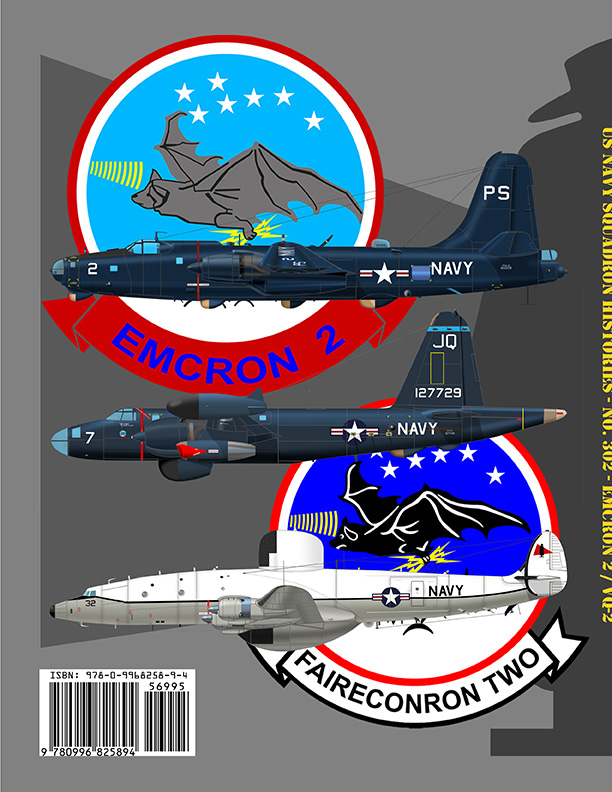 | Naval Fighters - NF302 - No Scale | FROM BATS TO RANGERS A Pictorial History of Electronic Countermeasures Squadron Two (ECMRON-2) Fleet Air Reconnaissance Squadron Two (VQ-2) by Angelo Romano and AMHC (AW) John D. Herndon, USN, Ret. This Pictorial History of US Navy's Electronic Countermeasures Squadron Two (ECMRON-2 or VQ-2), later designated Fleet Air Reconnaissance Squadron Two (FAIRECONRON TWO or VQ-2) by Angelo Romano and AMHC (AW) John D. Herndon, USN, Ret. is the second title of the new U.S. Navy SQUADRON HISTORIES by GINTER BOOKS. The photo coverage of the history of the Electric Bats, also known as the Rangers, is comprehensive, both in terms of photography and in terms of historical content. Much of the squadron's mission was top secret, as were many of its cold war missions, but the authors were able to utilize official (declassified) documents and first-hand accounts to write this book. For completeness, it is also a history of the U.S. Navy Electronic Intelligence gathering activities going back to WWII, beginning with the creation of the Cast Mike (Counter Measures) Project in 1942 and the deployment of early XARD receivers aboard aircraft like the Consolidated PBY Catalina and PB4Y Liberator. After WWII, the Navy started to use the Privateers as dedicated ELINT platforms and assigned them to two special units operating jointly with the National Security Group. One of these units, designated Port Lyautey Patrol Unit (NPU), was based at Naval Air Activities Port Lyautey, in French Morocco. It was first assigned modified PB4Y-1s and later, the Martin P4M-1Q Mercator. The NPU teamed with the Naval Security Group's Naval Communications Unit 32 George (NCU32G), which provided the ELINT equipment installed on board and the crew to operate them, mostly for covert operations around Europe and the Mediterranean. When the NPU reached its full complement of four P4M-1Qs, the unit and NCU32G, needed to have an administrative identity for budgetary and logistics purposes. Airborne Early Warning Squadron TWO (VW-2), based at NAS Patuxent River, was therefore selected to be its "mother" squadron. On 1 May 1953, NPU Port Lyautey became VW-2 Detachment A (or DET ABLE). In 1955, the Navy decided to establish a dedicated squadron for the unique mission rather than continue with a detachment: Electronic Countermeasures Squadron TWO (ECMRON TWO) was established on 1 Sep 1955. ECMRON TWO was assigned the alphanumeric designation "VQ-2". Its mission was to conduct electronic-search in support of fleet operations to obtain adequate and timely information on enemy radar, communications, and other emissions in support of fleet operations. The Squadron inherited the P4M-1Qs from VW-2 DET A and acquired a Lockheed P2V Neptune for utility purposes. On 1 Jan 1960, EMCRON TWO was redesignated Fleet Air Reconnaissance Squadron TWO (FAIRECONRON TWO) but still retained the alphanumeric designation "VQ-2". In 1956, VQ-2 received its first Douglas A3D-1Q Skywarrior, followed in 1957 by one A3D-1. In 1958, the Squadron received the Lockheed P2V-5F Neptune to augment the P4M-1Qs. The more capable A3D-2Q/EA-3B arrived in 1959 followed by the big Lockheed WV-2Q/EC-121M Constellation in 1960. The first Lockheed EP-3E ARIES arrived in 1971 and the squadron continued to fly this aircraft until disestablishment in 2012. The VQ-2 history and all worldwide events surrounding it are very well described and documented. This 242-page book contains 180 B&W and 444 color photos, most never published before. Thirty-seven superbly detailed aircraft color profiles show the evolution of the color schemes and markings and the different aircraft types and sub-types, providing very useful information for the benefit of both modelers and aviation historians. The inclusion of many squadron patches completes this masterpiece. THE AUTHORS Angelo Romano Angelo has authored six books: Wings from Coral Sea (Golden Wing Publications, 1986), Naval Fighters (Osprey, 1990), Naval Air Weapons Meet 1956-1959 (Model Publishing, 2006), First and Foremost - An illustrated History of Carrier Air Wing One - CVW-1 Part One 1934-1957 (Model Publishing, 2006), CVW-1 Part Two 1957-1973 (Model Publishing, 2008), and Black Knights Rule! (BKR) - A Pictorial History of VBF-718 / VF-68A / VF-837 / VF-154 / VFA-154 - 1946-2013 (Ginter Books, 2014). John D. Herndon AMHC (AW) Retired U.S. Navy John joined the U.S. Navy in 1978, Assigned to VQ-2 a total of 13 years E-1 to E-7, deployed to six Aircraft carriers in support of the EA-3B aircraft. Additionally deployed to locations all around the world in support of the EP-3E aircraft, Maintenance Control, Aircraft Division and Detachment Leading Chief Petty Officer. Retired out of VQ-2 his last tour which ended in 2000, went on to civilian life, employers ATA and American Airlines and finally the FAA as an Aviation Safety Inspector, currently the Boeing 787 Fleet Program Manager overseeing United Airlines safety compliance. Very involved over the years in collecting VQ-2 information/ history, assisted in raising funds and restoring a VQ-2 EA-3B Aircraft in Fort Worth Texas Ranger 15 BuNo 146453. More | Aircraft books | Limited Availability | £58.30 | |
 | Naval Fighters - NF42 - No Scale | Lockheed T2V-1/T-1A Seastar 73 pages More | Aircraft books | Catalogue | £13.99 | |
 | Naval Fighters - NFAF222 - No Scale | Lockheed XF-90 Penetration Fighter By William Simone. 68-pages, including 21-pages of color. 212 B&W photos, 68 color photos, and 90 illustrations. Created by the famous Lockheed "Skunks Works" and highly publicized at the start of the 1950s, the futuristic XF-90 seemed to epitomize what a supersonic fighter ought to look like. I was one of the first Air Force jets to be equipped with afterburners and the first Lockheed aircraft to exceed the speed of sound. Its handsome good looks captured the public's imagination. Even the creators of the popular Blackhawk comic book series adopted the XF-90 as its hero's jet fighter of choice. The text covers the design criteria of the 1945 penetration fighter request-for-proposal and the 8 companies that submitted proposals. Lockheed made over 60 design studies for the XF-90 which included delta wings, V-tails, forward swept wings, variable sweep wings, and Navy proposals, many of which are discussed in the book. The text goes on to describe its development and testing and flight testing at Muroc/Edwards AFB by Tony LeVeir, Lockeed's chief test pilot. Also included is an extensive history (14-pages) of the second XF-90's involvement in the nuclear testing at the Nevada Test Site and its subsequent retrieval. Additionally, 2-pages are devoted to Blackhawks and 9-pages to XF-90 models. More | Aircraft books | Catalogue | £33.30 | |
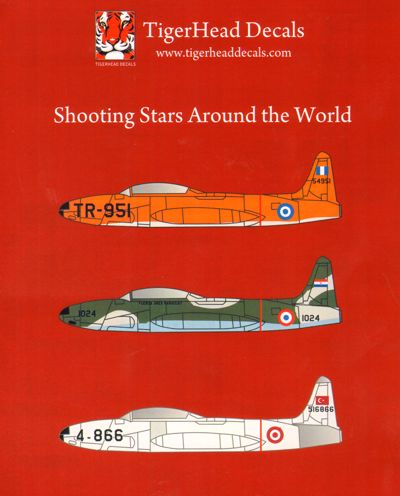 | Tigerhead Models - THD72017 - 1:72 | The Lockheed T-33 Shooting Star (or T-Bird) is an American jet trainer aircraft. It was produced by Lockheed and made its first flight in 1948 piloted by Tony LeVier. The T-33 was developed from the Lockheed P-80/F-80 starting as TP-80C/TF-80C in development, then designated T-33A. It was used by the U.S. Navy initially as TO-2 then TV-2, and after 1962, T-33B. Despite its age, the T-33 remains in service worldwide. - Cuban Air Force - Hellenic Air Force - Italian Air Force - Paraguay Air Force - Turkish Air Force More | Aircraft decals (military) | Limited Availability | £15.99 |
Hannants Search Engine
Convert Currency
Copyright © 2001-2026 H. G. Hannant Limited. All rights reserved. | Website by Dessol
Privacy Policy | Cookie Information | Switch to Mobile Version