



 Advanced Search
 You are not currently logged in so your shopping cart will not be saved. Please click here to loginor you can register here
« Go back« Go backPrevious Product (MKM144134)Next Product (MKM144136)
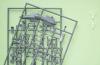
Mark I Models MKM144135

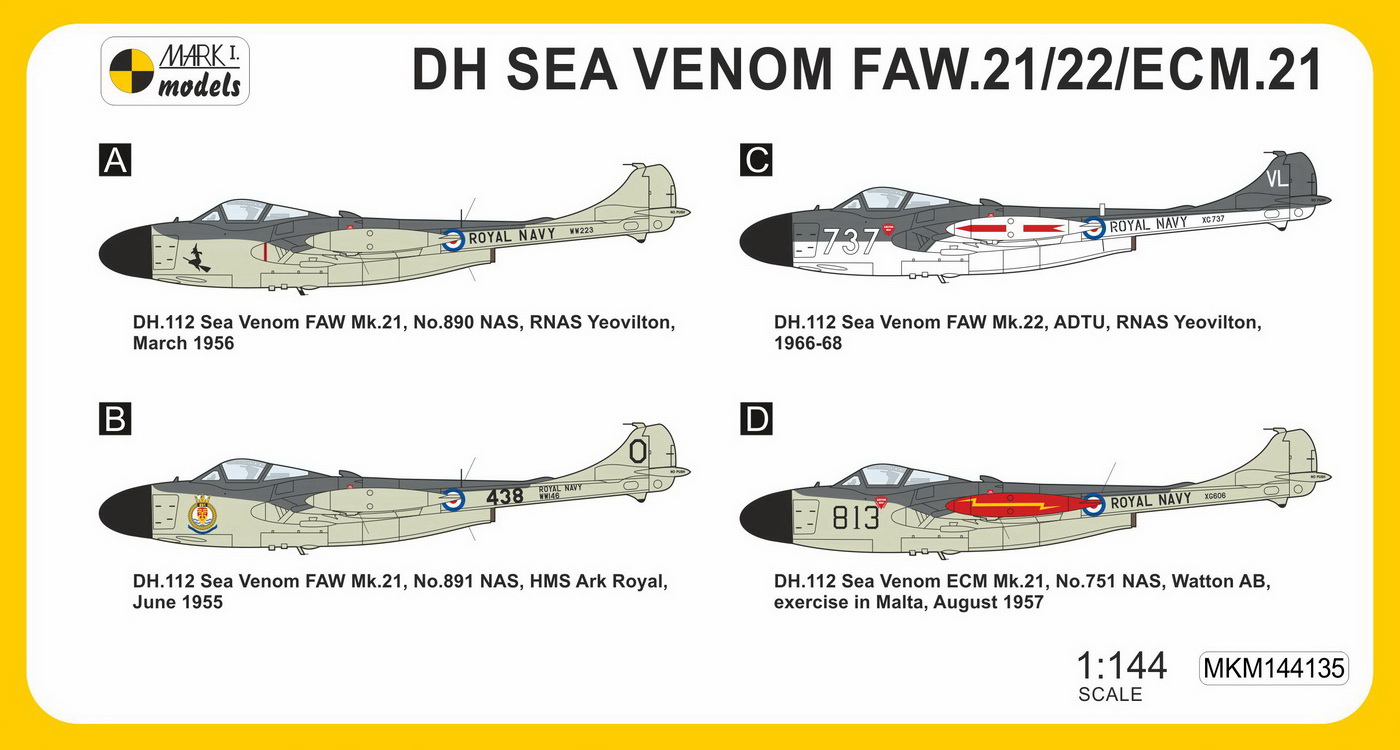
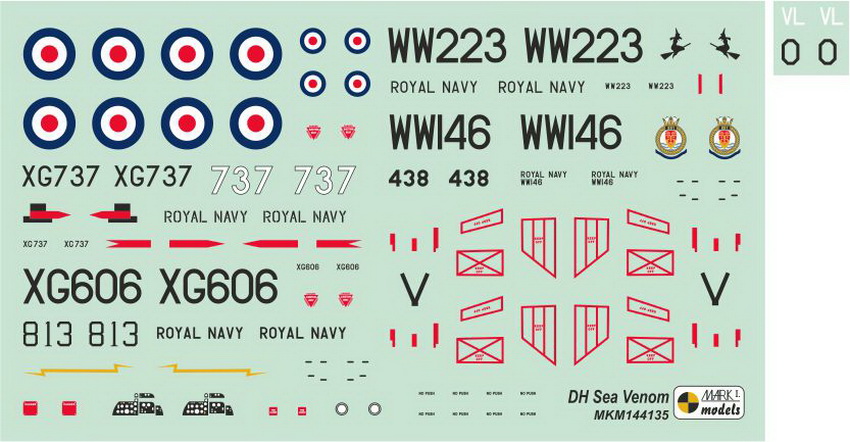
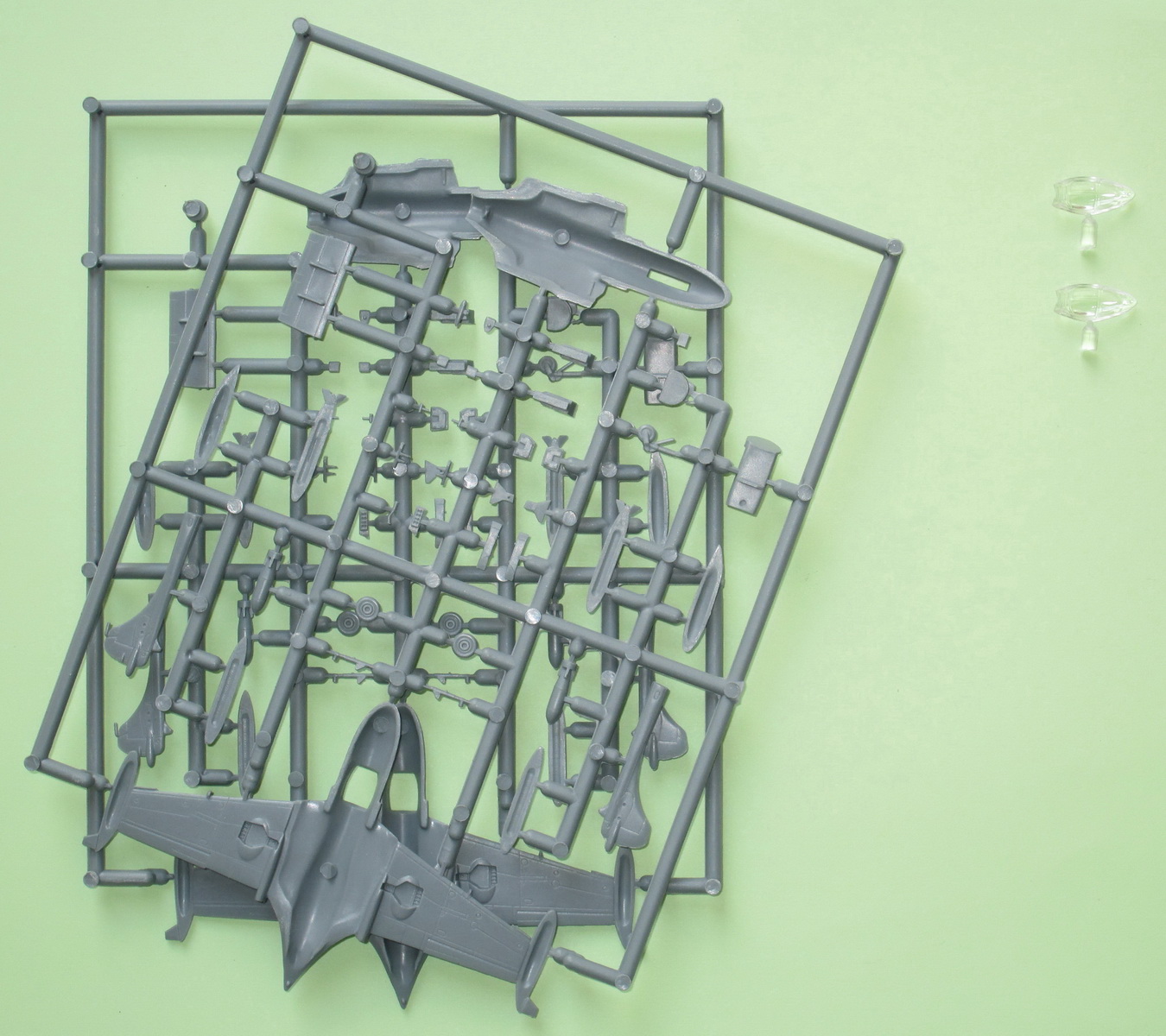
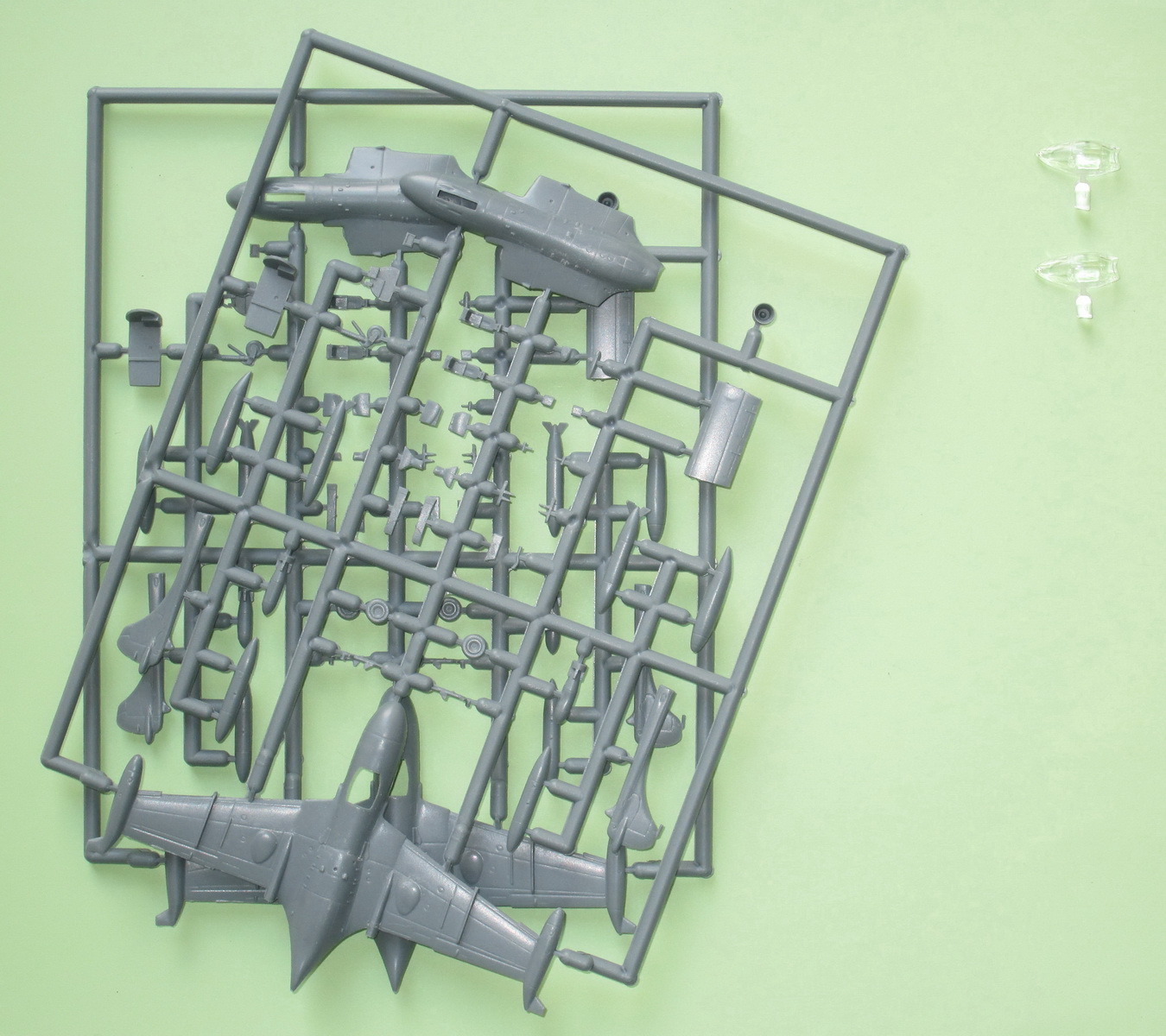
- Description:
-
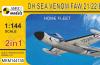
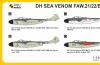
de Havilland Sea Venom FAW.21/22/ECM.21 'Home Fleet' (2in1)
The de Havilland Sea Venom was a British jet all-weather fighter developed for the Royal Navy from the RAF's Venom NF.2 night fighter. First flown in April 1951, the Sea Venoms were produced as the FAW.20 (50 a/c), improved FAW.21 (167 a/c) and uprated FAW.22 (39 new built and other Mk.21s converted). In total, 256 aircraft were taken on FAA's charge, while 39 Sea Venoms, designated FAW.53, were delivered to the Royal Australian Navy in 1956.
It was a two-seat monoplane aircraft, of all-metal construction, powered by a DH Ghost turbojet. It featured twin-boom tail configuration, with two wing-root intakes and folding wings with wing tip fuel tanks, clear-view canopy and was fitted with e[+] More... - Manufacturer:
- Mark I Models
- Code Number:
- MKM144135
- Scale:
- 1:144
- Item type:
- Aircraft kits (injection)
- Price:
- £18.40
- Order Quantity:
- Quantity In Stock:
 5
5
- Availability:
- This will usually be dispatched within 24/48 hours of receiving your order
- Wish List:
- Department:
- Catalogue
Here are some accessories you might find useful for this kit
Found 2 related products
 | Mark I Models - MKA14426 - 1:144 | de Havilland Sea Venom Weapon Set (resin parts & decals) (designed to be used with Mark I Models kits) More | Aircraft detailing sets (resin) | Catalogue | £10.20 | |
 | Peewit - PEE144032 - 1:144 | de Havilland Sea Venom FAW.21/22/53/ECM.21/TT.53 canopy frame paint mask (designed to be used with Mark I models kits) More | Aircraft paint masks (self adhesive) | Catalogue | £3.99 |
Here are some books and decals you might find useful for this kit
Found 1 related products
 | Warpaint Series - WPS44 - No Scale | de Havilland Venom and Sea Venom (Hall Park Books Limited) More | Aircraft books | Catalogue | £14.00 |
Hannants Search Engine
Convert Currency
Copyright © 2001-2026 H. G. Hannant Limited. All rights reserved. | Website by Dessol
Privacy Policy | Cookie Information | Switch to Mobile Version