



 Advanced Search
 « Go back« Go backPrevious Product (TA12694)Next Product (TA35387)
Tamiya TA30057




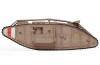

- Description:
-
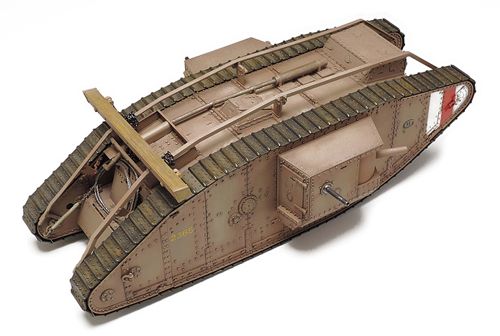
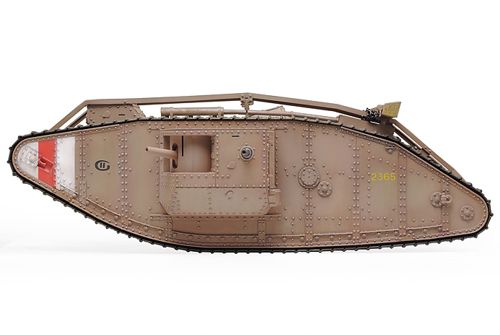
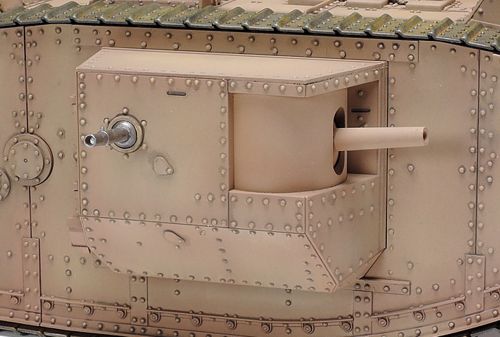
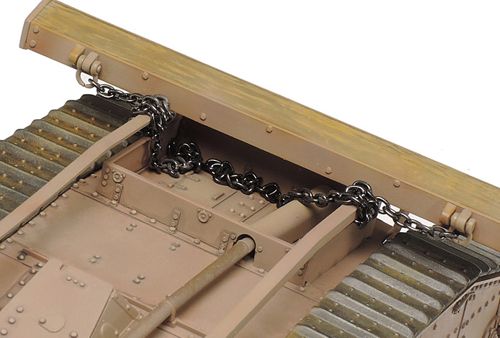
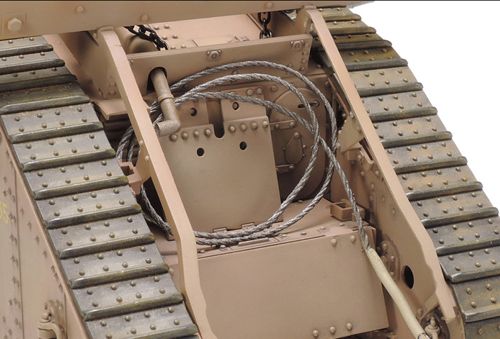
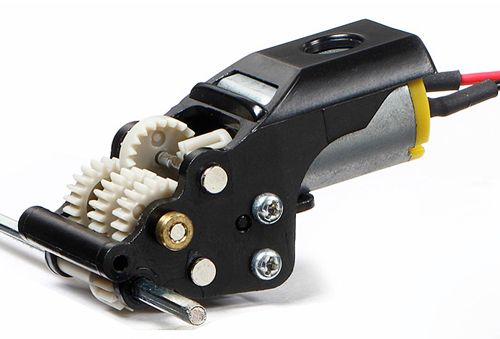
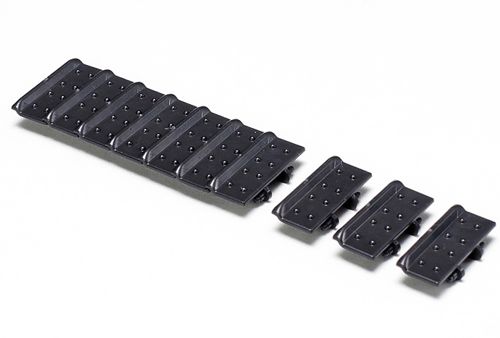
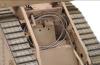
WWI British Mk.IV Tank Male During WWI, much of Western Europe was reduced to a massive battlefield criss-crossed by a seemingly unending network of trenches. The original British Mk.I tank was developed to break the deadlock; the Mk.IV was a later model based on many of the same design principle, and of which around 1,000 were produced starting in March 1917. A 'Male' variant was developed to smash through enemy lines and in addition to machine guns it utilized large 6-pounder guns, in contrast to the separate Female variant equipped with only machine guns for armament. The Mk.IV saw a variety of action, including a mass deployment of around 400 at the Battle of Cambrai in November 1917, additionally prevailing in the world's first tank on tank batt[+] More...
- Manufacturer:
- Tamiya
- Code Number:
- TA30057
- Scale:
- 1:35
- Item type:
- Military vehicle kits (injection)
- Price:
- £74.99
- Order Quantity:
- Quantity In Stock:
 3
3
- Availability:
- This will usually be dispatched within 24/48 hours of receiving your order
- Wish List:
- Department:
- Catalogue
Here are some accessories you might find useful for this kit
Found 2 related products
 | Aber - ABR35L155 - 1:35 | Barrels for British WWI Tank Mark IV - Male. 2 x 6 pdr gun and 3 x Lewis machine gun (designed to be used with Takom, Tamiya and others kits) [WWI Heavy Battle Tank Mk.IV Male Tadpole] More | Military vehicle gun barrels | Catalogue | £16.50 | |
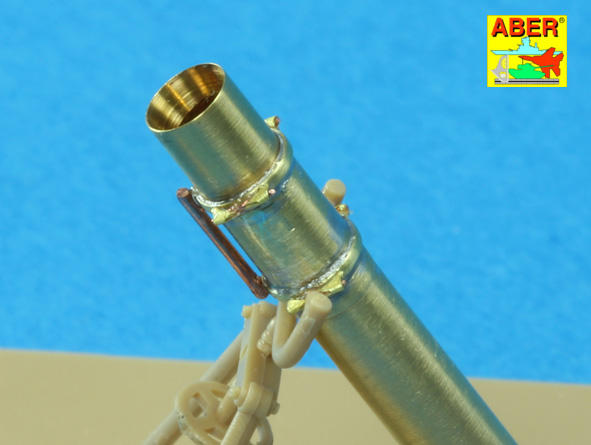 | Aber - ABR35L161 - 1:35 | Stokes 4in mortar for British WWI Tank Mk.IV Tadpole (designed to be used with Emhar, Takom and Tamiya kits) [WWI Heavy Battle Tank Mk.IV Male Tadpole] More | Military vehicle gun barrels | Catalogue | £11.50 |
Here are some books and decals you might find useful for this kit
Found 4 related products
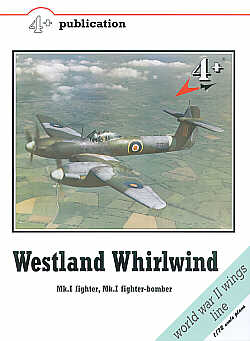 | 4 + Publications - 4PLUS14 - No Scale | Westland Whirlwind Mk.I Fighter/Fighter bomber The first British twin-engined four-cannon WWII fighter. actual size 11 ¾ in x 8 ¼ in (297 x 210 mm) paperback, stock No. 4+014 28 pages 77 b/w photos 1/72 scale plans type history and technical description production overview 2 pages camouflage profiles pull-out poster cockpit interior drawings camouflage details armament & equipment description More | Aircraft books | Catalogue | £14.40 | |
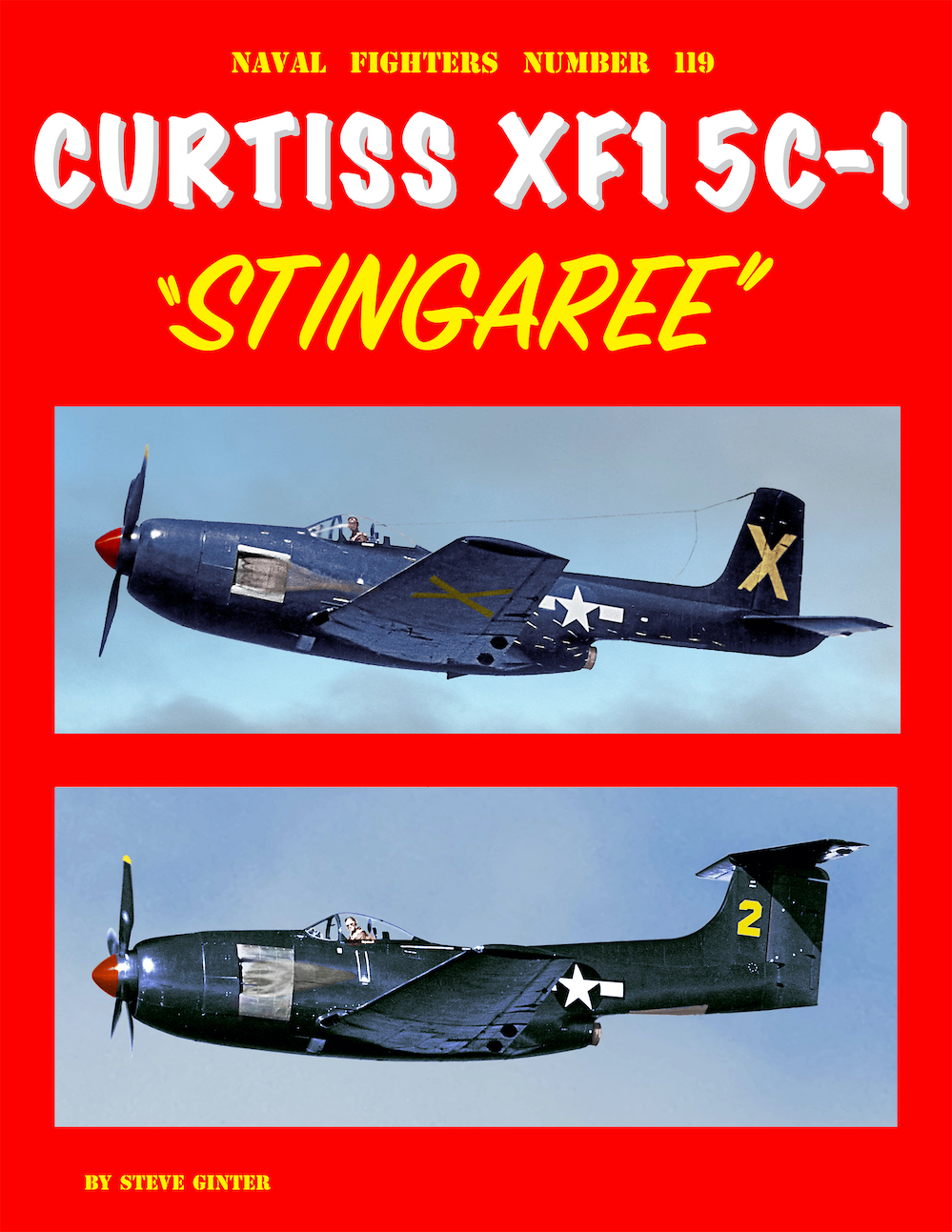 | Naval Fighters - NF119 - No Scale | Curtiss XF15C-1 "Stingaree" 36 b&w pages with color covers, 87 b&w and 4 color photos. During WWII, the Navy ordered two carrier capable composite powered fighters (each equiped with one prop and one jet engine) to counter the land based all jet aircraft being developed by the Germans. The first was the small Ryan FR-1 "Fireball" followed by the much larger Curtiss XF15C-1 "Stingaree" heavy fighter. Three XF15C-1s, BuNos 01213-01215 and a static airframe were ordered on 7 April 1944. They were powered by a Pratt & Whitney R-2800-34W prop engine of 2,100 hp in the nose and an Allis-Chalmers H-1B (J36) (British "Goblin') jet engine of 2,700 lbs thrust in the tail. Ship one's first flight was made on 27 February 1945. All three ships were completed with a conventional tail group. During flight testing of ship one it was decided to retrofit ships two and three with "T"-tails to improve overall performance and to increase the number of aircraft that could be spotted on the carrier's deck and hangar deck. The first aircraft was lost to fuel starvation caused by a faulty gage. The other two XF15C-1s were delivered to the Naval Air Test Center where they were flown until the program was cancelled in October 1946 by which time the Navy decided to go with the all-jet FD/FH-1 Phantom. More | Aircraft books | Catalogue | £16.60 | |
 | Star Decals - STAR35908 - 1:35 | British Comets in WWII and cold war. A34 Comet. More | Military vehicle decals | Catalogue | £7.80 | |
 | Warpaint Series - WPS105 - No Scale | Sopwith Pup by Matthew Willis (Hall Park Books Limited) By Matthew Willis The Sopwith Pup, as it is unofficially but universally known, was one of the first true British fighter aircraft, and one of the most significant of the First World War. It played a key part in maintaining control of the skies over the Western Front during and after the RFC's toughest period, Bloody April, 1917. Its superb flying qualities kept it competitive as ever-faster and more powerful opposition appeared, and it played an unglamorous but important role in the defence of the UK against zeppelin and heavy bomber attacks, and was fundamental to the development of ship-based aviation. With the very well-established categories of military aircraft that are familiar today, it is hard to comprehend the world in which the Pup was born, where these clear delineations did not exist. Certainly the idea of the fast, agile single-seat fighter was barely thought of when the Pup's outline was first chalked on the floor of the experimental workshop at Sopwith's Kingston-upon-Thames premises in 1915. The new aircraft was known as the 'Sparrow', was powered by a 50hp Gnome rotary. Test pilot Harry Hawker took the aircraft to Brooklands and amazed trainee RFC pilots by flying it under the bridge across the Byfleet Banking. It was fully aerobatic and capable of a speed just shy of 85mph despite the low engine power. It is unclear whether Sopwith intended the machine to form the basis of a military aircraft but in any event, its performance and handling, even on such low power, must have recommended it for that purpose. The 'Sparrow' therefore became the progenitor of the aircraft that would become the 'Pup'. It was around the time of the prototype's first appearance that the Pup seems to have gained its popular name. Brigadier-General SeftonBrancker, then the RFC's Director of Air Organisation, is reputed to have remarked, on seeing the prototype Scout beside its larger sibling at Brooklands, 'Your 1 Strutter has had a pup!' For all its value as a front line fighting aeroplane, the Pup had a potentially even greater impact on the development of naval aviation; in particular, the sometimes tortuous path of launching aircraft from, and returning them safely to, ships at sea. Moreover, the Pup became one of the more successful operational aircraft in this fledgling area of combat. This is the first WWI title in the series and includes all the usual Warpaint features historical text, modellers glossary, colour artwork by Richard Caruana and a three page colour walkaround by author Matthew Willis. More | Aircraft books | Catalogue | £14.00 |
Hannants Search Engine
Convert Currency
Copyright © 2001-2026 H. G. Hannant Limited. All rights reserved. | Website by Dessol
Privacy Policy | Cookie Information | Switch to Mobile Version