



 Advanced Search
 « Go back« Go backPrevious Product (TAK02607)Next Product (TAK02605)
Takom TAK02606

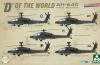
- Description:
-
D of the World AH-64D Apache Longbow (Limited Edition) USUALLY £99.99. TEMPORARILY SAVE 1/3RD!!!
Other US-built Apache Longbow helicopters in service with overseas nations.
Limited edition release. Choice of 5 markings for Hellenic Army, Kuwait Air Force; Royal Netherlands Air Force, Republic of Singapore Air Force, United Arab Emirates Air Force. - Manufacturer:
- Takom
- Code Number:
- TAK02606
- Scale:
- 1:35
- Item type:
- Aircraft kits (injection)
- Price:
- £55.55
- Order Quantity:
- Quantity In Stock:
 5+
5+
- Quantity Available At This Price:
- 10+
- Availability:
- This will usually be dispatched within 24/48 hours of receiving your order
- Wish List:
- Department:
- Special Offers
Here are some books and decals you might find useful for this kit
Found 59 related products
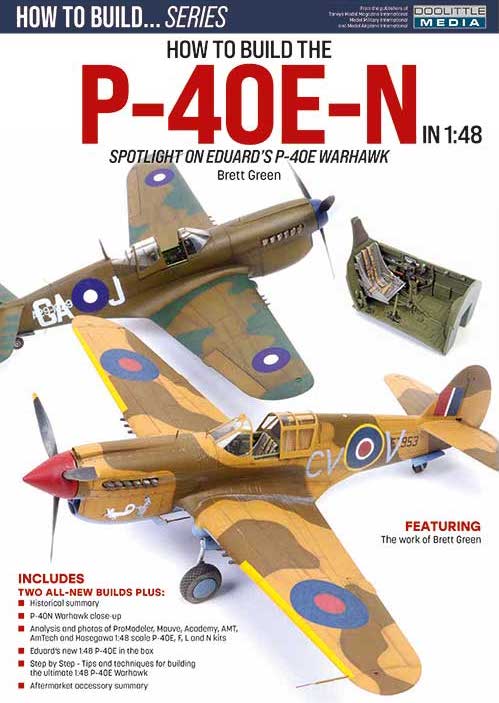 | ADH Publishing - ADH181 - No Scale | How to build...Eduards Curtiss P-40E/P-40N Warhawk in 1:48 SCALE The P-40 was a dependable warhorse produced in far greater numbers than any other USAAF fighter during 1941 and 1942, and one that continued to provide valuable service until the closing days of World War II. However, the Warhawk is often overshadowed or even ignored in the annals of aviation history because it did not shine as brightly as its more glamorous counterparts on both sides of the conflict. Eduard's all-new 1:48 scale P-40E is an instant classic with its high level of detail, modeller-friendly design and class leading surface textures. Between these covers, we provide an exhaustive step-by-step illustrated guide to building Eduard's new 1:48 scale P-40E plus tips on painting and weathering. Additional inspiration is also offered with a second full build of the Mauve 1:48 scale P-40N, still widely available with re-issues by Eduard and Academy, using plenty of after-market accessories. You'll also find history, reference, exploration of earlier 1:48 scale P-40 kits and more! More | Aircraft books (on modelling aircraft) | Catalogue | £16.95 | |
 | Guideline Publications - AIP01 - No Scale | Armour in Profile-Armoured Fighting Vehicles USA 1945-2018 By MP Robinson, David Grunnitt, Leif Robinson Armour in Profile: Armoured Fighting Vehicles of the United States Army, 1945-2018 contains profiles of five armoured fighting vehicles that have shaped the strategy and tactics of the United States Army since the end of World War II. From the battlefields of the Korean Peninsula and the jungles of Vietnam, to the plains of Central Europe and deserts of Iraq and Kuwait, these vehicles are iconic of American military might. Beginning with the M47 and M48 Patton tanks, replacements for the M4 Sherman, it goes on to examine the M60 tank and the mighty M1 Abrams Main Battle Tank, a vehicle that is expected to serve as the principal weapon of the U.S. Army for at least another two decades. As well as these main battle tanks, it profiles the 'King of Battle', the M109 self-propelled howitzer, another relic of the Cold War continuously updated to meet the challenges of warfare in the twenty-first century. Finally, the book looks at the 'REFORGER' exercises held in the 1970s and 80s, at the height of the Cold War, and which moved thousands of U.S personnel and vehicles to Germany on an annual basis. More | Military vehicle books | Catalogue | £11.99 | |
 | Echelon FD - D356091 - 1:35 | V100 & V150 Commando ACs of the World (Pt1) Part 1 of the international series on Commando ACs. This set covers 2 versions of the stretched V150s denoted by the postfix 'S'. One really attractive Philipines Marine Corp, one-off vehicle and the other fielded by the Portugese army. Lastly not forgetting the Thai 3-toned V100, armed with MG3 and .50 cal. More | Military vehicle decals | Catalogue | £7.70 | |
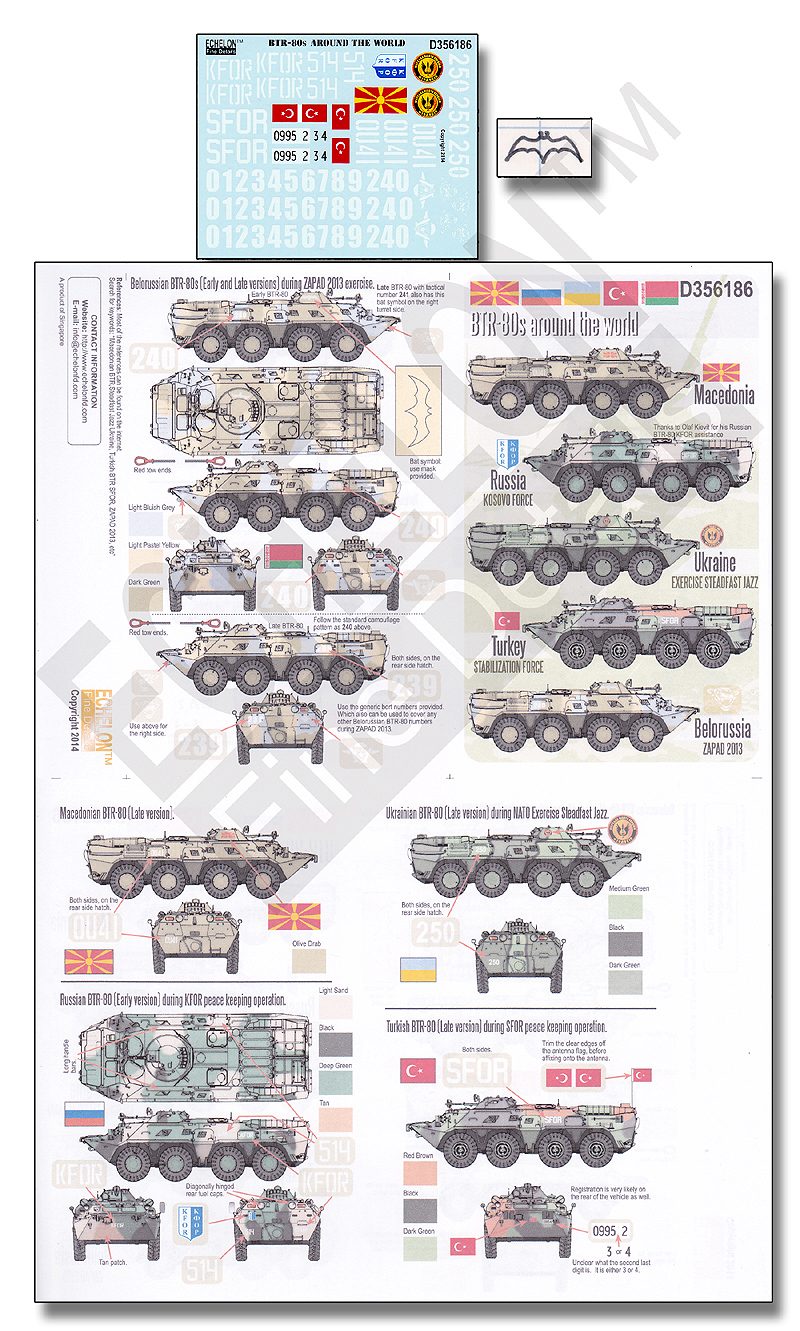 | Echelon FD - D356186 - 1:35 | Soviet BTR-80s Around the World. Macedonia, Ukraine, Belorussia, Turkey, Russian Kosovo Force. More | Military vehicle decals | Limited Availability | £9.70 | |
 | Echelon FD - D356239 - 1:35 | BMP-3s Around the World (Part 1) More | Military vehicle decals | Limited Availability | £12.75 | |
 | Double Ugly - FTC003 - No Scale | McDonnell-Douglas AV-8A/C, AV-8S and TAV-A/S Double Ugly! Books " Fox Two! CAMO: The Modellers' to Aircraft Finish & Markings USMC HARRIERS: The McDonnell-Douglas AV-8A/C, AV-8S and TAV-A/S in World Wide Service 1971 - 2006 (USMC, Armada Espanola and Royal Thai Navy) by Angelo Romano with Michael Grove Sized A-4 landscape, softcover, English text and captions, 108 pages of content, over 190 hitherto unpublished images mainly in colour, 8 colour profiles From the content: " Introduction " VMA-231 'Ace of Spades' " VMA-513 'Flying Nightmares' " VMA-542 'Tigers'VMAT-203 'Hawks' " Naval Air Test center (NATC) " NASA " Armada Espanola " Royal Thai Navy " AV-8A/C Camouflage & Markings [McDonnell-Douglas AV-8] More | Aircraft books | Catalogue | £27.95 | |
 | Guideline Publications - GPSAMCC3 - No Scale | Combat Colours 3: The Curtiss P-36 and P-40 in USAAC/USAAF service 1939-1945 The usual detailed 'Scale Aircraft Modelling' treatment of the plane which kept Curtiss at the forefront of fighter design following the success of their biplane line. When re-engined with Allisons the P-36 became the P-40 and served with distinction throughout World War II. 8 colour 3-views. 150 colour profiles. 44 black/white photos. More | Aircraft books | Catalogue | £9.95 | |
 | Guideline Publications - GPSAMCC9 - No Scale | Combat Colours No.9 - Nicholas Millman Mitsubishi Zero - Type 0 Carrier Fighter (A6M) 'Zeke' in World War Two. No.9 in the series charts the colour schemes and markings worn by this iconic Japanese naval fighter which saw service throughout the whole of the Pacific War from 1940 in China, to the final defence of the homeland in 1945. Structured chronologically by variant, it covers the development from the A6M1 to A6M7/8, including the floatplane Nakajima A6M2-N 'Rufe' and the A6M2-K Zero two-seat trainers, with colour profiles, four-views and illustrations. It includes in detail examples of all the main schemes worn by the Zero and their colours [A6M5c] More | Aircraft books | Catalogue | £16.00 | |
 | Duke Hawkins - HMHDH-WH001 - No Scale | Brussels during World War II This book is a 264 page book bringing a photographic portrait of Brussels during World War 2, showing the preparations by the defending armies, the assault and the 4-year long occupation, followed by the liberation by the allies. It includes over 500 photos, of which more than 470 have never been published before. It shows the destruction of the defences, the every day life during the occupation, the German troops and their working during the occupation and the allied troops entering the city. Many of the photos published in this book were made by German soldiers residing in the city. The book is written in English and French and is one print only - no reprints ! The author is Robert Pied More | Aircraft books | Limited Availability | £41.99 | |
 | Linden Hill - LHB-01 - 1:72 | Book 'Airlift to the Top of the World' (book to accompany Shorts Sunderland decals) https://www.lindenhillimports.com/lhi-blog#/ "By 1950 it had been almost forty years since a publicly funded British polar expedition had been attempted. In contrast to the days of Scott and Shackleton, it was now possible to support such a venture with both motor and air transport. The British North Greenland Expedition (BNGE), a combined scientific and military venture to a remote region within 800 miles of the North Pole and headed by a Royal Navy Lieutenant-Commander, would not have been possible without the support of military aviation, mostly in the shape of the Royal Air Force's Coastal and Transport Commands. This book examines the origins of the Expedition and for the first time tells the full story of the role played by the RAF in transporting the BNGE northwards, supplying it, supporting its scientific research work, and bringing it safely home. It is a story that includes both potential and actual calamities and details missions flown by the RAF in some of the world's most extreme climatic conditions." More | Aircraft books | Catalogue | £26.99 | |
 | MA Publications - MAE01 - No Scale | Building the Focke-Wulf Fw-190. The Focke-Wulf Fw-190 is generally viewed as a far superior fighter than the much more famous Messerschmitt Bf-109 - and for good reason. This highly adaptable aircraft served in an enormous variety of roles, including fighter, night-fighter, fighter-bomber/ ground attack, reconnaissance and torpedo bomber throughout much of the Second World War. It initially appeared as an interim fighter designed to complement the Bf-109 and the first production model, the Fw-190A-1 was deployed on occupation duties in France in the summer of 1941, from where it could threaten the British Isles. The sheer number and variety of model kits of the Fw-190 makes this one of the most popular aircraft in various scales. This new book in the Model Aircraft Extra series from MA Publications brings you a guide to modelling some of the variants of this aircraft using some of the best model kits currently available, and some of the best model makers around. 13 build projects will be included, in a 'how-to' format, and herald the start of a fantastic modelling guide series from MA Publications, the new name in scale modelling. More | Aircraft books | Limited Availability | £14.99 | |
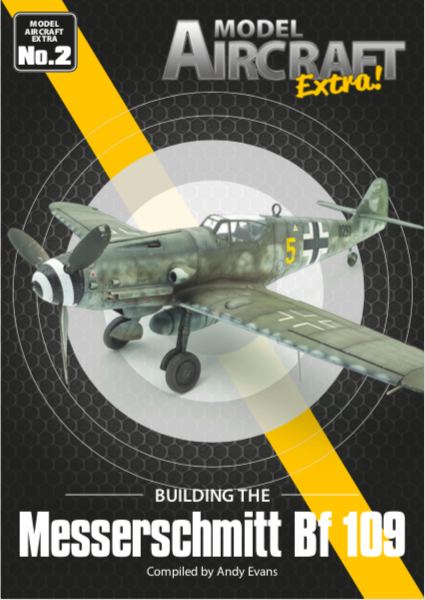 | MA Publications - MAE02 - No Scale | Building the Messerchmitt Bf-109. The iconic Messerschmitt Bf-109 was the backbone of the Luftwaffe's fighter force during World War II. The aircraft first saw operational service in 1937 during the Spanish Civil War and was still in service at the dawn of the jet age at the end of the War in 1945. The Bf-109 is the most produced fighter aircraft in history, with a total of 33,984 airframes produced from 1936 up to April 1945. It was also one of the most advanced fighters of the era, including such features as all-metal monocoque construction, a closed canopy, and retractable landing gear, and was powered by a liquid-cooled, inverted-V12 engine. It was conceived as an interceptor, and later models were developed to fulfil multiple tasks, serving as bomber escort, fighter- bomber, day-night all-weather fighter, ground-attack aircraft, and as reconnaissance aircraft. It was supplied to and operated by several countries during World War II and served with a number of air arms for many years after the war. The Bf-109 was flown by the three top-scoring German fighter aces of World War II, who claimed 928 victories among them. The highest scoring fighter ace of all time, Erich Hartmann, flew the Bf-109 and was credited with 352 aerial victories. The aircraft was also flown by Hans-Joachim Marseille, the highest-scoring German ace in the North African Campaign, who achieved 158 aerial victories. It was also flown by several other aces from Germany's allies, notably the Finn Ilmari Juutilainen, the highest scoring non-German ace on the type. This second book in the MA Publications 'Model Aircraft Extra' series brings you a guide to building some of the variants of the Bf-109. In all some 14 build projects are included in a 'how-to' format using kits in popular scales from some of the best model makers around. More | Aircraft books | Limited Availability | £14.99 | |
 | MA Publications - MAE04 - No Scale | Model Aircraft Extra 4. Building the North-American P-51D Mustang. WAS £14.99. TEMPORARILY SAVE 1/3RD!!! Marrying an American dive-bomber design and a British engine, the North-American P-51 Mustang became one of the greatest fighters of World War II. The iconic P-51 was a World War II single-seat fighter and fighter-bomber that also saw service in the Korean War and other conflicts. The Mustang was designed in 1940 by North-American Aviation (NAA) in response to a requirement of the British Purchasing Commission. The Purchasing Commission approached North-American Aviation to build Curtiss P-40 fighters under license for the Royal Air Force (RAF). Rather than build an old design from another company, North-American Aviation proposed the design and production of a more modern fighter. The prototype NA-73X airframe was rolled out on 9 September 1940, 102 days after the contract was signed, and first flew on 26 October. The Mustang was designed to use the Allison V-1710 engine, which had limited high-altitude performance in its earlier variants. The aircraft was first flown operationally by the RAF as a tactical-reconnaissance aircraft and fighter-bomber (Mustang Mk I). Replacing the Allison with a Rolls-Royce Merlin resulted in the P-51B/P-51C (Mustang Mk III) model and transformed the aircraft's performance at altitudes above 15,000ft, without sacrificing range, allowing it to compete with the Luftwaffe's fighters. The definitive version, the P-51D, was powered by the Packard V-1650-7, a license-built version of the two-speed two-stage-supercharged Merlin 66 and was armed with six .50 calibre M2/AN Browning machine guns. From late 1943, P-51Bs and P-51Cs (supplemented by P-51Ds from mid-1944) were used by the USAAF's Eighth Air Force to escort bombers in raids over Germany, while the RAF's Second Tactical Air Force and the USAAF's Ninth Air Force used the Merlin-powered Mustangs as fighter-bombers, roles in which the Mustang helped ensure Allied air superiority in 1944. The P-51 was also used by Allied air forces in the North African, Mediterranean, Italian and Pacific theatres, and during World War II, Mustang pilots claimed to have destroyed some 4,950-enemy aircraft. At the start of the Korean War, the Mustang, by then redesignated F-51, was the main fighter of the United Nations until jet fighters, including North-American's F-86, took over this role, the Mustang then became a specialised fighter-bomber. Despite the advent of jet fighters, the Mustang remained in service with some air forces until the early 1980s. In Model Aircraft Extra #4, some 15 P-51 Mustang build projects will be included, in a 'how-to' format, and continue this fantastic series modelling guides from MA Publications, the new name in scale modelling. More | Aircraft books | Special Offers | £9.99 | |
 | MA Publications - MAE06 - No Scale | Building the Supermarine Spitfire The iconic Supermarine Spitfire, the most strategically important British single-seat fighter of World War II. The Spitfire, renowned for winning victory laurels in the Battle of Britain along with the Hawker Hurricane, served in every theatre of the War and was produced in more variants than any other British aircraft. The Spitfire was designed by Reginald Mitchell of Supermarine Ltd., in response to a 1934 Air Ministry specification calling for a high-performance fighter with an armament of eight wing-mounted 0.303-inch machine guns. The airplane was a direct descendant of a series of floatplanes designed by Mitchell to compete for the coveted Schneider Trophy in the 1920s. One of these racers, the S.6, set a world speed record of 357 miles per hour in 1929. Designed around a 1,000-horsepower, 12-cylinder, liquid-cooled Rolls-Royce PV-12 engine (later dubbed the Merlin), the Spitfire first flew in March 1935. It had superb performance and flight characteristics, and deliveries to operational Royal Air Force (RAF) squadrons commenced in the summer of 1938. A more radical design than the Hurricane, the Spitfire had a stressed-skin aluminum structure and a graceful elliptical wing with a thin airfoil that, in combination with the Merlin's efficient two-stage supercharger, gave it exceptional performance at high altitudes. The version of the Spitfire that fought in the Battle of Britain was powered by a Merlin engine. Faster than its formidable German opponent the Bf-109 at altitudes above 15,000 feet and just as manoeuvrable, Spitfires were sent by preference to engage German fighters while the slower Hurricanes went for the bombers. More Hurricanes than Spitfires served in the Battle of Britain, and they were credited with more 'kills,' but it can be argued that the Spitfire's superior high-altitude performance provided the margin of victory. Meanwhile, Supermarine was developing more-capable versions of the Spitfire driven by progressively more-powerful Merlin's. The eight 0.303-inch machine guns gave way to four 0.8-inch automatic cannons, and by war's end the Spitfire had been produced in more than 20 fighter versions alone, powered by Merlin's of up to 1,760 horsepower. Though outperformed by the German Fw-190 on that aircraft's introduction in 1941, the Spitfire restored parity the following year and eventually regained the advantage. It remained a first-line air-to-air fighter throughout the war. Spitfires were used in the defence of Malta, in North Africa and Italy, and, fitted with tail hooks and strengthened tail sections, as Seafires from Royal Navy aircraft carriers from June 1942. Spitfires helped to provide air superiority over the Sicily, Italy, and Normandy beachheads and served in the Far East from the spring of 1943. Fighter-bomber versions could carry a 250 or 500lb bomb beneath the fuselage and a 250-pound bomb under each win One of the Spitfire's most important contributions to Allied victory was as a photo-reconnaissance aircraft from early 1941. Superior high-altitude performance rendered it all but immune from interception, and the fuel tanks that replaced wing-mounted machine guns and ammunition bays gave it sufficient range to probe western Germany from British bases. n late 1943 Spitfires powered by Rolls-Royce Griffon engines developing as much as 2,050 horsepower began entering service. Capable of top speeds of 440 miles per hour and ceilings of 40,000 feet, these were used to shoot down V-1 'buzz bombs.' During World War II, Spitfires were exported in small numbers to Portugal, Turkey, and the Soviet Union, and they were flown by the U.S. Army Air Forces in Europe. When production ceased in 1947, 20,334 Spitfires of all versions had been produced, 2,053 of them Griffon-powered versions. Fighter versions of the Spitfire were withdrawn from RAF service during the early 1950s, while photo-reconnaissance Spitfires continued in service until 1954. In Model Aircraft 'Extra Special' #6, the biggest book of this series some 22`Spitfire build projects will be included, in a 'how-to' format, and continue this fantastic series modelling guides from MA Publications, the new name in scale modelling. More | Aircraft books | Limited Availability | £14.99 | |
 | MA Publications - MAE07 - No Scale | Building the Republic P-47D Thunderbolt. The Republic P-47 Thunderbolt Big, powerful, and truly a juggernaut of an aircraft, resulting in its appropriate nickname 'Jug', the Republic P-47 Thunderbolt was one of the really great warplanes of its generation. Alongside the superlative North-American P-51 Mustang and the twin-engined Lockheed P-38 Lightning, it was one of the three principal fighter types which the US Army Air Forces (USAAF) successfully operated in the later stages of World War Two. The initial production version was the P-47B, and examples of this type started to reach the USAAF's 56th Fighter Group in June 1942. The first really combat-ready model was the refined and slightly longer P-47C, which entered service later in 1942. Like all front-line P-47 versions it packed a formidable punch of four 0.5in M2 Browning machine guns in each wing, although early models did not carry the wing pylons that became so important later in the Thunderbolt's combat career. The first P-47C examples to reach Britain for the US Eighth Army Air Force did so in December 1942, followed by what became the main combat model of the Thunderbolt, the P-47D, in April 1943. Weighing in at some 15,000lb (6,804kg) fully loaded and powered by the R-2800-59 Double Wasp of 2,000hp, the P-47D was a big, powerful beast. Water injection introduced for some versions of the R-2800 would see even greater power on demand when needed in aerial combat. All of these early Thunderbolts had the 'razorback' high line rear fuselage pioneered with the P-35 and P-43, with a rearwards-sliding heavily framed cockpit canopy. Although the USAAF at first saw the Thunderbolt as a high altitude interceptor, its main initial role very soon became that of daylight bomber escort with the England- based Eighth Air Force, which was in great need of escort fighters for its B-17 Flying Fortresses and B-24 Liberators that were increasingly facing stiff Luftwaffe fighter opposition. he Thunderbolt helped to turn the tide for the US daylight bombing offensive during 1943 and early 1944, with a number of P-47 pilots gaining impressive scores in air-to-air combat against Luftwaffe fighters. Eventually the appearance of the Merlin-engined P-51B Mustang and later versions of the superb Mustang long-range fighter resulted in the Eighth Air Force almost completely re-equipping its fighter groups with the P-51, but the Eighth's 56th Fighter Group continued to fly the Thunderbolt right up to the end of the war in Europe in May 1945. The Eighth Air Force also pioneered the P-47 for air-to-ground operations as a part of its policy of taking the fight to the Luftwaffe, and additional to this the Thunderbolt eventually equipped several fighter groups specifically for fighter-bomber operations within the tactical England-based US Ninth Air Force. The P-47 proved to be a formidable fighter-bomber due to its impressive eight-gun armament, bomb load and ability to survive enemy fire. The underwing pylons that proved so useful for long-range fuel tanks were equally at home carrying a 500lb (227kg) bomb (one under each wing), and the Ninth Air Force in particular used this capability to devastating effect against German tactical targets before and after D-Day. 'Razorback' Thunderbolts additionally equipped USAAF units in Italy, the Pacific (including exceptional use by the Fifth Air Force), and the China-Burma-India theatre (CBI). Continuing development of the P-47 design led to the adoption later in P-47D manufacture of a cut- down rear fuselage spine and all-round vision 'bubbletop' canopy. This resulted in a further series of later Thunderbolt versions with even greater range and capabilities, but many 'razorback' P-47s nevertheless continued in service right to the war's end " some pilots in fact preferring the 'razorback' to the later models particularly for their better directional stability. Other important users of the Thunderbolt in World War Two included the Soviet Union, the RAF and the Free French. This seventh book in the highly successful MA Extra Series contains fourteen showcase and step by step model builds and will be a must for any P-47 aficionado! More | Aircraft books | Limited Availability | £14.99 | |
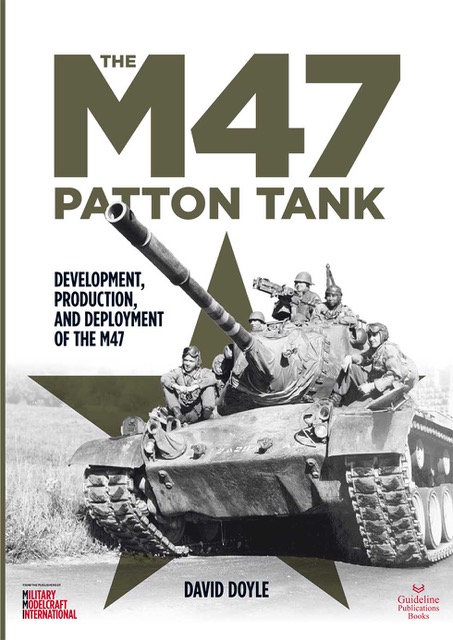 | Guideline Publications - MIL3DD - No Scale | The M47 Patton Tank by David Doyle (mil3DD) 100 pages The American M47 Patton is one of the least known tanks of the Cold War, but in this meticulously researched new book well-known US vehicle historian David Doyle reveals its history. With the real threat of World War III imminent, the M47 was rushed into production in 1951 as an interim improved medium tank. Thankfully, the feared global conflict was averted, and for the United States, who developed the M47, it proved to be an interim tank indeed, serving for less than a decade. But for many of the nations across the world who fielded it, the M47 soldiered on for many years-with some still in service as late as 2024. This feat is made even more impressive when the story of the struggle of its development and production, which was far more convoluted than many other military systems, including many far more complex, is fully understood. This 96-page softcover book, based almost entirely on primary source documents and lavishly illustrated with previously unpublished images, reveals the history of the M47, one of the longest-lived armored fighting vehicles. It is an essential addition to the library of modellers, vehicle enthusiasts and historians alike. More | Military vehicle books | Catalogue | £20.00 | |
 | Guideline Publications - MMI-IA - No Scale | Imperial Armour: Modelling AFVs of the Japanese Army 1939-2020. 84 pages. Since the 1930s the armed forces of Japan have deployed a wide range of armoured fighting vehicles from diminutive tankettes to modern, state-of-the-art Main Battle Tanks. This new 84-page book from Guideline Publications and the team that bring you Military Modelcraft International presents a series of step-by-step guides and reference articles on Japanese AFVs from 1939 to the present day. Using kits from Dragon, Finemolds and Tamiya, some of the best modellers from the MMI stable go through construction, detailing, and painting and weathering, while in-depth reference articles look at Japanese armour in World War II and today. As well as collecting and reimagining some of the best features on the topic from MMI over the past decade and more, the book has new content that will both inspire and inform anyone wanting to tackle their own Japanese armour project. More | Military vehicle books | Catalogue | £19.99 | |
 | Guideline Publications - MMI759206 - No Scale | Panzer Vor! 84 pages The Armoured Vehicles of the Panzerwaffe in Profile and Miniature There is no doubt, almost eighty years after the end of World War II, that the tanks and other armoured vehicles developed and employed by Nazi Germany from 1933 until 1945 continue to fascinate historians and modellers alike. Their popularity is evident in the rate at which new kits of German vehicles appear from all the major model manufacturers. These new kit releases are fuelled by an ongoing search for information on these AFVs and a steady of stream of period photographs, many from private archives, that are a constant source of fascination for modellers This book brings together the best of more than a decade's research articles published in Military Modelcraft International, redesigned and presented for this book. Together they shed light on Nazi Germany's armoured forces-the Panzerwaffe-and the men-the Panzertruppen-who fought with them. Rare archival photographs reveal unique camouflage schemes and unusual field modifications, while colour profiles will provide inspiration beyond the marking and camouflage options provided in model kits. As well as this unique reference source, the book contains a build of a small-scale armoured car by master modeller Alex Clark and a previously unpublished build of Tamiya's Panzer IV Ausf. More | Military vehicle books | Catalogue | £19.99 | |
 | Mushroom Model Publications - MMP64-7 - No Scale | Russian Aviation Colours 1909-1922. Volume 3 Red Stars. WAS £40.00. NOW BEING CLEARED!! SAVE 1/3RD!!! The third volume of the Russian Aviation Colours series. Books describe the history of the little-known emblems and distinctive markings of Russian military aviation from its early origins up to the Russian exit from World War One. The authors have managed to collect, and in some cases partially reconstruct, most emblems and signs used in Russia during this period by military aviation units. The collected material is presented in a clear and attractive form - colour plates, reconstructed logos, and original photographs from public and private archives. This profusely illustrated book covers all the aircraft used, with brief details of their service use and comprehensive details of the colours and markings they carried. Besides the many photographs, full colour profiles illustrate the markings applied. Detailed colour notes and precise descriptions and illustration of national markings over the period complete a book that will be invaluable to aircraft enthusiasts, historians and modellers. Vol 3 describes aircraft used by early Soviet aviation. More | Aircraft books | Special Offers | £26.67 | |
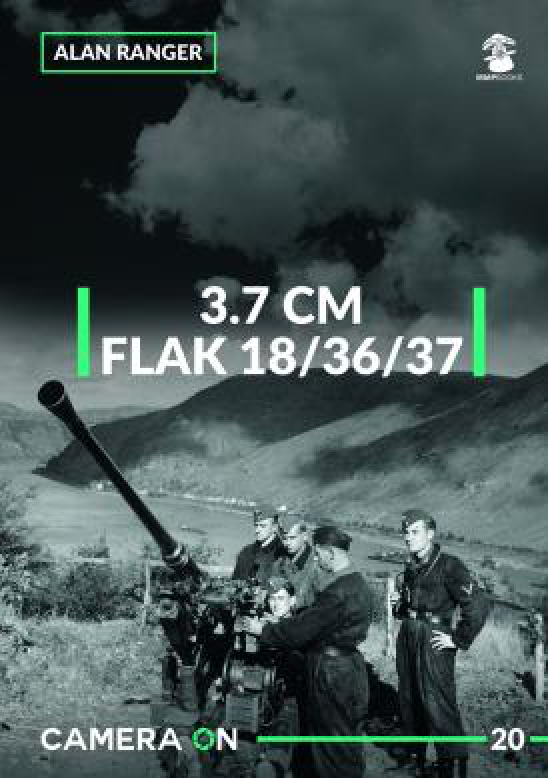 | Mushroom Model Publications - MMPCAM20 - No Scale | CAMERA ON 20 3.7 FLAK 18/36/37 Authors Alan Ranger Format A4, 80 pages This latest photo album in the ""Camera On"" series is the first to cover an anti-aircraft weapon alone and whilst there have been a few books previously covering medium German 37mm Flak weapons, the 37 mm Flak 18/36/37 has never been covered in such photographic depth. This truly historically significant World War II weapon (along with the other German 37 mm weapons it evolved into) are illustrated in over 160 photographs. Nearly all of the images are from the author's collection that were originally taken by ordinary German soldiers not professional propagandists. The book shows this rarely illustrated equipment in detail but still shows it as the soldiers viewed it - as both their work place and in some cases also their home - not the highly posed and polished views of the official photographers. More | Aircraft books | Limited Availability | £15.00 | |
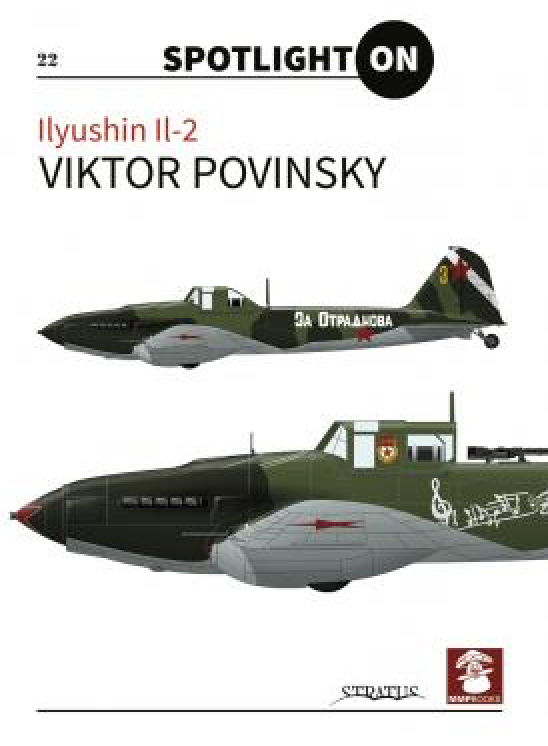 | Mushroom Model Publications - MMPSPOT22 - No Scale | Ilyushin Il-2 (Spotlight On No.22) This book is the latest in a reference series for aircraft modellers called "Spotlight On" and presents detailed illustrations of the famous Russian World War II attack aircraft. Nicknamed Shturmovik or Ilyusha, the Ilyushin Il-2 was a ground-attack aircraft produced by the Soviet Union in large numbers during the Second World War and played a crucial role on the Eastern Front. The book contains 40 colour profile views of the colours, camouflage and markings of different units. More | Aircraft books | Limited Availability | £19.00 | |
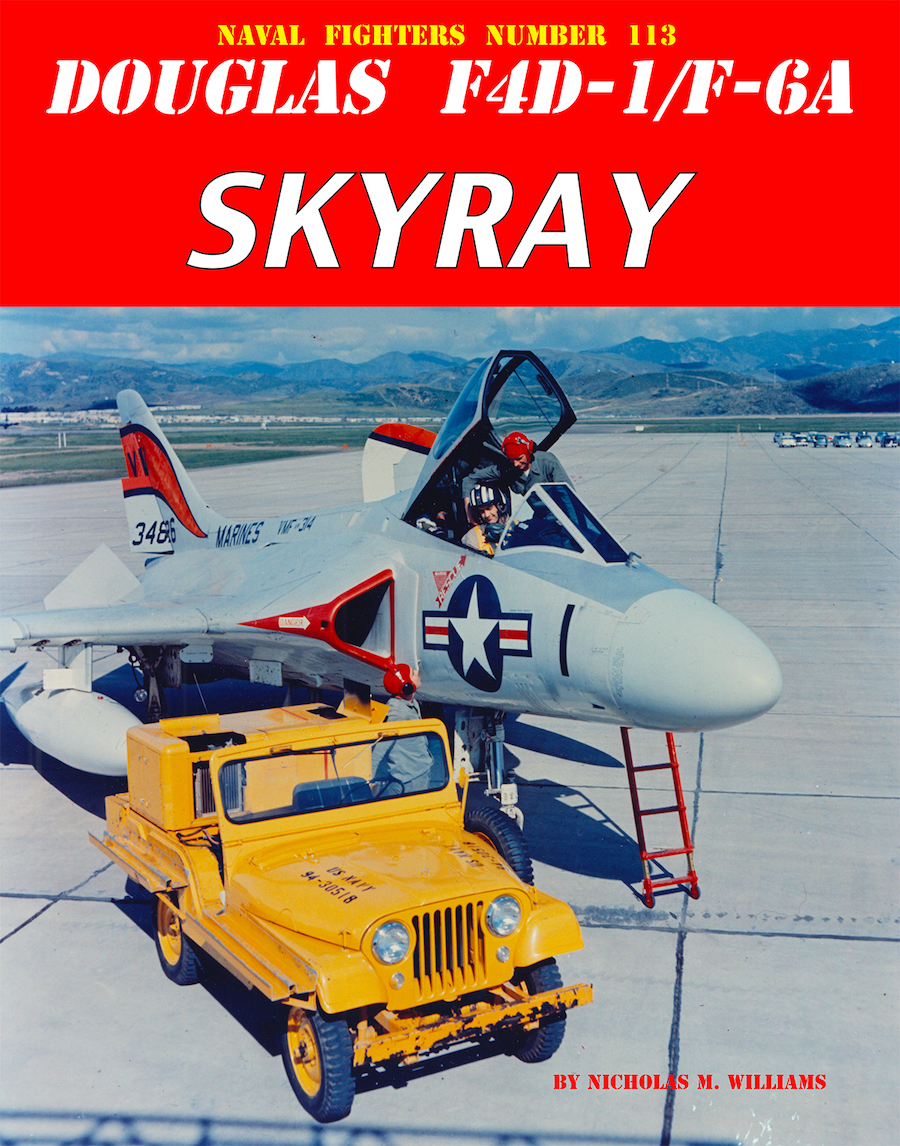 | Naval Fighters - NF113 - No Scale | Douglas F4D-1 / F-6A Skyray By Nick Williams 256-pages, over 600 b&w photos and drawings, 23-pages of color (86-color photos). The radical tailless F4D Skyray built by Douglas in the early 1950s was the product of flying wing research work originally done by Jack Northrop and Germany's Alexander Lippisch of Me-163 fame. Since no horizontal tail was present, longitudinal and lateral control was maintained by trailing edge "elevons" that functioned as both elevators when used together, and as ailerons when used opposite one another. These were supplemented with a set of wing root "trimmers". This carrier fighter interceptor was originally scheduled to be powered by the J40 which proved inadequate and thus entered the Fleet with the J57 instead. The F4D Skyray set World 3Km and 100Km speed records and Time-to-Climb records. As an intercepter it was armed with four 20mm wing mounted canons supplemented with rocket pods and later Sidewinder missiles. It was operated for about 10-years until 1964 by 29 Navy squadrons and testing units and 11 Marine squadrons and units. More | Aircraft books | Catalogue | £49.99 | |
 | Naval Fighters - NF305 - No Scale | US NAVY SQUADRON HISTORIES - NO. 305 WORLD WATCHERS A Pictorial History of Electronic Countermeasures Squadron ONE (ECMRON-1) and Fleet Air Reconnaissance Squadron ONE (VQ-1). by Angelo Romano Pages: 304 Size: 8.5 X 11 (inches) Format: Paperback with semi-rigid cover Illustrations: 633 mostly color photos, 39 color profiles, 82 patches Publisher: Ginter Books The lineage of VQ-1's "World Watchers" can be traced back to two PBY-5A Catalina "Black Cats" modified for electronic reconnaissance during World War II. In Oct 1951, the unit was formally established as the Special Electronic Search Project (SESP) at NAS Sangley Point, Republic of the Philippines, in Oct 1951. On 13 May 1953, the unit was redesignated Detachment Able of Airborne Early Warning Squadron One (VW-1), and operated four P4M-1Q Mercator aircraft. On 1 Jun 1955, Detachment Able was reorganized into Electronic Countermeasures Squadron One (VQ-1) at MCAF Iwakuni, Japan. This was the first Navy squadron dedicated to electronic warfare. In Sep 1956, VQ-1 received the first A3D/A-3 Skywarrior, or "Whale" as it came to be known, which served the squadron for the next three decades. In 1960, VQ-1 moved to NAS Atsugi, Japan and redesignated Fleet Air Reconnaissance Squadron ONE. The last Mercator was retired and replaced by the WV-2Q Super Constellations. The "Willie Victor" would remain the backbone of VQ-1's long range, land-based reconnaissance efforts through the Vietnam Era and into the 1970s. The squadron's involvement in the Vietnam War started characteristically, at the very beginning, when a Skywarrior crew was awarded the Navy Unit Commendation for their role in the Gulf of Tonkin incident of 2-5 Aug 1964. For the next nine years, VQ-1 would operate from DaNang, Cubi Point, Bangkok, aircraft carriers on patrol in Yankee Station and other bases in Southeast Asia. VQ-1's aircrews supported countless air strikes and were credited with assisting in the destruction of numerous MiG aircraft and Komar patrol boats. In 1969, The first EP-3B joined the squadron, which began the replacement program for the Super Constellations, which was completed in 1974. In 1971, VQ-1 moved its homeport to NAS Agana, Guam. At that time it absorbed Heavy Photographic Squadron SIXTY ONE (VAP-61) and its former parent unit, VW-1. For a time, VQ-1 consisted of thirty aircraft: sixteen Skywarriors, twelve Super Constellations and two Orions. In Jul 1974, VQ-1 welcomed the first of three EP-3E ARIES I, which served well until retirement, in 1992. On 29 Nov 1988, the last four Skywarriors left the squadron which now flew EP-3E exclusively. In 1991, the squadron closed its permanent detachment at Atsugi, after 30 years and relocated it to Misawa, Japan. In the same year, VQ-1 received the first EP-3E Aries II, an upgraded version of the ARIES I, using modified P-3C airframes. The squadron played a key role in Operations DESERT SHIELD and DESERT STORM. Tasking included strike support, combat search and rescue, communications and over-the-horizon-targeting support to Coalition forces. In 1994, as a result of the base closure of NAS Agana, VQ-1 was notified of the homeport change to NAS Whidbey Island. Coincidentally, in Jul 1994, VQ-1 retired the Navy's oldest operational P-3, EP-3E ARIES I BuNo 148887. Its retirement also marked VQ-1's transition to all EP-3E ARIES II mission aircraft. The next aircraft upgrade, the Sensor Systems Improvement (SSIP) Program, became operational in Aug 2000. On 1 Apr 2001, a VQ-1 EP-3E collided with a People's Republic of China F-8 II fighter, 70 nm off the coast of Hainan Island in the South China Sea. After struggling to regain control of the crippled aircraft, the crew performed a successful three-engine, no-flap emergency landing at Lingshui Air Base on Hainan Island. The crew of 24 was detained for ten days. After the terrorist attacks of 11 Sep 2001, VQ-1 surged aircraft and crews to the Central Command, where missions were flown in support of Operations ENDURING FREEDOM, IRAQI FREEDOM and NEW DAWN. On 17 May 2012, VQ-1 became the largest operational aviation squadron in the Navy when Fleet Air Reconnaissance Squadron Two (VQ-2) was officially disestablished and its personnel consolidated into VQ-1. Today, VQ-1 continues to provide Intelligence, Surveillance, and Reconnaissance (ISR) flights over an area of responsibility spanning 17 time zones from the East Coast of Africa to the West Coast of the United States. The World Watchers maintain a constant, forward-deployed status to ensure global support to Combatant, Joint and Fleet Commanders. This book is a tribute to all World Watchers who have served the squadron since its establishment to date. A special mention goes to those crews who were lost in tragic accidents, while serving their country. More | Aircraft books | Catalogue | £74.99 | |
 | Naval Fighters - NF306 - No Scale | World Class DIAMONDBACKS. A Pictorial History of Strike Fighter Squadron 102 (VFA-102) by Angelo Romano US NAVY SQUADRON HISTORIES No. 306 ISBN-13: 978-1-7349727-3-3 Soft bound (NF306) Originally designated Fighter Squadron 102 (VF-102), the DIAMONDBACKS of Strike Fighter Squadron 102 (VFA-102) were established on 1 Jul 1955 in Jacksonville, Florida. The first aircraft to carry the distinctive DIAMONDBACK markings was the McDonnell F2H Banshee, a twin-engine fighter-bomber with four 20mm internal cannons. The DIAMONDBACKS' inaugural deployment took place on-board the USS RANDOLPH (CV-15), in July 1956. After this deployment, the squadron transitioned to the Douglas F4D-1 Skyray. In 1960, the DIAMONDBACKS moved to NAS Oceana, Virginia, and transitioned to the McDonnell Douglas F-4B Phantom II. This marked the beginning of a 20-year association with the Phantom. In Jun 1981, the DIAMONDBACKS bade farewell to the Phantom and transitioned to the Grumman F-14A Tomcat. The Tomcat's design provided the pilot and RIO with a formidable air-to-air radar and weapons system. The long-range AWG-9 radar and its multiple track, multiple launch capable AIM-54 Phoenix missile system, AIM-7 Sparrow and AIM-9 Sidewindermissiles, and the six-barrelled 20mm cannon, comprised the Tomcat's weapons suite. With the addition to the Tomcat of the Tactical Air Reconnaissance Pod System (TARPS) in 1982, the DIAMONDBACKS added the tactical aerial photo reconnaissance mission to their traditional fighter role. In 1992, VF-102 and the Tomcat entered the critical air-to-ground mission area, thus solidifying the DIAMONDBACKS' role as a strike fighter squadron, and leading the way into the 21st century. In 1994, the DIAMONDBACKS transitioned to the re-engined F-14B and, with the installation of the Low Altitude Navigation Targeting Infrared for Night (LANTIRN) pod in 1998, they added the precision strike mission to their capabilities. In 2002, VF-102 was assigned to Commander, Strike Fighter Wing Pacific and transferred to NAS Lemoore, California to transition to the Navy's newest strike fighter, the Boeing F/A-18F Super Hornet. In March 2002, the DIAMONDBACKS were redesignated Strike Fighter Squadron 102 (VFA-102). After completion of the transition to the Super Hornet, VFA-102 moved across the Pacific to Naval Air Facility Atsugi, Japan, to join Carrier Air Wing FIVE (CVW-5), the Navy's only forward deployed air wing and part of the Forward Deployed Naval Forces (FDNF). Since then, the DIAMONDBACKS were assigned respectively to the following FDNF carriers: USS Kitty Hawk Models (CV 63), USS GEORGE WASHINGTON (CVN 73), and USS RONALD REAGAN (CVN 76). Pages: 284 Size: 8.5 X 11 (inches) Format: Soft bound Illustrations: 741 color and 124 B&W photos, 52 color profiles, 82 patches Publisher: Ginter Books More | Aircraft books | Catalogue | £66.60 | |
 | Naval Fighters - NF307 - No Scale | SMOKIN' TIGERS A Pictorial History of Reconnaissance Attack Squadron ONE (RVAH-1)by Michael Grove and Angelo Romano On 1 Nov 1955, Heavy Attack Squadron ONE (HATRON ONE or VAH-1) was established and temporarily based at Naval Air Station (NAS) Jacksonville, Florida. On the same day, CDR P.F. Stevens assumed the command of the squadron. He was a highly decorated patrol-bomber pilot during World War II. In 1956, VAH-1 underwent an intensive training schedule in anticipation of the receipt of the new jet, Douglas A3D-1 Skywarrior. Designed with an eye toward the Heavy Attack mission, the A3D was an atomic bomber, fully capable of carrier operations. On 31 Mar 1956, the squadron received five A3D-1s, thereby becoming the first fleet unit to take delivery of the jet-powered nuclear bomber. The squadron's initial deployments were to the Mediterranean and North Atlantic area onboard USS FORRESTAL (CVA-59) and USS INDEPENDENCE (CVA-62). Following their return from their Apr-Aug 1962 cruise, the SMOKIN' TIGERS began transitioning to the North-American A-5A Vigilante. On 22 Jan 1963, the first A-5A was accepted for service by the squadron at NAS Sanford, Florida, and in March of that year, VAH-1 became the first squadron to win a monthly bombing contest while flying the A-5A. The squadron also completed one deployment with the heavy attack version of the Vigilante on the INDEPENDENCE during Aug 1963-Mar 1964, participating on several NATO and Sixth Fleet exercises. Upon returning to Sanford, VAH-1 began transitioning to the RA-5C, with squadron skipper CDR J. W. Taft delivering the first example from the North-American plant at Columbus on 10 July 1964. On 1 Sep 1964, the squadron was redesignated RVAH-1. The SMOKIN' TIGERS logged their first combat deployment to Southeast Asia during May-Dec 1965, completing 308 combat missions. Over the course of the next 13 years, RVAH-1 alternated between the Atlantic and Pacific Fleets, completing three additional combat cruises. Like all RA-5C squadrons, it shifted homeports from Sanford to NAS Albany, Georgia, in 1968, and in 1974 moved to NAS Key West, Florida. The second fleet squadron to operate the Vigilante, RVAH-1 disestablished on 29 Jan 1979. Pages: 120 Size: 8.5 X 11 (inches) Format: Soft bound Illustrations: 140 color and 93 B&W photos, 73 color profiles, 10 drawings and 24 patches. More | Aircraft books | Catalogue | £41.60 | |
 | Naval Fighters - NFAF223 - No Scale | Douglas C-74 Globemaster By Nicholas M. Williams, 104 pages (88 in b&w, 16 in color), 141 b&w photos, 35 color photos, 22 illustrations. The Japanese attack on Pearl Harbor in December 1941 brought U.S. Army Air Corps strategists to the realization that a new global transport was needed to carry large loads over great distances. The Douglas Aircraft Company in Santa Monica, California, also quickly saw this need and design studies were begun immediately on an expanded version of the company's DC-4. The "C-74 Project Group" adopted a design philosophy to produce a "no frills" transport able to accommodate at least two of the Army's T-9 tanks, two 105mm Howitzers, or two angle dozers. Douglas contacted the Air Corps early in 1942 to determine their interest and a letter of intent was issued in March 1942 for procurement of the Model 415A, now designated the C-74. A contract of over $50 million was signed in June 1942 for fifty airplanes. To speed its delivery to operational units, the C-74 was designed to be released without the benefits of an experimental or prototype model, all aircraft being designated as C-74s with design features following conventional "state-of-the-art" practice. Originally, powered by Wright R-3350 engines, a decision was made in March 1943 to switch to the new, mammoth Pratt & Whitney R-4360 Wasp Major. The first C-74 was rolled out in July 1945 from the Douglas Long Beach factory. At rollout, the C-74 was the largest land-based transport in the world with a wingspan of 173 feet, length of 124 feet, and gross weight of 145,000 pounds. Able to carry 125 passengers, the C-74 was called the Globemaster as its 11,100-gallons of internal fuel gave it a maximum range of over 7,000 miles, enabling it to circumnavigate the world with only two refueling stops. In its final form, the C-74 was a remarkably efficient airplane, using a semi-laminar flow airfoil for its wings with a full-span flap arrangement. The pilots were enclosed by two teardrop-shaped, double-bubble canopies that provided them with a 360-degree view. Douglas had every intention of adapting the C-74 into a civil airliner once hostilities had ended. In 1944 Pan American World Airways ordered 26 examples of the civil version, the DC-7, for a route expansion program into Latin America. However, further development of this DC-7 design increased its gross weight to 162,000 pounds and the unit cost to $1.4 million and Pan American cancelled its order in October 1945, opting for smaller transports. The first C-74, 42-65402, made its maiden flight from Long Beach in September 1945, but with the end of World War II, most of the C-74 production order was cancelled and only 14 Globemasters were built. Unfortunately, during contractor demonstration flights the second Globemaster crashed. The fourth C-74 was subsequently diverted for static tests and its components tested to destruction at Wright Field, Ohio. Beginning in September 1946, the remaining twelve C-74s were flown for the next nine years by the Army Air Forces' Air Transport Command and the U.S. Air Force's Military Air Transport Service. Once in service, the C-74 Globemaster, based first in Memphis, Tennessee, then Morrison Field, West Palm Beach, Florida, finally at Brookley AFB, Mobile, Alabama, set many records for tonnage carried. In November 1949, a C-74 flew the Atlantic to England with a record 103 passengers aboard. One Globemaster set several records during the Berlin Airlift, averaging over 38,000 pounds of cargo and setting a new Airlift Task Force utilization record by flying 20 hours in a 24-hour period. Until one C-74 was converted to the prototype C-124A and the Globemaster II became available, the C-74 was the only Air Force transport capable of carrying outsized cargo. After the C-74's retirement from service in 1955, several were purchased surplus and began flying for a contract air carrier, Aeronaves de Panama, hauling prize cattle from Denmark to the Middle East, horses to Singapore, and ships' parts and vegetables throughout Europe. Unfortunately, after the tragic crash in 1963 of one C-74 in Marseilles, France, the airline suspended operations and its C-74s eventually were scrapped. Today, no examples of this record-setting transport exist. This monograph of the C-74 Globemaster is written by Nick Williams, an award-winning author of over two dozen articles published in the Journal of the American Aviation Historical Society and publications in the U.K. Nick has written two previous books in Steve Ginter's Naval Fighters series as well as his 1999 book published in the U.K., "Aircraft of The Military Air Transport Service 1948-1966". His new book on the C-74 is the result of nearly fifty years of research, containing comments from several of the C-74's engineers as well as former Douglas and Air Force pilots. More | Aircraft books | Catalogue | £27.40 | |
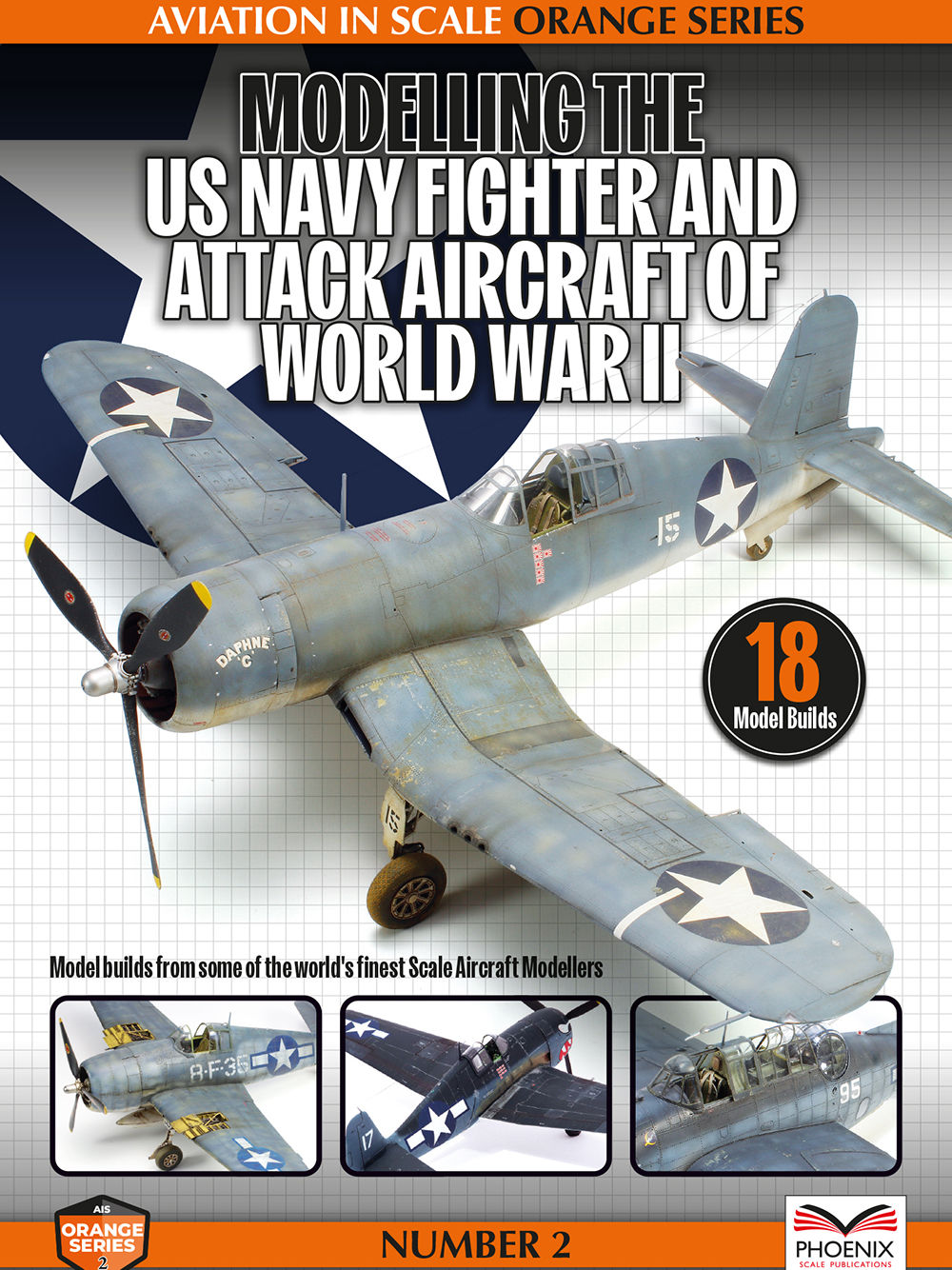 | Phoenix Scale Publications - R2RORANGE02 - No Scale | Modelling the Aircraft of the US Navy in World War 2 More | Aircraft books | Catalogue | £17.99 | |
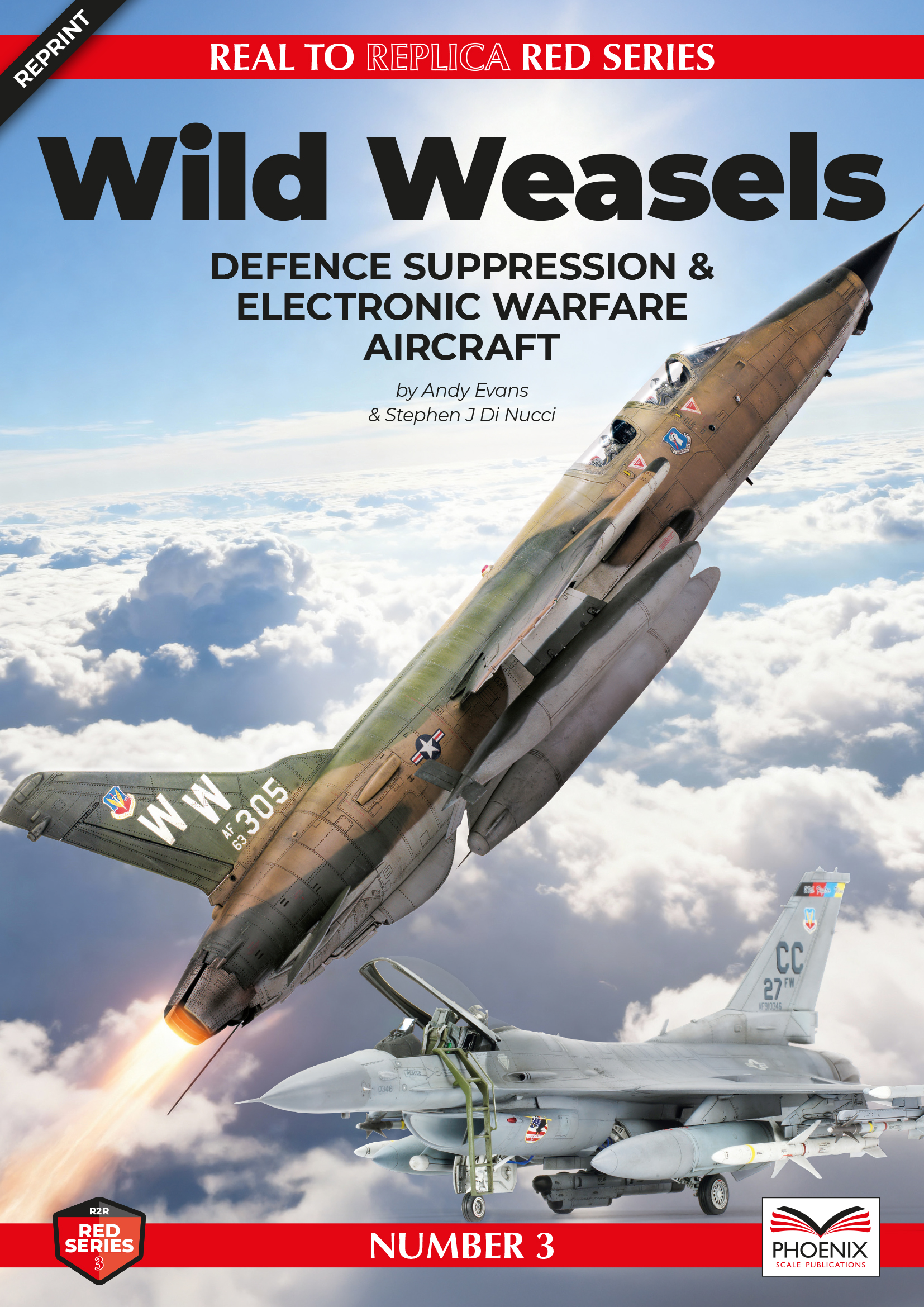 | Phoenix Scale Publications - R2RRED03 - No Scale | LIMITED RE-PRINT! Wild Weasels Defence suppression & electronic warfare aircraft by Andy Evans & Stephen J Di Nucci Real To Replicas Red series Number 3 Suppression of Enemy Air Defences (SEAD) are military actions to subdue enemy surface-based air defences, including not only surface-to-air missiles (SAMs) and anti-aircraft artillery (AAA), but also interrelated systems such as early-warning radar and command, control, and communication (C3) functions, while also marking other targets to be destroyed by an air strike. Suppression can be accomplished both by physically destroying the systems or by disrupting and deceiving them through electronic warfare. In modern warfare SEAD missions can constitute as much as thirty percent of all sorties launched in the first week of combat and continue at a reduced rate through the rest of a campaign. One quarter of American combat sorties in recent conflicts have been SEAD missions. Electronic warfare (EW) on the other hand is any action involving the use of the electromagnetic spectrum (EM spectrum) or directed energy to control the spectrum, attack an enemy, or impede enemy assaults. The purpose of electronic warfare is to deny the opponent the advantage of, and to ensure friendly unimpeded access to the EM spectrum. EW can be applied from air, sea, land, and/or space by manned and unmanned systems, and can target communication, radar, or other military and civilian assets. These airborne roles were in their infancy during World War II and the Korean War but came to prominence during the Vietnam War with the advent of the dedicated 'Wild Weasel' role, a code name given by the United States Air Force to an aircraft, of any type, equipped with anti-radiation missiles and tasked with the SEAD - destroying the radar and surface-to-air missile installations of enemy air defence systems. The 'Wild Weasel' concept was developed by the United States Air Force in 1965, after the introduction of Soviet SAMs and their downing of US strike aircraft over the skies of North Vietnam. 'Wild Weasel' tactics and techniques began their development in 1965 following the commencement of Operation 'Rolling Thunder' and were later adapted by other nations The term 'Wild Weasel' derives from Project 'Wild Weasel', the USAF development program for a dedicated SAM-detection and suppression aircraft. The technique was also called an 'Iron Hand' mission, though technically this term referred only to the suppression attack before the main strike. Originally named 'Project Ferret', denoting a predatory animal that goes into its prey's den to kill it, the name was changed to differentiate it from the code-name 'Ferret' that had been used during World War II for radar counter-measures bombers. In brief, the task of a Wild Weasel aircraft is to bait enemy anti-aircraft defences into targeting it with their radars, whereupon the radar waves are traced back to their source, allowing the Weasel or its teammates to precisely target it for destruction. Since then, SEAD and EW has been used in the Gulf Wars an in NATO operations over Bosnia and Kosovo. The unofficial motto of the Wild Weasel crews is 'YGBSM' " 'You Gotta Be Shittin' Me'. This appears prominently on the logo patch of some squadrons. As the story goes, this was the response of Jack Donovan, a former B-52 EWO (Electronic Warfare Officer), whereupon learning that he was to fly back seat to a self-absorbed fighter pilot while acting as flypaper for enemy SAMs, his exact words were: 'I'm gonna fly with you, and we're gonna shoot a SAM site before it shoots us? You gotta be shittin' me'. In this book we examine the background of these specialised roles from World War II, through Vietnam to modern day, and look at the aircraft that undertake them More | Aircraft books | Catalogue | £27.99 | |
 | Guideline Publications - SAMMCOMP02 - No Scale | Colour Conundrum Compendium No.2 (including previously published material and updates) By Paul Lucas Colour Art work by Mark Rolfe and Jan Polc Author Paul Lucas Guideline Publications is pleased to announce the second 'Colour Conundrum Compendium'. With this further release the Author focuses on three themes: the RAF in the Second World War, the Post War Fleet Air Arm, and related products of the United States' aviation industry that are intertwined with both the other subject areas. To this has been added a completely new chapter on the B-17Cs of 90 Sqn in 1941, which along with the 4 pages of updates presenting new findings on some of the subjects, makes for an additional 12,000 previously unpublished words. Quoting extensively from primary sources, the articles also provide valuable insight into the organisation and administration of the air force, and the many thousands of documents and memos that passed from office to office behind the scenes, providing background and understanding that add depth and focus to a model, as well as an opportunity to understand why a specific colour scheme may have been either selected or rejected. With original research based on surviving records in the National Archive at Kew the aim of these articles is to throw fresh light upon some old questions, to challenge some long held views on aircraft camouflage and markings, and to pose new questions that had arisen as a result of the research to which the answers were not yet known. More | Aircraft books | Catalogue | £23.00 | |
 | Guideline Publications - SAMMCOMP03 - No Scale | Colour Conundrum Compendium No.3 84 pages By Paul Lucas Guideline Publications is pleased to announce the third 'Colour Conundrum Compendium'. This volume collates two groups of articles, the first dealing with the RAF's 'exotic' Tropical Land and Sea Schemes and colours from 1933-1945, while the second deals with the unusual RAF Photographic Reconnaissance Schemes and colours from 1939-1945. As with Compendium No.2, this volume contains new material that has not been previously published in Scale Aircraft Modelling. These two new Conundrums contain material that dovetails into the Tropical Land and Sea Schemes section in such a way that the result is a volume containing more information on the development and possible use of these schemes than has ever appeared in any one place before on three themes: the RAF in the Second World War, the Post War Fleet Air Arm, and related products of the United States' aviation industry that are intertwined with both the other subject areas. To this has been added a completely new chapter on the B-17Cs of 90 Sqn in 1941, which along with the 4 pages of updates presenting new findings on some of the subjects, makes for an additional 12,000 previously unpublished words. Quoting extensively from primary sources, the articles also provide valuable insight into the organisation and administration of the air force, and the many thousands of documents and memos that passed from office to office behind the scenes, providing background and understanding that add depth and focus to a model, as well as an opportunity to understand why a specific colour scheme may have been either selected or rejected. With original research based on surviving records in the National Archive at Kew the aim of these articles is to throw fresh light upon some old questions, to challenge some long held views on aircraft camouflage and markings, and to pose new questions that had arisen as a result of the research to which the answers were not yet known. More | Aircraft books | Catalogue | £23.00 | |
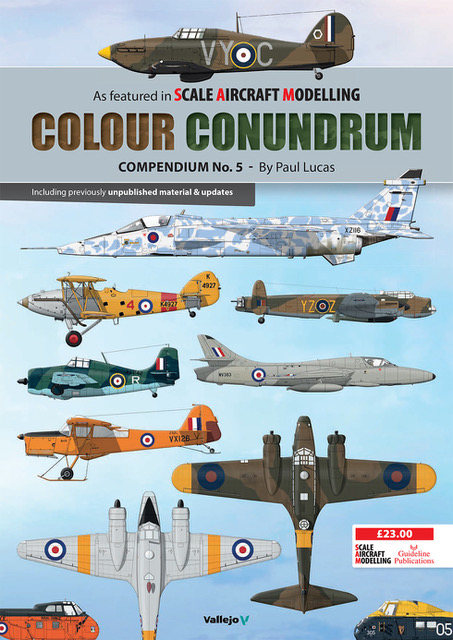 | Guideline Publications - SAMMCOMP05 - No Scale | Colour Conundrum Compendium #5 By Paul Lucas The publication of this fifth 'Colour Conundrum Compendium' in November 2025 marks not only ten years since the first of these 'Colour Conundrum' articles appeared in the December 2015 issue of Scale Aircraft Modelling, but also thirty Years since I first began to research the topic of the Camouflage and Markings of British military aircraft from primary source materials for myself. As with the previous four Colour Conundrum Compendiums, the articles reprinted here have not been reproduced in the sequence that they were originally published, but have been loosely grouped together in three sections to a common theme and arranged in chronological order within that section. The first section is the most diffuse in that it deals with general principles rather than specific subject areas. The 'Detail Markings' chapter spans the period from 1916 to 1970 and the markings described within it are applicable to a wide range of types and applied in conjunction with a wide range of colour schemes. This section also includes the first chapter of new and previously unpublished material to be presented here, a consolidated RAF Vocabulary of Stores Section 33B listing for the Second World War period 1936-1945, the product of some 30 years research. The second section deals for the most part with the Second World War period and contains sub-sections that deal with the RAF and Fleet Air Arm, the latter including the second chapter of new material. The third section deals with the Post War era and includes a significant update upon the topic of Arctic Camouflage made possible by release into the public domain of previously classified documents in the years since the original article was published. It is almost certain that the interpretations offered here will undergo some degree of revision as further information comes to light because any single visit to any archive has the potential to unearth new information that calls into question what we currently think we know. In the meantime, it is hoped that the material offered here will continue to be found challenging, informative, and of interest to aircraft enthusiasts and modellers alike More | Aircraft books | Catalogue | £23.00 | |
 | Squadron Signal - SQS10238 - No Scale | Douglas A-20 HAVOC IN ACTION Doyle. The Douglas A-20 Havoc was a light bomber, attack, and intruder aircraft of World War II. Used by the American Army Air Forces, nearly one-third of the aircraft served with the Soviet military, while many other A-20s fought with the RAF. Taking its first operational shape on the eve of the outbreak of the war in Europe, the 7B prototype actually crashed with a French observer aboard, kicking off a scandal in still-isolationist America where military aircraft were not to be exported. U.S. President Franklin Roosevelt pressed for a change in that restrictive rule and the French, impressed by the plane's rugged dependability and maneuverability, proceeded to place orders for 100 of the aircraft, albeit with modifications that resulted in the DB-7 version. Even before shipments began in November 1939, Paris had increased its order by another 170 aircraft. Many of those, however, found their way into the British RAF, which flew them under the nickname Boston, after the fall of France in June 1940. The U.S. Army Air Corps issued its first contracts for the aircraft they called the A-20 and A-20A, in May 1939, these were only delivered during the months from late 1940 through much of 1941. A dozen A-20As had recently arrived in Pearl Harbor when the Japanese surprise attack destroyed two of them on the ground. Modifications of the design continued and it was after the U.S. entry into the war when the A-20C version, produced by Douglas and Boeing, first were accepted. Of the first 515 A-20Cs, 108 were retained by the U.S. Army Air Forces, while 407 were shipped off to the Soviet Union. Numerous versions of the aircraft followed. About half of the A-20G were sent to the Soviet Union, as were many of the A-20H. In fact the Soviet air forces had more A-20s than the USAAF. Illustrated with 192 vintage photographs and detailed line drawings. 80 pages. (now out of print so be quick!) More | Aircraft books | Catalogue | £14.99 | |
 | Squadron Signal - SQS12051 - No Scale | Mutt In Action (Soft cover) The 4WD M151 was intended to be a lightweight, high-mobility replacement for the M38A1, itself a successor to the famed World War II jeep. Dubbed the Military Utility Tactical Truck or "MUTT" by the military - GIs almost universally referred to the vehicle as a "jeep." The series' service life spanned more than 40 years and four manufacturers, and the vehicles saw service everywhere the U.S. GI was deployed. This volume chronicles the development and field use of the 4WD M151 series in Europe, the Middle East and, of course, there is extensive coverage of the vehicles' service in Vietnam. The photos, many previously unpublished, are augmented by seven line drawings. Illustrated with 220 photographs; 80 pages.[4WD M151A1 Ford Jeep Mutt 4WD M151A2] More | Military vehicle books | Catalogue | £11.99 | |
 | Squadron Signal - SQS27029 - No Scale | M18 HELLCAT TANK DESTROYER (Soft cover) Though relatively lightly armored, Buick's M18 Hellcat could top 55 MPH, making it the fastest armored fighting vehicle fielded during World War II. The Tank Destroyer men who crewed these vehicles used this speed and the Hellcat's 76mm high-velocity cannon to destroy German tanks; firing at the vulnerable areas of the enemy, and then racing away before coming under fire themselves. This volume examines the three principal variants of the Hellcat - the preproduction T70, early M18, and late M18, using ample visual reference to document these vehicles - and their differences - inside and out. Engine and drive train, driver's compartment, weapons and sighting systems, and stowage - both interior and exterior - are all carefully presented. Illustrated with 230 color photographs, 5 color photographs, 5 line drawings, and 4 profiles; 80 pages. More | Military vehicle books | Catalogue | £16.99 | |
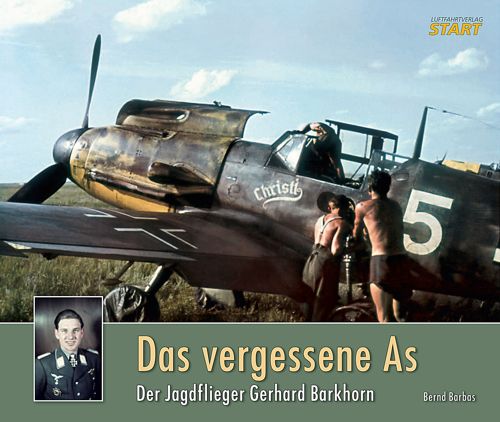 | Start - STARTDAS - No Scale | Das vergessene As. Der Jagdfliger Gerhard Barkhorn by Bend Barbas The Forgotten Ace Fighter Pilot Gerhard Barkhorn Despite the fact that Gerhard Barkhorn scored a total of 301 victories while flying with Jagdgeschwader 52 on the Eastern Front, making him the second most successful fighter pilot of the Second World War after Erich Hartmann, today he is almost forgotten. This book describes Barkhorn's wartime experiences with JG2 on the Channel, JG52, JG6 and finally JV 44. Excerpts from original combat reports enable the reader to feel the drama of the events that happened back then. Barkhorn's career in the postwar Bundeswehr is also examined. Published in this book for the first time are numerous color slides taken by Barkhorn during his service with JG52, as well as many black-and-white photos. It also contains color side-views of every aircraft flown by Barkhorn. It is a book that examines all aspects of the fighter ace. More | Aircraft books | Limited Availability | £54.99 | |
 | Warpaint Series - WPAV01 - No Scale | Warpaint Aviation #1 - Fall of Iron Edited by Gary Hatcher & Chris Meddings. Fall of Iron is the first in a series of compendium volumes covering military aircraft with a focus on some of the less well-covered subjects. The series is designed to offer a brief one-stop historical reference combined with colour artwork and is aimed primarily scale modellers but offers plenty for the general aviation enthusiast too. This first volume looks at some of the twin-engined medium bombers of World War Two and includes a selection of profiles written by Richard Mason, as well as a ground-breaking piece of research on the early B-25 Mitchell by Brian Derbyshire that offers an incisive look into the business of wartime mass-production and the vast number of changes to the ensuing airframes brought about as a result of ongoing combat experience. Other aircraft covered include the rarely discussed Tupolev SB-2, the Mitsubishi G4M Betty, Bristol Blenheim, Savoia-Marchetti SM.79, Petylyakov Pe-2 and the Handley Page Hampden. Many of these aircraft have been overlooked as 'also-rans' by history and the scale modelling community but an examination of similar types designed for similar roles from various Axis and Allied air forces demonstrates just how much aircraft development kept pace during the conflict, and how despite their clear external differences aircraft designers all over the World were drawing the same conclusions as a result of experience gained in a shooting war. Comprehensive enough to inform but concise enough to be useful, Fall of Iron presents a picture of Wartime bomber development that will help the reader understand the essential role these unsung machines played and the sometimes remarkable use that was made of them. This books is 92 pages More | Aircraft books | Catalogue | £18.00 | |
 | Warpaint Series - WPS10 - No Scale | Vickers Wellington AUTHOR: Hall, A FORMAT: 30pp col/Bw/dwgs 297x210 Pb Designed with both the aircraft enthusiast and the modeller in mind, this series offers a comprehensive and accurate account of a single aircraft type within each issue. Drawings provided in both colour side and plan view with 1:72 scale plans, kit decal and accessory lists, squadrons, units and individual aircraft serials in codes, etc. The Vickers Wellington was one of those aircraft that seemed to go on for ever. In spite of the glamour and publicity gained by the Lancaster & Halifax, Wellingtons flew operationally for much longer during World War 2 and were still in side spread use for some considerable time afterwards as a trainer aircraft both for pilots and multi-engine aircraft and as crew trainers. (Mk.IC Mk.II Mk.III Mk.IV Mk.VIII Mk.X Mk.XIV] More | Aircraft books | Catalogue | £13.00 | |
 | Warpaint Series - WPS105 - No Scale | Sopwith Pup by Matthew Willis (Hall Park Books Limited) By Matthew Willis The Sopwith Pup, as it is unofficially but universally known, was one of the first true British fighter aircraft, and one of the most significant of the First World War. It played a key part in maintaining control of the skies over the Western Front during and after the RFC's toughest period, Bloody April, 1917. Its superb flying qualities kept it competitive as ever-faster and more powerful opposition appeared, and it played an unglamorous but important role in the defence of the UK against zeppelin and heavy bomber attacks, and was fundamental to the development of ship-based aviation. With the very well-established categories of military aircraft that are familiar today, it is hard to comprehend the world in which the Pup was born, where these clear delineations did not exist. Certainly the idea of the fast, agile single-seat fighter was barely thought of when the Pup's outline was first chalked on the floor of the experimental workshop at Sopwith's Kingston-upon-Thames premises in 1915. The new aircraft was known as the 'Sparrow', was powered by a 50hp Gnome rotary. Test pilot Harry Hawker took the aircraft to Brooklands and amazed trainee RFC pilots by flying it under the bridge across the Byfleet Banking. It was fully aerobatic and capable of a speed just shy of 85mph despite the low engine power. It is unclear whether Sopwith intended the machine to form the basis of a military aircraft but in any event, its performance and handling, even on such low power, must have recommended it for that purpose. The 'Sparrow' therefore became the progenitor of the aircraft that would become the 'Pup'. It was around the time of the prototype's first appearance that the Pup seems to have gained its popular name. Brigadier-General SeftonBrancker, then the RFC's Director of Air Organisation, is reputed to have remarked, on seeing the prototype Scout beside its larger sibling at Brooklands, 'Your 1 Strutter has had a pup!' For all its value as a front line fighting aeroplane, the Pup had a potentially even greater impact on the development of naval aviation; in particular, the sometimes tortuous path of launching aircraft from, and returning them safely to, ships at sea. Moreover, the Pup became one of the more successful operational aircraft in this fledgling area of combat. This is the first WWI title in the series and includes all the usual Warpaint features historical text, modellers glossary, colour artwork by Richard Caruana and a three page colour walkaround by author Matthew Willis. More | Aircraft books | Catalogue | £14.00 | |
 | Warpaint Series - WPS109 - No Scale | Douglas C-54/R5D Skymaster and DC-4 The Douglas C-54 Skymaster, a direct adaptation of the civilian DC-4 while still on the production line, became the outstanding long-range four-engined transport aircraft of the Second World War. With its origins as a civilian airliner, it served chiefly on the long-distance haul of Air Transport Command of the United States Army Air Forces on the Atlantic and Pacific routes, where it cut flight hours between the United States and the theatres of operation thousands of miles away. The reliability of its airframe and engines was put to good use also on the India-China 'Hump' route, which was described as the most arduous of all within the responsibility of Air Transport Command. Like its smaller Douglas stable mate the C-47, the C-54 boasted legendary reliability, and was the preferred long-range transport from among its contemporaries. A special VIP version was built for use by the President of the United States, Franklin D Roosevelt. The Royal Air Force also used it in small numbers during the Second World War, one of which was outfitted as a VIP aircraft for use by Prime Minister Winston Churchill. The U.S. Navy acquired it under the designation R5D. All production having been commandeered by the USAAF on the outbreak of war, no civilian DC-4s flew during the war. After 1945, however, hundreds became available for use by civilian airlines, which converted them into airliners with passenger seating and comfort, or used them as freighters. Douglas re-opened its production line for new builds in 1946, but the cheap price of the second-hand market kept back this production to only 79 examples. Also in 1946 Canadair ventured to build a Rolls-Royce Merlin-powered version, which it named North Star, used by both military and commercial operators. The DC-4 was a common sight in the immediate post-war period up to the 1950s flown by leading European and United States airline liveries, until it started to be replaced by Douglas's own DC-6 and DC-7. The aircraft came in handy during the 1948-49 Berlin Airlift, during which it hauled food supplies and even coal to the beleaguered German city, and again during the Korean War, airlifting the wounded to Japan and the United States. Dozens of variants of the C-54 were employed in a wide variety of non-combat roles such as air-sea rescue, scientific and military research and missile tracking and recovery. No fewer than 1,315 examples of Skymasters were built in the United States and Canada, flown by 35 air arms of other countries in a variety of versions and roles, and full information on serials, versions and other remarks are all included in very detailed tables in this book. The Aviation Traders Carvair cross-Channel car ferry is not forgotten in this account, and a chapter is dedicated to this unique aircraft converted in Britain from standard C-54s. This new 96 page Warpaint publication written by Charles Stafrace contains 200 colour and B&W photos plus eleven pages of colour artwork by Richard Caruana. More | Aircraft books | Catalogue | £19.50 | |
 | Warpaint Series - WPS112 - No Scale | Douglas A3D Skywarrior. by Charles Stafrace Never glamorous and not receiving the recognition showered on its deck mates, the shipboard Douglas A3D Skywarrior will be remembered by U.S. Navy fans and historians for many reasons, most of all because it figured prominently in the Cold War crises of the late 1950s and early 1960s, culminating in the Vietnam War that dragged on until the mid-1970s. The Skywarrior will also be remembered for its longevity, the first examples having shared deck space with FJ Furies aboard Second World War-vintage carriers in the 1950s, and the last examples mingling with F-14 Tomcats on nuclear-powered Nimitz Class carriers in 1987. However, this magnificent aircraft, affectionately known as the 'Whale', achieved fame in roles different from that for which it had been designed. After its strategic nuclear bomber role faded owing to changed U.S. Navy and Pentagon policies, the Skywarrior excelled in other roles entrusted to it such as aerial tanking and electronic jamming, electronic and photoreconnaissance, vital tasks which it carried out faithfully in the first line of battle for several years from 1965 onwards. Indeed, the RA-3B version was also used during the 1991 Operation Desert Storm. Some examples were converted into bombardier trainers and VIP staff transports, while others found their way to experimental establishments and aerospace companies as testbeds for various systems and weaponry until 2011, resulting in many strange nose shapes and radomes. The Skywarrior will be recorded, too, as being the heaviest jet aircraft to ever operate from any U.S. Navy aircraft carrier. It served with several types of squadrons - VAH, VAQ, VAK, VAP/VCP, VQ and VR. All versions and squadrons, both shipboard and land-based, are listed in this new Warpaint series by Guideline Publications, written by Charles Stafrace and illustrated by Richard J Caruana. Apart from the usual detailed text that describes each version and its operational service, several other tables are included in this profile, including production serials, versions lists, squadron use and Appendices giving detailed data on each Skywarrior cruise, specifications, and the 1962 type re-designation of U.S. Navy aircraft. No fewer than 200 B&W and colour photos, many of which are being published for the first time, illustrate the various versions of this versatile aircraft. More | Aircraft books | Catalogue | £19.00 | |
 | Warpaint Series - WPS115 - No Scale | Armstrong-Whitworth Albemarle By Tony Buttler AMRAeS The Armstrong Whitworth Albemarle is something of an 'odd man out' in the list of British World War Two military aircraft. It was manufactured entirely in a special factory as sub-contract work, to save light alloys it was intended to make use of steel tube and wood in its construction, and its service career was undistinguished. As a result the Albemarle is a rather forgotten aircraft and yet it made an important contribution during the latter part of the conflict. This new Warpaint will hopefully make enthusiasts more aware of the background and career of this unusual aeroplane. This book is written by Tony Buttler and is superbly illustrated by Mark Rolfe. More | Aircraft books | Catalogue | £13.00 | |
 | Warpaint Series - WPS122 - No Scale | Albatros D.I - D.III By Dave Hooper The Albatros D.III was flown by many top German aces during World War One, including Wilhelm Frankl, Erich Lowenhardt, Manfred von Richthofen, Karl Emil Schafer, Ernst Udet, and Kurt Wolff and was the preeminent fighter during the period of German aerial dominance known as 'Bloody April' 1917. The D.III entered squadron service in December 1916, and was immediately acclaimed by German aircrews for its manoeuvrability and rate of climb. Albatros built approximately 500 D.III aircraft at its Johannisthal factory, but In the spring of 1917 D.III production shifted to Albatros' subsidiary, Ostdeutsche Albatros Werke (OAW), to permit Albatros to concentrate on development and production of the D.V. Between April and August 1917, Idflieg issued five separate orders for a total of 840 D.IIIs with the he OAW variant undergoing its proofing trials in June 1917. Production commenced at the Schneidemuhl factory in June and continued through December 1917, with OAW aircraft distinguishable by their larger, rounded rudders. Peak service was in November 1917, with 446 aircraft available on the Western Front. This is the second Great War subject to be added to the Warpaint list and has been authored by Dave Hooper, founder of the IPMS Great War Special Interest Group and a long-standing contributor to aviation modelling journals, whose comprehensive knowledge and attention to detail will ensure this current title will maintain the high standards that have made Warpaint one of the most respected and sought after aviation reference sources. Includes a full walkaround of a replica D.III and scale plans and profiles by Jan Polc. More | Aircraft books | Catalogue | £15.00 | |
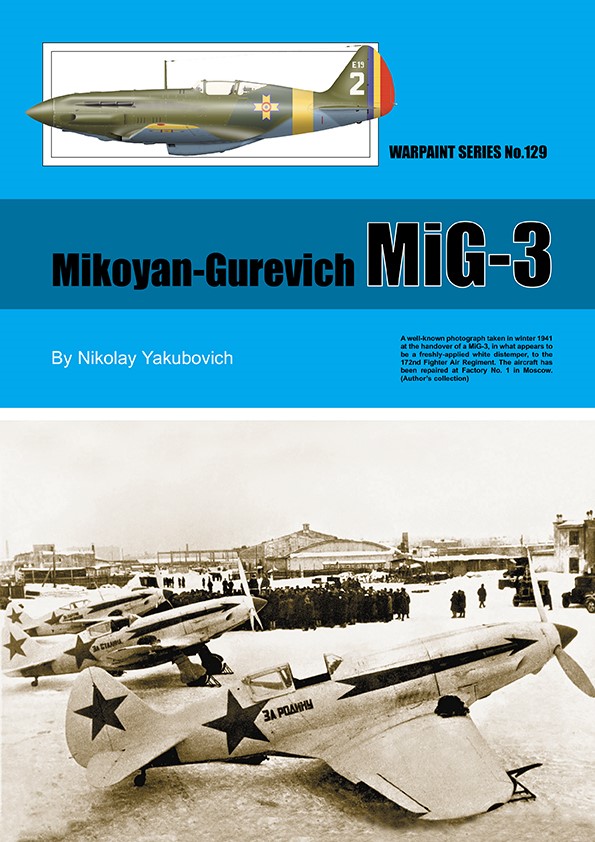 | Warpaint Series - WPS129 - No Scale | Mikoyan-Gurevich MiG-3 By Nikolay Yakubovich By the time Operation Barbarossa unfolded on 22 June 1941 some 981 MiG-3s were in service with the Soviet Air Forces (VVS), the Soviet Air Defence Forces (PVO) and Soviet Naval Aviation, but the aircraft had undergone a difficult development and was an unforgiving machine to fly in combat. It had been designed for high-altitude but combat over the Eastern Front was generally at lower altitudes, where it was outmatched by its chief adversary, the Bf-109. Combat losses were high, and over time, the aircraft were concentrated in the PVO, where its disadvantages mattered less, despite which the type had been replaced in service by the end of the conflict. This latest book in the Warpaint series covers the aircraft comprehensively, with an impressive historical text, and a selection of photographs that will be essential for any modeller considering a project. Drawing on original Soviet sources and archives this is an authoritative and comprehensive account of one of the great fighter aircraft of World War 2. Once again author Nikolay Yakubovich has provided an authoritative text backed up by historical images and colour artwork and scale drawings to the same standard by artist Andrey Yurgenson. More | Aircraft books | Catalogue | £17.00 | |
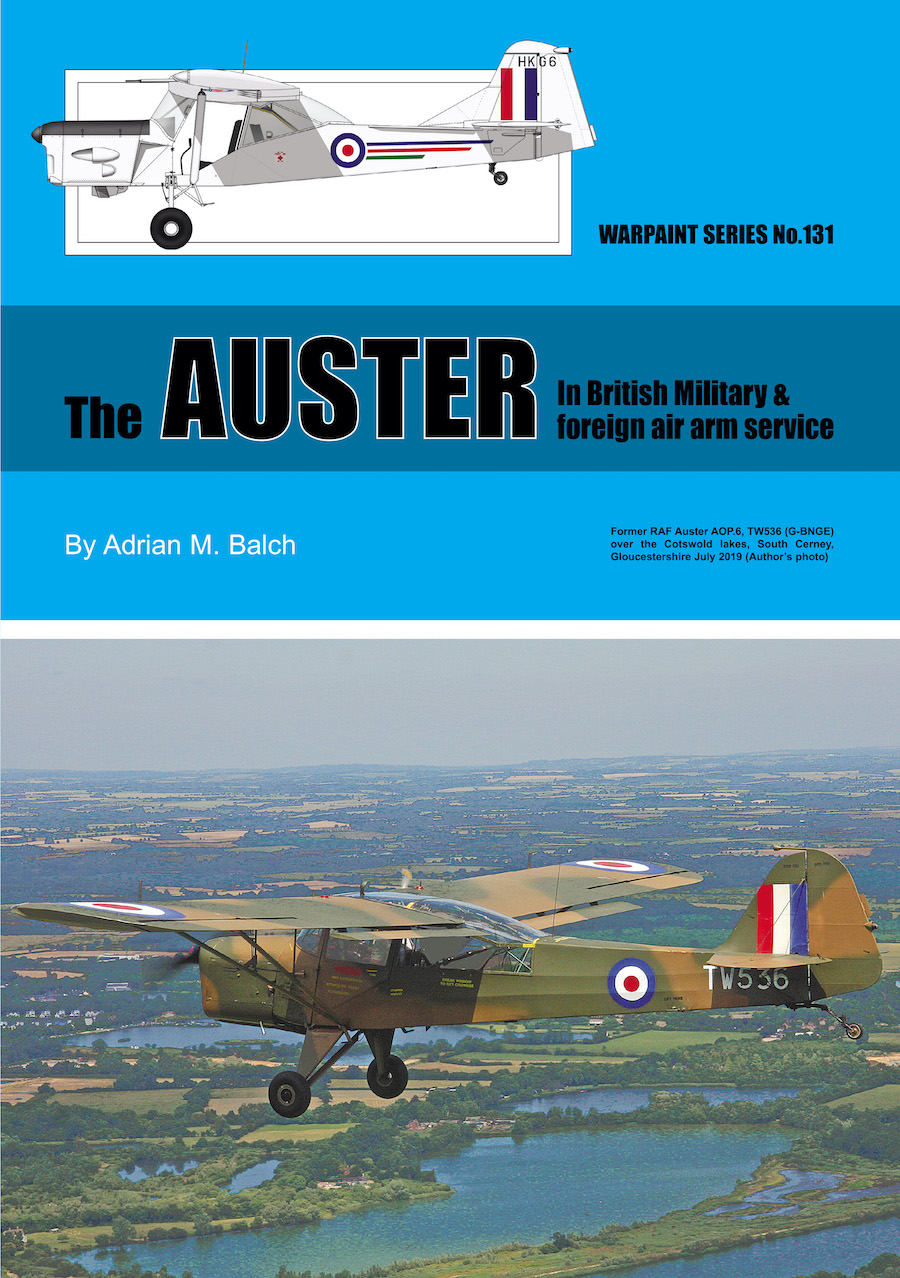 | Warpaint Series - WPS131 - No Scale | The Auster, In British Military & Foreign Air Arm Service. Author Adrian M Balch 64 pages, 15 pages of Colour Profiles Over 150 many never seen before images Stemming from the original American Taylorcraft design, the British Auster is arguably as well known and famous as the Tiger Moth, being built at the right time to provide a vital role during WW2 in the Air Observation Post role, spotting and reporting artillery positions, particularly during D-Day and through decades of post-war conflicts worldwide. Founded in 1938 at the Britannia Works, Thurmaston near Leicester, England, as Taylorcraft Aero-planes (England) Limited, they made 1,604 high-wing Taylorcraft Auster monoplanes which were built during World War II for the armed forces of the UK and Canada. The type has proved to be versatile and adaptable to worldwide conditions being fitted with wheels, floats or skis as per the Trans-Antarctic Expeditions, which are all recorded within. This is another comprehensive Warpaint book by Adrian Balch, which covers the design and de-velopment of the Auster, highlighting the variants that were used in military service by the RAF, Army Air Corps and air arms around the world, culminating in the variants built by BEAGLE. Nearly 150 photographs, many rare and never seen before, illustrate the type in military service, supported by 13 pages of colour profile drawings and plans by artist Sam Pearson. More | Aircraft books | Catalogue | £17.00 | |
 | Warpaint Series - WPS141 - No Scale | Vickers Viking, Valetta & Varsity In Military Service. By Adrian M. Balch £19.00 56 pages The Vickers VC.1 Viking was a British twin-engine short-range airliner derived from the Vickers Wellington bomber and built by Vickers-Armstrongs Limited at Brooklands near Weybridge in Surrey. After the Second World War, the Viking was an important airliner with British airlines, pending the development of turboprop aircraft like the Viscount. The Valetta was a military derivative of the Viking developed in transport and training variants for the Royal Air Force, while the Varsity was a versatile twin piston-engined aircraft developed from the Viking and Valetta but with a tricycle undercarriage and ventral pannier for bomb-aimer training, among other changes. It was brought into RAF service in 1951 for crew training as a replacement for the Wellington T.10. This Warpaint relates the history of all three types, focussing on the military operators, as per the series title. It is profusely illustrated by 125 top quality photographs, nearly all in colour, from the author's extensive photograph archive and supported by excellent colour profiles and plans by Sam Pearson. More | Aircraft books | Catalogue | £19.00 | |
 | Warpaint Series - WPS143 - No Scale | Boeing B-29 & B-50 Superfortress 120 pages Having launched the signature bomber for use in the European Theatre, Boeing embarked on a voyage into the unknown. Bringing together numerous untried technologies the Boeing Aircraft Company launched its most significant bomber, the B-29 Superfortress. Although beset by development problems and having suffered the loss of the prototype and its Chief Test Pilot Eddie Allan, the company pushed on to create the first long-range strategic bombers. Once the Pacific Islands had been captured the B-29 Bomb Groups began bombing raids on the Japanese Home Islands. On the other side of the Himalayas further bomb groups launched attacks against targets in Japan. As combat experience grew the focus turned to destroying as much as possible of its production facilities, mainly by firebombing areas known to have these targets. And then the world changed forever. The use of two atom bombs against Hiroshima and Nagasaki had shown the power of the atom. When the Japanese finally surrendered the Cold War arrived to take its place. War in Korea followed, being the swan song for the B-29 while its younger sibling, the B-50, assumed the mantle of Strategic Defence, a position it held until the B-47 Stratojet arrived One of the largest aircraft of World War II, the B-29 remained in service in various roles throughout the 1950s, being retired in the early 1960s after 3,970 had been built. The Royal Air Force flew the B-29 with the service name 'Washington from 1950 to 1954' while the re-engined B-50 Superfortress Lucky Lady II became the first aircraft to fly around the world non-stop, during a 94-hour flight in 1949. The Soviet Union produced 847 Tupolev Tu-4s, an unlicensed reverse-engineered copy of the B-29. This latest in the essential Warpaint series offers a comprehensive look at the famous bomber in all its guises, with history, development, service details, and colour artwork and scale plans by Sam Pearson. More | Aircraft books | Catalogue | £25.00 | |
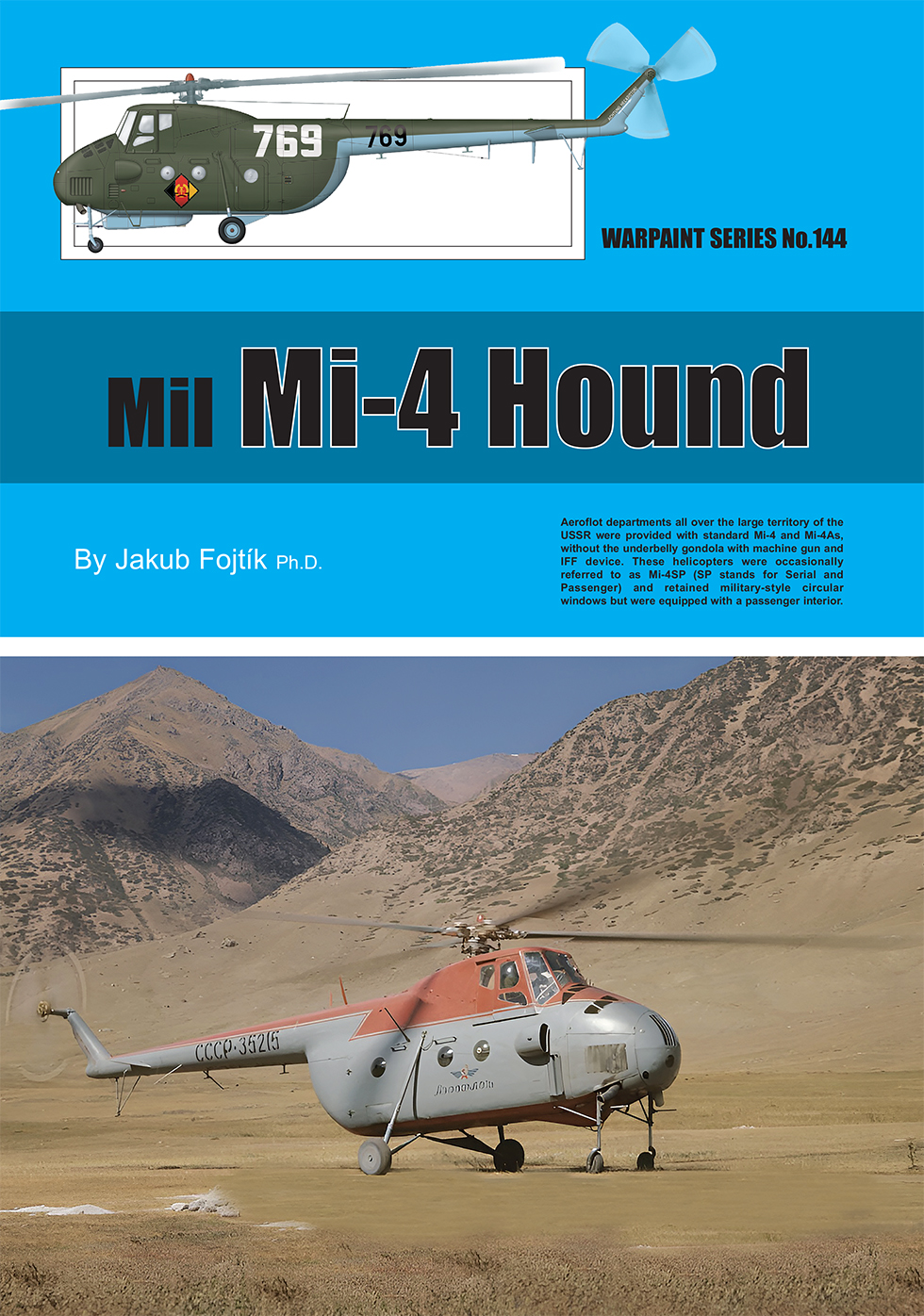 | Warpaint Series - WPS144 - No Scale | Mil Mi-4 By Jakub Fojtik. This latest authoritative work of reference to join the Warpaint series charts the rise of the helicopter in both military and civilian use throughout the vast territories of the Soviet Union from the mid-1950s. The Mi-4 was the first successful series production type, and its widespread use with the Soviet Army and Navy saw fundamental changes to tactics and doctrine. Lavishly illustrated with original images, the story unfolds in detail and tells how the Mi-4 went on to serve globally, ranging from China to Cuba, through Africa, India, and the Middle East, and was to remain ubiquitous both in military and civilian use throughout the Eastern Bloc, and with Soviet client states across the World. The 88-page book tells of the aircraft's inception, development, and all the many facets of its long service. Few aircraft can have achieved so much yet remained so unsung, but author Jakub Fojtik brings the story to life with a comprehensive and informed text that makes this book the definitive reference on the type, including all the usual Warpaint features, with artwork and scale drawings by Sam Pearson. More | Aircraft books | Catalogue | £20.00 | |
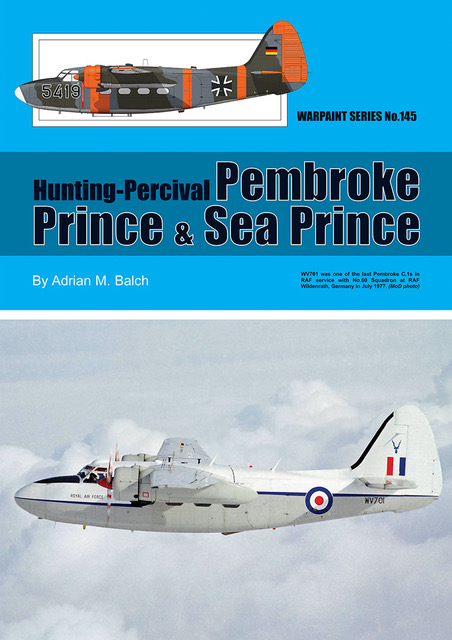 | Warpaint Series - WPS145 - No Scale | Hunting-Percival Pembroke, Prince & Sea Prince 44 pages The Pembroke originated as a development of an idea sponsored by Lord Brabazon towards the end of World War II, when he chaired a committee whose brief was to assess the civil aviation requirements after the end of hostilities, and recommended several specifications for civil aircraft required to keep Britain ahead for both home and export sales. A twin-engined transport emerged from Percival called the Merganser in 1947. This was refined and in 1950 the Prince was born, being immediately snapped up by companies as there was nothing similar on the market at the time. The Royal Navy were quick to order the type as a communications aircraft and could see the potential for it as a navigation trainer. With an extended nose for radar and other equipment, Percival were quick to assess that as being suitable. Named the Sea Prince, the Royal Navy ordered three of the early short-nosed variant as the Sea Prince C1 for communications, forty-one of the T.1 version built for navigation and anti-submarine training, and four C.2s as a transport version of the Sea Prince T1. The RAF, seeing this interest, finally ordered forty-five of the type naming it 'Pembroke', the last of which was completed in February 1958. The Pembrokes were used for light transport and communications, and were also used as pilot trainers and flying classrooms. Overseas, ten countries ordered the type for similar roles in their Air Forces in Australia, Belgium, Denmark, Finland, Germany, Sudan, Sweden, Rhodesia, Thailand and Zambia. This is another Warpaint by author Adrian Balch, comprehensively illustrated with over 100 top quality photographs from his extensive archives, once again being illustrated by accurate quality colourful profile drawings by artist Sam Pearson including 5-view line drawings/plans making this a must for the aviation historian and modeller. More | Aircraft books | Catalogue | £17.00 | |
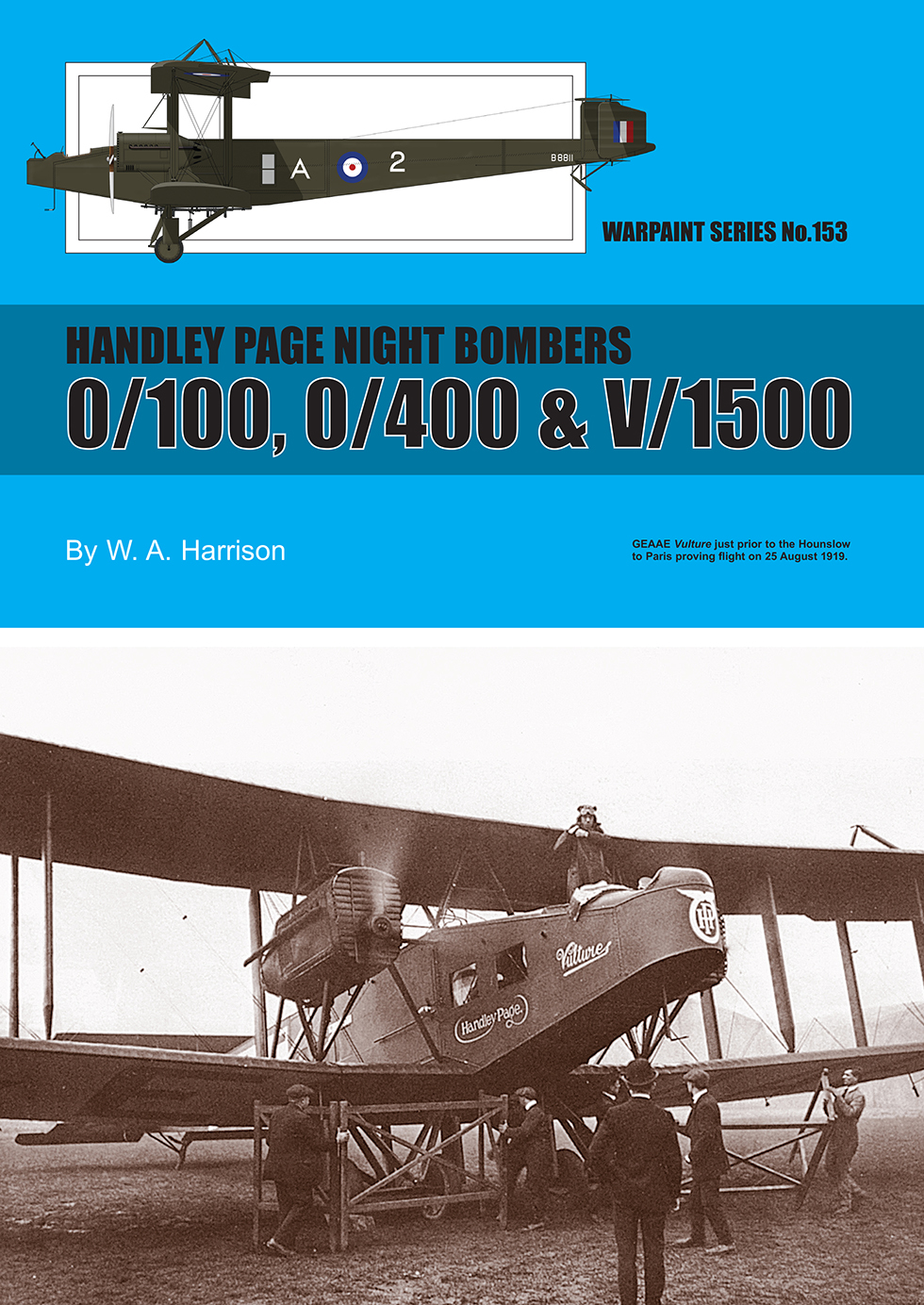 | Warpaint Series - WPS153 - No Scale | Handley Page Night Bombers 0/100, 0/400 & V/1500 Author: W.A. Harrison By William Harrison The Handley Page 0/100, 0/400 and V/1500 were the first true heavy bombers of the Royal Flying Corps and Royal Air Force during the First World War, giving Britain the long-range striking power needed for strategic bombing deep into Germany. Designed initially with a 114ft wingspan (later 100ft), folding wings, armour protection and twin engines, the early 0/100s were underpowered and slow. Performance improved dramatically with the arrival of Rolls Royce Eagle engines. Bomb capacity also grew from six 100lb bombs to loads of sixteen 112lb, and eventually to 230lb, 250lb, 550lb, 1,600lb and even 3,360lb weapons. After successful trials, the 0/100 entered service and was refined into the 0/400, which crews regarded highly. These aircraft enabled the RFC/RAF to take the air war to the enemy, but demands for even greater range led to the creation of the enormous V/1500, capable of reaching Berlin. The war ended before such a raid could be flown, and the type saw little operational use. After the Armistice, surplus 0/400s were converted into civil transports, becoming the O/7, O/10 and O/11 variants. They were used in early commercial aviation and exported to countries including Argentina, Australia, China, India and South Africa. One 0/400 even carried T. E. Lawrence during his return from the Versailles Conference, though the aircraft later crashed without injuring him. By 1922 most Handley Page bombers and their civilian derivatives had disappeared, but they had already laid the foundations of long range military and civil aviation. Warpaint 153 follows the usual format telling the full history of the development and service, and includes a walkaround compiled from original images of aircraft in service, and colour profiles and plans by Sam Pearson. More | Aircraft books | Catalogue | £17.00 | |
 | Warpaint Series - WPS66 - No Scale | Bristol Bulldog Mk.II Although there were only ten squadrons equipped with the Bristol Bulldog during the drastic cut back of RAF fighter strength following World War 1, they were certainly the most colourful. Each unit had its identification colours shown on the fuselage and upper wing surfaces and squadron and flight commanders had individual colours on the tail unit. But that was not all. As new squadron commanders took over at the end of a tour of duty of their predecessors, they made changes to the squadron markings making this period one of the most colourful and perhaps controversial of all the pre-war squadron markings. The history of the Bulldog is also of considerable interest as it was exported or built under licence in a number of overseas countries thus adding to the profusion of colour schemes of that period. Richard J.Caruana has detailed the history of the Bulldog and given a great variety of colour schemes that were used. In fact this Warpaint can be said to have more colour side view drawings than most others of its size in the series. Centre spread drawings show the variations that were built at both home and overseas and there is a list of all squadrons and units with representative serial numbers plus a list of available kits and decals that have been produced over the years. More | Aircraft books | Catalogue | £12.50 | |
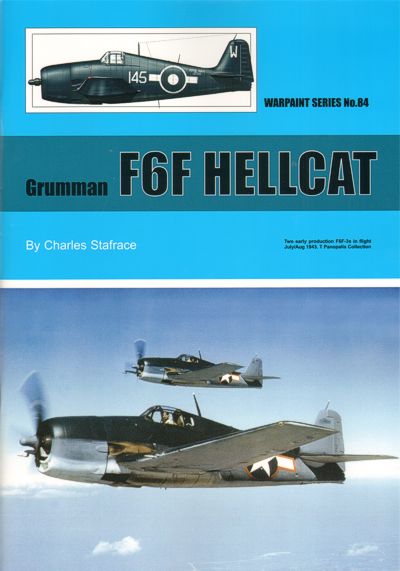 | Warpaint Series - WPS84 - No Scale | Grumman F6F Hellcat. Even before Pearl Harbor the U.S. Navy realised that it would be hard for its existing fighters, the F2A Buffalo and F4F Wildcat, to deal with Japan's shipboard fighters, especially the A6M Zero. The situation was such that in June 1941 the U.S. Navy placed orders with Grumman 's 'Iron Works' for the F6F Hellcat before the first prototype had even flown. It was the right decision for Grumman 's new fighter, although much larger and heavier than the Zero, proved to be the latter's nemesis, so that the American fighter's better fire-power, sturdiness, range and speed more than matched the Zero's agility. Its entry into service was also timely, for the much- awaited F4U Corsair suffered from a flawed carrier deck capability, so that the Hellcat remained the main carrier fighter of the U.S. Navy throughout the rest of the Second World War and established air superiority in the Pacific. Indeed, in barely two years of war it destroyed no less than 5,271 enemy aircraft of the 6,477 claimed by the U.S. fighters, attaining a fantastic kill-to-loss ratio of 19.1:1, and fully deserving the nickname of 'Ace-Maker'. It certainly was the most important Allied shipboard fighter of that world conflict. The Hellcat was used also by the Royal Navy's Fleet Air Arm, during the war, while in the postwar period it saw service with the French Aeronavale, which used them in Indochina, as well as with the Uruguayan Navy, the latter flying them until 1961. [F6F-3 F6F-5 F6F-3N F6F-5N] More | Aircraft books | Catalogue | £16.50 | |
 | Warpaint Series - WPS87 - No Scale | Grumman TBF Avenger. No. 87 in the Warpaint series by Charles Stafrace Without doubt the Grumman Avenger was the most successful torpedo-bomber of the Second World War, and certainly one of the wartime aircraft that could most sustain punishment and yet make it back to base. Built by both Grumman under its TBF designation and by Eastern Division of General Motors under the TBM designation, no less than 9,837 examples were constructed until production ceased in August 1945. The Avenger saw action in all theatres of the Second World War with the United States Navy and Marine Corps, Fleet Air Arm of the Royal Navy, and by the Royal New Zealand Air Force. Despite its designated role of torpedo-bomber, the Avenger was more commonly used in roles other than dropping tin-fish. It bombed, laid mines, gave ground support, directed drones, hunted submarines, and in the postwar period was employed as a personnel carrier, bulk carrier, airborne early warning, Carrier On-board Delivery, and other tasks by the major navies as well as by other air forces and naval air arms. It is also significant that after the last Avengers left Fleet Air Arm service in 1946, the Royal Navy again found a useful role for the aircraft for antisubmarine tasks in 1953. The U.S. Navy even needed its last examples of Avengers for specialized tasks during the Korean War. No doubt, carrying out these diverse tasks for so many years in a difficult environment was made possible by the Avenger design's adaptability to change, and thanks to the traditional strength of its Grumman airframe. More | Aircraft books | Catalogue | £17.00 | |
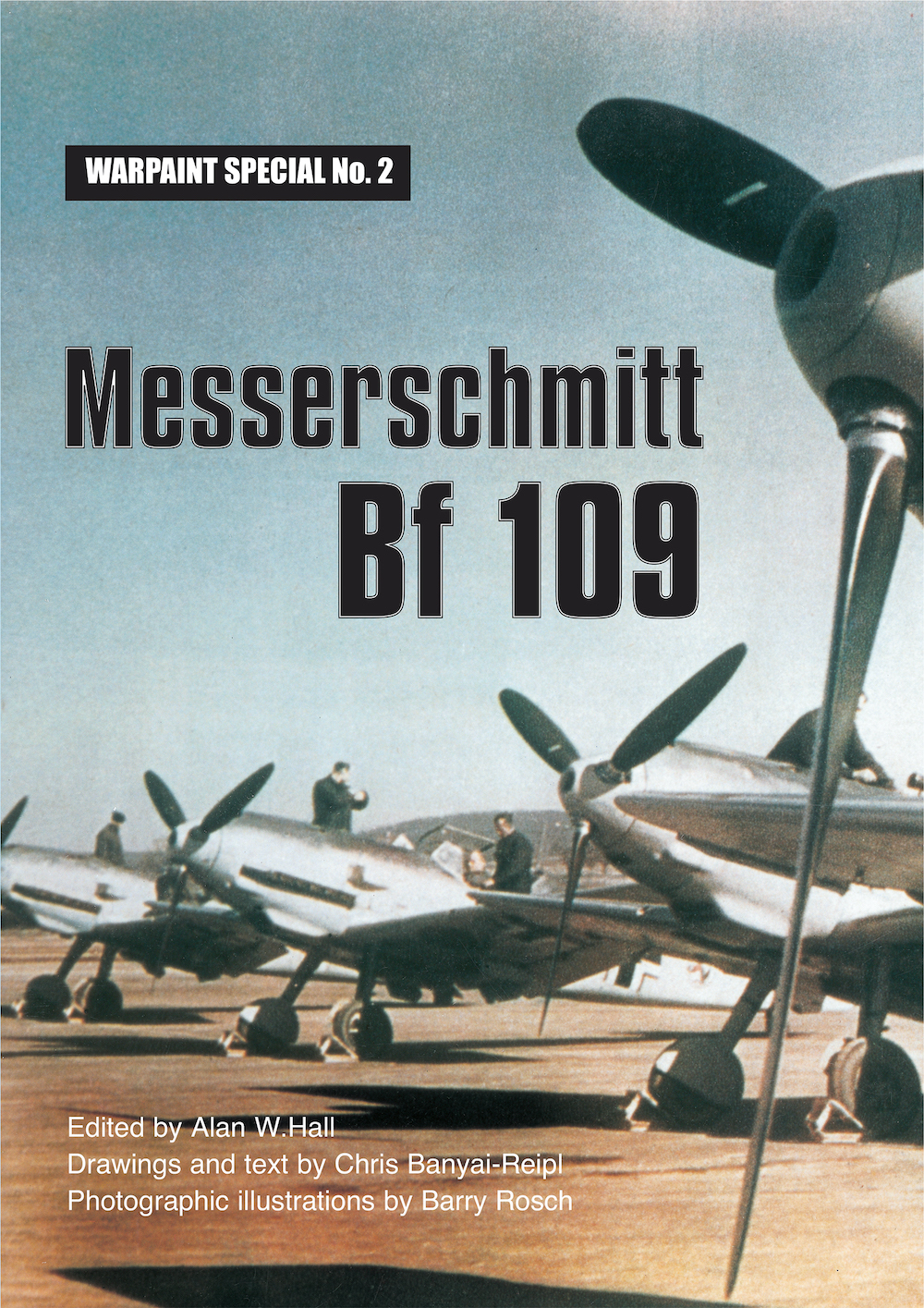 | Warpaint Series - WPSSP02 - None | Messerschmitt Bf-109. When it comes to famous aircraft of the 20th Century, one that is sure to come to the top of the list is the Messerschmitt Bf-109. With a career spanning nearly 20 years and over 30.000 examples of being built the Messerschmitt Bf-109 is probably the most recognised of all the World War 2 fighters. Ironically this German fighter started and ended its life being powered by British engines. More | Aircraft books | Catalogue | £25.00 | |
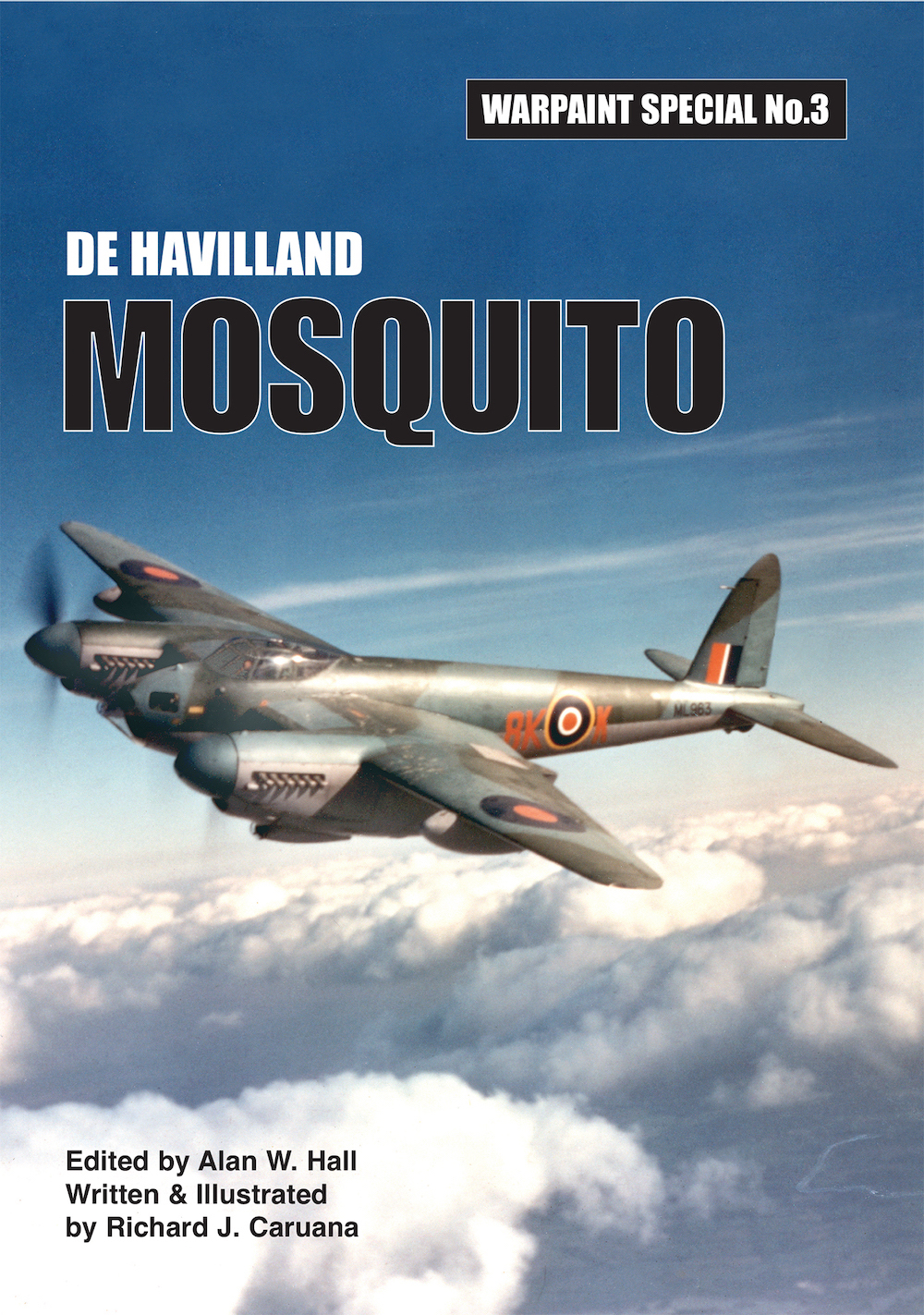 | Warpaint Series - WPSSP03 - None | de Havilland Mosquito Mks I to TT.39 Written and Illustrated by Richard J Caruana 84 pages Born during the dark days of World War 2, the Mosquito was the result of revolutionary thinking that started way back in 1936. Although originally designed and built as a bomber, it was even- tually adapted to any role imaginable where speed was of an essence. In fact its only defence was its capability of outpacing enemy interceptors. A four-cannon and four- gun fighter version was so successful that it was developed into a fighter-bomber that could even carry rockets. It also featured as an unarmed photo-reconnaissance version, as a transport, trainer and target tug. No less than 7,781 Mosquitos were built in Britain, Canada and Australia covering over 40 ver- sions with the last example leaving De Havilland's facility at Chester in November 1950.84 pages More | Aircraft books | Catalogue | £25.00 | |
 | Warpaint Series - WPSSP06 - None | Dambusters and the Avro Lancaster 64 pages By Desmond Brennan Few military exploits have captured the public's imagination as much as the famous 'Dambusters' raid on the night of 16 " 17 May 1943. To mark the 80th anniversary of the escapade Guideline present Dambusters and the Lancaster, a comprehensive study of the raid itself, the background and planning that led up to it, and the men and machinery that took part, as well as a reasoned study of the aftershocks. Author Des Brennan, one of our most respected writers on military aviation history, has gathered together all the threads of this astonishing tale and woven them together to present a book that pays tribute to one of the most remarkable feats of World War 2. More | Aircraft books | Catalogue | £20.00 | |
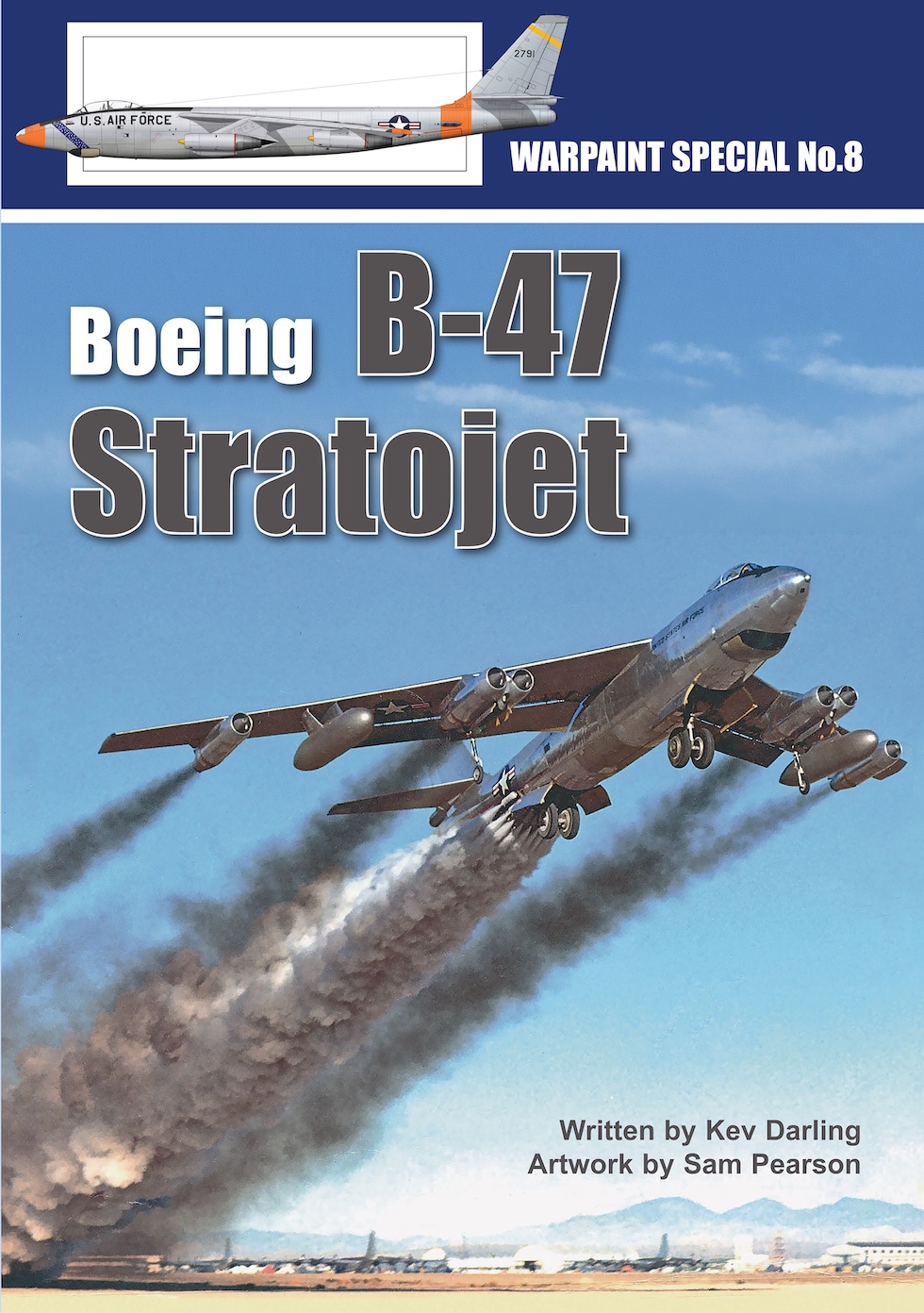 | Warpaint Series - WPSSP08 - None | Boeing B-47 Stratojet. By Kev Darling When Strategic Air Command was formed in 1947 its few flying units were equipped with the Boeing B-29 Superfortress. Few of these aircraft were fit for flight and the crews were under-trained. It would be General Curtis E. LeMay who transformed the entire organisation. Not only would SAC's performance be vastly improved, it would also begin receiving aircraft capable of delivering nuclear weapons to targets in Russia. Having transitioned through the B-29, B-36 and B-50, it was time to enter the jet age. Boeing already had a strong record in bomber design, and the requirement for a medium-range jet bomber would lead to the creation of the B-47 Stratojet. Drawing on aerodynamic knowledge gained from Germany at the end of the Second World War, Boeing's designers produced a revolutionary aircraft. Ultimately, 2,042 B-47s were built, the majority being B-47Es, although it would be the specialist variants that remained in service after the bombers were retired. Following the usual Warpaint format, this latest volume offers a comprehensive look at the aircraft, its history and development, and its operational use. This book is written by Kev Darling with colour profiles and plans by Sam Pearson. More | Aircraft books | New Arrivals | £23.00 | |
 | Warpaint Series - WPT116 - No Scale | Cessna Bird Dog Warpaint Special No 4 Author: Des Brennan. Cessna's Bird Dog was designed and built to serve in what some might regard as the unglamorous field of Army co-operation at a time when attention was more often focused on a growing array of gleaming silver, nuclear-capable jet fighters and bombers deemed essential for a seemingly inevitable Third World War. Nonetheless the Bird Dog was flown sometimes by multiple services and by a wide range of nations on every continent. The Bird Dog served in numerous internal and cross-border conflicts and was from the 1950s into the 1980s, and with the UH-1 Huey helicopter epitomised the role of the United States air power in operations over South-East Asia during the 1960s and into the 1970s. This superb 68-page book is written by Des Brennan with superb colour profiles by Mark Roolfe. More | Aircraft books | Catalogue | £11.99 | |
 | Albatros Productions - WSWW06 - No Scale | Building the Wingnut Wings Junkers D.I Modelling Special No.6-Building the Wingnut Wings Albatros Productions are pleased to announce the publication of Ray Rimell's latest WNW Modelling Special. Generously illustrated throughout, this 48 page book follows the unique format highly- acclaimed by model enthusiasts throughout the World with over 164 images, four pages of 1:32 scale plans, new Ronny Bar profiles, 1:32 wing camouflage templates, archive photos and contemporary drawings- all supporting the hyper-detailed stage-by-stage builder's log. Additional sections are devoted to more general building and finishing techniques aimed at newcomers to WWI modelling for whom the Junkers D.I will be an ideal introduction to this fascinating and rewarding hobby. Yet another winning combination... available from the end of April! More | Aircraft books | Catalogue | £26.00 | |
 | Albatros Productions - WSWW07 - No Scale | Building the Wingnut Wings Sopwith 5F.1 Dolphin and Pfalz D.IIIa BUILDING THE DOLPHIN AND PFALZ D.IIIA FOR our seventh Wingnut Wings modelling Special, Ray Rimell, one of the World's most experienced WWI aeroplane modellers, turns his attention to the Sopwith 5F.1 Dolphin and Pfalz D.IIIa. With a compelling combination of modelling know-how and unique archive material, the book includes 100 exclusive colour close-ups, over a dozen all-new Ronny Bar colour profiles and more than 205 model images in the extensive build logs for both kits. Hyper-detailed step-by-step guides backed up by over two dozen contemporary photos, drawings and a unique photographic 'walk- around' of the RAF Museum's restored Dolphin, provide invaluable insight into cockpits; armament; interior details; powerplants, finishing and rigging. Ray takes the reader through the entire building operation, from initial pre-painting to final addition of laminated wooden airscrews, with suggestions on painting ,decal application, addition of extra detail and improvements inside and out all supported by scores of carefully-chosen images at each and every stage. Together with comprehensive bibliographies for both subjects, an extended Jargon-Buster, as well as listings of relevant accessories and decals, our latest Special is laden with top-notch material including a superb wartime centre-spread Dolphin portrait, original Dolphin rigging notes and invaluable airframe close-ups of the RAFM 5F.1 during restoration at Cosford. Although the 64 page book is aimed at modellers of the 1:32 Wingnut Wings kits, it has broader appeal for those working in other scales since a great deal of the content is pure documentation providing an unrivalled in-depth resource for anyone building either of these classic WWI biplane fighters. Published in November 2018. More | Aircraft books | Catalogue | £26.00 | |
Hannants Search Engine
Convert Currency
Copyright © 2001-2026 H. G. Hannant Limited. All rights reserved. | Website by Dessol
Privacy Policy | Cookie Information | Switch to Mobile Version