



 Advanced Search
 Trumpeter TU03475
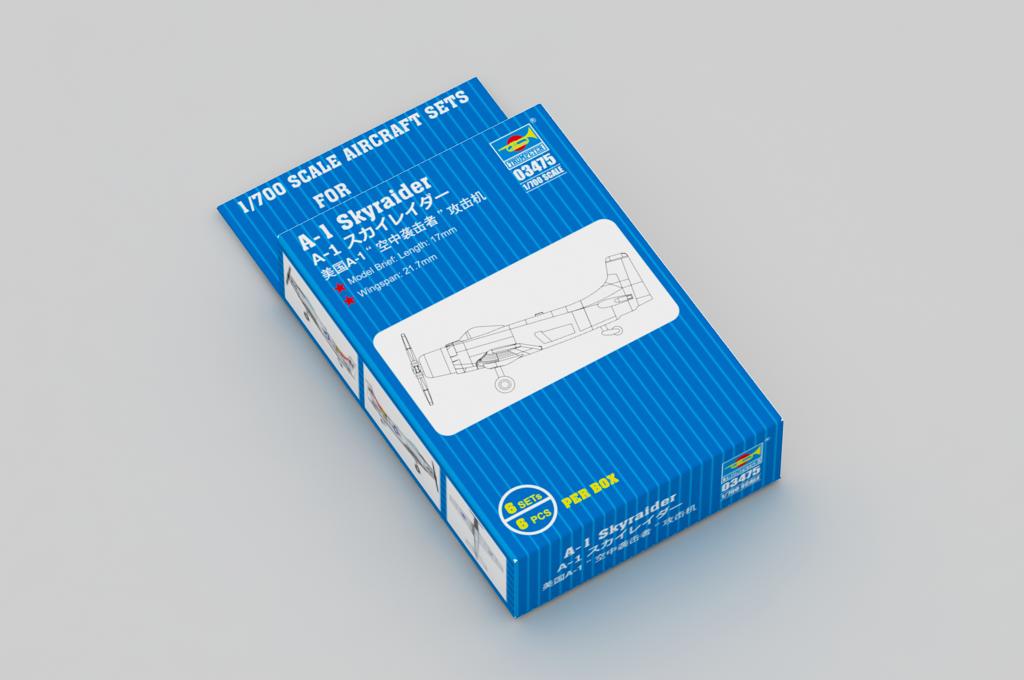
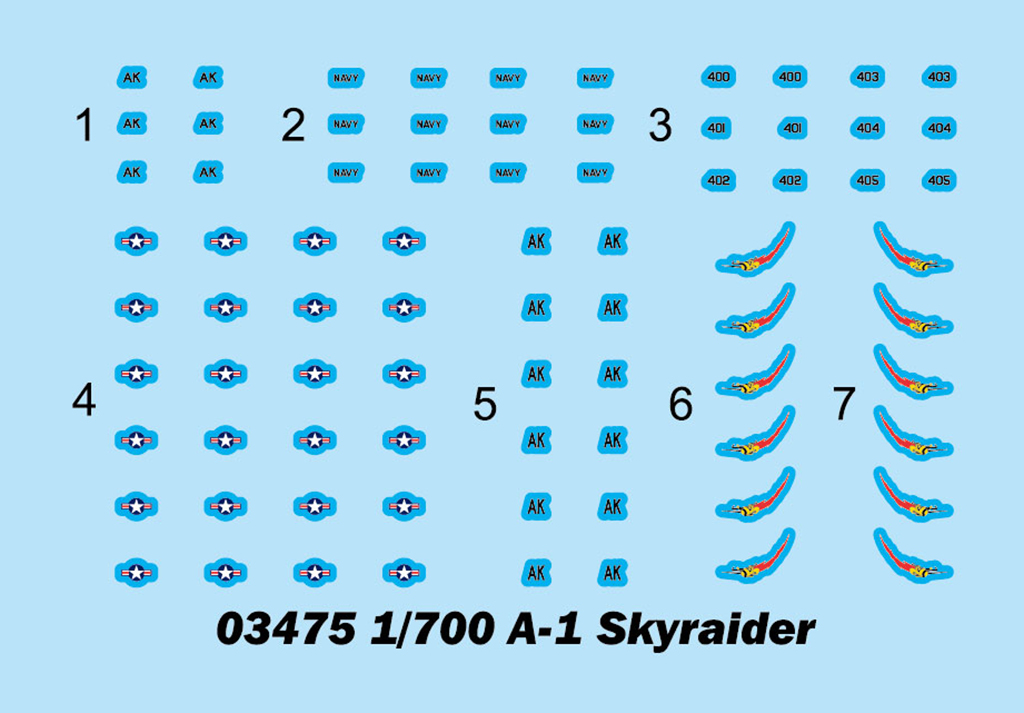
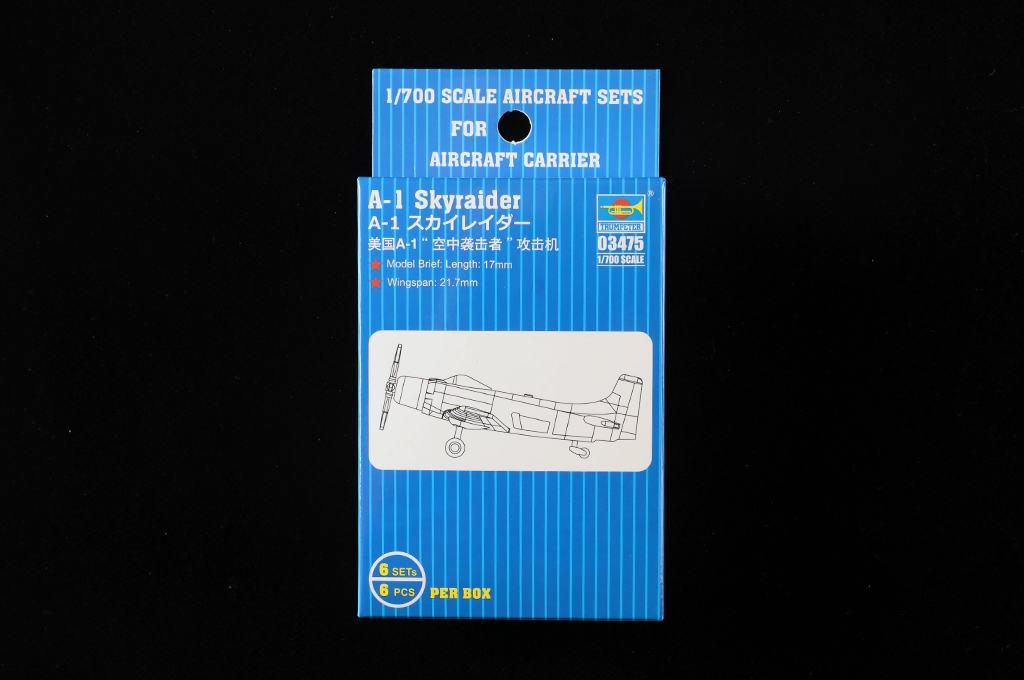
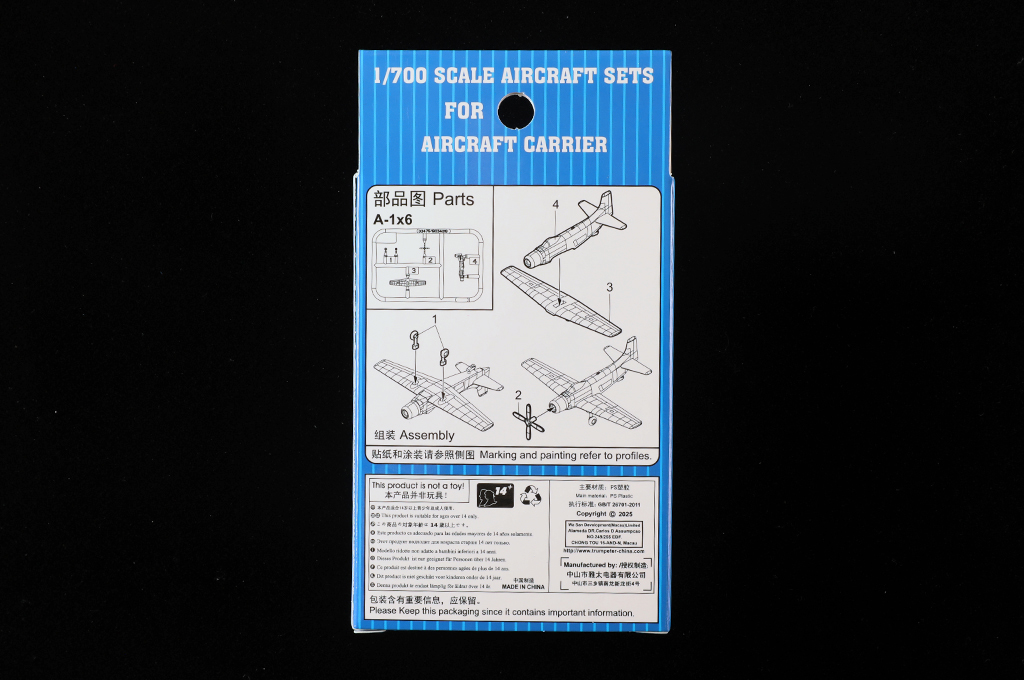
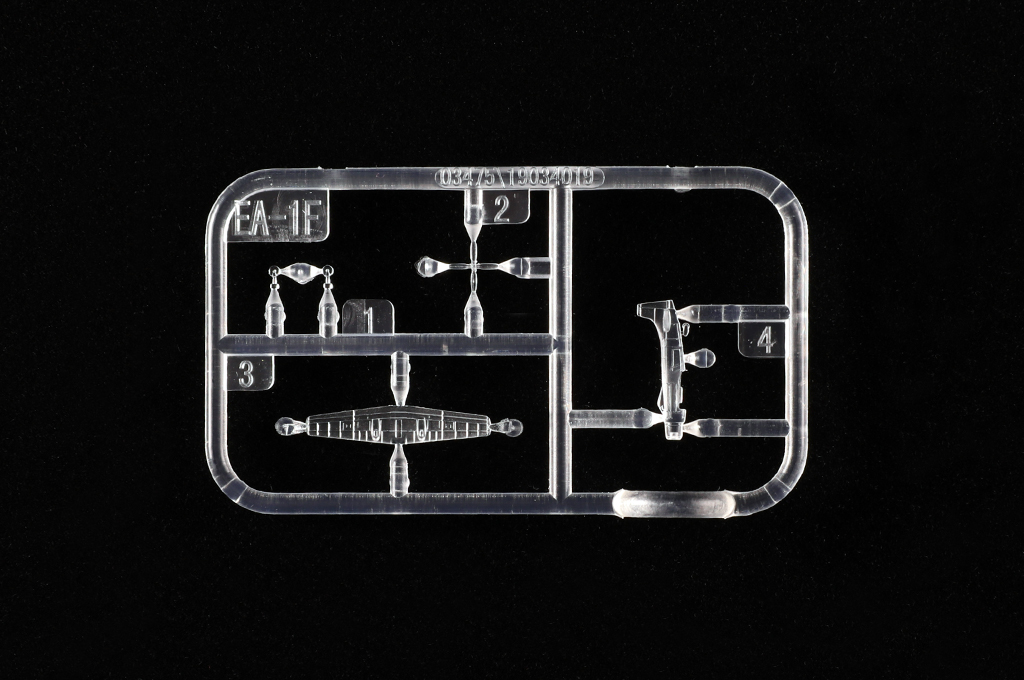
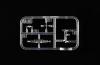
- Description:
- Douglas A-1 Skyraider 1 clear a/c each sprue, total 6 a/c
- Manufacturer:
- Trumpeter
- Code Number:
- TU03475
- Scale:
- 1:700
- Item type:
- Aircraft kits (injection)
- Price:
- £7.07
- Order Quantity:
- Quantity In Stock:
 5+
5+
- Availability:
- This will usually be dispatched within 24/48 hours of receiving your order
- Wish List:
- Department:
- Catalogue
Here are some books and decals you might find useful for this kit
Found 5 related products
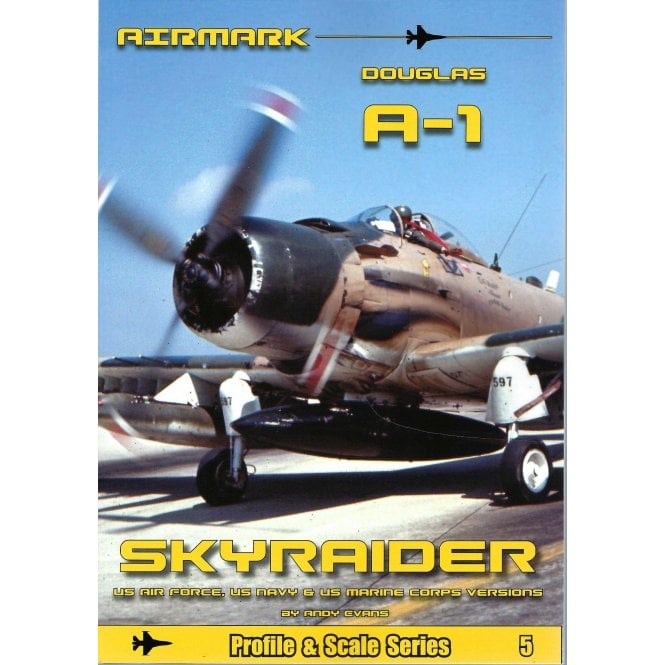 | Airmark - AMPS05 - No Scale | Douglas A-1 Skyraider US Air Force, US Navy & US marine corps versions by Andy Evans. PROFILE & SCALE series More | Aircraft books | Catalogue | £17.99 | |
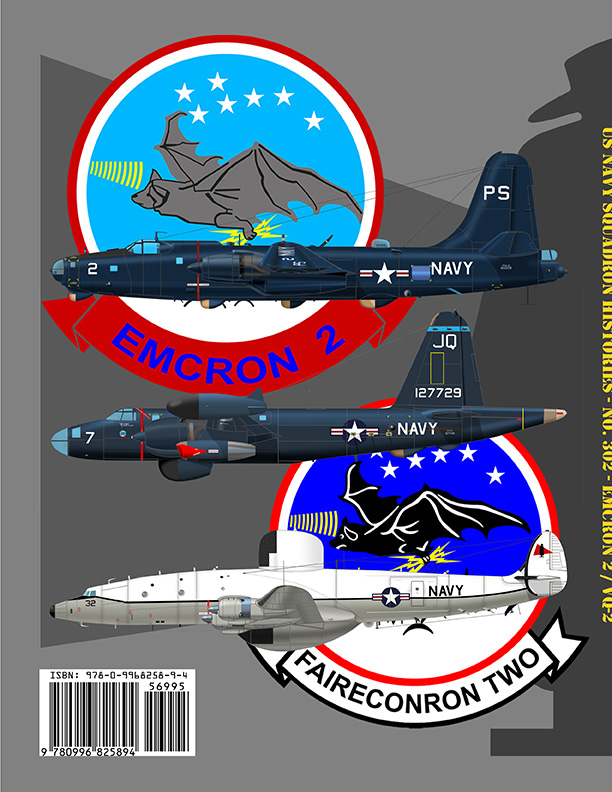 | Naval Fighters - NF302 - No Scale | FROM BATS TO RANGERS A Pictorial History of Electronic Countermeasures Squadron Two (ECMRON-2) Fleet Air Reconnaissance Squadron Two (VQ-2) by Angelo Romano and AMHC (AW) John D. Herndon, USN, Ret. This Pictorial History of US Navy's Electronic Countermeasures Squadron Two (ECMRON-2 or VQ-2), later designated Fleet Air Reconnaissance Squadron Two (FAIRECONRON TWO or VQ-2) by Angelo Romano and AMHC (AW) John D. Herndon, USN, Ret. is the second title of the new U.S. Navy SQUADRON HISTORIES by GINTER BOOKS. The photo coverage of the history of the Electric Bats, also known as the Rangers, is comprehensive, both in terms of photography and in terms of historical content. Much of the squadron's mission was top secret, as were many of its cold war missions, but the authors were able to utilize official (declassified) documents and first-hand accounts to write this book. For completeness, it is also a history of the U.S. Navy Electronic Intelligence gathering activities going back to WWII, beginning with the creation of the Cast Mike (Counter Measures) Project in 1942 and the deployment of early XARD receivers aboard aircraft like the Consolidated PBY Catalina and PB4Y Liberator. After WWII, the Navy started to use the Privateers as dedicated ELINT platforms and assigned them to two special units operating jointly with the National Security Group. One of these units, designated Port Lyautey Patrol Unit (NPU), was based at Naval Air Activities Port Lyautey, in French Morocco. It was first assigned modified PB4Y-1s and later, the Martin P4M-1Q Mercator. The NPU teamed with the Naval Security Group's Naval Communications Unit 32 George (NCU32G), which provided the ELINT equipment installed on board and the crew to operate them, mostly for covert operations around Europe and the Mediterranean. When the NPU reached its full complement of four P4M-1Qs, the unit and NCU32G, needed to have an administrative identity for budgetary and logistics purposes. Airborne Early Warning Squadron TWO (VW-2), based at NAS Patuxent River, was therefore selected to be its "mother" squadron. On 1 May 1953, NPU Port Lyautey became VW-2 Detachment A (or DET ABLE). In 1955, the Navy decided to establish a dedicated squadron for the unique mission rather than continue with a detachment: Electronic Countermeasures Squadron TWO (ECMRON TWO) was established on 1 Sep 1955. ECMRON TWO was assigned the alphanumeric designation "VQ-2". Its mission was to conduct electronic-search in support of fleet operations to obtain adequate and timely information on enemy radar, communications, and other emissions in support of fleet operations. The Squadron inherited the P4M-1Qs from VW-2 DET A and acquired a Lockheed P2V Neptune for utility purposes. On 1 Jan 1960, EMCRON TWO was redesignated Fleet Air Reconnaissance Squadron TWO (FAIRECONRON TWO) but still retained the alphanumeric designation "VQ-2". In 1956, VQ-2 received its first Douglas A3D-1Q Skywarrior, followed in 1957 by one A3D-1. In 1958, the Squadron received the Lockheed P2V-5F Neptune to augment the P4M-1Qs. The more capable A3D-2Q/EA-3B arrived in 1959 followed by the big Lockheed WV-2Q/EC-121M Constellation in 1960. The first Lockheed EP-3E ARIES arrived in 1971 and the squadron continued to fly this aircraft until disestablishment in 2012. The VQ-2 history and all worldwide events surrounding it are very well described and documented. This 242-page book contains 180 B&W and 444 color photos, most never published before. Thirty-seven superbly detailed aircraft color profiles show the evolution of the color schemes and markings and the different aircraft types and sub-types, providing very useful information for the benefit of both modelers and aviation historians. The inclusion of many squadron patches completes this masterpiece. THE AUTHORS Angelo Romano Angelo has authored six books: Wings from Coral Sea (Golden Wing Publications, 1986), Naval Fighters (Osprey, 1990), Naval Air Weapons Meet 1956-1959 (Model Publishing, 2006), First and Foremost - An illustrated History of Carrier Air Wing One - CVW-1 Part One 1934-1957 (Model Publishing, 2006), CVW-1 Part Two 1957-1973 (Model Publishing, 2008), and Black Knights Rule! (BKR) - A Pictorial History of VBF-718 / VF-68A / VF-837 / VF-154 / VFA-154 - 1946-2013 (Ginter Books, 2014). John D. Herndon AMHC (AW) Retired U.S. Navy John joined the U.S. Navy in 1978, Assigned to VQ-2 a total of 13 years E-1 to E-7, deployed to six Aircraft carriers in support of the EA-3B aircraft. Additionally deployed to locations all around the world in support of the EP-3E aircraft, Maintenance Control, Aircraft Division and Detachment Leading Chief Petty Officer. Retired out of VQ-2 his last tour which ended in 2000, went on to civilian life, employers ATA and American Airlines and finally the FAA as an Aviation Safety Inspector, currently the Boeing 787 Fleet Program Manager overseeing United Airlines safety compliance. Very involved over the years in collecting VQ-2 information/ history, assisted in raising funds and restoring a VQ-2 EA-3B Aircraft in Fort Worth Texas Ranger 15 BuNo 146453. More | Aircraft books | Limited Availability | £58.30 | |
 | Naval Fighters - NF306 - No Scale | World Class DIAMONDBACKS. A Pictorial History of Strike Fighter Squadron 102 (VFA-102) by Angelo Romano US NAVY SQUADRON HISTORIES No. 306 ISBN-13: 978-1-7349727-3-3 Soft bound (NF306) Originally designated Fighter Squadron 102 (VF-102), the DIAMONDBACKS of Strike Fighter Squadron 102 (VFA-102) were established on 1 Jul 1955 in Jacksonville, Florida. The first aircraft to carry the distinctive DIAMONDBACK markings was the McDonnell F2H Banshee, a twin-engine fighter-bomber with four 20mm internal cannons. The DIAMONDBACKS' inaugural deployment took place on-board the USS RANDOLPH (CV-15), in July 1956. After this deployment, the squadron transitioned to the Douglas F4D-1 Skyray. In 1960, the DIAMONDBACKS moved to NAS Oceana, Virginia, and transitioned to the McDonnell Douglas F-4B Phantom II. This marked the beginning of a 20-year association with the Phantom. In Jun 1981, the DIAMONDBACKS bade farewell to the Phantom and transitioned to the Grumman F-14A Tomcat. The Tomcat's design provided the pilot and RIO with a formidable air-to-air radar and weapons system. The long-range AWG-9 radar and its multiple track, multiple launch capable AIM-54 Phoenix missile system, AIM-7 Sparrow and AIM-9 Sidewindermissiles, and the six-barrelled 20mm cannon, comprised the Tomcat's weapons suite. With the addition to the Tomcat of the Tactical Air Reconnaissance Pod System (TARPS) in 1982, the DIAMONDBACKS added the tactical aerial photo reconnaissance mission to their traditional fighter role. In 1992, VF-102 and the Tomcat entered the critical air-to-ground mission area, thus solidifying the DIAMONDBACKS' role as a strike fighter squadron, and leading the way into the 21st century. In 1994, the DIAMONDBACKS transitioned to the re-engined F-14B and, with the installation of the Low Altitude Navigation Targeting Infrared for Night (LANTIRN) pod in 1998, they added the precision strike mission to their capabilities. In 2002, VF-102 was assigned to Commander, Strike Fighter Wing Pacific and transferred to NAS Lemoore, California to transition to the Navy's newest strike fighter, the Boeing F/A-18F Super Hornet. In March 2002, the DIAMONDBACKS were redesignated Strike Fighter Squadron 102 (VFA-102). After completion of the transition to the Super Hornet, VFA-102 moved across the Pacific to Naval Air Facility Atsugi, Japan, to join Carrier Air Wing FIVE (CVW-5), the Navy's only forward deployed air wing and part of the Forward Deployed Naval Forces (FDNF). Since then, the DIAMONDBACKS were assigned respectively to the following FDNF carriers: USS Kitty Hawk Models (CV 63), USS GEORGE WASHINGTON (CVN 73), and USS RONALD REAGAN (CVN 76). Pages: 284 Size: 8.5 X 11 (inches) Format: Soft bound Illustrations: 741 color and 124 B&W photos, 52 color profiles, 82 patches Publisher: Ginter Books More | Aircraft books | Catalogue | £66.60 | |
 | Naval Fighters - NF98 - No Scale | Douglas AD/A-1 Skyraider Part One Covers: Development, Testing, Variants, Test/R&D, CAG, FASRONs, Training Squadrons, Base/Carrier/Air Group/Squadron Hacks and Marine Skyraiders. By Steve Ginter 256-pages, Color Covers, 169 illustrations, 472-photos. The Douglas Skyraider entered fleet service with VA-19A in February 1947 and was retired in 1969. A single engine attack aircraft able to carry more tonnage of bombs than a WWII B-17 all while operating from a aircraft carrier. Marine Squadron VMA-121 routinely struck enemy targets with bomb loads in excess of 9,000 lbs. The 3,180 Skyraiders were produced in 20 different versions and modified further into at least 7 other variants. Furthermore, Douglas created conversion kits for the AD-5 allowing it to be modified at squadron level into a four-seat or ten seat COD aircraft, a target tug, an air ambulance, a cargo aircraft, or a aerial tanker. As an attack aircraft, it became the weapon of choice for close air support and ground attack in Korea because of its ability to loiter for hours with a variety of bombs, rockets and napalm and its ability to take hits and bring its pilot's home. It repeated these tasks in Vietnam where it also became the RESCAP aircraft of choice due to its ability to stay airborne for up to 12-hours. More | Aircraft books | Catalogue | £43.99 | |
 | Naval Fighters - NF99 - No Scale | Douglas AD/A-1 Skyraider Part Two, U.S. Navy Squadrons. By Steve Ginter. 272-pages, 13-color photos, 589 b&w photos, and 138 patches. The Douglas AD/A-1 Skyraider Part Two covers Skyraider Fleet and Utility squadrons with text on each squadron and photos and squadron patches/insignia when available. Because the Skyraider's service life bridges from post WWII, through the Korean War and into the Vietnam War, the AD/A-1 squadrons went through all the confusing redesignations and disestablishments of the 50's. In some cases the same squadron designation was applied three times during the life of the Skyraiders in the Navy. This volume covers 95 squadrons that flew this amazing aircraft. More | Aircraft books | Catalogue | £46.60 |
Hannants Search Engine
Convert Currency
Copyright © 2001-2026 H. G. Hannant Limited. All rights reserved. | Website by Dessol
Privacy Policy | Cookie Information | Switch to Mobile Version