



 Advanced Search
 « Go back« Go backPrevious Product (TU05603)Next Product (TU06214)
Trumpeter TU06210


- Description:
- Grumman F6F Hellcat 6 sets per box
- Manufacturer:
- Trumpeter
- Code Number:
- TU06210
- Scale:
- 1:350
- Item type:
- Aircraft kits (injection)
- Price:
- £12.99
- Order Quantity:
- Quantity In Stock:
 3
3
- Availability:
- This will usually be dispatched within 24/48 hours of receiving your order
- Wish List:
- Department:
- Catalogue
Here are some books and decals you might find useful for this kit
Found 3 related products
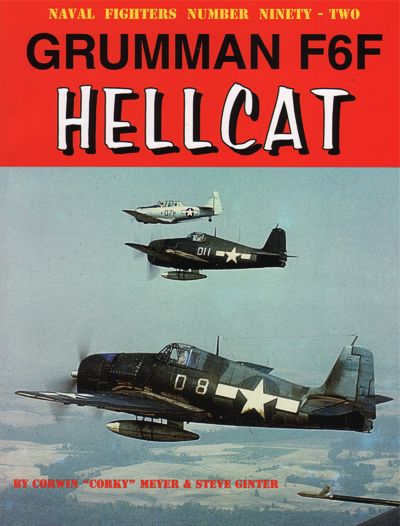 | Naval Fighters - NF92 - No Scale | Grumman F6F Hellcat. The Grumman F6F Hellcat was a carrier-based fighter aircraft developed to replace the earlier F4F Wildcat in United States Navy (USN) service. Although the F6F resembled the Wildcat, it was a completely new design powered by a 2,000 hp Pratt & Whitney R-2800. Some tagged it as the 'Wildcat's big brother'. First 60 pages are about the development & testing written by the late Corky Myers. The day to day operational history of were and with what squadron the Hellcat served with. 224 pages of history and photos More | Aircraft books | Catalogue | £41.60 | |
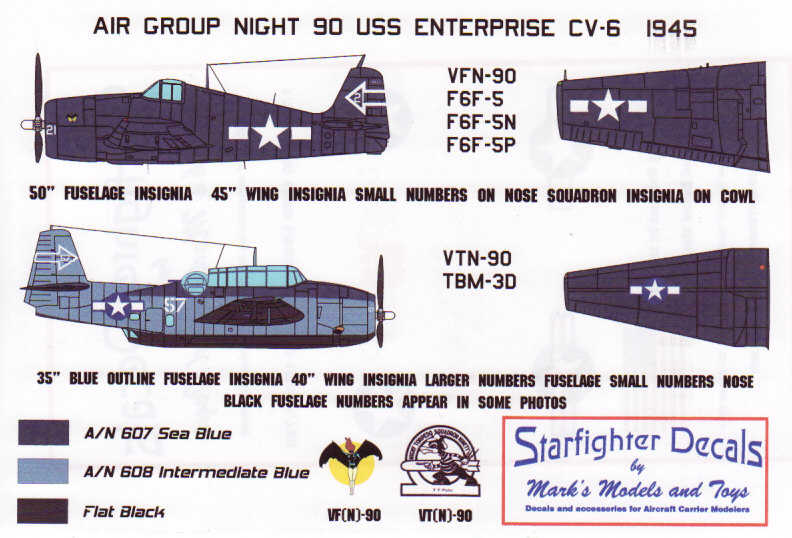 | Starfighter Decals - SFD350023S - 1:350 | Air Group 90 (night) for CV-6 Enterprise 350-23s Air Group 90 (night) for CV-6 Enterprise Two sheet set. Markings for Air Group 90 (night) serving aboard the USS Enterprise late in WWII. Air Group consisted of Grumman F6F Hellcats and TBM Avengers. Color placement guide included. More | Aircraft decals (military) | Limited Availability | £14.99 | |
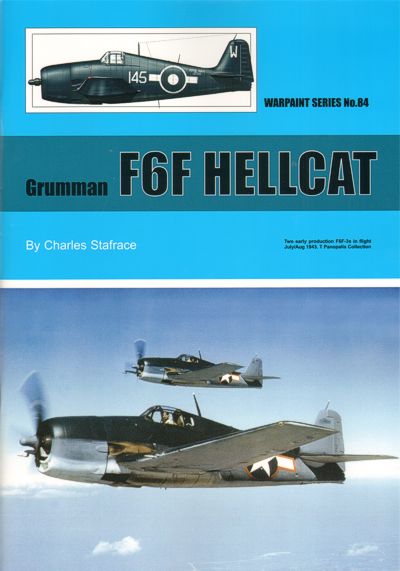 | Warpaint Series - WPS84 - No Scale | Grumman F6F Hellcat. Even before Pearl Harbor the U.S. Navy realised that it would be hard for its existing fighters, the F2A Buffalo and F4F Wildcat, to deal with Japan's shipboard fighters, especially the A6M Zero. The situation was such that in June 1941 the U.S. Navy placed orders with Grumman 's 'Iron Works' for the F6F Hellcat before the first prototype had even flown. It was the right decision for Grumman 's new fighter, although much larger and heavier than the Zero, proved to be the latter's nemesis, so that the American fighter's better fire-power, sturdiness, range and speed more than matched the Zero's agility. Its entry into service was also timely, for the much- awaited F4U Corsair suffered from a flawed carrier deck capability, so that the Hellcat remained the main carrier fighter of the U.S. Navy throughout the rest of the Second World War and established air superiority in the Pacific. Indeed, in barely two years of war it destroyed no less than 5,271 enemy aircraft of the 6,477 claimed by the U.S. fighters, attaining a fantastic kill-to-loss ratio of 19.1:1, and fully deserving the nickname of 'Ace-Maker'. It certainly was the most important Allied shipboard fighter of that world conflict. The Hellcat was used also by the Royal Navy's Fleet Air Arm, during the war, while in the postwar period it saw service with the French Aeronavale, which used them in Indochina, as well as with the Uruguayan Navy, the latter flying them until 1961. [F6F-3 F6F-5 F6F-3N F6F-5N] More | Aircraft books | Catalogue | £16.50 |
Hannants Search Engine
Convert Currency
Copyright © 2001-2026 H. G. Hannant Limited. All rights reserved. | Website by Dessol
Privacy Policy | Cookie Information | Switch to Mobile Version