Cookies are small text files that are placed on your computer by
websites that you visit. They are widely used in order to make
websites work, or work more efficiently, as well as to provide
information to the owners of the site.
Here is a list of cookies this site uses:
Cookie name
Description
existing_user
Stores the email address used to previously log into the site, used to prefill forms like on the reset password screen
authchallenge
Authentication security checks
hcart
Stores the anonymous customer\'s cart token. If items are added to the card while not logged in, if you log in the items will be added to the customer\'s existing cart
hannants
Stores the session information while you remain on the site
pricer
Stores if the export or eu prices is selected on the catalogue page
hidefilter
Stores if the search filter panel is hidden or shown
AWSELB
Stores which server you\'re connected to so to access the same server while you navigate around the site
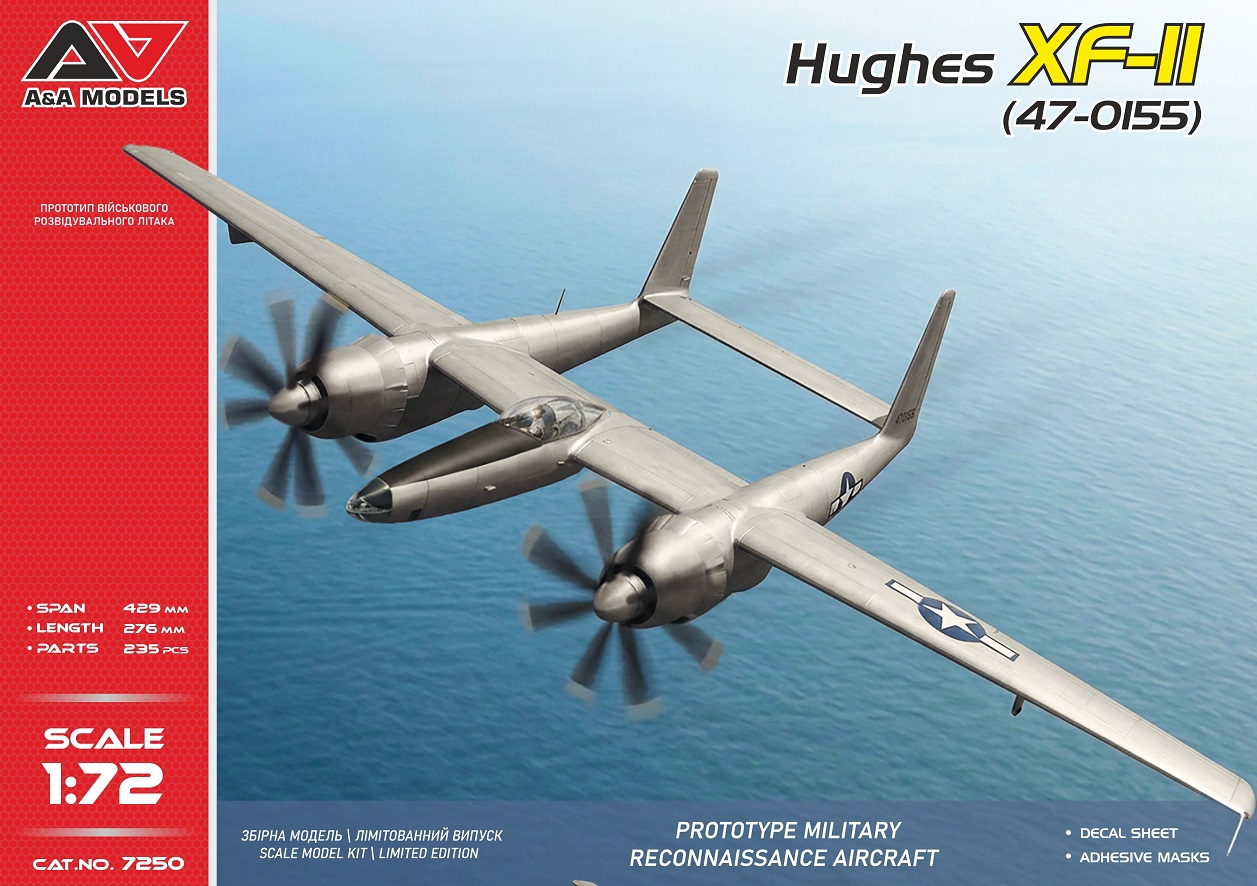
Hughes XF-11 experimental reconnaissance aircraft (#47-0155)
The kit includes:
235 plastic parts on 13 sprues;
Decal sheet for 1 livery (printed by Cartograf );
Painting masks;
Engine parts (on the pic above);
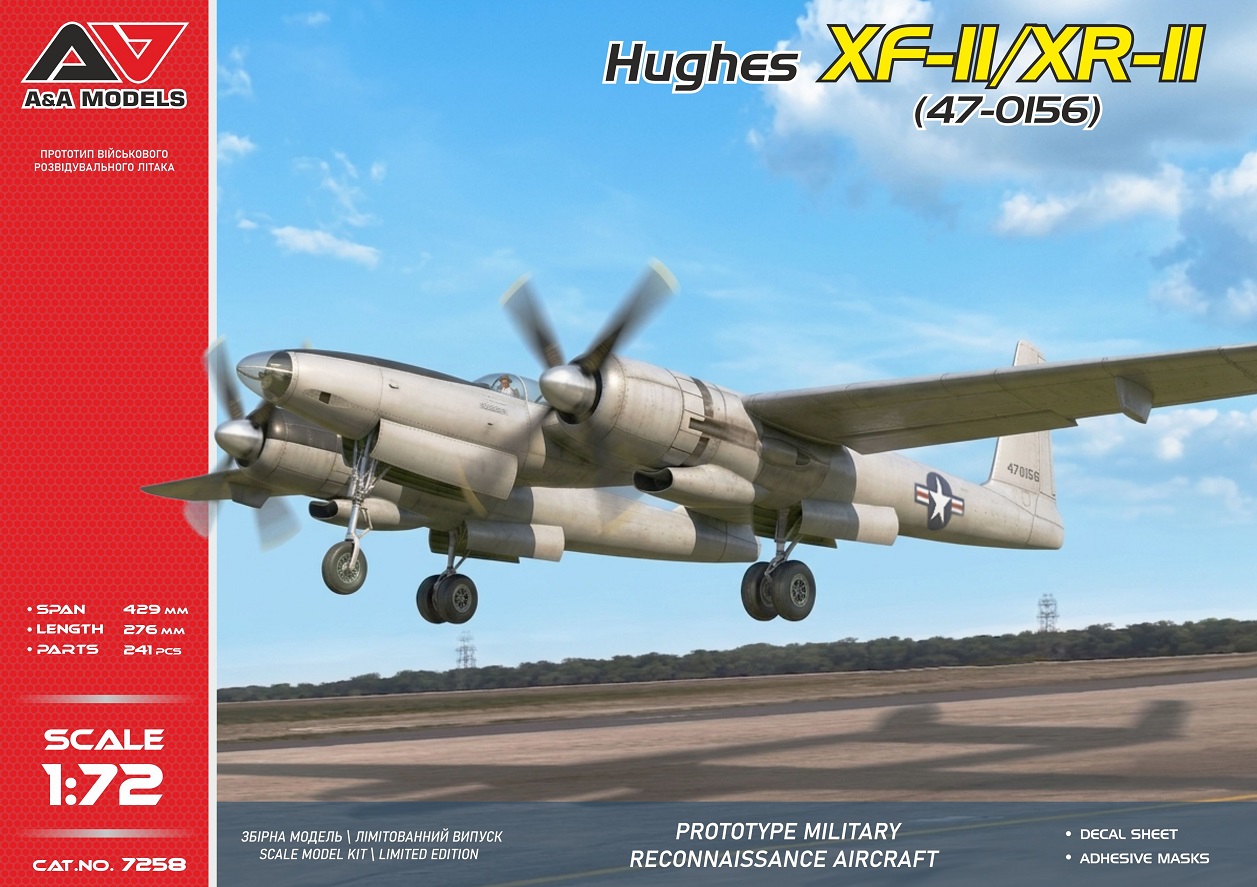
Hughes XF-11/XR-11 experimental reconnaisance aircraft (#47-0156)
The kit includes:
241 plastic parts on 13 sprues;
Decal sheet for 2 liveries (printed by Cartograf );
Painting masks;
Engine parts ;
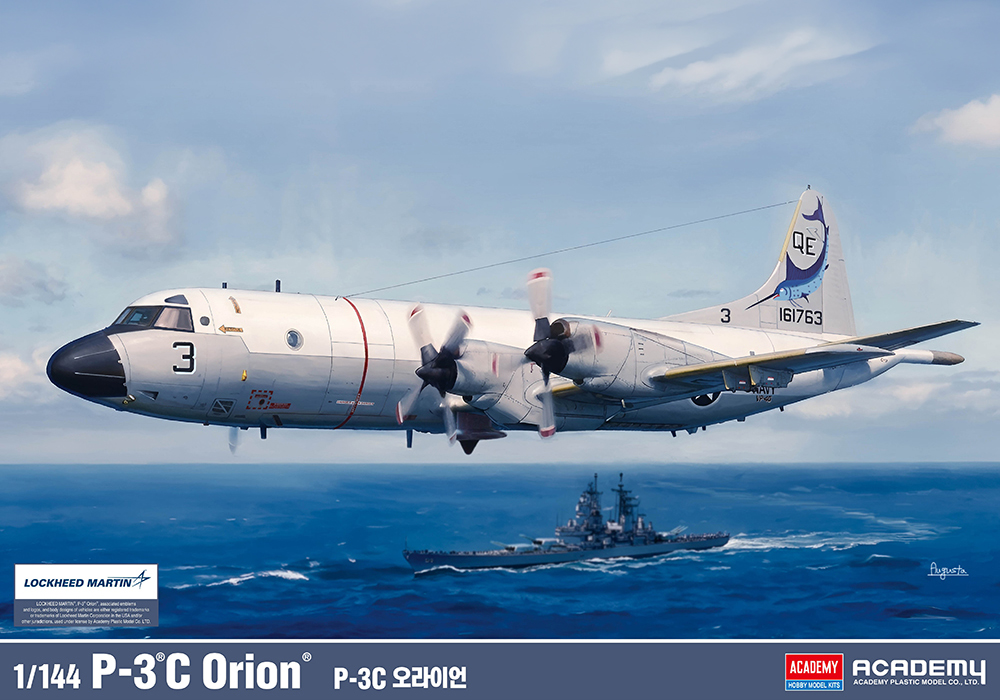
Lockheed US Navy P-3C Orion Maritime Patrol/Anti-Submarine Warfare Aircraft
NEW TOOLING
The Lockheed P-3C Orion was the principal maritime patrol and anti-submarine warfare aircraft of the United States Navy during the Cold War. Developed from the L-188 Electra airliner, the Orion first entered service in 1962, with the definitive production model P-3C following in 1969. Powered by four Allison T56 turboprop engines, it ...
Boeing 737-8 Jin Air
Jin Air is a South Korean low-cost airline established in 2008 as a subsidiary of Korean Air. Based in Seoul, it operates domestic services and international routes across East and Southeast Asia. Its fleet is centred on the Boeing 737 family, supplemented by larger Boeing 777-200ER aircraft on higher-capacity routes.
The Boeing 737-8, marketed as the 737 MAX 8, is a development of the long-running 737...
Caudron G.III Anzani, British and Belgian service
High-quality Cartograf decals
135 high-quality injection moulded plastic parts
Highly detailed Anzani 100 HP engine
8 photo-etched metal detail parts
Full rigging diagram.
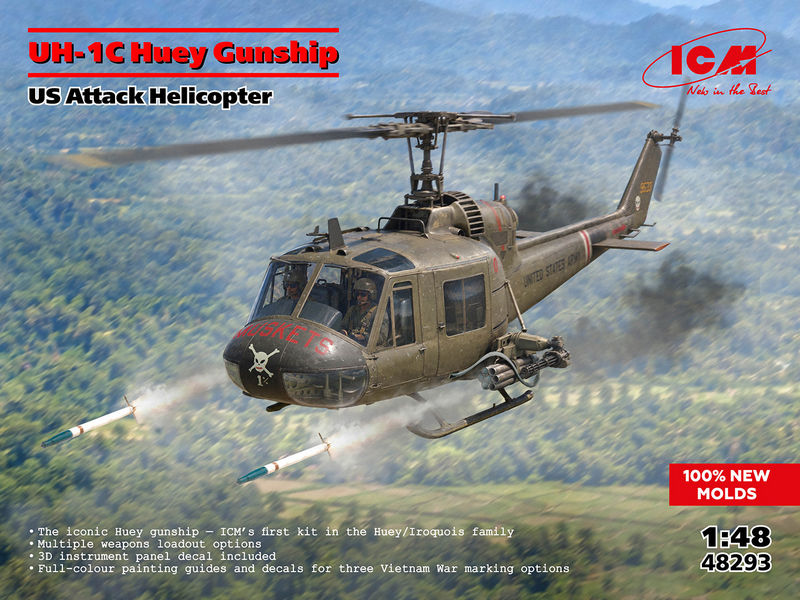
Bell UH-1C Huey Gunship
MARKINGS
UH-1C 66-15213, 189th Assault Helicopter Company, "Avengers" Platoon, Pleiku, February 1968
UH-1C 65-9438, 334th Assault Helicopter Company, "Playboys" Platoon, Bien Hoa, late 1960s
UH-1C 65-9533, 176th Assault Helicopter Company, Chu Lai, 1971
Following the Korean War, the U.S. Army formulated requirements for a new multipurpose helicopter based on operational experience gained during...
NEARLY GOOD AS NEW!!! Bristol Beaufighter Mk.IF/VIF 'No.68 Sq. RAF'
The Bristol Beaufighter was a British heavy fighter, whose first prototype flew in July 1939. The Mk.IF was a high performance fighter and efficient night-fighter employing the then novel AI radar. It was a two-seat, twin engine, all-metal mid-wing cantilever monoplane, fitted with a retractable undercarriage. It was powered by two Hercules radial engines ...
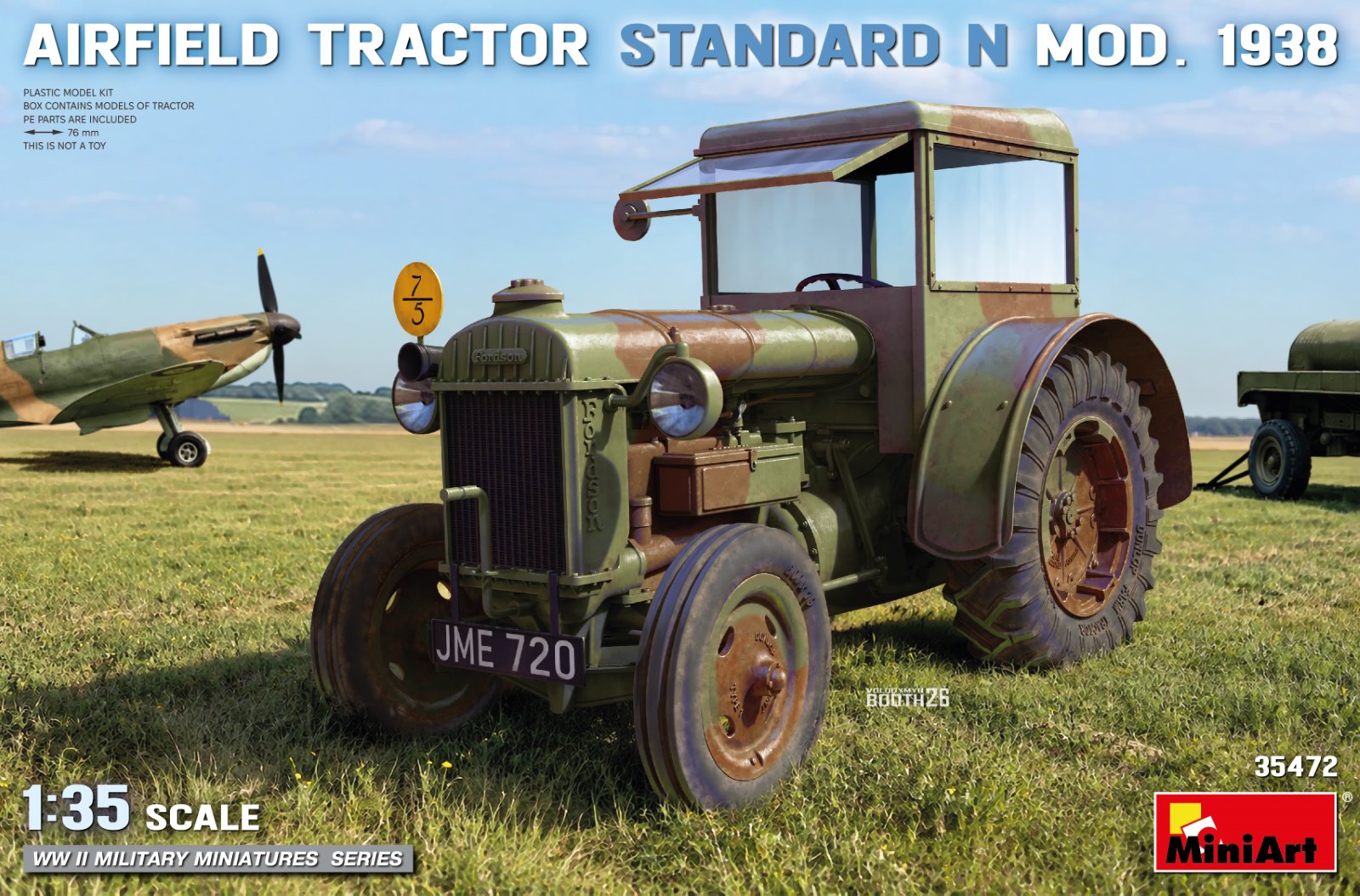
AIRFIELD TRACTOR STANDARD N MOD. 1938
This kit represents the Standard N Mod. 1938 airfield tractor, designed for ground-support duties around military aircraft. Its distinctive enclosed cab and compact design make it a great addition to WWII airfield and aviation dioramas.
Highly detailed plastic model kit Scale 1:35
Standard N Mod. 1938 airfield tractor
Detailed cab and engine components
Photo-etched parts inclu...
Morane-Saulnier MS.405 4 decal variants
1. MS.405C, No.1 test in CEMA, pilot "Kostia" Rozanoff, Reims 1938
2. MS.405C, No.1, Chartres , June 1940
3. MS.405C, No.4, prototype of MS.406C1, CEMA , January 1940
4. MS.405C, No.15, Salon de Provence 1939
Morane-Saulnier's response was the M.S.405 developed by Engineer in Chief Paul-Rene Gauthier. The MS.405 was a low-wing monoplane of mixed construction, with fabr...
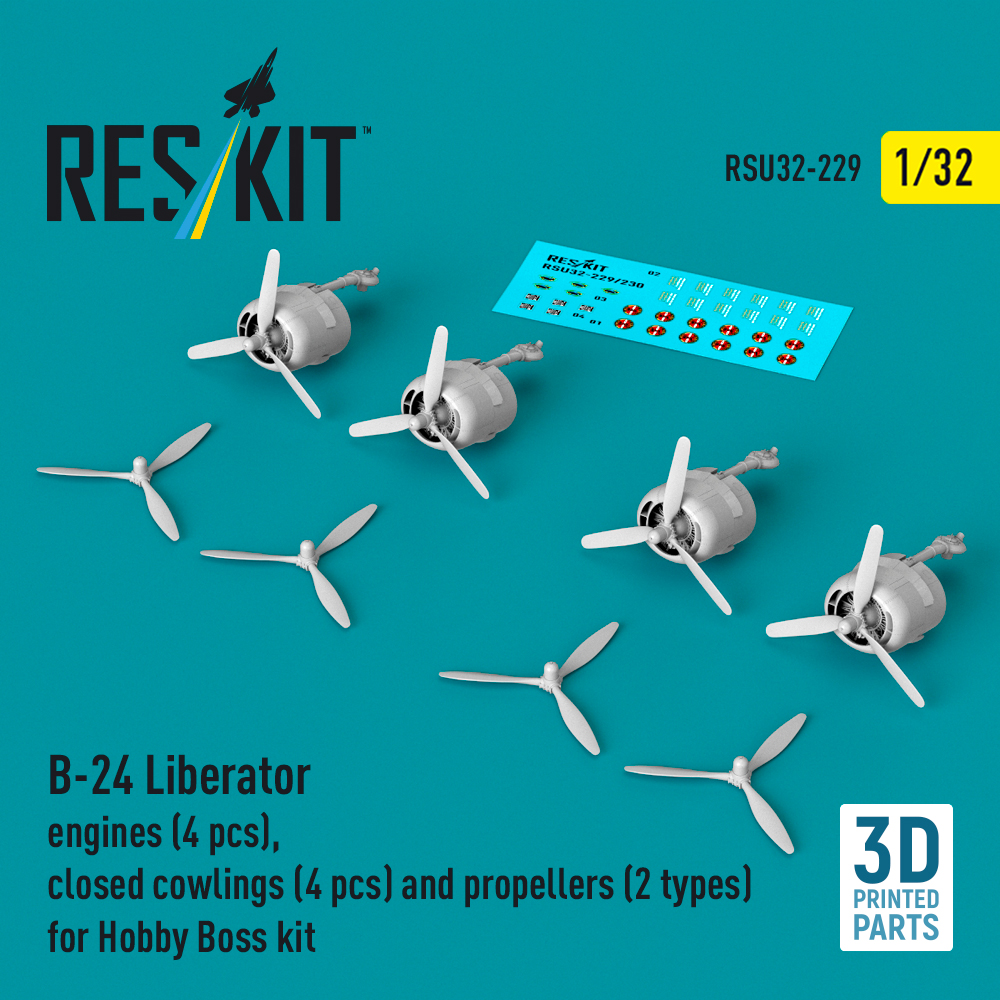
Consolidated B-24D/B-24J Liberator engines (4 pcs), closed cowlings (4 pcs) and propellers (2 types) (designed to be used with Hobby Boss kits) (3D Printed)
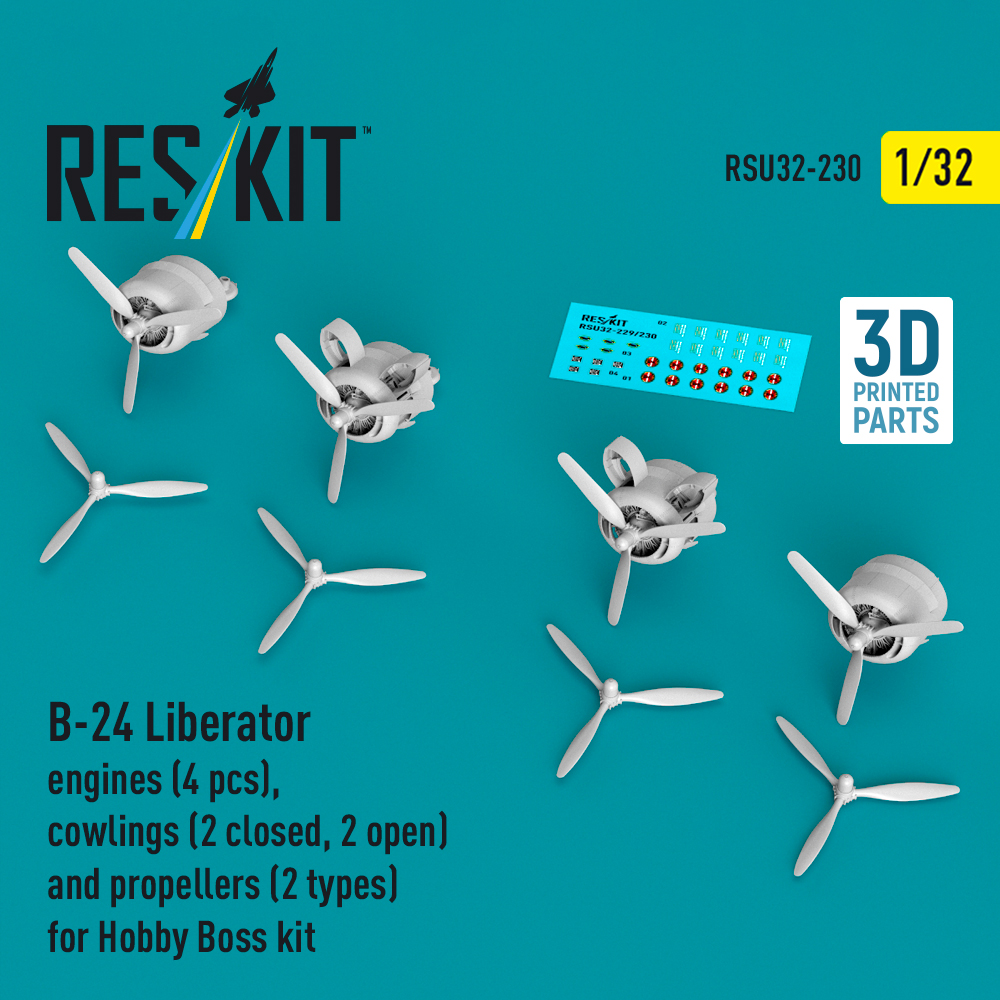
Consolidated B-24D/B-24J Liberator engines (4 pcs), cowlings (2 closed, 2 open) and propellers (2 types) (designed to be used with Hobby Boss kits) (3D Printed)
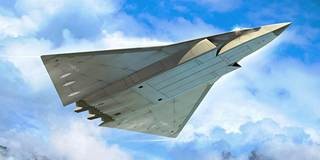
Chinese Air Force J-36 6th Generation Combat Aircraft (Notional)
Chinese sixth-generation combat aircraft prototype believed to be under development for the People's Liberation Army Air Force. First observed during test flights over Chengdu in December 2024, the aircraft has a distinctive tailless, diamond-shaped design and three-engine configuration, features intended to support stealth, long range and high performan...
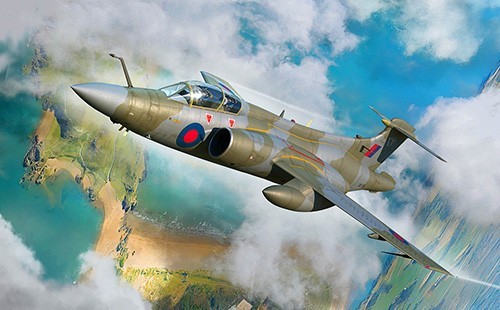
Blackburn Buccaneer S.2B Strike Aircraft
The Hawker Siddeley Buccaneer S.2B was the principal RAF-built variant of the Buccaneer S.2, itself developed from the original Blackburn S.1 with more powerful Rolls-Royce Spey turbofan engines. Designed for high-speed, low-level strike missions, the S.2B featured RAF-specific avionics and equipment for the carriage of Martel air-to-surface missiles. Its enlarged bomb-bay door coul...
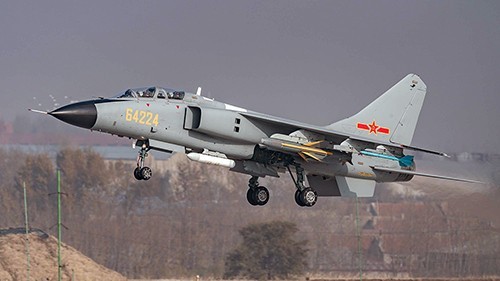
Chinese Xian JH-7A Flying Leopard
Chinese twin-engine, two-seat strike aircraft developed by Xi'an Aircraft Industry Corporation for the People's Liberation Army's naval and air forces. An improved version of the original JH-7, it entered service in 2004 with upgraded avionics, a revised airframe and an expanded weapons-carrying capability. Its principal roles include maritime strike, anti-ship warfare and attacks against g...
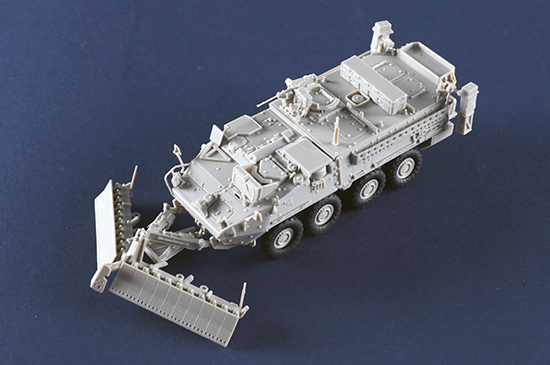
US Army M1132 Stryker Engineer Squad Vehicle w/SMP & AMP Mine Plough
Part of the 8x8 Stryker family, the M1132 Engineer Squad Vehicle supports combat engineers with route clearance and mobility tasks. Outfitted with a mine roller (Surface Mine Plough-SMP) and Anti-Mine Plough (AMP), it is designed to detect and neutralise explosive threats. Fully integrated with protective armour and battlefield comms, the M1132 enables sa...
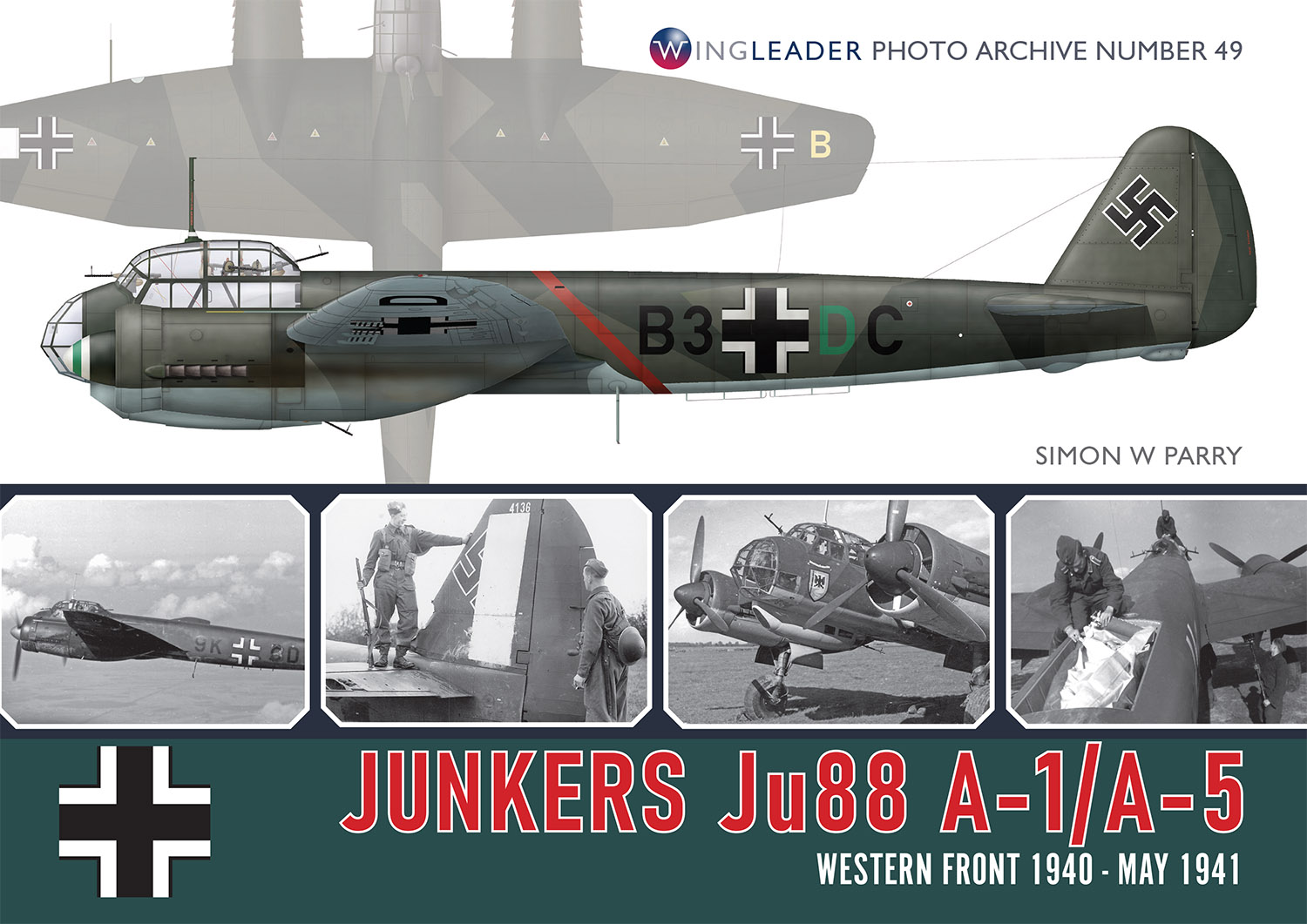
Junkers Ju-88A-1/A-5
In the early days of this Photo Archive series, we published a trilogy of volumes on the Me109 in the Battle of Britain and a single volume on the He111 also in the Battle of Britain. At the time, we struggled to find high quality photos for these books, so we made them more about the units rather than the aircraft detail itself. They sold well, but didn't quite fit in with the style of the WPA series, so...




 Advanced Search