1:144
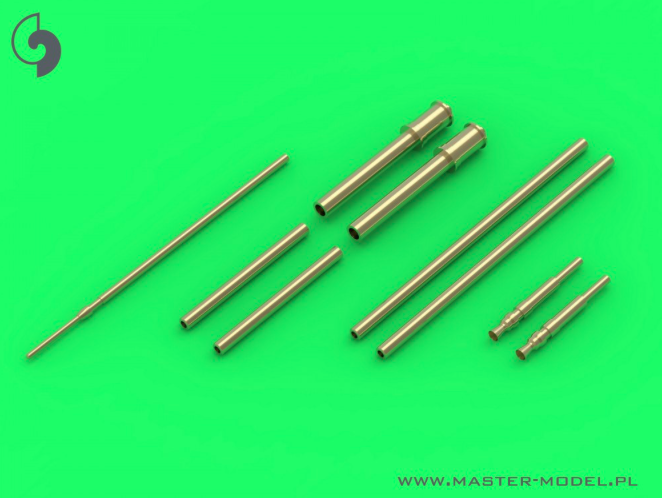
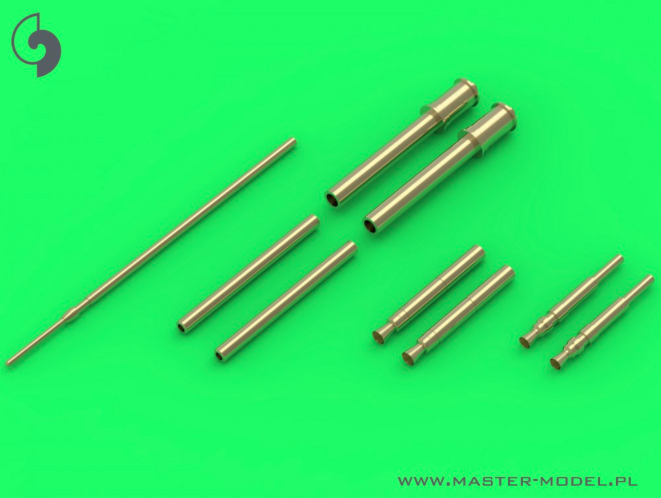
Mikoyan MiG-15 - gun barrels, antenna base & Pitot Tube (designed to be used with Attack Hobby Kits, Eduard kits, and Ozmods kits)
Aircraft detailing sets (metal)
Limited Availability
£5.92
-
 3
3
1:144
Sukhoi Su-33 (Flanker D) - Pitot Tube (designed to be used with Dragon J-15 - Chinese version of Su-33 kits)[PLA J-15 'Flying Shark' Naval Fighter]
Aircraft detailing sets (metal)
Limited Availability
£2.92
-
5
1:144
Republic F-105D Thunderchief - Pitot Tube (designed to be used with Arii, Otaki and Revell kits)
Aircraft detailing sets (metal)
Catalogue
£3.50
-
4
1:72
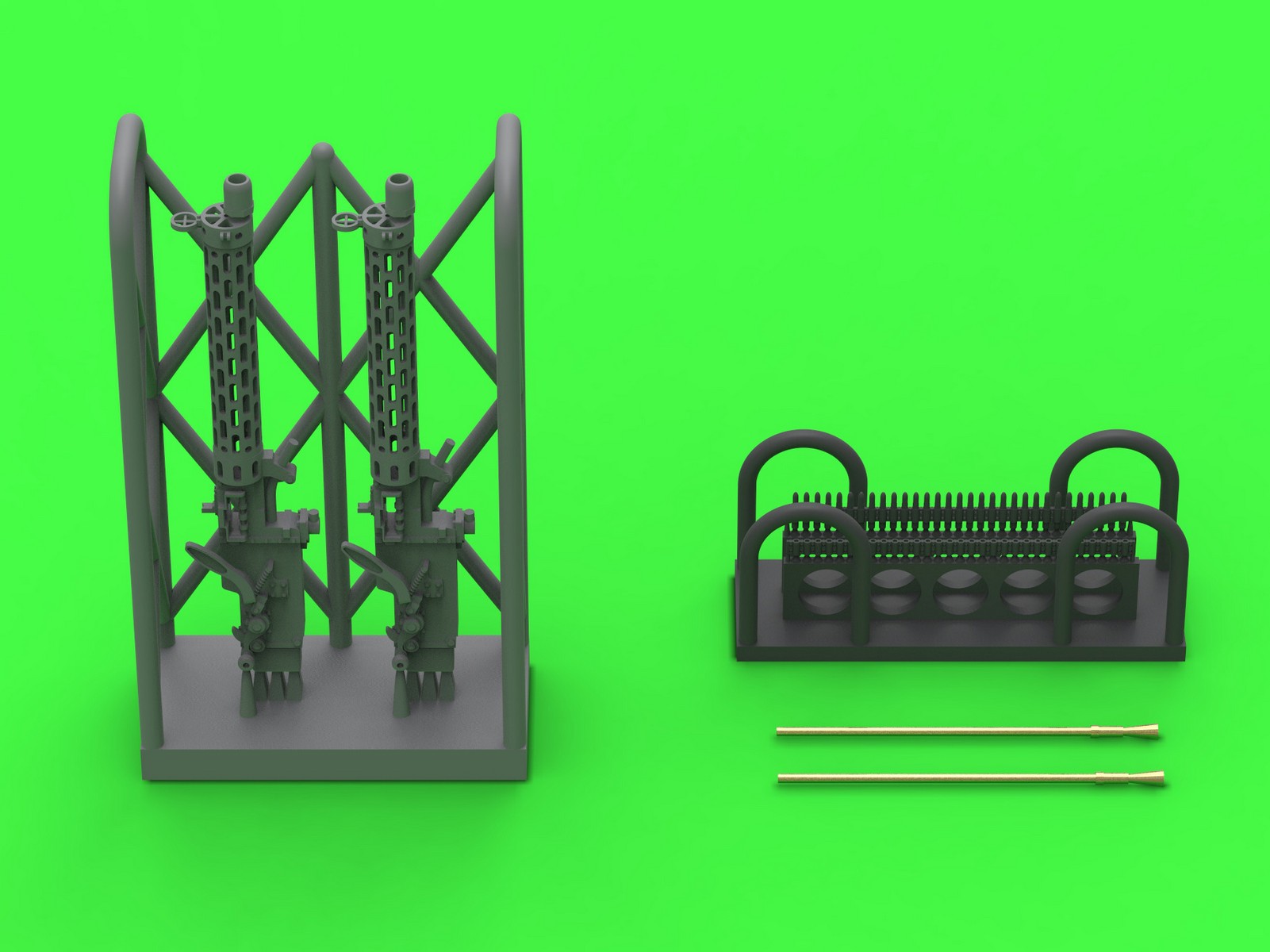
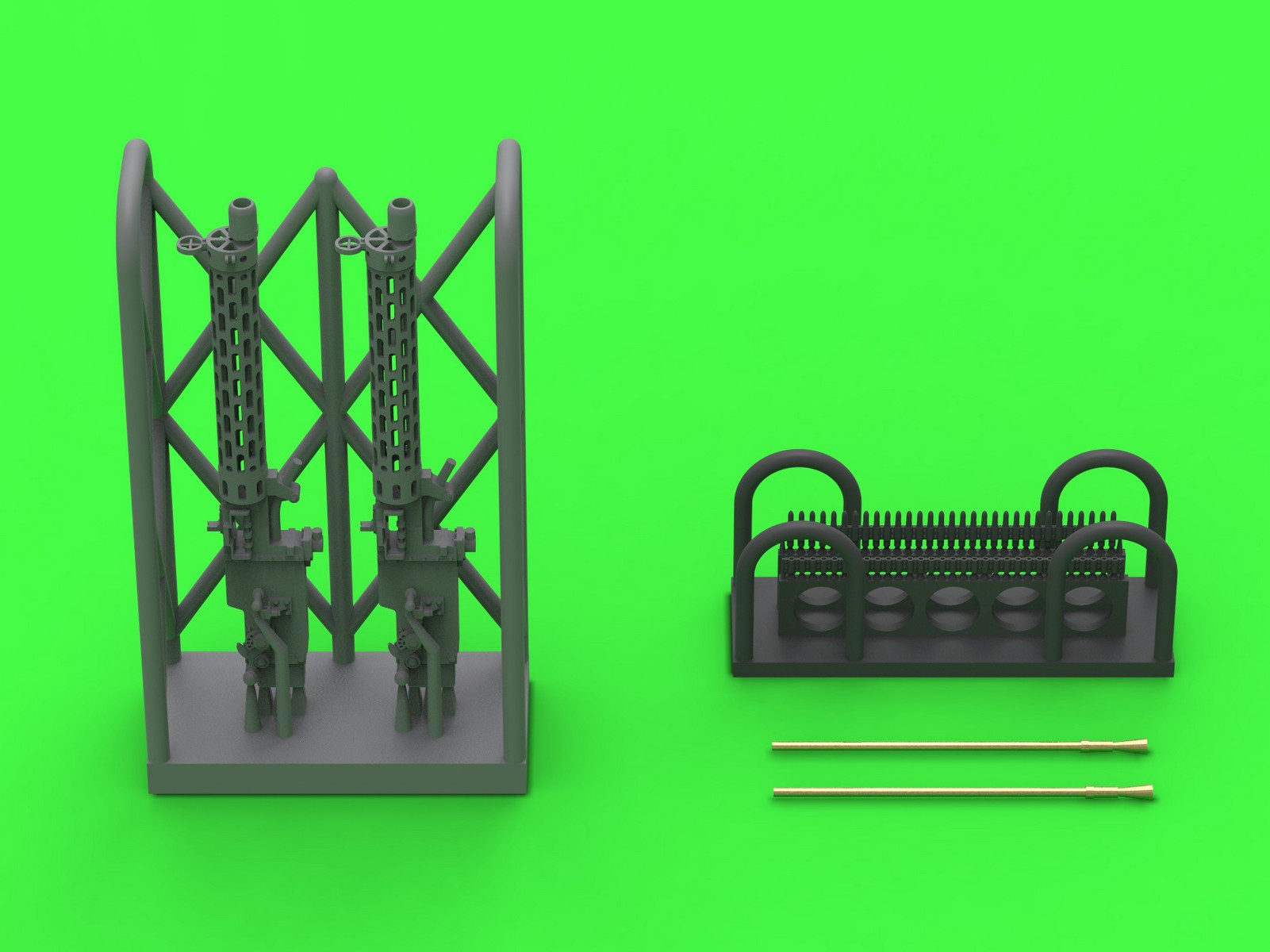
German WW I machine gun Spandau LMG 08/15 (2 pcs) - with LONG charging handle - complete guns incl. 3D resin & brass parts
Aircraft detailing sets (resin)
Catalogue
£7.00
-
5+
1:72
German WW I machine gun Spandau LMG 08/15 (2 pcs) - with SHORT charging handle - complete guns incl. 3D resin & brass parts
Aircraft detailing sets (resin)
Catalogue
£7.00
-
5+
1:72
German cannon Bordkanone 5cm with resin muzzle (Mk 214 / 5cm BK) - used on Messerschmitt Me-262A-1a/U4, Me 410 A-1/U4
Aircraft guns (brass)
Catalogue
£5.92
-
5+
1:72
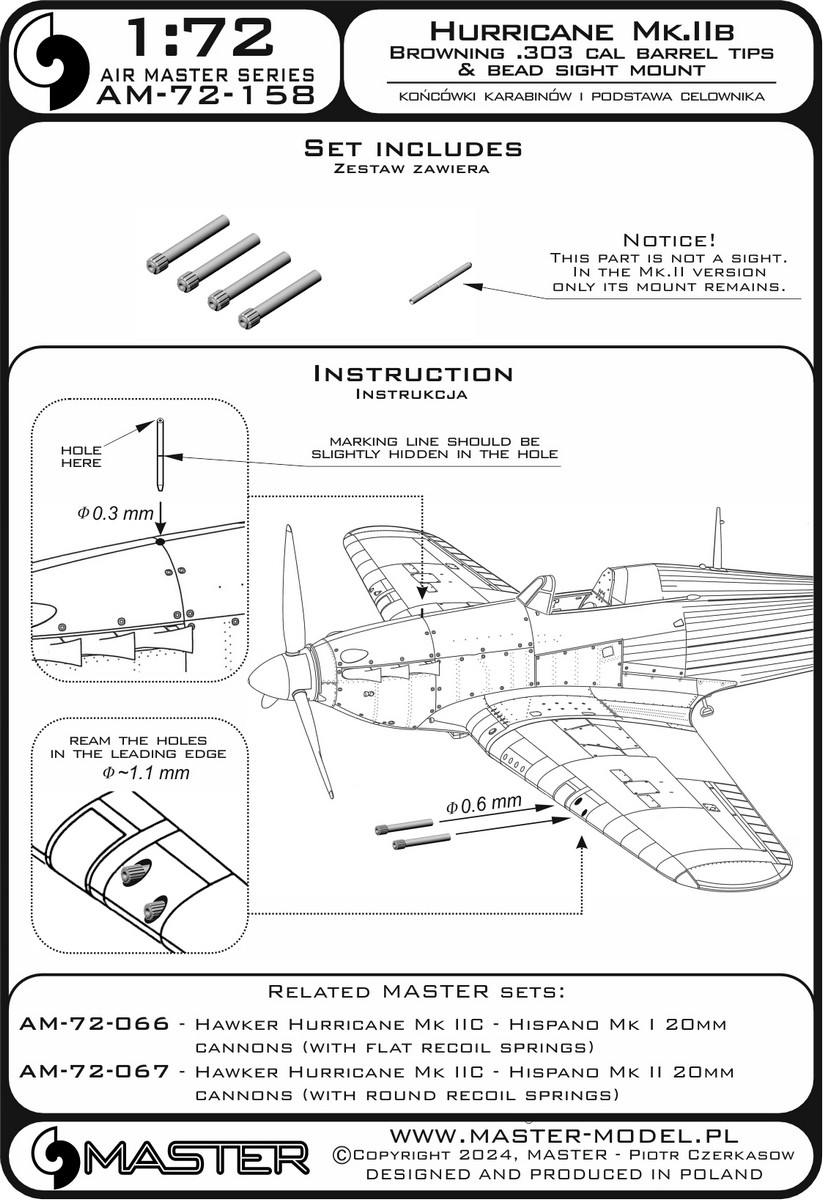
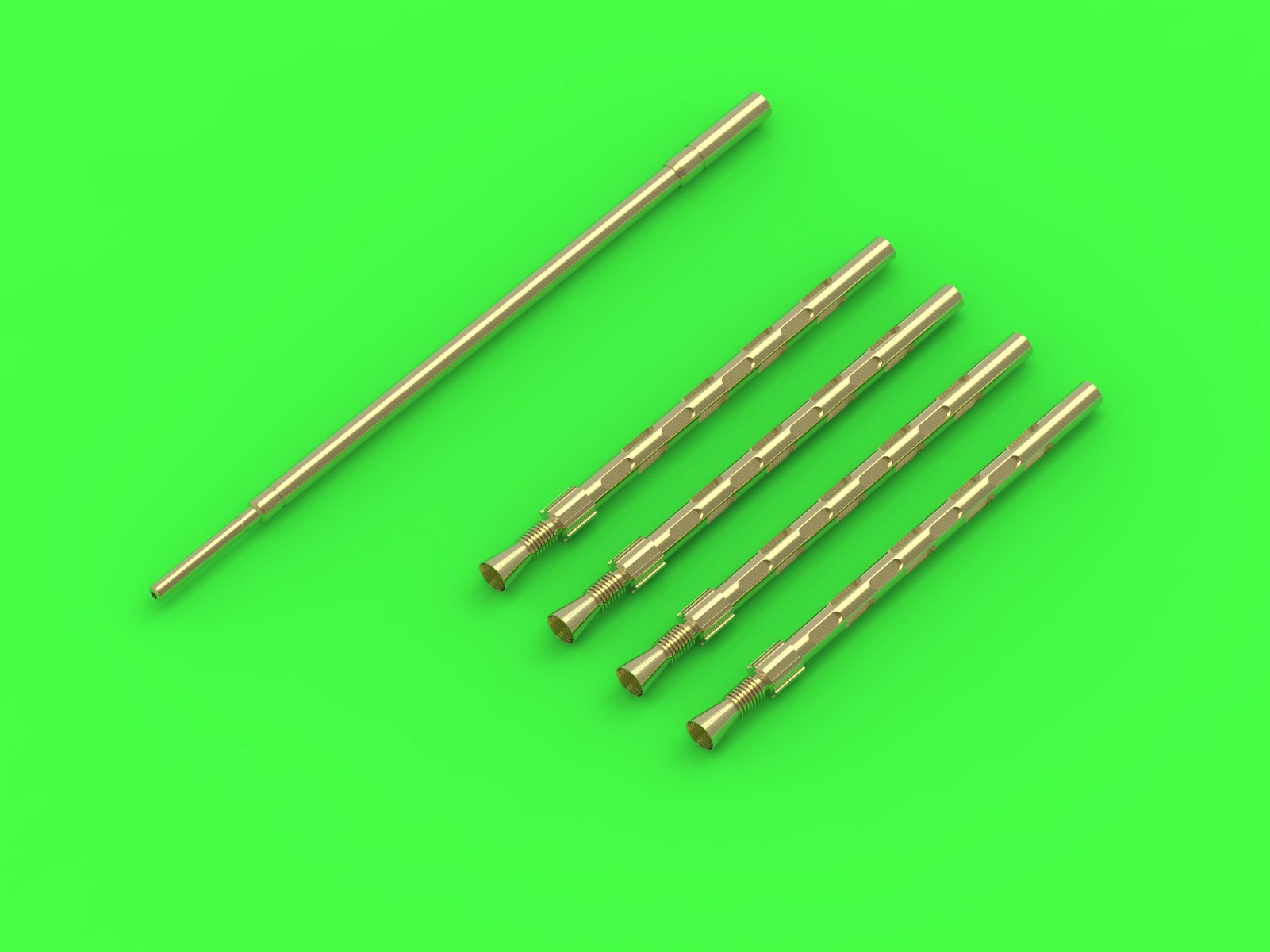
Hawker Hurricane Mk.IIb - Browning .303 cal barrel tips & bead sight mount (designed to be used with Airfix and Arma Hobby kits)
Aircraft detailing sets (brass)
Catalogue
£5.67
-
5+
1:72
Boeing F/A-18E/F/A-18F Super Hornet & EA-18G Growler - Angle Of Attack probe - late type (designed to be used with Academy, Hasegawa, Italeri, Revell and Tamiya kits)
Aircraft detailing sets (resin)
Catalogue
£3.17
-
4
1:72
Boeing F/A-18E/F/A-18F Super Hornet & EA-18G Growler - Angle Of Attack probe - early type (designed to be used with Academy, Hasegawa, Italeri, Revell and Tamiya kits)
Aircraft detailing sets (resin)
Catalogue
£3.17
-
4
1:72
Grumman F4F-3 Wildcat LATE - .50 Browning gun barrels with round holes & Pitot Tube (two options) (designed to be used with Eduard kits)
Aircraft detailing sets (brass)
Catalogue
£5.67
-
5+
1:72
Grumman F4F-3 Wildcat EARLY (pre-war) - .50 Browning gun barrels with oblong holes & early Pitot Tube (designed to be used with Eduard kits)
Aircraft detailing sets (brass)
Catalogue
£5.67
-
5+
1:72
Boulton-Paul Defiant - Pitot tube & Browning .303 cal barrels (designed to be used with Airfix and MPM kits)
Aircraft detailing sets (brass)
Catalogue
£8.25
-
5+
1:72
Grumman A-6 Intruder - Pitot Tube, Angle Of Attack and Refueling probe (designed to be used withBilek, FROG, Fujimi, , Hasgawa, Italeri, Kangnam Models, Revell, Tamiya and Trumpeter kits) [A-6A A-6E]
Aircraft detailing sets (brass)
Catalogue
£4.67
-
5+
1:72
PZL P.11c - oil cooler (designed to be used with Arma Hobby kits)
Aircraft detailing sets (3D printed)
Catalogue
£5.33
-
5+
1:72
PZL P.11A/P.11B/P.11C - details set - wz. 33 machine gun barrels, gunsight and Venturi Tube (designed to be used with Arma Hobby and IBG Models kits)
Aircraft detailing sets (brass)
Catalogue
£8.83
-
5+
1:72
Dornier Do-335B-2 - detail set - MG 151, MK-103 tips, FuG 25a antenna, Pitot Tube (designed to be used with Dragon and Drami Models kits)
Aircraft detailing sets (metal)
Catalogue
£7.67
-
5
1:72
Dornier Do-335A - detail set - MG 151, FuG 25a antenna, Pitot Tube (designed to be used with Dragon and Hobby Boss kits)[Do-335A-10 Do-335A1A Do-335A-10]
Aircraft detailing sets (metal)
Catalogue
£5.33
-
5
1:72
Focke-Wulf Fw-190A-7 Fw-190A-8/Fw-190A-9 armament set (MG 131, MG 151 barrel tips, MK 108 blast tubes) & Pitot Tube (designed to be used with Eduard kits)
Aircraft detailing sets (metal)
Catalogue
£6.66
-
5+
1:72
Focke-Wulf Fw-190A-6 armament set (MG 17, MG 151 barrel tips) & Pitot Tube (designed to be used with Eduard kits)
Aircraft detailing sets (metal)
Catalogue
£5.92
-
5+
1:72
Focke-Wulf Fw-190A-2 - A5 armament set (MG 17, MG FF, MG 151 barrel tips) & Pitot Tube (designed to be used with Eduard kits)
Aircraft detailing sets (metal)
Catalogue
£5.92
-
5+
1:72
Mikoyan MiG-31 Foxhound - Pitot Tube (designed to be used with ICM UA UK and Zvezda kits)
Aircraft detailing sets (metal)
Catalogue
£7.67
-
5
1:72
Sukhoi Su-15_Flagon - Pitot Tubes (optional parts for all versions) (designed to be used with A-Model and Trumpeter kits)[Su-15TM Su-15UTM Su-15UM]
Aircraft detailing sets (metal)
Catalogue
£8.42
-
5+
1:72
Mikoyan MiG-15 & Mikoyan MiG-15bis - gun barrels set, antenna base & Pitot Tube
Aircraft guns (brass)
Catalogue
£7.67
-
5+
1:72
Messerschmitt Me-163B Komet - armament set (MG 151 barrel tips) & Pitot Tube (designed to be used with Condor and Special Hobby kits)
Aircraft guns (brass)
Catalogue
£3.67
-
5
1:72
Heinkel He-162A Salamander - armament and detail set (MG 151 barrel tips, nose gear indicator and Pitot Tube) (designed to be used with Dragon, Drami Model and Special Hobby kits)
Aircraft guns (brass)
Catalogue
£3.67
-
5




 Advanced Search