1:35
Zwillingssockel 36, WWII German Anti-aircraft Machine gun Mount (100% new molds)
Military vehicle kits (injection)
Catalogue
£12.08
-
 3
3
1:35
s.Gr.W.34 WWII German mortar with Crew (mortar and 4 figures) (100% new molds) The s.Gr.W.34 mortar, produced from 1934 to 1945 was in Wermacht service during the war. It was a regular means of fire support of German infantry battalions and allowed to solve combat tasks of ground units successfully. The range of the mortar was adjusted by changing the angle of the barrel and the amount of powder charge on the mine. The ammunit...
Figures (injection)
Catalogue
£12.49
-
3
1:35
s.Gr.W.34 WWII German mortar The 81.4 mm GrW 34 mortar was the standard mortar of the German Army in WWII. Developed by Rheinmetall-Borsig AG in 1932, it was produced from 1934 to 1945 by various manufacturing companies. The maximum range of the shot was 2400 meters, there were included different types of ammunition: fragmentation, smoke, lighting and special bouncing bombs. The mortar was the standard weapon of the German inf...
Military vehicle kits (injection)
Catalogue
£8.17
-
18
1:35
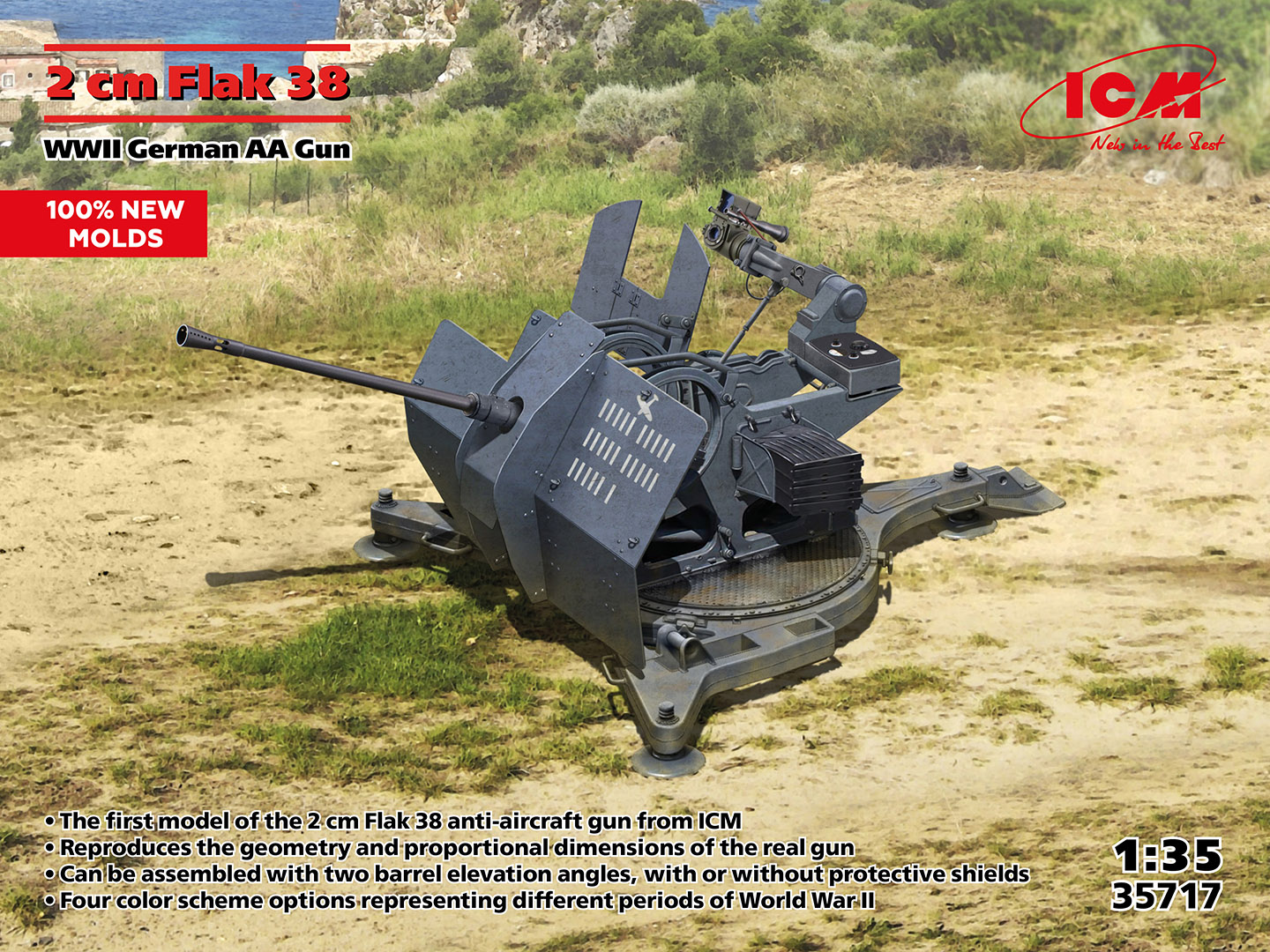
Flak 38, WWII German AA Gun (100% new molds) 100% new molds In 1934, the 20 mm anti-aircraft gun Flak 30, developed by the German company Rheinmetall, was adopted by the Luftwaffe. Based on the combat experience with the gun in Spain, Mauser upgraded it, and the new model was named the 2 cm Flak 38. The upgraded gun used the same ammunition as the Flak 30, with changes primarily aimed at increasing the rate of fire, which rose...
Military vehicle kits (injection)
Catalogue
£13.17
-
20+
1:35
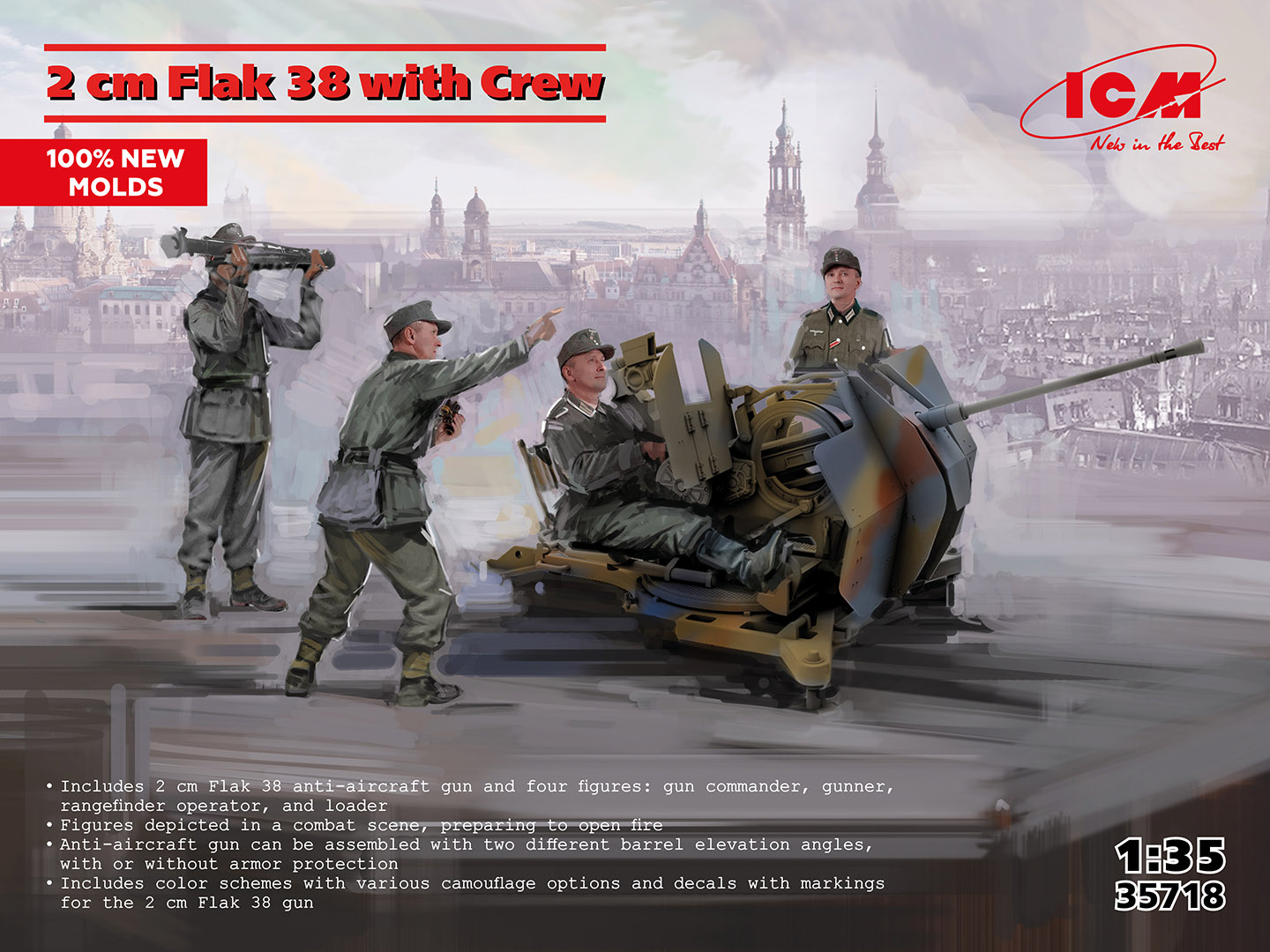
Flak 38 with Crew with new parts. At the beginning of World War II, the German Army's anti-aircraft
defense relied on specialized motorized companies, each equipped
with 12 automatic anti-aircraft guns. However, as the Luftwaffe
lost air superiority, the need to protect units from enemy attack aircraft and fighter-bombers intensified. Many Wehrmacht combat formations began incorporating anti-aircraft units armed with heavy ...
Military vehicle kits (injection)
Catalogue
£16.50
-
18
1:35
Brewster Body Shield, US Infantry WWI (100% new molds) WAS £15.80. TEMPORARILY SAVE 1/3RD!!!
Figures (injection)
Special Offers
£8.77
-
10+
1:35
WWI Italian Infantry in armour (100% new molds) During the WWI so-called "death companies" were created in the Italian army to carry out assault operations. They were manned by volunteers, and according to their purpose were to pave the way for the attacking infantry units. Their primary task was to clear the passages in the enemy's barriers, for which the fighters of these companies were equipped with special assault armor.
...
Figures (injection)
Catalogue
£11.50
-
10+
1:35
WWI German Infantry in armor (100% new molds) (WWI)
Figures (injection)
Catalogue
£12.49
-
5
1:35
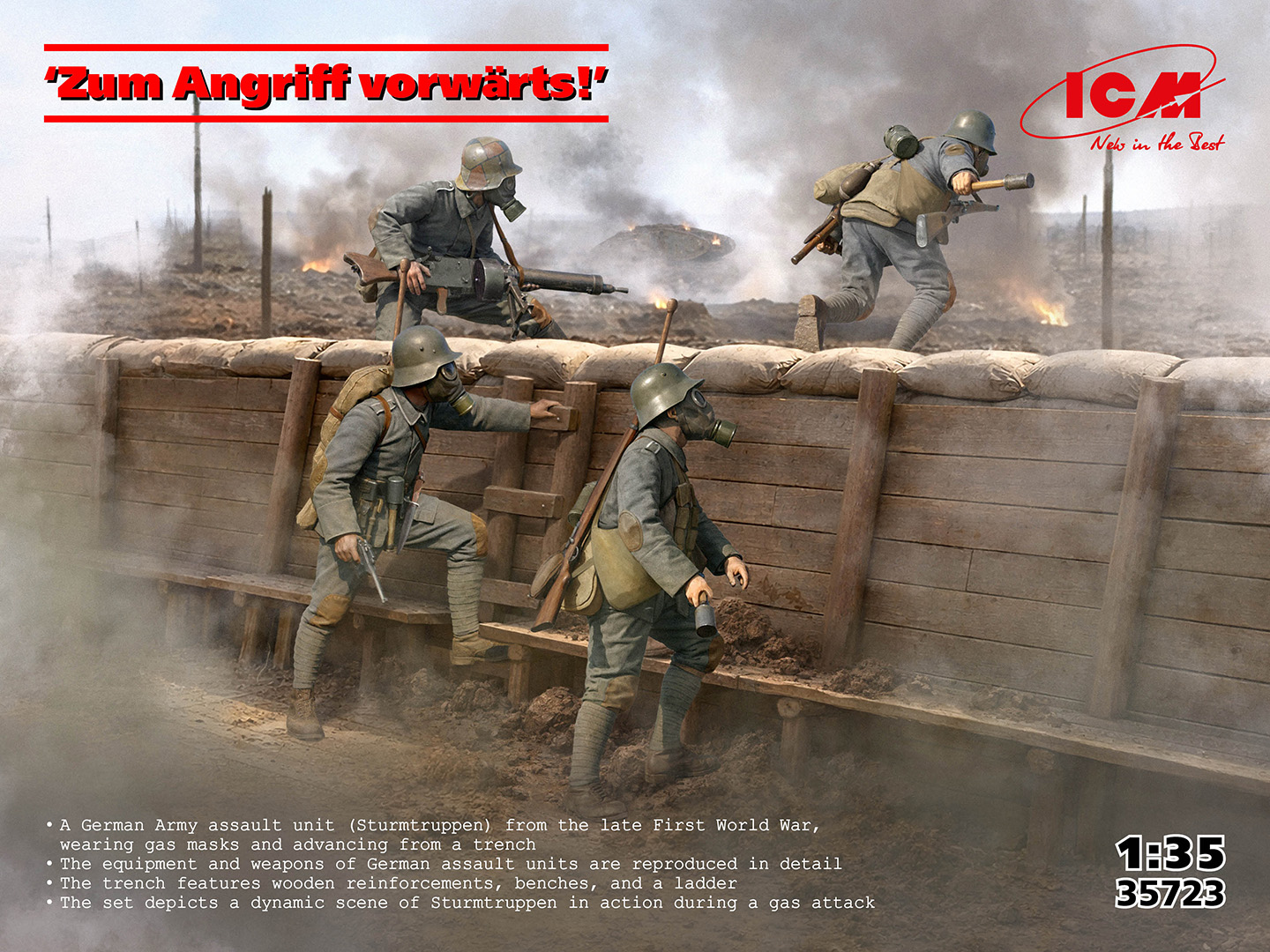
"Zum Angriff vorwarts!" German army assault unit Straupengruppe (WWI)
Figures (injection)
Catalogue
£18.32
-
10+
1:35
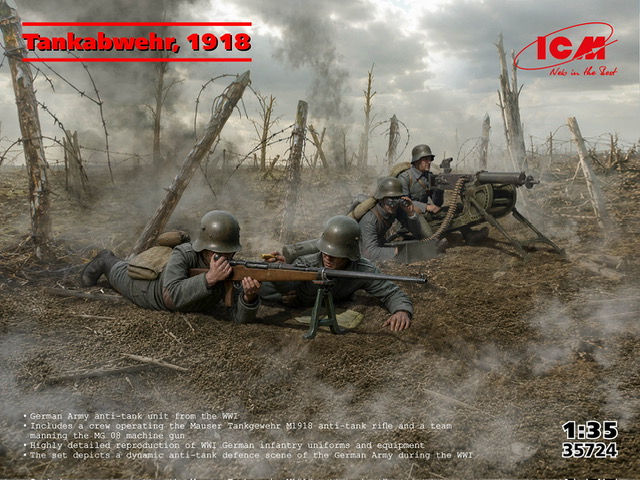
'Panzerabwehr, 1918'
- German Army anti-tank unit from the WWI
- Includes a crew operating the Mauser Tankgewehr M1918 anti-tank rifle and a team manning the MG 08 machine gun
- Highly detailed reproduction of WWI German infantry uniforms and equipment
- The set depicts a dynamic anti-tank defence scene of the German Army during the WWI
Figure kits (injection)
Catalogue
£18.32
-
6
1:35
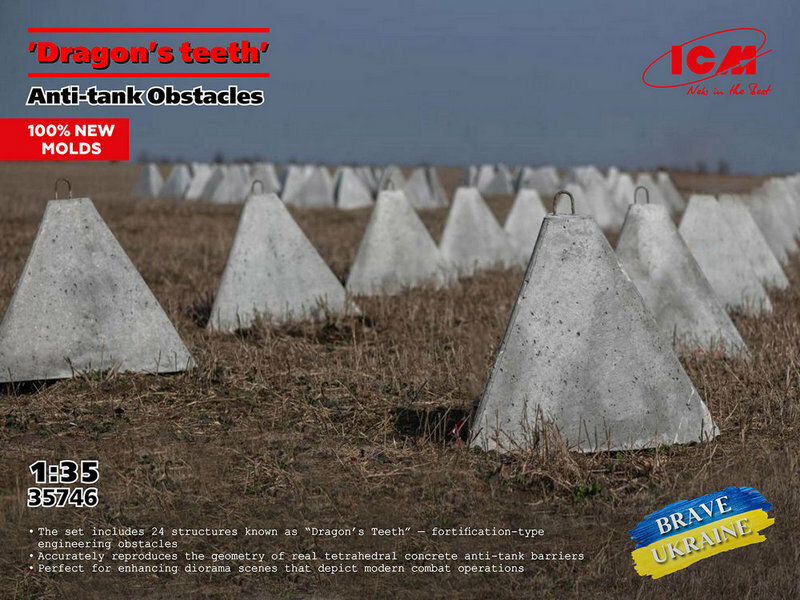
Dragons Teeth tank obstacles USUALLY 14.99. TEMPORARILY SAVE 1/3RD!!!
Diorama accessories (injection)
Special Offers
£8.32
-
20+
1:35
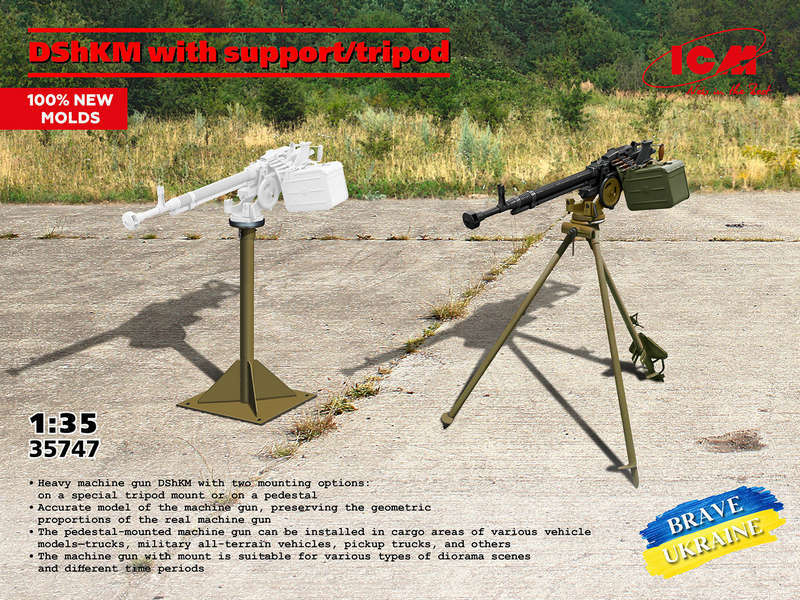
DShKM with support tripod
Diorama accessories (injection)
Catalogue
£8.32
-
5
1:35
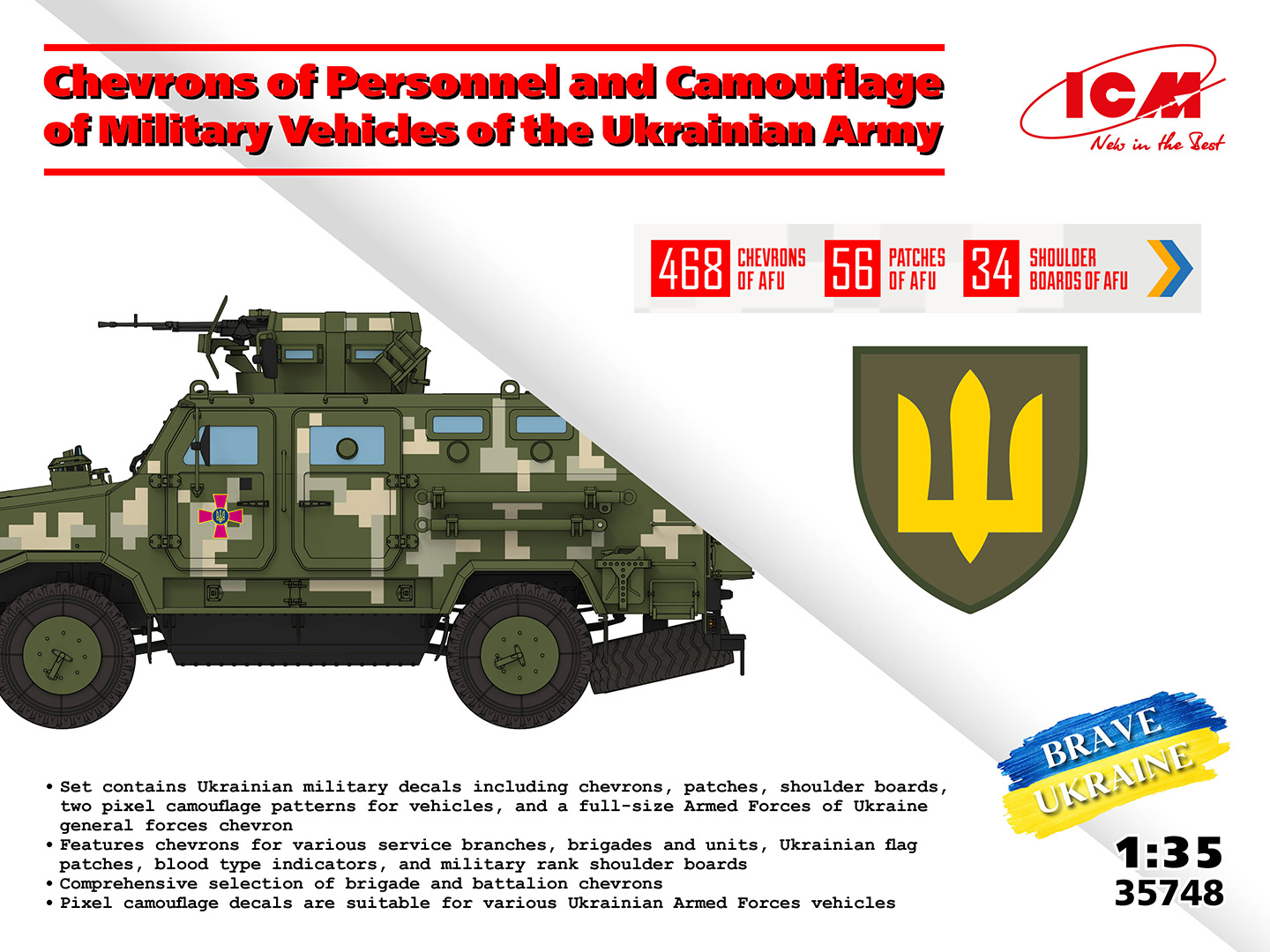
Chevrons of personnel and camouflage of military vehicles of the ukraian army Identification marks for ranks, specialties, or titles appeared on military uniforms in the 19th century. Over time, their appearance evolved in accordance with advancements in technology and graphic design. It is known that different countries have their own unique chevrons and patches, influenced by military traditions and, to some extent, the ment...
Diorama accessories (injection)
Catalogue
£12.49
-
4
1:35
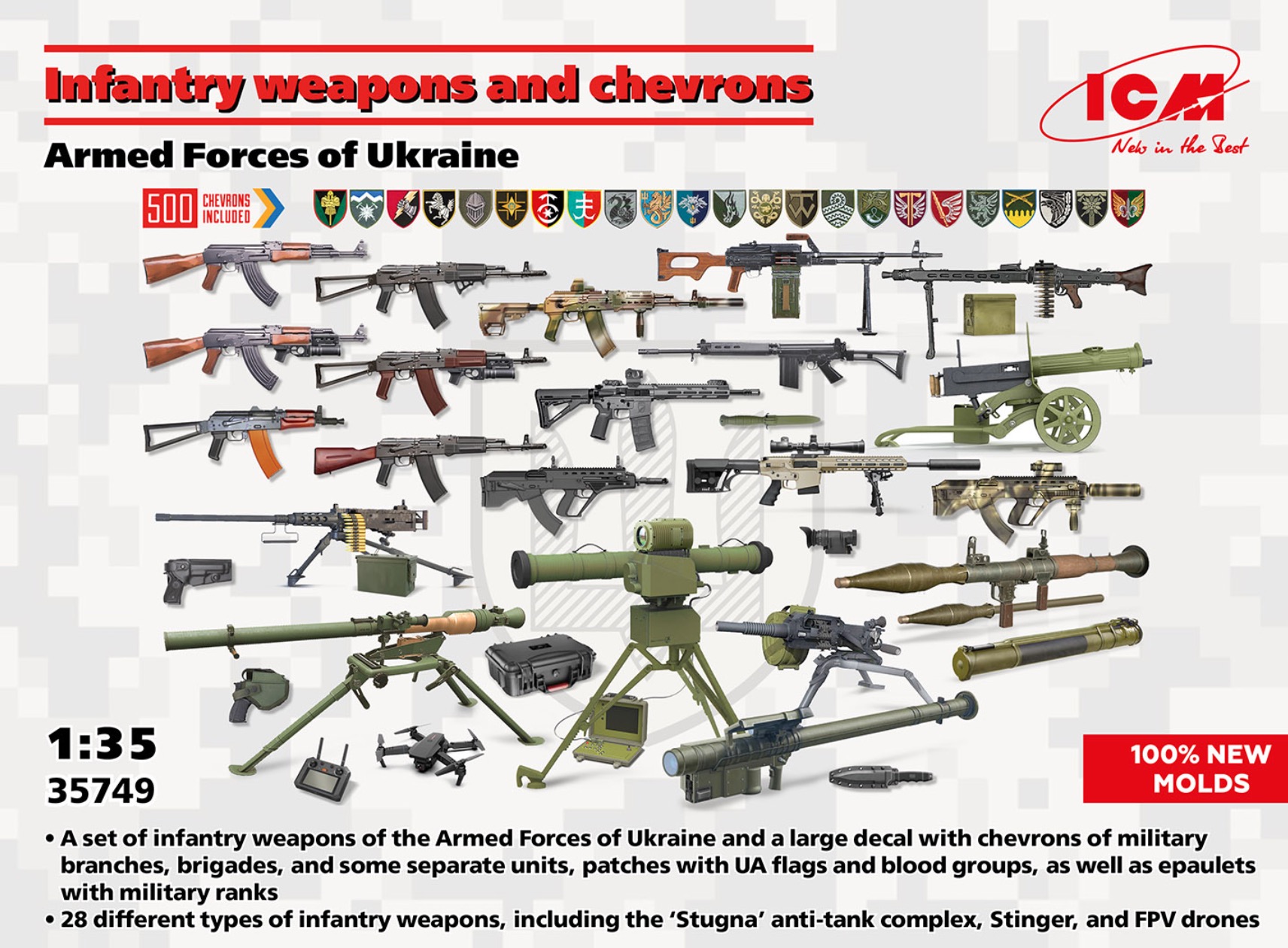
Infantry weapons and chevrons of the Armed Forces of Ukraine (100% new molds) "new parts Brave Ukraine Series Infantry weapons and decals with AFU chevrons" The main burden of the full-scale war that began in February 2022 fell on the Ground Forces of Ukraine. These include mechanized, motorized infantry, mountain, tank, and artillery brigades. However, the most active participation in combat operations is seen from the Air As...
Military vehicle kits (injection)
Catalogue
£17.08
-
2
1:35
'Stugna-P' anti- tank system (100% new molds in 2023). TEMPORARILY SAVE 1/3RD!!! The Stugna-P anti-tank missile system was developed by the Ukrainian design bureau Luch. The system is designed to engage tanks and other armored targets with a high level of protection, and it can also engage helicopters. The range of fire on ground targets reaches 5000 meters. One of the advantages of the system is that it can fire from closed p...
Military vehicle kits (injection)
Special Offers
£8.32
-
10+
1:35
Journalists in War (4 figures) (100% new molds) BRAVE UKRAINE
Figures (injection)
Catalogue
£11.50
-
4
1:35
"Quietly came, quietly went"", Special Operations Forces of Ukraine (4 figures) (100% new molds) BRAVE UKRAINE The modern Special Operations Forces (SOF) of the Armed Forces of Ukraine were created in 2016 on the basis of existing units and subunits, most of which already had some combat experience. As of the summer of 2023, the Ukrainian Special Operations Forces are based on two special purpose regiments - a special purpose ...
Figures (injection)
Catalogue
£12.49
-
3
1:35
"To be ahead, to save the life", Sappers of the Armed Forces of Ukraine (3 figures and a sapper dog in a protective mask) USUALLY £13.80. TEMPORARILY SAVE 1/3RD!!! (100% new molds) In the Armed Forces of Ukraine, as in other armies of the world, the tasks of sapper units include conducting
engineering reconnaissance of the area, equipping and removing minefields. Ukrainian sappers also provide engineering support to their uni...
Figures (injection)
Special Offers
£7.67
-
5+
1:35
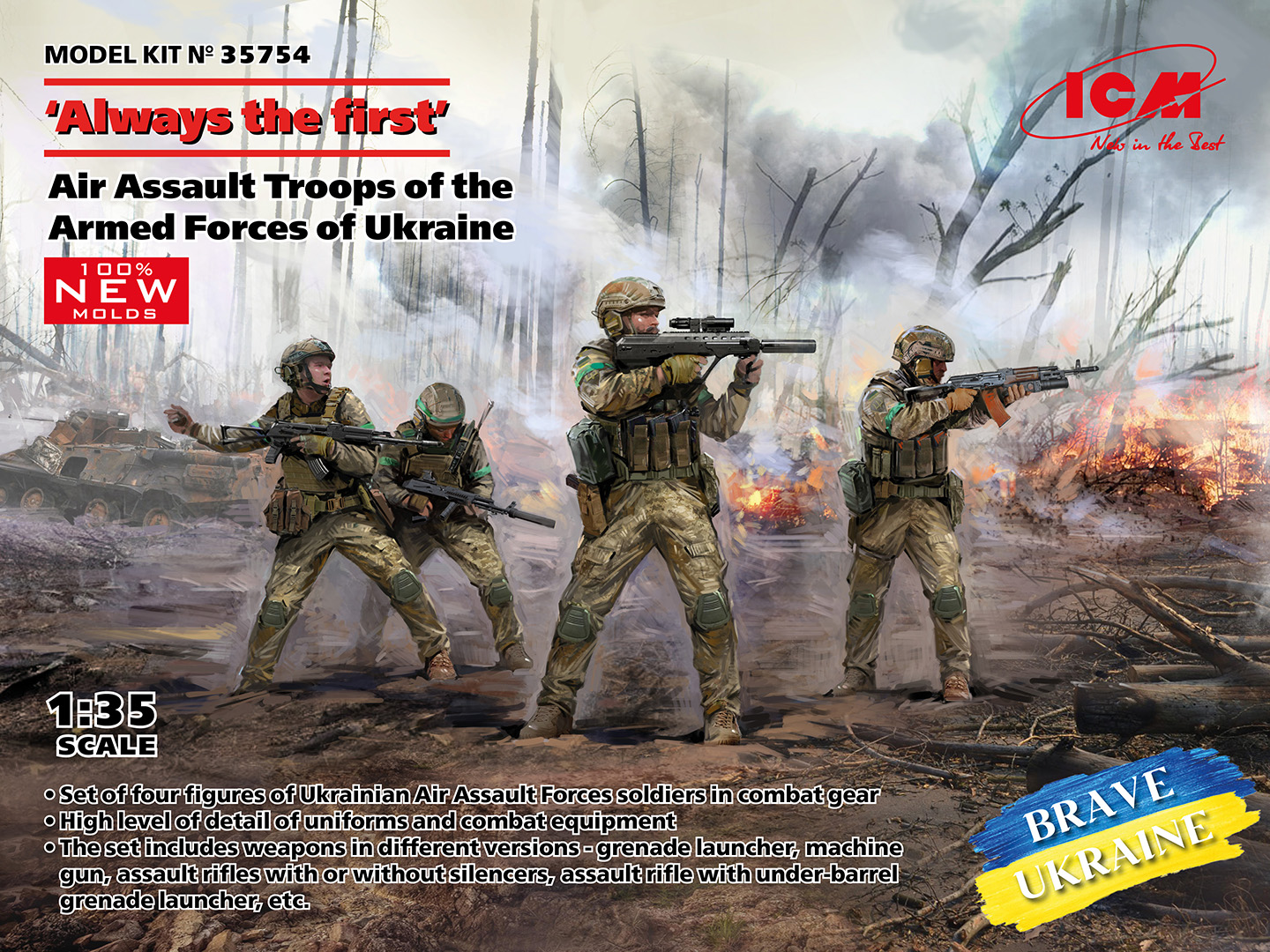
'Always the First.' Air assault troops of the Armed Forces of Ukraine USUALLY £13.80. TEMPORARILY SAVE 1/3RD!!!
The Air Assault Forces of Ukraine were created in 2017 on the basis of the existing Highly Mobile Landing Troops, which at that time already had its own separate command. According to their purpose, the units and subunits of the Air Assault Forces are divided into airborne and air assault troops; to enhance their st...
Figures (injection)
Special Offers
£7.67
-
5+
1:35
'War has no gender'. Female servicemen of the Armed Forces of Ukraine (100% new molds) As of October 2023, there were almost 43 thousand female servicemen in the Armed Forces of Ukraine. Ukraine has one of the highest rates of women in the armed forces among the armies of the world, including NATO armies As of October 2023, there were almost 43,000 female servicewomen in the Armed Forces of Ukraine. Ukraine has one of the high...
Figures (injection)
Catalogue
£11.50
-
4
1:35
Ukraine Tank Crew of the Armed Forces of Ukraine (100% new molds) USUALLY £13.80. TEMPORARILY SAVE 1/3RD!!! Brave Ukraine Series 100% new moulds The Armed Forces of Ukraine boast a variety of tanks, both
domestic and Western-made. Despite the abundance of modern
anti-tank weapons, tanks remain a formidable force on the battlefield. They are utilized by the Ground and Air Assault Forces, the Marine Corps, and units of the Nat...
Figures (injection)
Special Offers
£7.67
-
5+
1:35
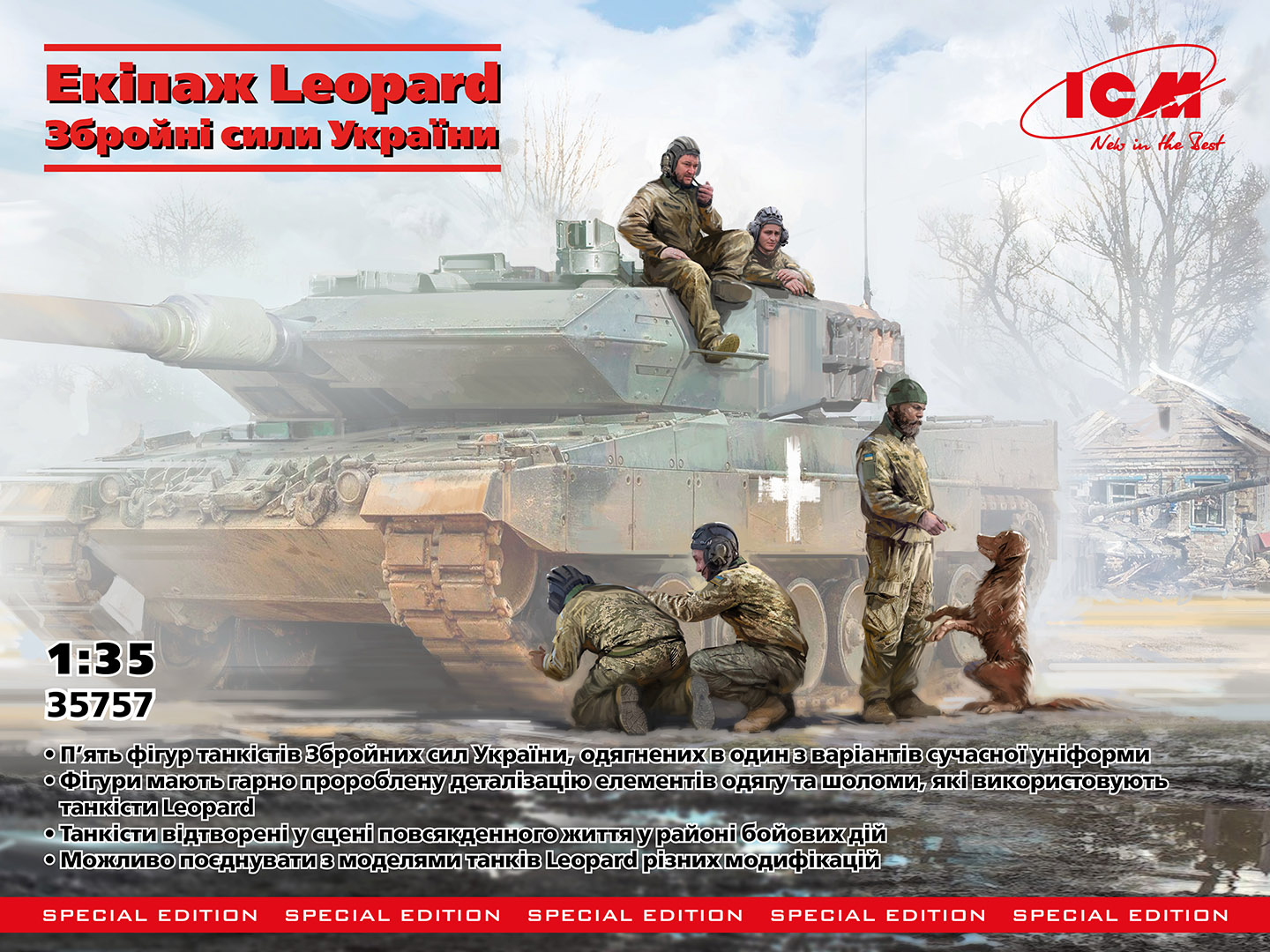
Combat units of the Armed Forces of Ukraine operate different types of tanks. Until recently, most of them were tanks of Soviet design (T-64, T-72, T-80 and their modifications). Starting in 2023, Western-made combat vehicles began to enter the tank forces of Ukraine. One of these most modern models are Leopard 2 tanks of various modifications. The crew of this tank has four men - tank commander, driver, gunner and loader. Mec...
Figures (injection)
Catalogue
£11.50
-
20+
1:35
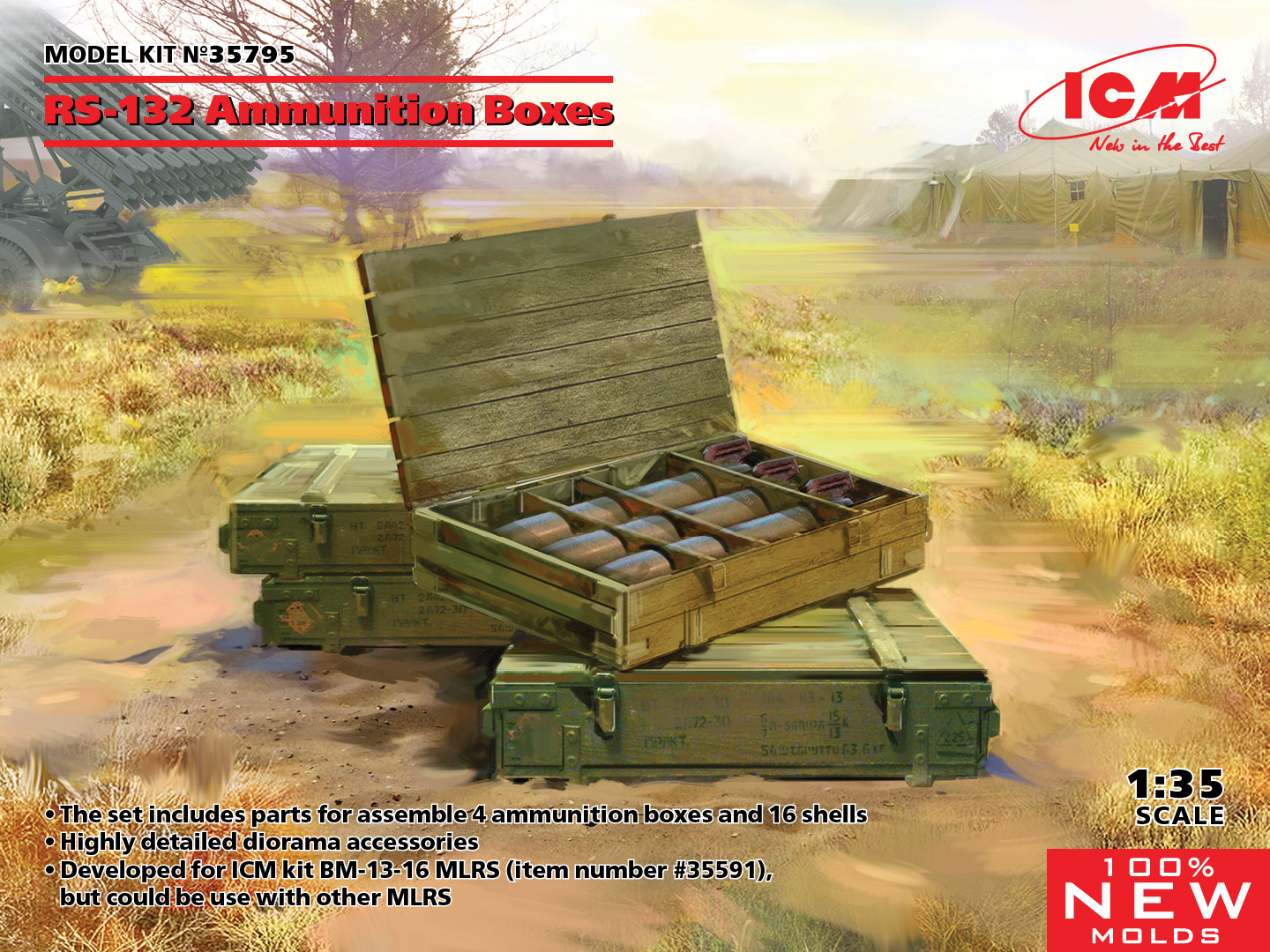
RS-132 Ammunition Boxes (100% new molds) (designed to be used with ICM UA UK kits) [BM-13-16 on W.O.T. 8 chassis]
Diorama accessories (injection)
Limited Availability
£9.83
-
10+
1:35
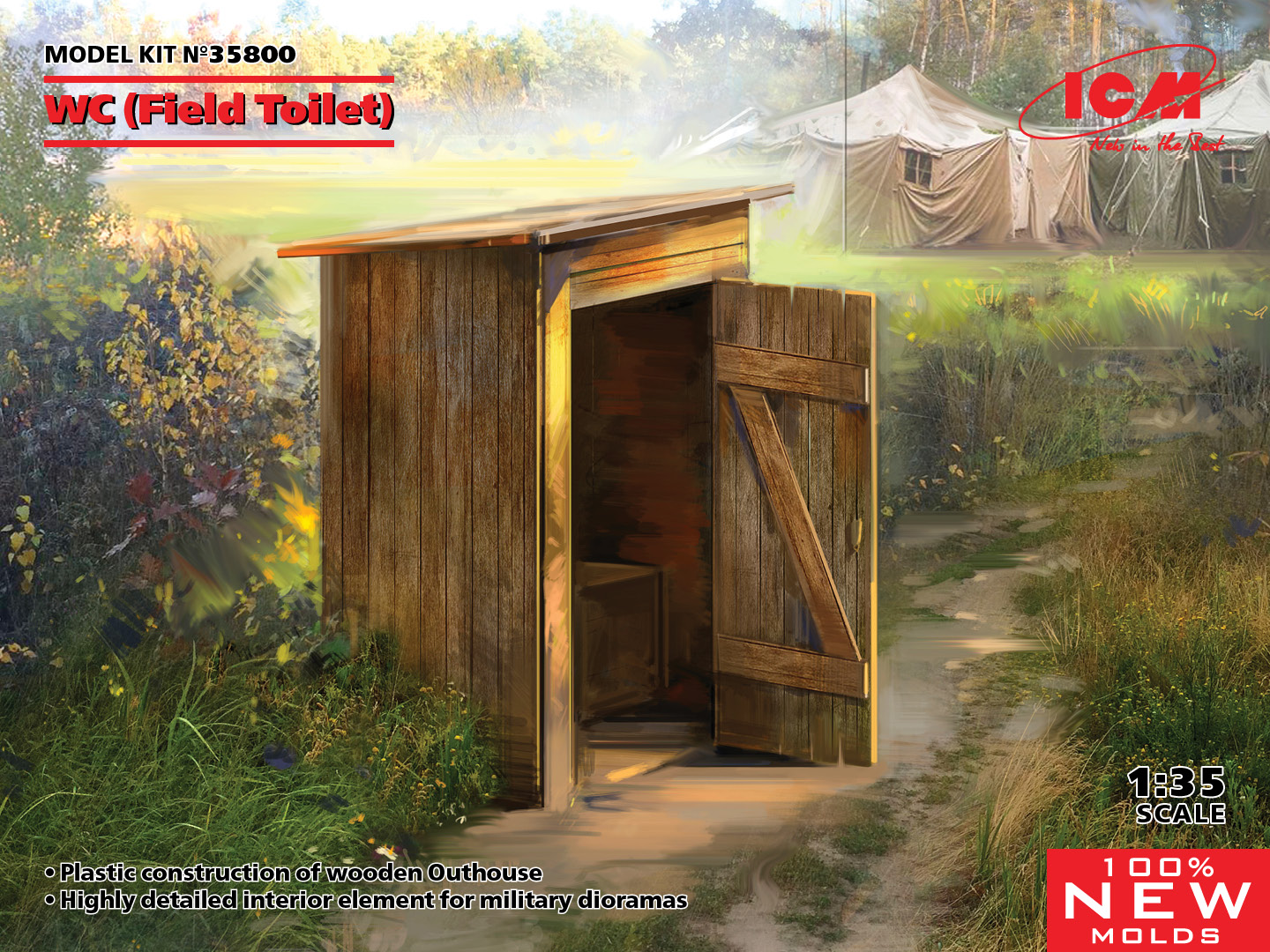
WC (Field Toilet) (100% new molds)
Diorama accessories (injection)
Catalogue
£12.49
-
10+
1:35
7,62mm Pak-36(r) field gun with Crew figures
Military vehicle kits (injection)
Catalogue
£16.50
-
5+




 Advanced Search