Cookies are small text files that are placed on your computer by
websites that you visit. They are widely used in order to make
websites work, or work more efficiently, as well as to provide
information to the owners of the site.
Here is a list of cookies this site uses:
Cookie name
Description
existing_user
Stores the email address used to previously log into the site, used to prefill forms like on the reset password screen
authchallenge
Authentication security checks
hcart
Stores the anonymous customer\'s cart token. If items are added to the card while not logged in, if you log in the items will be added to the customer\'s existing cart
hannants
Stores the session information while you remain on the site
pricer
Stores if the export or eu prices is selected on the catalogue page
hidefilter
Stores if the search filter panel is hidden or shown
AWSELB
Stores which server you\'re connected to so to access the same server while you navigate around the site
RAF Wildenrath, West Germany, 1967. 225mm(W) x 225mm(H) 9inches(W) x 9inches(H)
Construction of RAF Wildenrath began in 1950, with the station coming onto 'active' status in 1952. It was the first of four 'clutch' bases operated by the RAF in West Germany; the others being Geilenkirchen, Bruggen and Laarbruch.
From 1953, the first units to operate from Wildenrath were Nos. 67 and 71 Squadrons flying North-American F-86E ...
RAF Marham, Norfolk, United Kingdom, 2018-. 225mm(W) x 225mm(H) 9inches(W) x 9inches(H)
RAF Marham can trace its history back to 1916 when it started service as a night landing ground near RNAS Narborough, and also as an airfield to launch defensive operations against German Zeppelin attacks against Norfolk. The first unit stationed here was No. 51 Squadron, Royal Flying Corps flying Royal Aircraft Factory B.E.2 and B.E.12'...
Da Nang Air Base, 1970-71. 225mm(W) x 225mm(H) 9inches(W) x 9inches(H)
Armee de l'Air:
The history of the air base at Da Nang goes back to the days of French Indochina. Tourane Airfield as it was then called, was constructed during the 1930's. In 1940, the French Vichy Government agreed to let Imperial Japan use the base as a stationing post for Japanese troops along with several other bases in the area including Cam Ran...
USS Enterprise (CV-6), 250N Blue Flight Deck Stain, November 1943. 337mm(W) x 225mm(H) 13 inches x 9 inches(H)
The Enterprise was one of three Yorktown-class carriers, the others being the Yorktown (CV-5) and Hornet (CV-8). She was laid down on July 16th 1934, and launched on October 3rd, 1936, and was the seventh ship to that date to be named Enterprise.
Nicknamed The Big E, the Enterprise was commissioned in May 1938 a...
RAF Coltishall, Norfolk, United Kingdom, 1950's-1970's. 438mm(W) x 225mm(H) 17 inches x 9 inches(H)
Scottow Aerodrome was built in 1939. Renamed Coltishall, it was activated in May 1940 and one of the first units to operate from the station was No. 242 Squadron flying the Hawker Hurricane and led by Douglas Bader. 242 Squadron left for RAF Duxford shortly afterwards. The station became a night fighter base for most of the r...
Wood planked revetments, Finland/Russia: Winter War/Eastern Front/Continuation War, 1940-1944. 337mm(W) x 225mm(H) 13 inches x 9 inches(H)
Life during the war on the Eastern Front was primitive to say the least. Many roads were little more than dirt tracks, which, although fine for travel during the hot summer months, became nigh impassable during the spring and autumn periods known as the Rasputitsa, or more commonly to th...
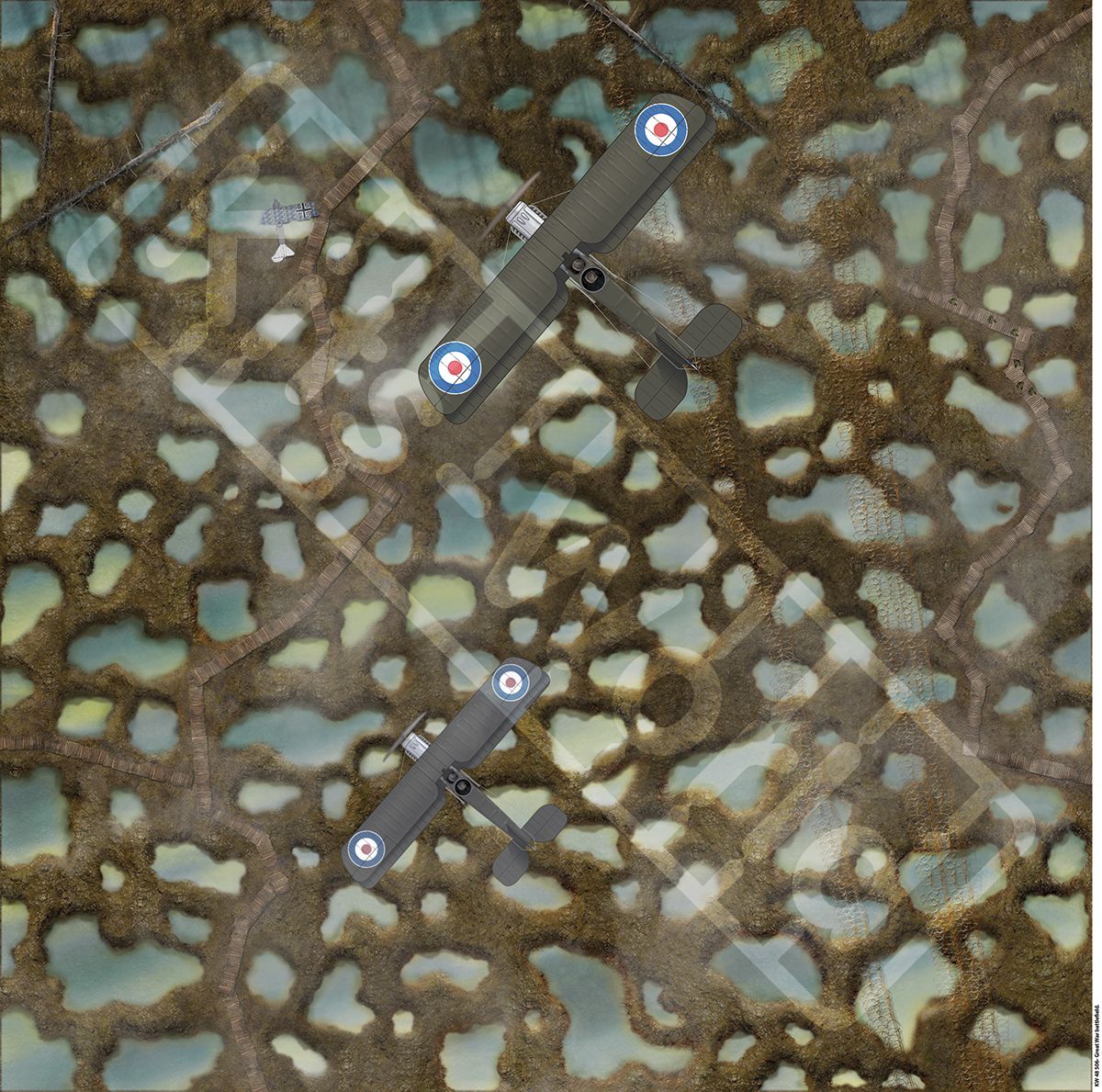
Great War Battlefield. 225mm(W) x 225mm(H) 9inches(W) x 9inches(H)
The war witnessed an unprecedented horror never before seen and bought war on an industrial scale to mankind. The trench system came into effect as early as September 1914, when the Allied and Central Powers Commands began to realise that war would not be the short-term battle they had initially envisioned. As the war drew on, the trench system expanded, eve...
Desert- Blurred. 225mm(W) x 225mm(H) 9inches(W) x 9inches(H)
This base can be used for a number of applications and theatres involving civil and military aviation from the Great War (Egypt, Mesopotamia, Palestine etc), through to the Second World War (Middle East, Persia), the Cold War (Middle East and Iran/Iraq conflicts, Indo-Pakistan conflicts etc), to the present day (Gulf Wars, Middle East wars, United States adversary...
RAF Scampton, Lincolnshire, United Kingdom, 2000-2021. 225mm(W) x 225mm(H) 9inches(W) x 9inches(H)
RAF Scampton's location can trace its ancestry back to the Great War when, named Home Defence Flight Station Brattleby, it served as a landing field for the Royal Flying Corps. From here operated No. 3 Squadron 'A' Flight equipped with the Royal Aircraft Factory F.E.2b albeit briefly in the anti-Zeppelin role. This unit was fo...
RAF Scampton, Lincolnshire, United Kingdom, 2000-2021- Main runway- blurred. 225mm(W) x 225mm(H) 9inches(W) x 9inches(H)
RAF Scampton's location can trace its ancestry back to the Great War when, named Home Defence Flight Station Brattleby, it served as a landing field for the Royal Flying Corps. From here operated No. 3 Squadron 'A' Flight equipped with the Royal Aircraft Factory F.E.2b albeit briefly in the anti-Zeppelin ...
RAF Waddington, Lincolnshire, United Kingdom, 1960s. 225mm(W) x 225mm(H) 9inches(W) x 9inches(H)
RAF Waddington began as a training base for the Royal Flying Corps in 1916. Between this time and 1919, the station was home to a number of squadrons both under RFC, and later, RAF control. Nos. 82, 97, 105, 117 and 123 Squadrons RFC between 1917 and 1918, and Nos. 23, 203 and 204 Squadrons RAF throughout 1919 were based at Wad...
Southend Airport Size 675mm x 675mm
Formation and early years
Southend Airport can trace its ancestry back to the Great War when it was established by the Royal Flying Corps (RFC) in 1915. It was briefly passed over to the Royal Navy Air Service (RNAS) in the same year with limited flying duties being carried out. In 1916 the airfield passed back to RFC control when it became RFC Rochford and used as a training centre f...
Manchester Airport/Manchester International Airport/Ringway Airport Size 675mm x 675mm
Beginning and early days
What is now Manchester Airport traces its ancestry back to the 1930s. Construction of Ringway Airport as it was formerly known, in 1935, and the site partially opened in June 1937 before becoming fully operational in June 1938, officially opening with an air pageant to mark the occasion. The first scheduled fl...
Norwich Airport Size 675mm x 675mm
Beginnings and the first Norwich Airport
Initially a British Army cavalry training ground, RFC Mousehold Heath was established on the site and was home to a number of Royal Flying Corps units; Nos 18, 37, 85 and 117 Squadrons. In April 1918, RFC Mousehold Heath became RAF Mousehold Heath, and following the war, Boulton & Paul Ltd took over the site as a test facility, although it shou...
London Heathrow Airport Size 675mm x 675mm
Early Days and the inter-war period
Today, one of the worlds' major airports, and the largest of the six airports surrounding London. Initially the site was located near the village of Heathrow and was known by several titles; the Great West Aerodrome, Heathrow Aerodrome (due to the nearby hamlet of Heathrow), or Harmondsworth Aerodrome (due to it being located in the civil pa...
London Gatwick Airport Size 675mm x 675mm
Founding and early years
Today, Gatwick airport is one of the United Kingdom's major airport hubs, second only to Heathrow.
Originally, partially the area now occupied by the airport was a racecourse, and was founded in 1891. From 1907, a golf course was added but this closed shortly after the end of the Great War. During the late 1920's the land adjacent to the course was ...
WWII Propaganda Posters British Common Wealth 'Great Britain', 'South Africa', 'New Zealand', 'Australia', 'Canada,'.
(88 Poster in this set " Size per poster 25mm x 11mm aaprox).
'Marston Mat' Pierced Steel Plank (PSP).675mm(W) x 675mm(H) 26inches(W) x 26inches(H).
'Marston Mat', was a very common covering used for makeshift runways, parking areas and other military uses where rough ground was prevalent. Each panel measured 1 ft 7.5 in by 11 ft 9.75 in, and interlocked with its neighbour by a series of flat 'T' hooks and slots along each of the longest sides, which allowed a degree of flexibility of...
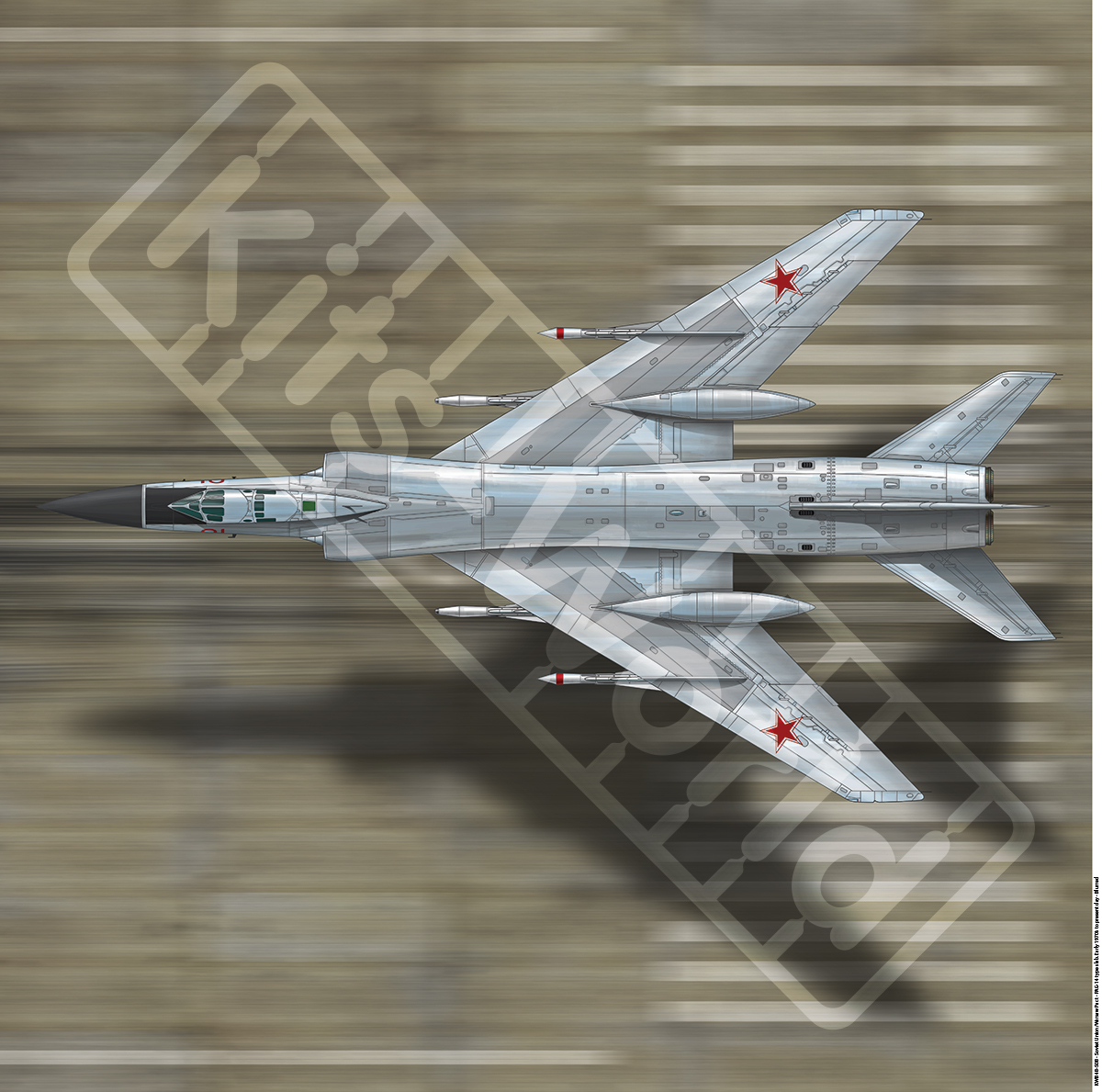
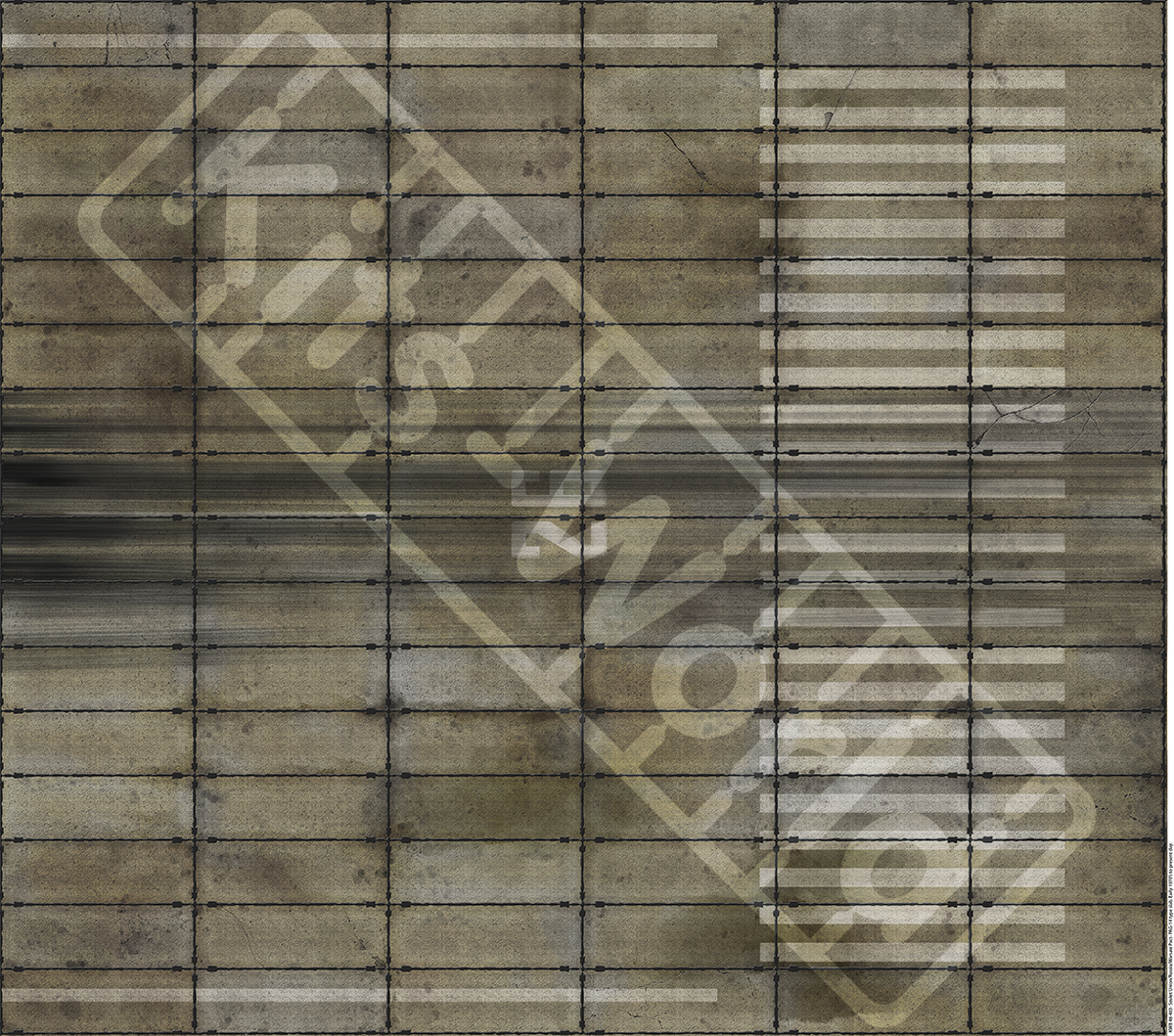
Soviet Union/Russia/Warsaw Pact/People's Republic of China: PAG-14 pre-stressed concrete slab- early 1970's to present. 675mm(W) x 675mm(H) 26inches(W) x 26inches(H).
This model represents the 6 metre by 2 metre slab type that replaced the earlier 1.8 metre hexagonal slab in use from the 1950's to the early 1970's. By the 1980's, most Soviet/Russian and WarPac bases had been relaid with this type which provided much better ...




 Advanced Search