Cookies are small text files that are placed on your computer by
websites that you visit. They are widely used in order to make
websites work, or work more efficiently, as well as to provide
information to the owners of the site.
Here is a list of cookies this site uses:
Cookie name
Description
existing_user
Stores the email address used to previously log into the site, used to prefill forms like on the reset password screen
authchallenge
Authentication security checks
hcart
Stores the anonymous customer\'s cart token. If items are added to the card while not logged in, if you log in the items will be added to the customer\'s existing cart
hannants
Stores the session information while you remain on the site
pricer
Stores if the export or eu prices is selected on the catalogue page
hidefilter
Stores if the search filter panel is hidden or shown
AWSELB
Stores which server you\'re connected to so to access the same server while you navigate around the site
Switchblade 600 Unmanned Air Vehicle (UAV) - also known as a loitering drone. This is a highly detailed, (3D-Printed) model of the munition used so successfully in the Ukraine. The kit consists of two UAVs, one with flying surfaces stowed, and the other with flying surfaces deployed, plus a loaded launch tube.
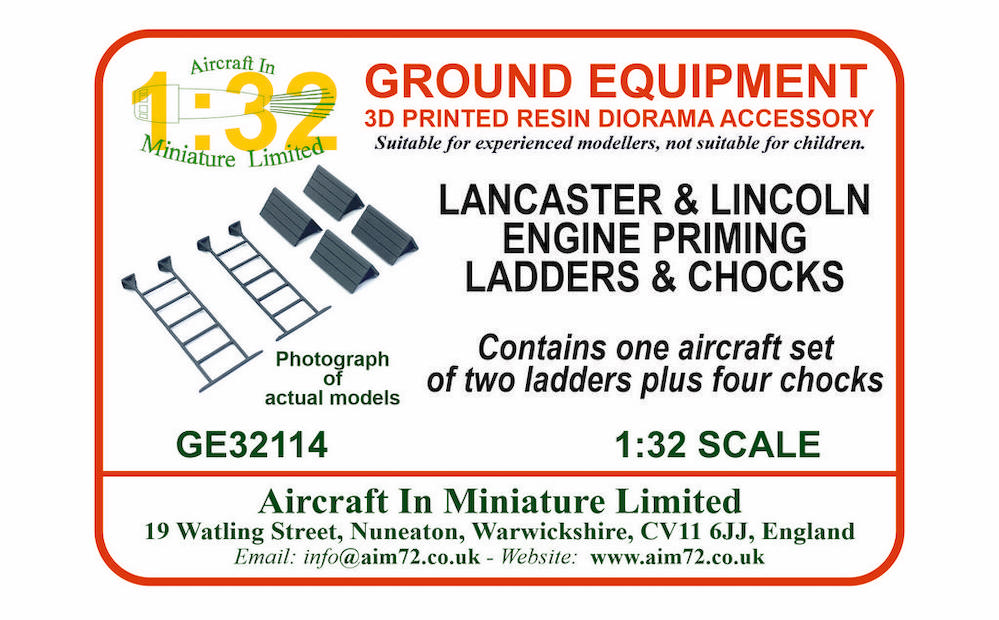
Avro Lancaster priming ladders and chocks. (designed to be used with Border Models and Hong Kong Models kits)[B.I/III B.III Lancaster B.Mk.I/III] [Avro Lancaster B Mk.III Dambuster]. 3D-printed.
Hawker Hunter F.6 & BAe Harrier GR.3 crew ladder. (3D-Printed) (designed to be used with the Revell kits) of the Hawker Hunter FGA.9/Mk.58.
Hawker Hunter F.6 & BAe Harrier GR.3 Crew Ladder
A crew ladder designed to be used with the Revell and Echelon Vacuform kits of the Hawker Hunter, and the Revell and Trumpeter kits of the Harrier.
Eurofighter Typhoon tow bars " two-pack, with wheels up and down (3D-Printed resin parts). Designed to be used with the Trumpeter kits of the Eurofighter EF-2000A Typhoon single seat or Eurofighter EF-2000B Typhoon twin seat. [EF-2000A, EF-2000B]
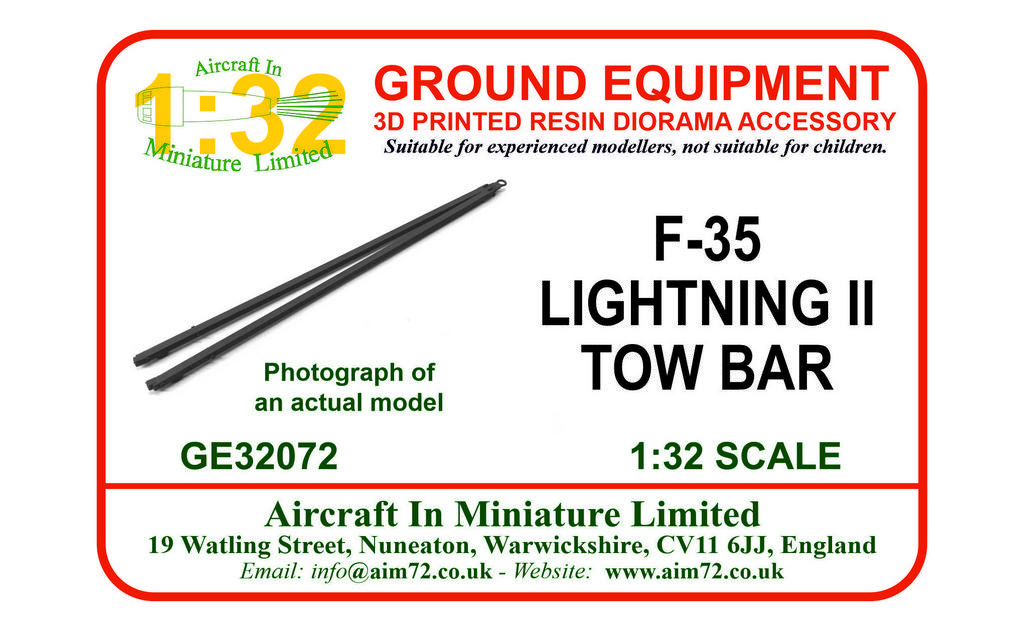
Lockheed-Martin F-35A/F-35B Lightning II (JSF) Tow Bar (designed to be used with Trumpeter kits) Lockheed-Martin F-35 Lightning II (JSF) Tow Bar (This is a 3D-printed
resin model. It is designed to be used with the Italeri kit of the F-35A, or the Trumpeter kits of the F-35A, F-35B or F-35C).
Ejector Seat Servicing Trolley - Ejector seats are mounted on these trolleys, when they are removed from the aircraft. NEW TOOL - previously an etched brass kit, it has been redesigned to give a high-quality (3D-Printed) resin model.
Avro Lancaster and Lincoln crew ladders, (designed to be used with Border Models and Hong Kong Models kits)[B.I/III B.III Lancaster B.Mk.I/III], or [Avro Lancaster B Mk.III Dambuster]. 3D-printed.
Re-released! Trolley - Accumulator (Late Version) (3D-Printed)
For use with
AX14003A North-American P-51K Mustang
AX19002 Hawker Typhoon Mk.IB
AX25001A de Havilland Mosquito FB Mk.VI
(designed to be used with Airfix kits)
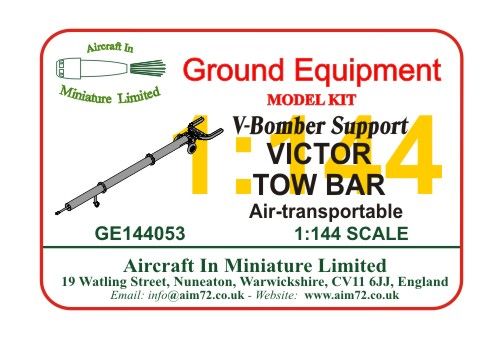
Handley-Page Victor B.2/K.2 Tow Bar (V-Bomber support series) NOW BEING CLEARED!! SAVE 1/3RD!!! Air-transportable (designed to be used with Anigrand Craftswork and Great Wall Hobby kits)




 Advanced Search