Cookies are small text files that are placed on your computer by
websites that you visit. They are widely used in order to make
websites work, or work more efficiently, as well as to provide
information to the owners of the site.
Here is a list of cookies this site uses:
Cookie name
Description
existing_user
Stores the email address used to previously log into the site, used to prefill forms like on the reset password screen
authchallenge
Authentication security checks
hcart
Stores the anonymous customer\'s cart token. If items are added to the card while not logged in, if you log in the items will be added to the customer\'s existing cart
hannants
Stores the session information while you remain on the site
pricer
Stores if the export or eu prices is selected on the catalogue page
hidefilter
Stores if the search filter panel is hidden or shown
AWSELB
Stores which server you\'re connected to so to access the same server while you navigate around the site
Airspeed Oxford and Consul By William Harrison
52 pages
With more than 8,750 built the Oxford was a well thought-out design that was based on their Airspeed Envoy, a similar shaped twin-engine executive aircraft that was used in the early 1930s but the more advanced design of the Oxford suited the military requirement for a three-seat training aircraft. The Oxford was a low-wing cantilever monoplane of advanced design and ...
Douglas SBD Dauntless By Kev Darling
The Douglas SBD Dauntless earned itself a reputation as a great dive bomber even though its antecedents were very much of pre-war origin. Many nicknames were given to the SBD during its time in frontline service, my own personal favourite is 'slow but deadly'. The original concept was developed by Jack Northrop with some help from Ed Heinemann. The resultant aircraft, the BT-1, had quite...
Lockheed F-117 Nighthawk By Andy Evans
Now you see it now you don't! The F-117's retirement may have seemed premature, but has it really gone? The informative text traces the story of this remarkable aircraft from its Have Blue origins to its withdrawal from active front line service, and takes a look at some of the recent sightings of the aircraft that suggest there may be a role of some sort for it yet.
This latest Warpa...
de Havilland (Canada) DHC-2 Beaver By Adrian M. Balch. The de_Havilland_Canada DHC-2 Beaver is a single-engine high-wing propeller-driven short take off and landing (STOL) aircraft developed and manufactured by de Havilland Canada. It has been mainly operated as a bush plane and has been used for a wide variety of utility roles, such as cargo and passenger hauling, aerial application (crop dusting and aerial topdressing), and ...
North-American OV-10 Bronco written by Mike Verier
The full story of the first true Multi-Role Combat Aircraft, the OV-10 Bronco, still flying operationally after nearly six decades of service, is told here for the first time in a bumper 104-page Warpaint. Detailed first-hand information gathered over many years has enabled the author to bring together the many facets of this remarkably versatile aircraft including pre-curs...
Vickers Viking, Valetta & Varsity In Military Service. By Adrian M. Balch £19.00 56 pages
The Vickers VC.1 Viking was a British twin-engine short-range airliner derived from the Vickers Wellington bomber and built by Vickers-Armstrongs Limited at Brooklands near Weybridge in Surrey. After the Second World War, the Viking was an important airliner with British airlines, pending the development of turboprop aircraft like the ...
Dassault_Mirage F1 by Andy Evans 60 pages
During the 1960s, Dassault commenced development of what would be-come the Mirage F1 as a private venture, alongside the larger Mirage F2. Work on the F1 eventually took precedence over the more costly F2, which was cancelled during the late 1960s. The Armee de l'Air took great interest in the fledgling F1 to meet its requirement for an all-weather interceptor aircraft. The Mirage F...
Boeing B-29 & B-50 Superfortress
120 pages
Having launched the signature bomber for use in the European Theatre, Boeing embarked on a voyage into the unknown. Bringing together numerous untried technologies the Boeing Aircraft Company launched its most significant bomber, the B-29 Superfortress. Although beset by development problems and having suffered the loss of the prototype and its Chief Test Pilot Eddie Allan, the comp...
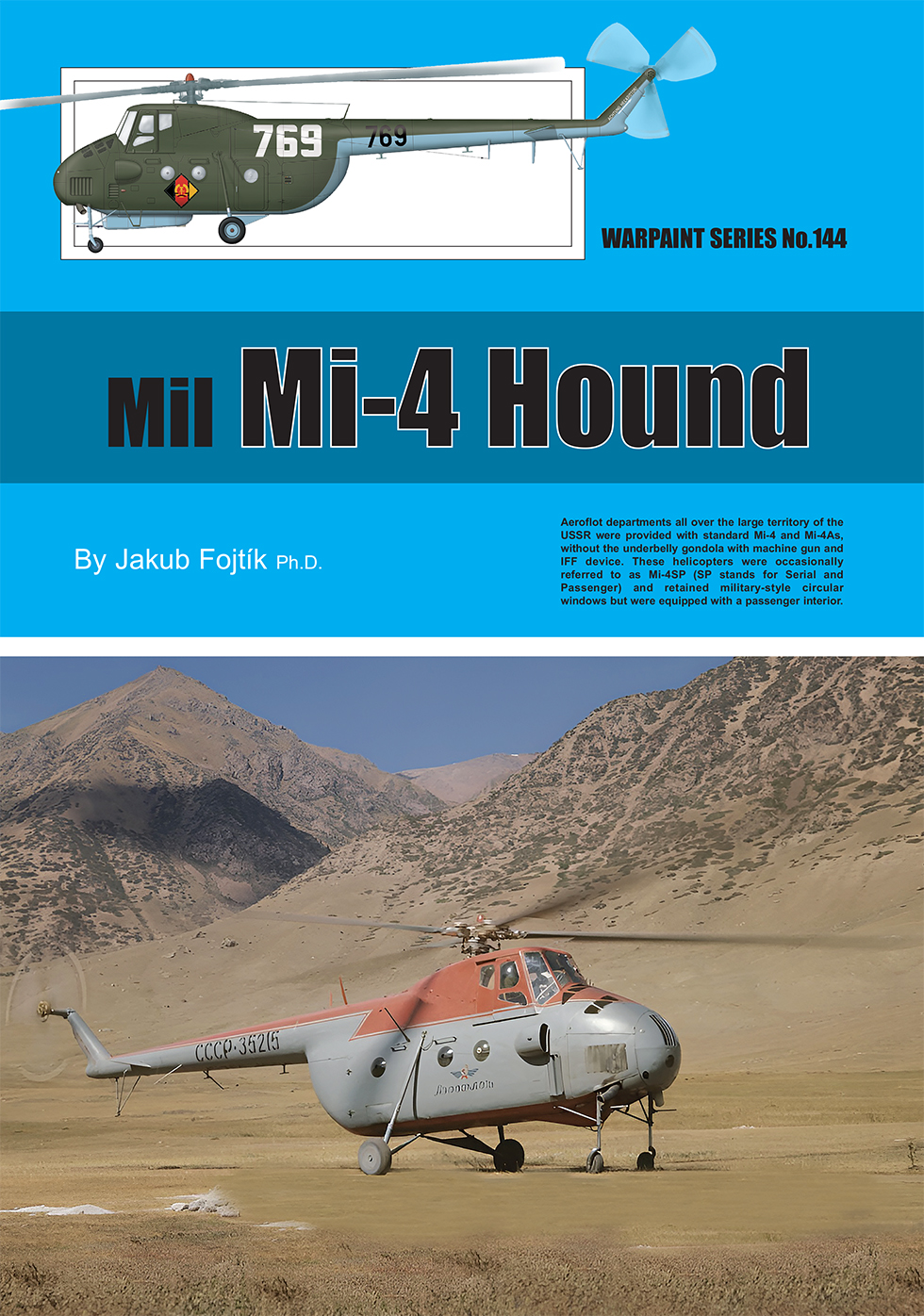
Mil Mi-4 By Jakub Fojtik.
This latest authoritative work of reference to join the Warpaint series charts the rise of the helicopter in both military and civilian use throughout the vast territories of the Soviet Union from the mid-1950s. The Mi-4 was the first successful series production type, and its widespread use with the Soviet Army and Navy saw fundamental changes to tactics and doctrine.
Lavishly illustrated wit...
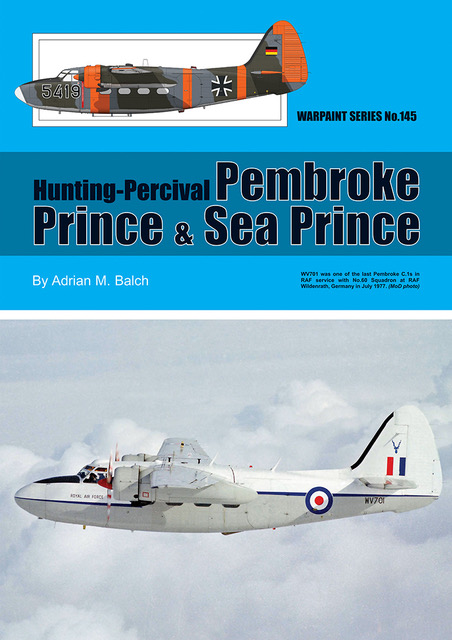
Hunting-Percival Pembroke, Prince & Sea Prince 44 pages
The Pembroke originated as a development of an idea sponsored by Lord Brabazon towards the end of World War II, when he chaired a committee whose brief was to assess the civil aviation requirements after the end of hostilities, and recommended several specifications for civil aircraft required to keep Britain ahead for both home and export sales. A twin-engined transpo...
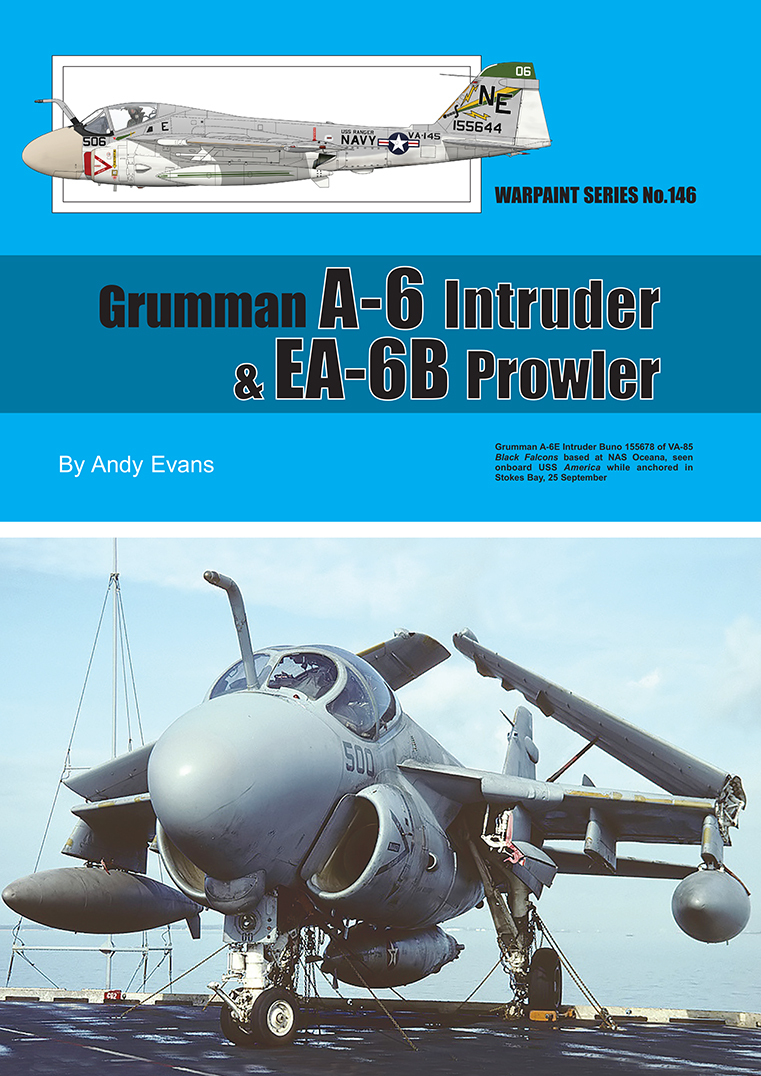
Grumman A-6 Intruder & EA-6B Prowler
By Andy Evans
The US Navy's experience in the Korean War showed the need for a new long-range strike aircraft with high subsonic performance at very low altitude that could penetrate enemy defences and find and destroy small targets in any weather. The Grumman A-6 Intruder was designed with these needs in mind and was a true bomb truck. From the jungles of Vietnam to the deserts of Ira...
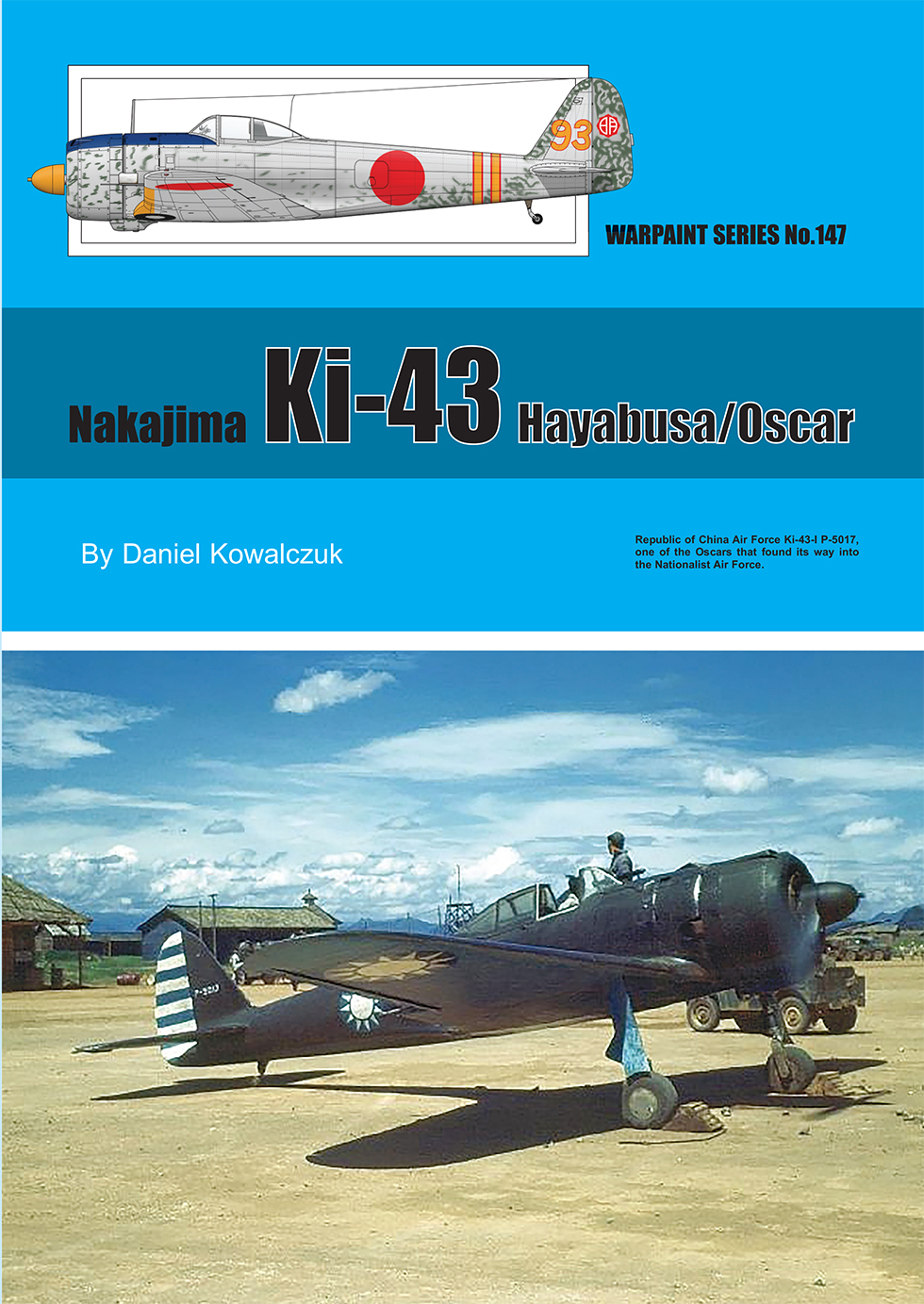
Nakajima Ki-43 Hayabusa
By Daniel Kowalczuk
One of the great unsung fighters of the Imperial Japanese Army Air Force was Nakajima's Ki-43 Hayabusa (Peregrine Falcon). Codenamed 'Oscar' by the Allies, the aircraft was frequently mistaken for the Navy's A6M2 Zero by those encountering it in combat, to the extent that it was widely referred to by its adversaries as the 'Army 0'.
Highly regarded in Japan, where it was muc...
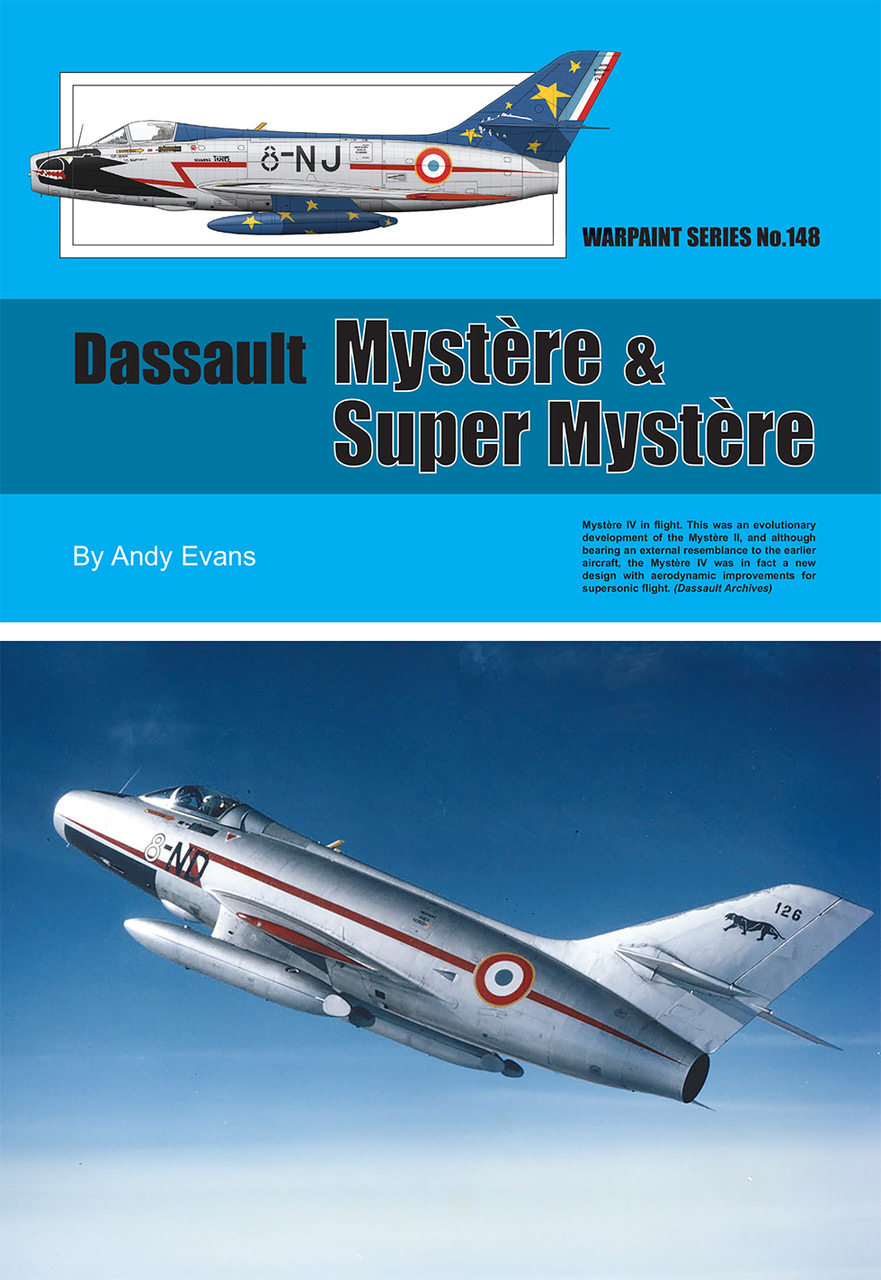
Dassault Mystere & Super Mystere
By Andy Evans
40 plus 4 pages
The Dassault MD.452 Mystere was a straightforward development of the successful Dassault Ouragan with a 30-degree swept wing and modified tail surfaces. The aircraft saw extensive service with the French air force, evolving first into the Mystere IVA, and the Super Mystere, which was the first Western European supersonic aircraft to enter mass production. B...
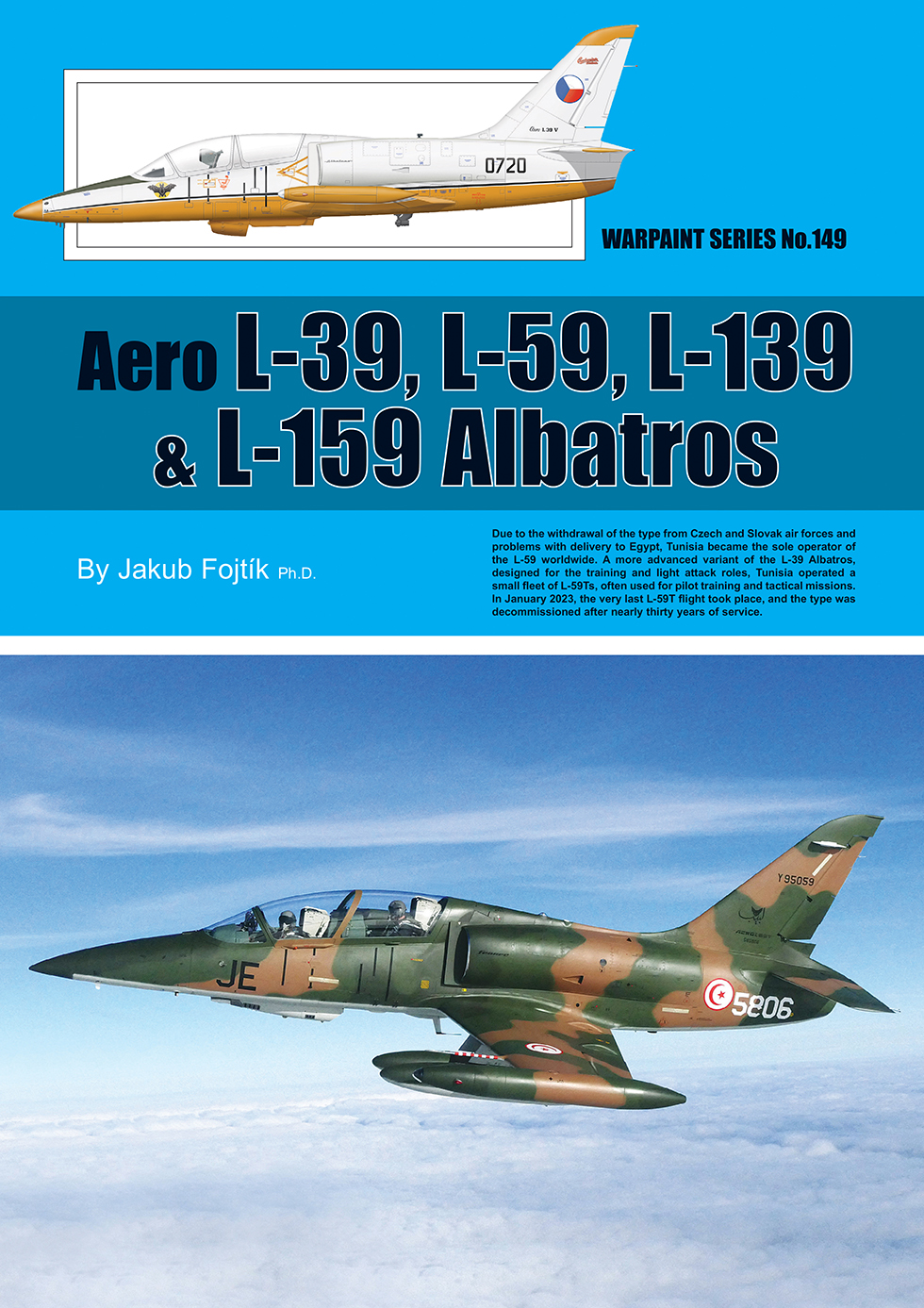
Aero L-39, L-59, L-139 & L-159 Albatros
By Jakub Fojtik Ph.D.
This latest Warpaint title covers the Aero L-39 Albatros, a a Czech-designed jet trainer and light attack aircraft developed by Aero Vodochody during the 1960s as a successor to the L-29 Delfin. It first flew in 1968 and entered service in 1972, becoming the standard jet trainer for Warsaw Pact nations. With over 2,900 units built, the L-39 became one of the mo...
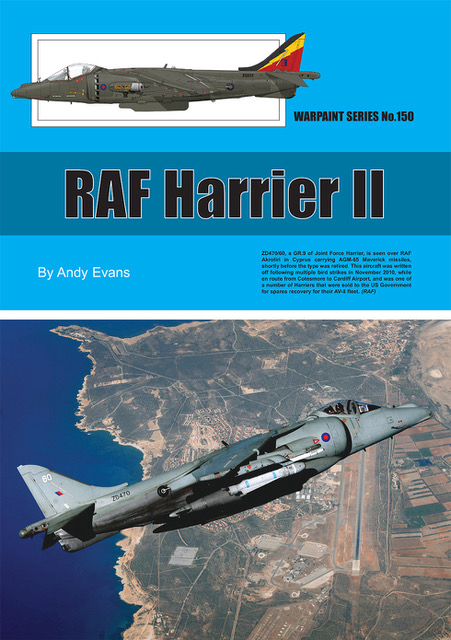
RAF BAe Harrier II By Andy Evans
The essential Warpaint series celebrates its milestone 150th release with a subject close to the hearts of all military aviation enthusiasts, telling the all-to-brief story of the Harrier II in British service.
Lavishly illustrated with contemporary photographs covering all aspects of the aircraft's development and operational service, this account starts with the replacement of the RAF's ...
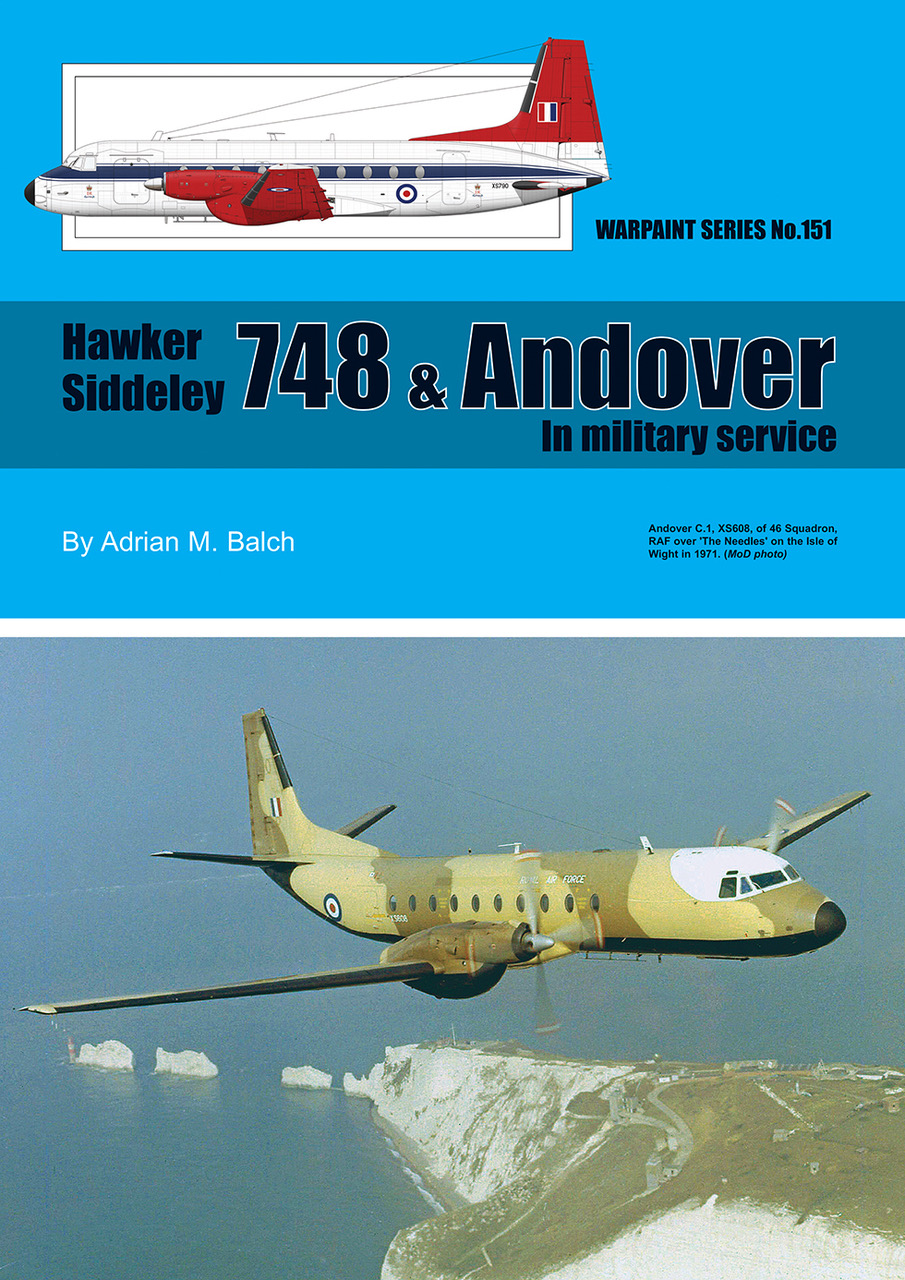
Hawker-Siddeley 748 & Andover in Military Service. Author Adrian Balch 56 pages
Making its first flight on 24 June 1960 the prototype AVRO 748, G-APZV, became a very successful rugged replacement for the many DC-3 Dakotas flying around the world. In production, it became the second most successful British turboprop transport aircraft and was only superseded in numbers produced by those of the Vickers Viscount.
A total o...
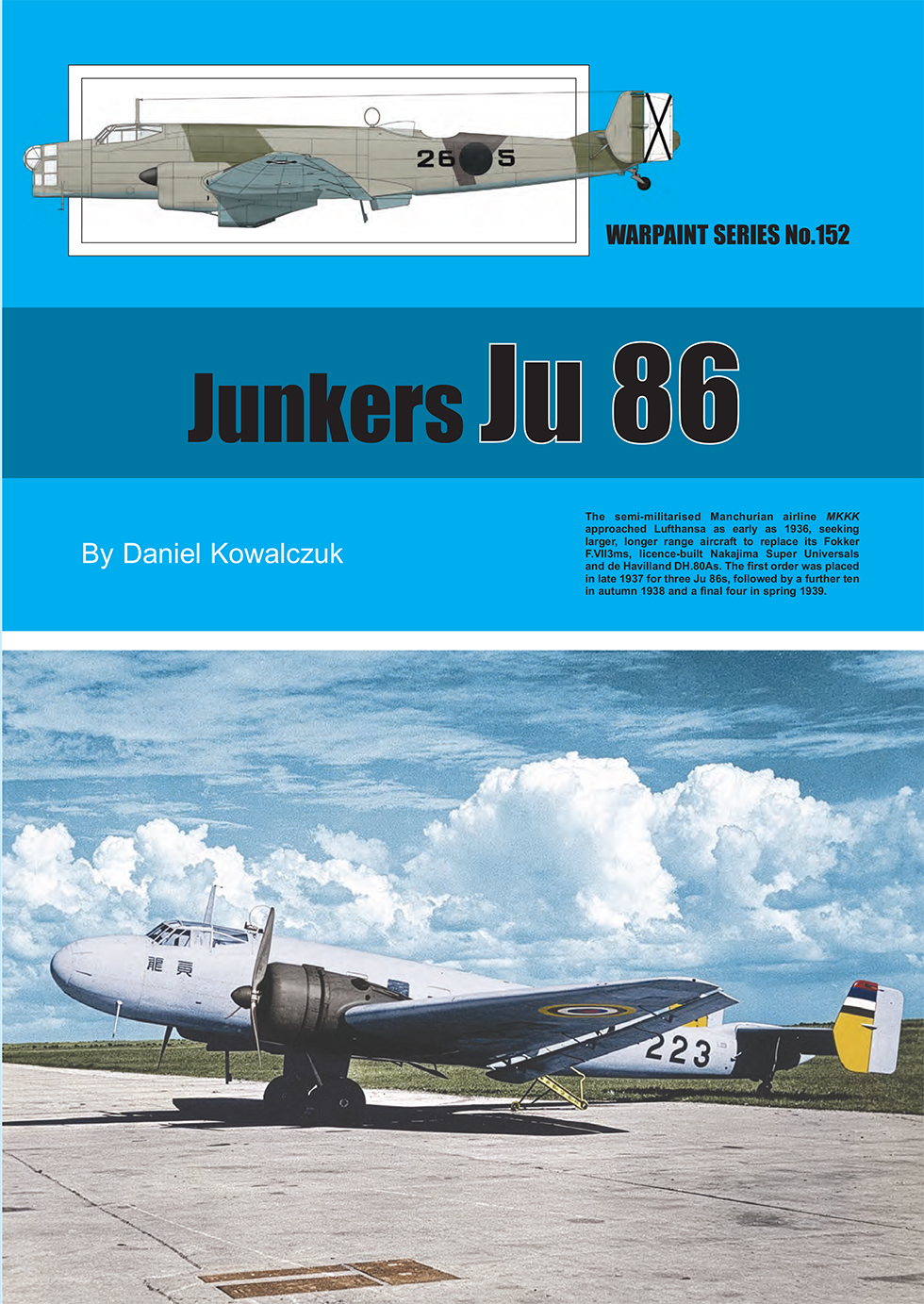
Junkers Ju-86. By Daniel Kowalczuk
The Junkers Ju?86 is one of those fascinating types developed in the 1930s by a Germany re-arming in secret, and was a twin-engine monoplane configured as both a medium bomber and ten-seat airliner. First flown in 1934 and introduced in 1936, it featured Jumo 205 diesel engines and a smooth stressed skin design. Although initially used by the Luftwaffe and trialled in the Spanish Civil War...
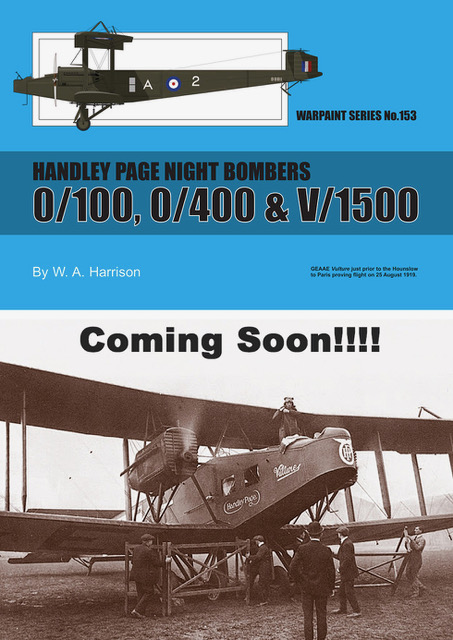
Handley Page Night Bombers 0/100, 0/400 & V/1500 Author: W.A. Harrison
By William Harrison
The Handley Page 0/100, 0/400 and V/1500 were the first true heavy bombers of the Royal Flying Corps and Royal Air Force during the First World War, giving Britain the long-range striking power needed for strategic bombing deep into Germany. Designed initially with a 114ft wingspan (later 100ft), folding wings, armour protection an...
RAF/RN McDonnell F-4K/F-4M Phantoms (Hall Park Books Limited) Designed with both the aircraft enthusiast and the modeller in mind, this series offers a comprehensive and accurate account of a single aircraft type within each issue. Drawings provided in both colour side and plan view with 1:72 scale plans, kit decal and accessory lists, squadrons, units and individual aircraft serials in codes, etc.
Westland Whirlwind Mk.I fighter [Mk.I] AUTHOR: Hall, A
FORMAT: 26pp col/Bw/dwgs 297x210 Pb
Designed with both the aircraft enthusiast and the modeller in mind, this series offers a comprehensive and accurate account of a single aircraft type within each issue. Drawings provided in both colour side and plan view with 1:72 scale plans, kit decal and accessory lists, squadrons, units and individual aircraft serials in codes, ...
Blackburn Firebrand and Firecrest by Tony Butler (Hall Park Books Limited) AUTHOR: Buttler, R
FORMAT: 38pp col/Bw/dwgs 297x210 Pb
Designed with both the aircraft enthusiast and the modeller in mind, this series offers a comprehensive and accurate account of a single aircraft type within each issue. Drawings provided in both colour side and plan view with 1:72 scale plans, kit decal and accessory lists, squadrons, units and...
Handley-Page Hampden and Hereford (Hall Park Books Limited) The first Hampden production aircraft flew in May 1938 and on 28th June 1938 it became the first aircraft to be christened by Viscount Hampden at a ceremony at Radlett in Hertfordshire, The name was taken front the original John Hampden the 17th century defender of civil liberties.
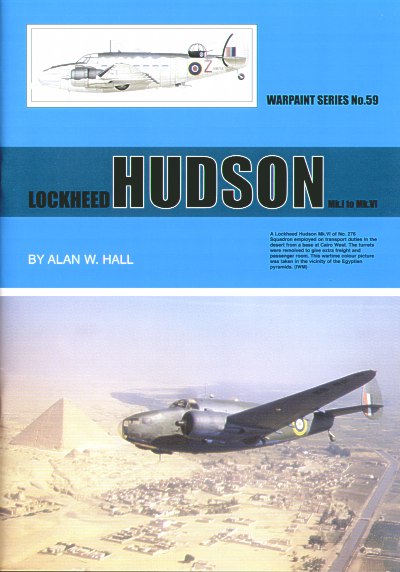
Lockheed Hudson Mk.I to Mk.VI (Hall Park Books Limited) Once the designs had been agreed with Lockheed not a company known in the UK at the time but significant in the US both military and US civilian airlines a order was placed for 200 aircraft at a cost of $25 million with a unit cost of £17,000.00
Bristol Bulldog Mk.II Although there were only ten squadrons equipped with the Bristol Bulldog during the drastic cut back of RAF fighter strength following World War 1, they were certainly the most colourful.
Each unit had its identification colours shown on the fuselage and upper wing surfaces and squadron and flight commanders had individual colours on the tail unit. But that was not all. As new squadron commanders took o...
Hawker P.1127 (Kestrel) Hawker-Siddeley Kestrel and Harrier Mks 1-4. The Harrier 'Jump-Jet' is now a legend in the history of British Aviation. The most modern version of this classic jet is still in RAF service, but the original Harriers have long since been withdrawn. This latest Warpaint looks at the now retired Harrier Mks.1 to 4, plus the Hawker P.1127 and Kestrel research and trials aircraft that preceded them. The text ...
Curtiss P-40. Derived from the earlier Curtiss 75 Hawk the P-40 Warhawk was an attempt to update the original design for more modern warfare. Unfortunately the aircraft that first emerged was seriously underpowered, undergunned and suffering from stability problems. Although not an auspicious start for a fighter design the Curtiss engineers and those of Allison, the engine builders, finally resulted in an aircraft that was wor...
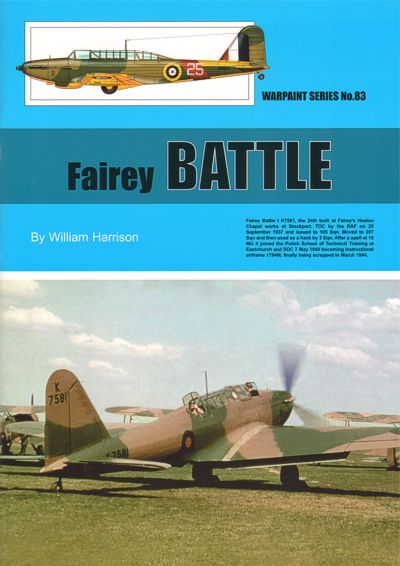
Fairey Battle. British Prime Minister, Winston Churchill, said in the House of Commons on 20 August, 1940 - ....'on no part of the RAF does the weight of war fall more heavily than on the daylight bomber'.... . A reflection of what happened in the Low Countries during May/June 1940. The Battle was not mis-used during this debacle. The Air Staff, before the war, had planned against such an attack by Germany through the Low Coun...
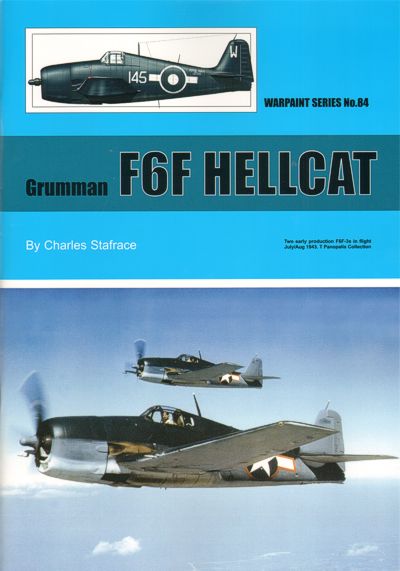
Grumman F6F Hellcat. Even before Pearl Harbor the U.S. Navy realised that it would be hard for its existing fighters, the F2A Buffalo and F4F Wildcat, to deal with Japan's shipboard fighters, especially the A6M Zero. The situation was such that in June 1941 the U.S. Navy placed orders with Grumman 's 'Iron Works' for the F6F Hellcat before the first prototype had even flown. It was the right decision for Grumman 's new fighter...
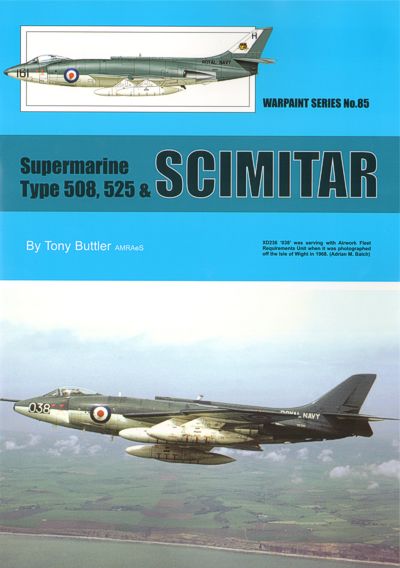
Supermarine Scimitar By Tony Buttler AMRAeS. The Supermarine Scimitar was the first swept-wing, twin-engined, single-seat jet aircraft to serve with the Royal Navy and it was also the last all-new fighter type to be designed and built by Supermarine. It evolved from a straight wing design called the Supermarine Type 508, passed through a swept wing development called the Type 525 and then matured into a service aeroplane. When...
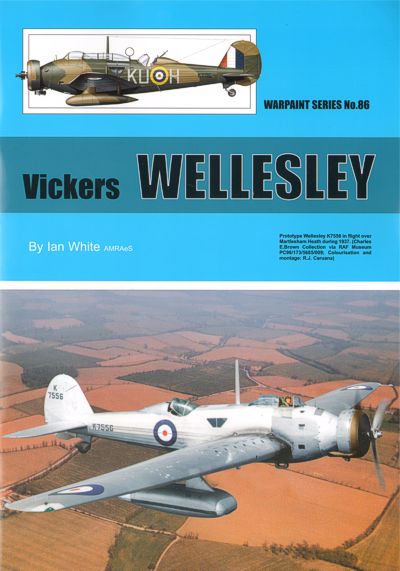
Vickers Wellesley by Ian White. Created on the drawing boards of the Vickers (Aviation) Company by Barnes Wallis using the geodetic form of construction he devised for Britain's R.100 airship, the Wellesley was designed to fulfil an Air Ministry specification for a reliable, general purpose bomber and torpedo-bomber, that was required to carry a heavy load over long distances. Originally conceived as a biplane, but converted t...
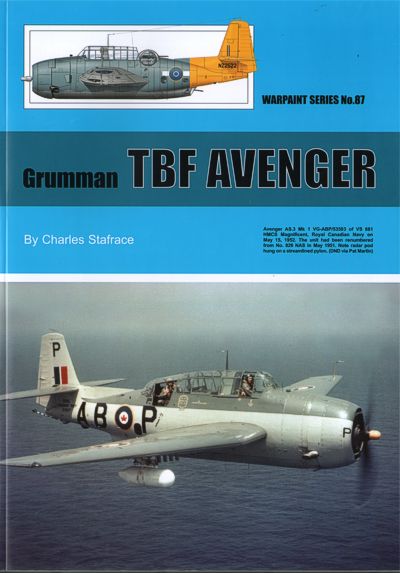
Grumman TBF Avenger. No. 87 in the Warpaint series
by Charles Stafrace
Without doubt the Grumman Avenger was the most successful torpedo-bomber of the Second World War, and certainly one of the wartime aircraft that could most sustain punishment and yet make it back to base. Built by both Grumman under its TBF designation and by Eastern Division of General Motors under the TBM designation, no less than 9,837 examples were c...




 Advanced Search