Cookies are small text files that are placed on your computer by
websites that you visit. They are widely used in order to make
websites work, or work more efficiently, as well as to provide
information to the owners of the site.
Here is a list of cookies this site uses:
Cookie name
Description
existing_user
Stores the email address used to previously log into the site, used to prefill forms like on the reset password screen
authchallenge
Authentication security checks
hcart
Stores the anonymous customer\'s cart token. If items are added to the card while not logged in, if you log in the items will be added to the customer\'s existing cart
hannants
Stores the session information while you remain on the site
pricer
Stores if the export or eu prices is selected on the catalogue page
hidefilter
Stores if the search filter panel is hidden or shown
AWSELB
Stores which server you\'re connected to so to access the same server while you navigate around the site
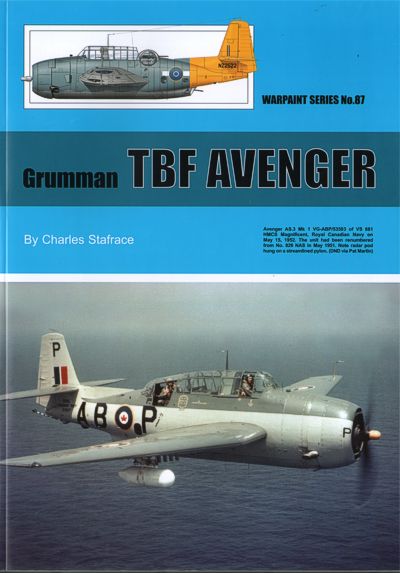
Grumman TBF Avenger. No. 87 in the Warpaint series
by Charles Stafrace
Without doubt the Grumman Avenger was the most successful torpedo-bomber of the Second World War, and certainly one of the wartime aircraft that could most sustain punishment and yet make it back to base. Built by both Grumman under its TBF designation and by Eastern Division of General Motors under the TBM designation, no less than 9,837 examples were c...
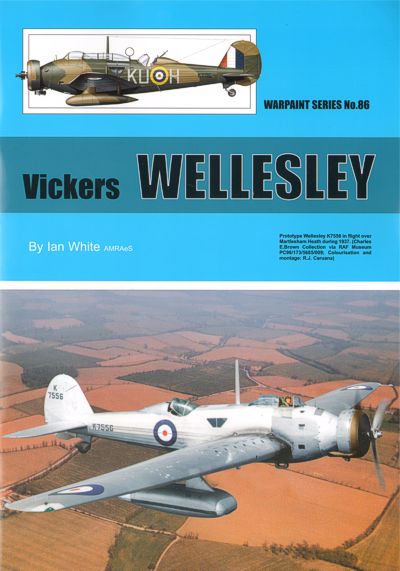
Vickers Wellesley by Ian White. Created on the drawing boards of the Vickers (Aviation) Company by Barnes Wallis using the geodetic form of construction he devised for Britain's R.100 airship, the Wellesley was designed to fulfil an Air Ministry specification for a reliable, general purpose bomber and torpedo-bomber, that was required to carry a heavy load over long distances. Originally conceived as a biplane, but converted t...
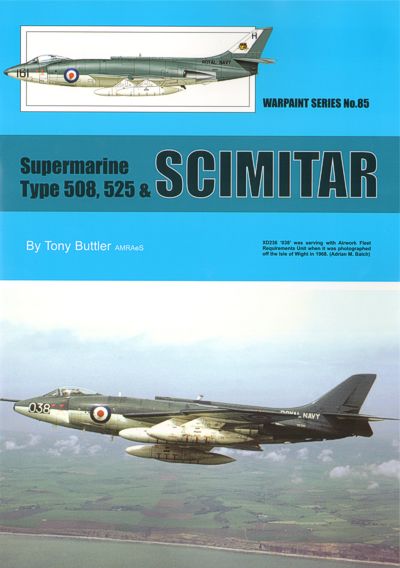
Supermarine Scimitar By Tony Buttler AMRAeS. The Supermarine Scimitar was the first swept-wing, twin-engined, single-seat jet aircraft to serve with the Royal Navy and it was also the last all-new fighter type to be designed and built by Supermarine. It evolved from a straight wing design called the Supermarine Type 508, passed through a swept wing development called the Type 525 and then matured into a service aeroplane. When...
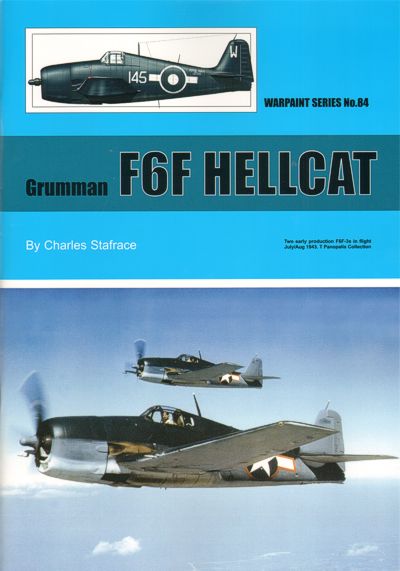
Grumman F6F Hellcat. Even before Pearl Harbor the U.S. Navy realised that it would be hard for its existing fighters, the F2A Buffalo and F4F Wildcat, to deal with Japan's shipboard fighters, especially the A6M Zero. The situation was such that in June 1941 the U.S. Navy placed orders with Grumman 's 'Iron Works' for the F6F Hellcat before the first prototype had even flown. It was the right decision for Grumman 's new fighter...
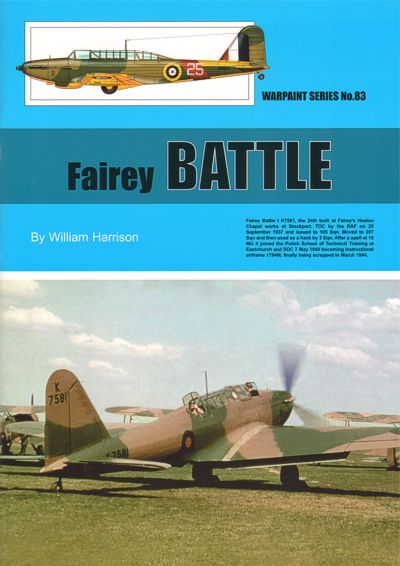
Fairey Battle. British Prime Minister, Winston Churchill, said in the House of Commons on 20 August, 1940 - ....'on no part of the RAF does the weight of war fall more heavily than on the daylight bomber'.... . A reflection of what happened in the Low Countries during May/June 1940. The Battle was not mis-used during this debacle. The Air Staff, before the war, had planned against such an attack by Germany through the Low Coun...
Curtiss P-40. Derived from the earlier Curtiss 75 Hawk the P-40 Warhawk was an attempt to update the original design for more modern warfare. Unfortunately the aircraft that first emerged was seriously underpowered, undergunned and suffering from stability problems. Although not an auspicious start for a fighter design the Curtiss engineers and those of Allison, the engine builders, finally resulted in an aircraft that was wor...
Hawker P.1127 (Kestrel) Hawker-Siddeley Kestrel and Harrier Mks 1-4. The Harrier 'Jump-Jet' is now a legend in the history of British Aviation. The most modern version of this classic jet is still in RAF service, but the original Harriers have long since been withdrawn. This latest Warpaint looks at the now retired Harrier Mks.1 to 4, plus the Hawker P.1127 and Kestrel research and trials aircraft that preceded them. The text ...




 Advanced Search