Cookies are small text files that are placed on your computer by
websites that you visit. They are widely used in order to make
websites work, or work more efficiently, as well as to provide
information to the owners of the site.
Here is a list of cookies this site uses:
Cookie name
Description
existing_user
Stores the email address used to previously log into the site, used to prefill forms like on the reset password screen
authchallenge
Authentication security checks
hcart
Stores the anonymous customer\'s cart token. If items are added to the card while not logged in, if you log in the items will be added to the customer\'s existing cart
hannants
Stores the session information while you remain on the site
pricer
Stores if the export or eu prices is selected on the catalogue page
hidefilter
Stores if the search filter panel is hidden or shown
AWSELB
Stores which server you\'re connected to so to access the same server while you navigate around the site
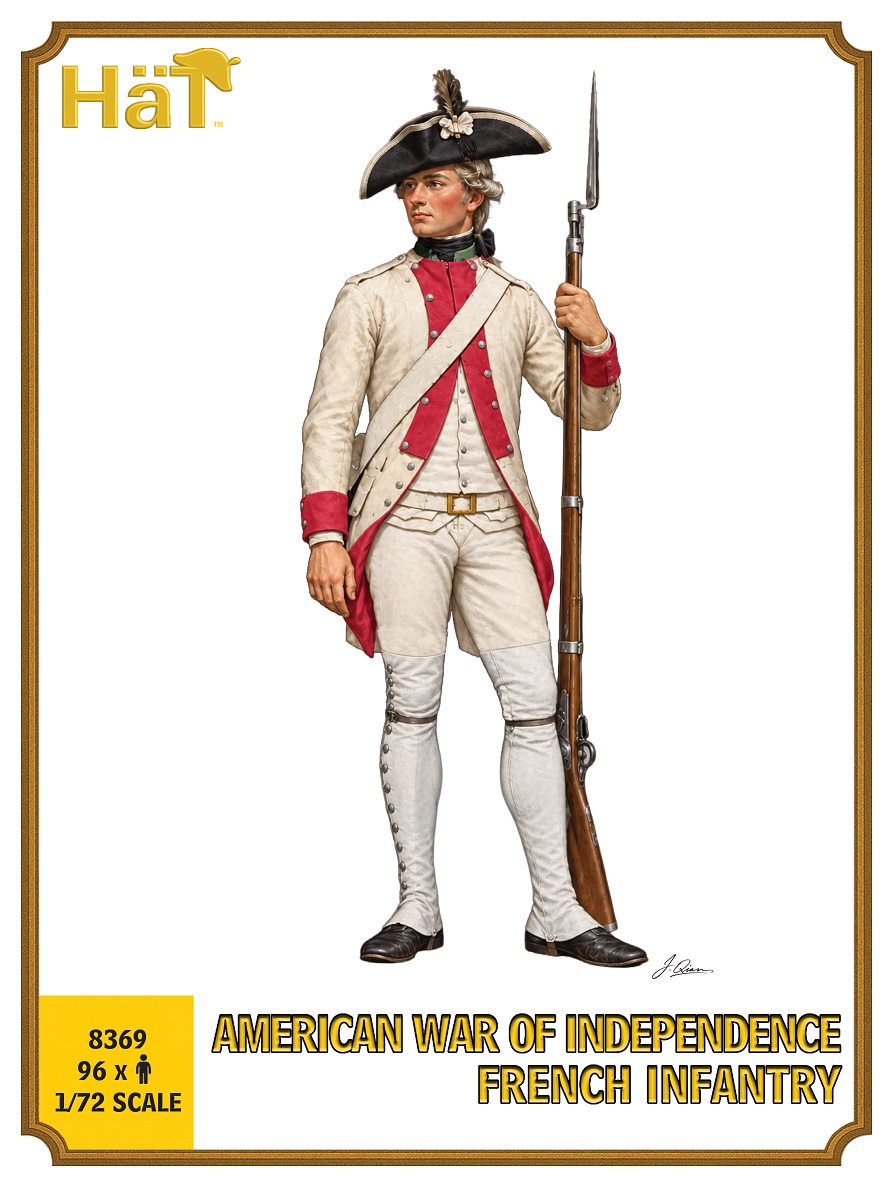
American War of Independence French Infantry. Most French line regiments wore white coats and waistcoats, with distinctive facing colors identifying individual regiments. The Royal Deux-Ponts, a German regiment in French service, was an important exception, wearing a blue coat with yellow facings. Cocked hats, white breeches and gaiters completed the characteristic appearance of the French infantry serving in America.
A Fre...
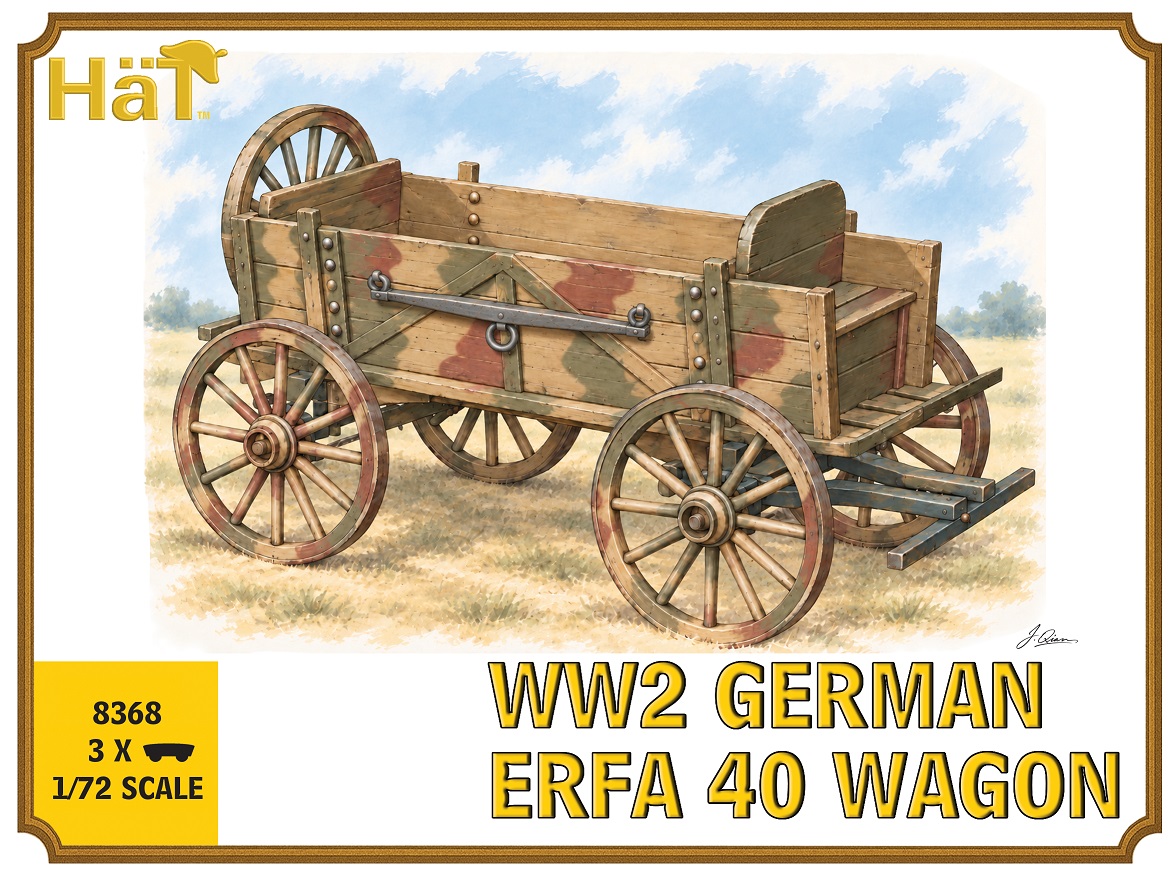
Erfa 40 German Horse Drawn Wagon. The ERFA 40 (Ersatzfeldwagen 40) was a simplified horse-drawn field wagon introduced by the German Army during WW2. Designed as an economical substitute for more complex military wagons, it could be manufactured quickly from wood and other readily available materials while still providing reliable transport for supplies, ammunition, equipment, and baggage.
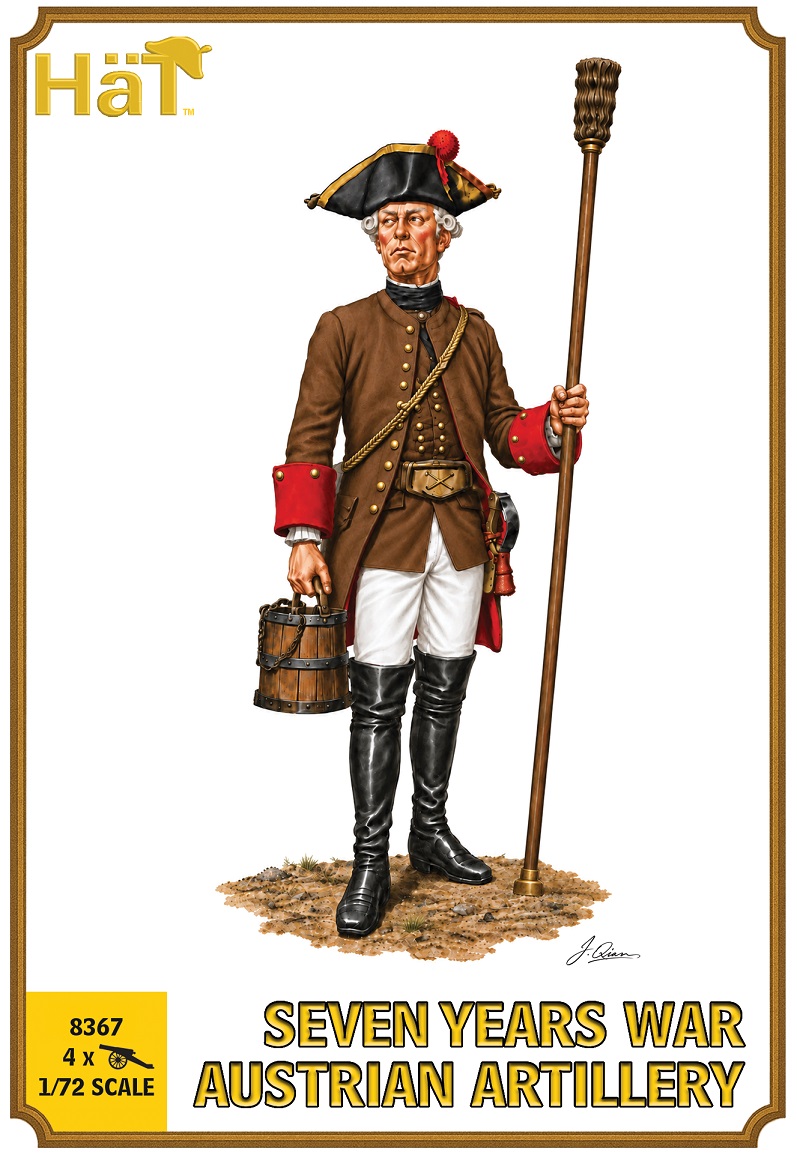
7YW Austrian Artillery. The artillery arm of the Habsburg Empire played a major role in Austria's long struggle against Frederick the Great during the Seven Years' War. Although initially overshadowed by the speed and discipline of the Prussian army, Austrian artillery steadily improved throughout the conflict and became one of the most effective branches of the Imperial forces. Austrian gunners supported the infantry and cava...
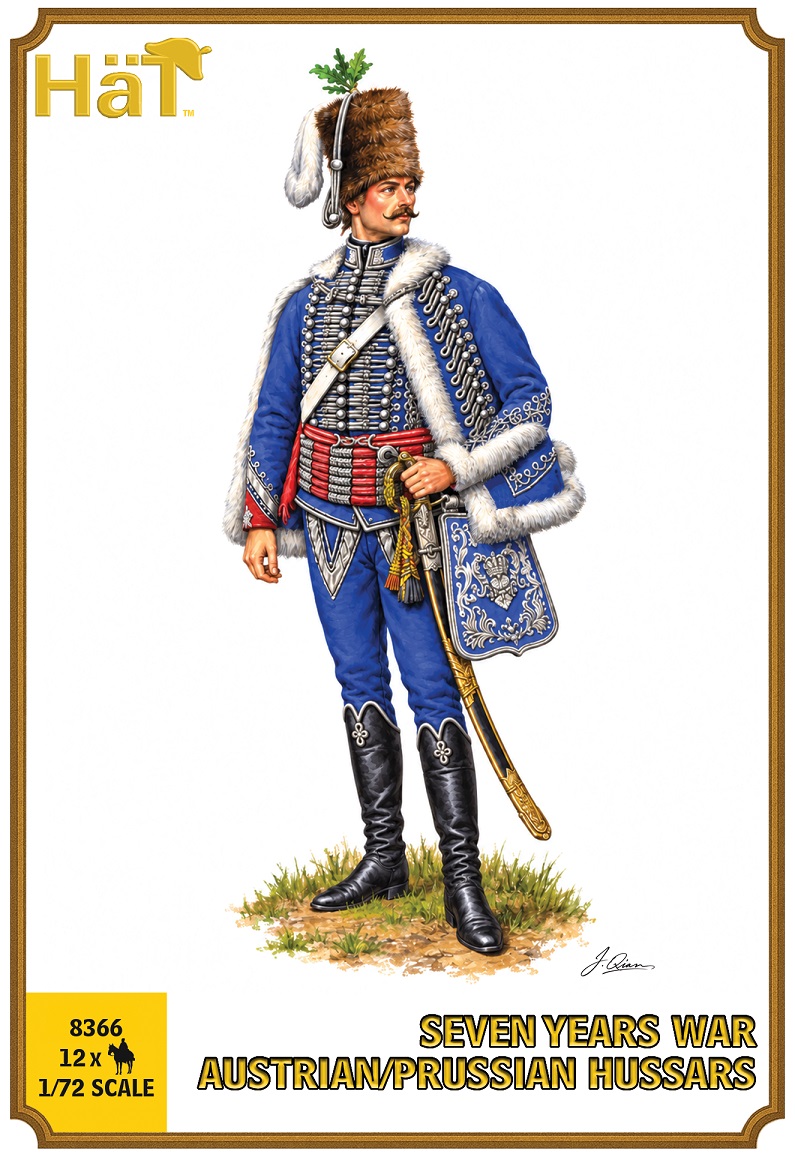
7YW Austrian/Prussian Hussars. The Hussars of the Seven Years' War were among the most colourful and effective light cavalry in Europe. Originally developed in Hungary, the hussar tradition was adopted by the armies of the Habsburg Empire and later copied by many other European powers, including Prussia. Fast moving, aggressive and highly skilled horsemen, hussars were used for scouting, raiding, screening army movements, purs...
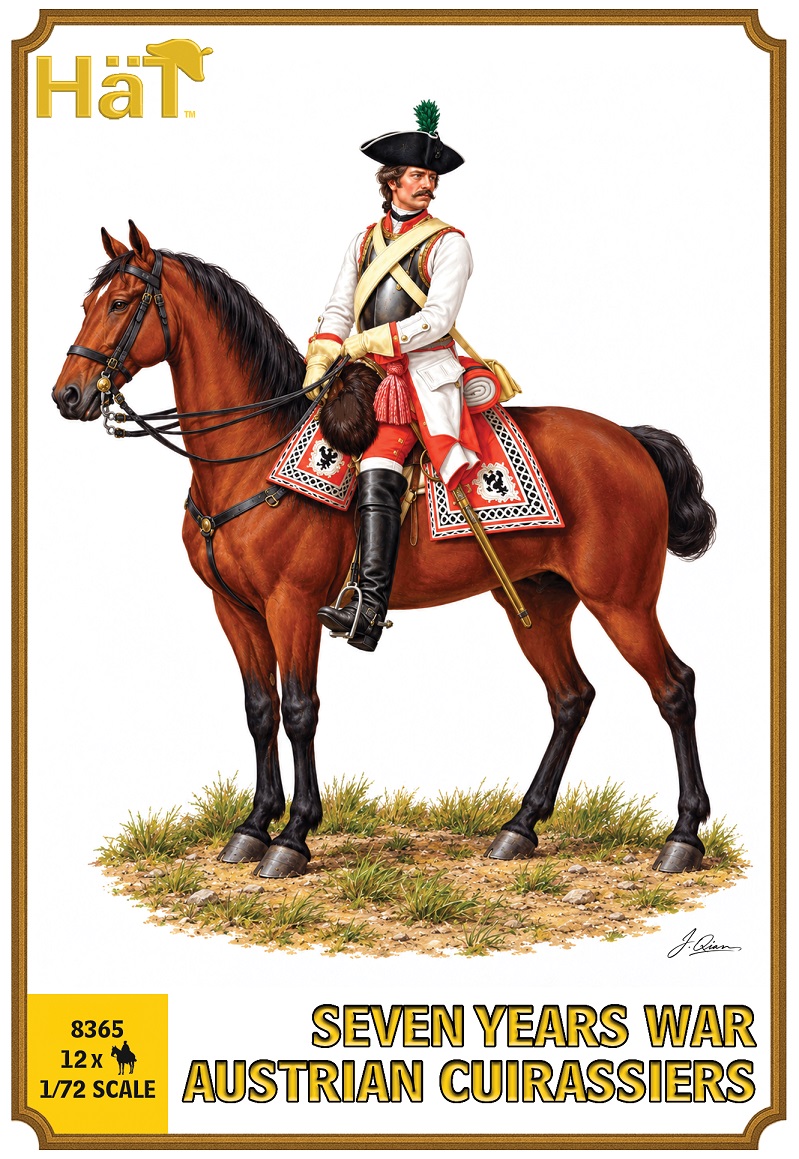
7YW Austrian Cuirassiers. The Austrian cuirassiers of the Seven Years' War were among the finest heavy cavalry in Europe. Clad in breastplates and mounted on powerful horses, they delivered devastating charges against the armies of Frederick the Great on battlefields across Central Europe. Though often overshadowed by the colourful Hungarian hussars, the cuirassiers formed the hard striking arm of the Habsburg cavalry and earn...
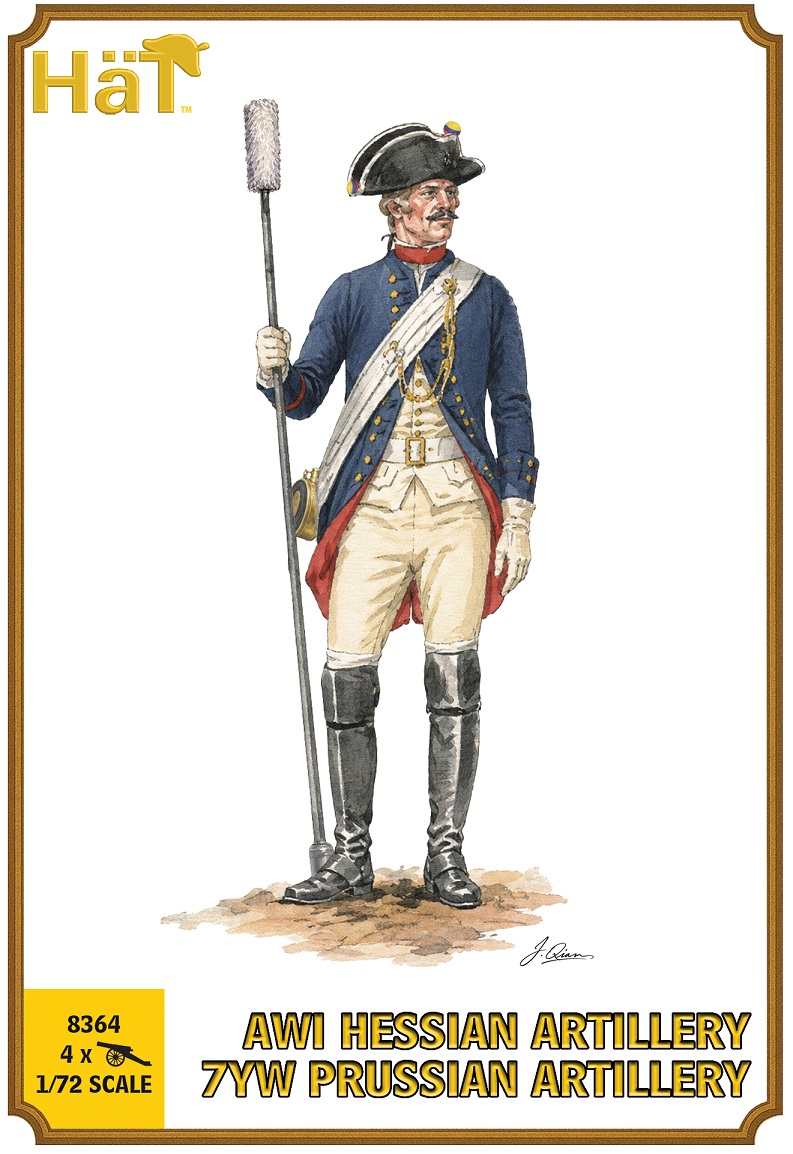
American War of Independence Hessian Artillery
During the American War of Independence, Hesse-Kassel supplied the largest contingent of German auxiliary troops serving with the British army in North America. These forces included artillery as well as infantry and cavalry, and Hessian gunners served in the same European artillery tradition that had been strongly influenced by Prussian practice during the eighteenth century.
The Hf1 light field wagon, Heeresfahrzeug 1 or leichte Heeresfeldwagen, was one of the standard horse-drawn vehicles used by the German army throughout the Second World War. Designed as general-purpose transport almost 20 years earlier, it carried everything from ammunition and equipment to provisions and medical supplies. Drawn by a two-horse team, the Hf1 balanced capacity with mobility, making it well suited for a wide rang...
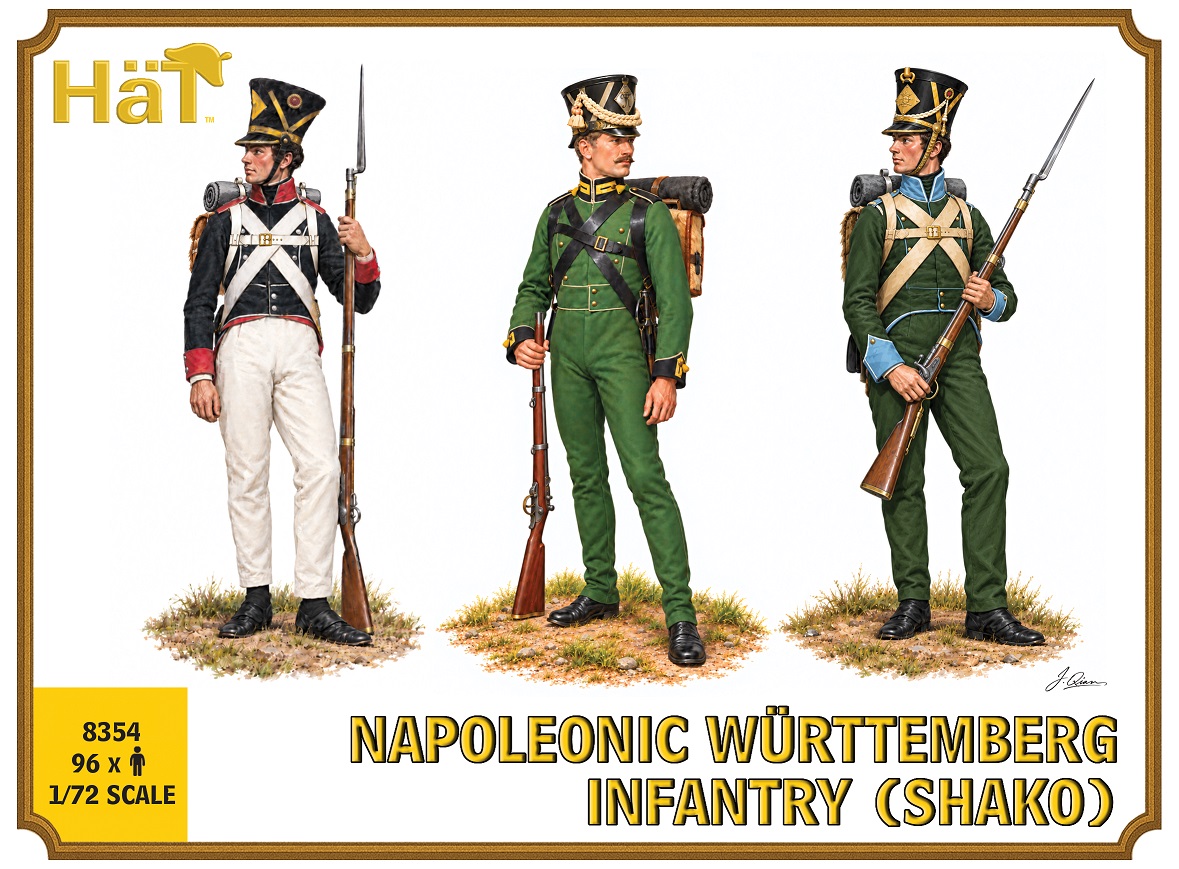
Napoleonic Wurttemberg Infantry (shako)
Wurttemberg was one of the German states whose army underwent extensive reform during the Napoleonic Wars. After joining the Confederation of the Rhine, the kingdom supplied substantial forces to Napoleon and fought in a number of the major campaigns of the period. By 1809 the Wurttemberg contingent included line infantry regiments, fusilier battalions, light infantry and dedicated foot...
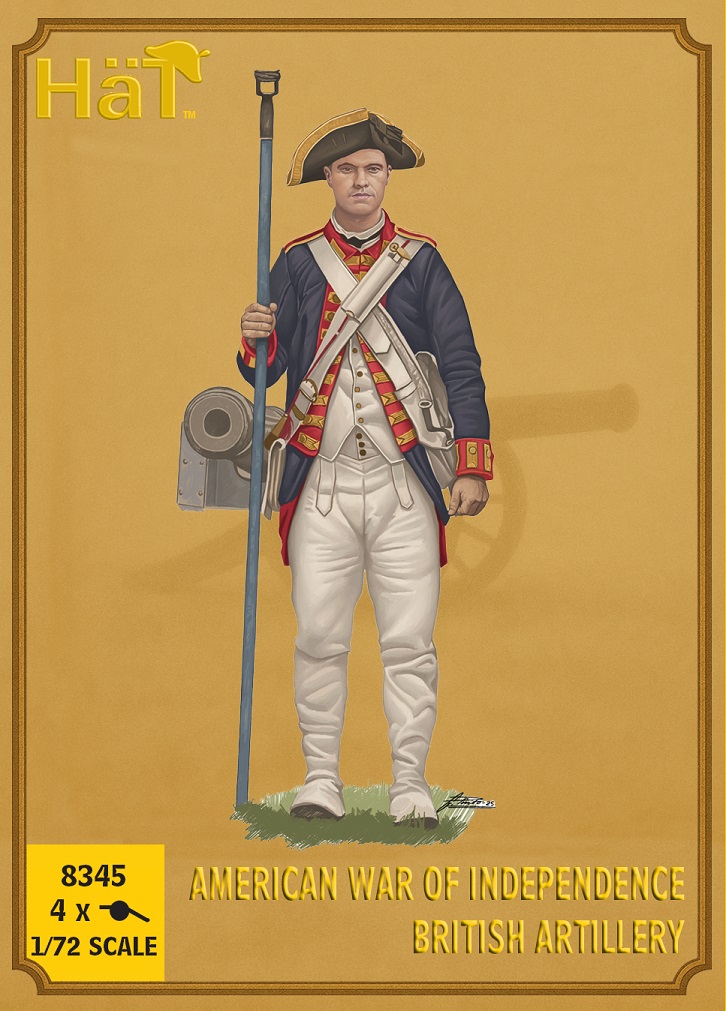
American War of Independence British Artillery. The Royal Regiment of Artillery was one of the British Army's permanent professional corps and served throughout the American War of Independence. In North America, rough roads, forests and broken terrain made heavy artillery difficult to move, so the relatively light and versatile 6-pounder became one of the most commonly used British field guns. Lighter pieces could also accomp...
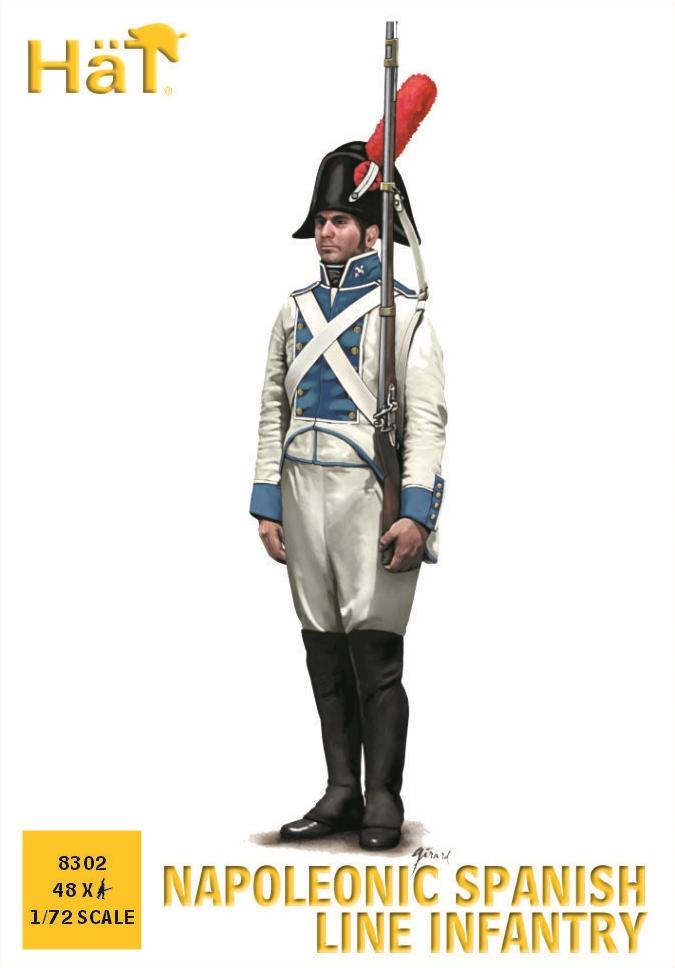
RE-RELEASED!!! Napoleonic Spanish Line Infantry. Spanish line infantry formed the main body of the army that resisted Napoleon during the Peninsular War. Although the popular image of the conflict often focuses on guerrillas, the regular Spanish Army fought continuously from 1808 onward and played a major part in the struggle against French occupation.
The ordinary infantrymen of the line were fusiliers. They made up the ma...
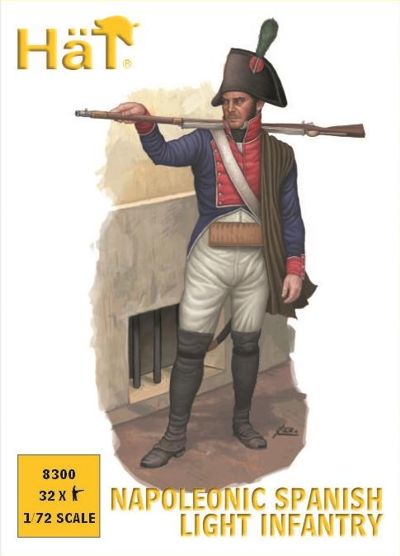
RE-RELEASED!!! Napoleonic Spanish Light Infantry. Spanish light infantry, or Cazadores, formed an important part of the army that resisted Napoleon during the Peninsular War. When fighting began in Spain in 1808, the Spanish Army contained twelve light infantry regiments, each consisting of a single battalion. Their role was to skirmish ahead of the main infantry, occupy broken ground, screen troop movements and engage enemy l...
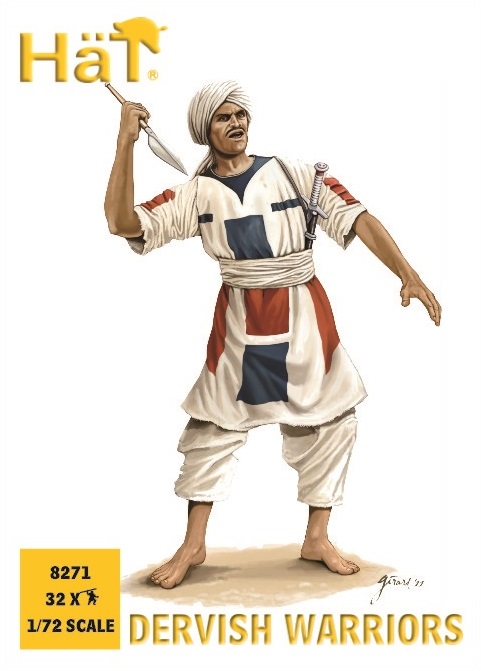
Dervish Warriors (Colonial). The warriors commonly called "Dervishes" by British and Egyptian troops were more properly the Ansar, the followers of Muhammad Ahmad, who proclaimed himself the Mahdi in 1881. Their uprising began as a revolt against Egyptian rule in the Sudan and rapidly grew into a powerful religious and political movement. Early Mahdist forces were drawn from many tribal groups and were far from uniform, but th...
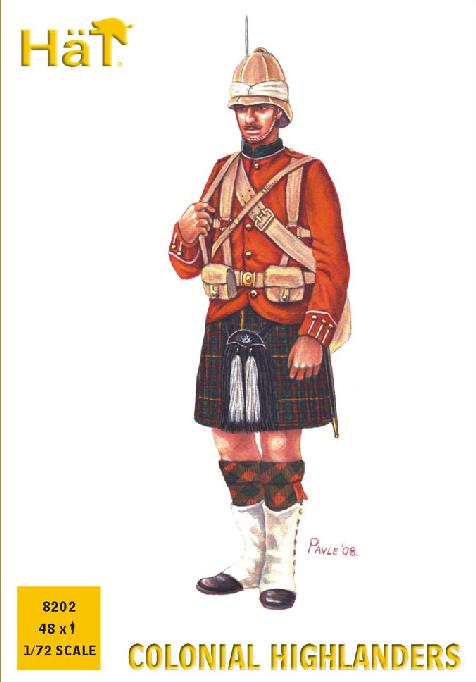
RE-RELEASED!!! Colonial Wars Highlanders x 48 figures per box. Highland regiments occupied a special place in the British Army. The first permanent Highland regiment was raised in the 18th century and later became famous as the Black Watch. Over the following two centuries, Highland soldiers served throughout the Empire and developed a reputation for discipline, endurance and aggressive battlefield spirit. Their kilts, tartans...
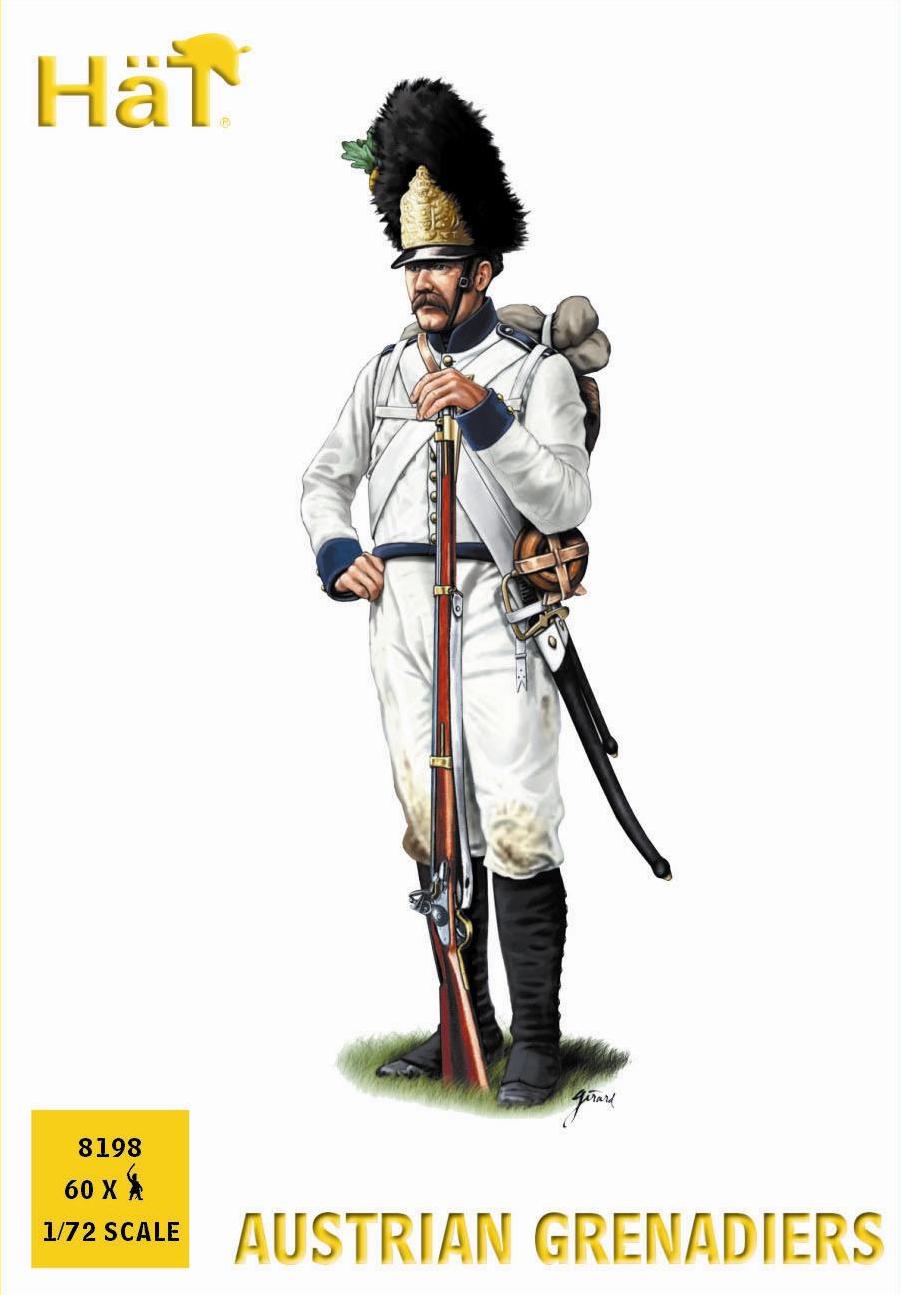
RE-RELEASED!!! Austrian Grenadiers. Austrian grenadiers were selected from the tallest and most experienced men of the line infantry. Each regiment normally maintained two grenadier companies, but on campaign these were often detached and combined with grenadiers from other regiments to form separate battalions. These imposing formations were regarded as elite troops and were frequently committed at important moments in battle...
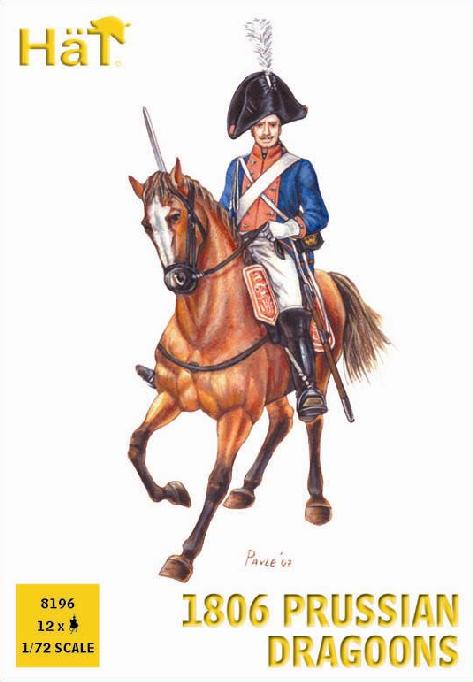
Napoleonic 1806 Prussian Dragoons. Prussian dragoons formed an important part of the cavalry arm that went to war against Napoleon in 1806. By this period dragoons had long since ceased to function primarily as mounted infantry and instead served as versatile battlefield cavalry, occupying a position between the lighter hussars and the heavier cuirassiers.
Prussian cavalry entered the campaign with a formidable reputation i...
RE-RELEASED!!! Napoleonic 1806 Prussian Hussars. Prussian hussars were among the most colorful and mobile troops of the army that confronted Napoleon in 1806. Originally developed for scouting, raiding and other light cavalry duties, hussars had become an established part of the Prussian mounted arm and were expected to perform reconnaissance, screen the movement of armies, protect flanks and pursue a defeated enemy.
In 180...
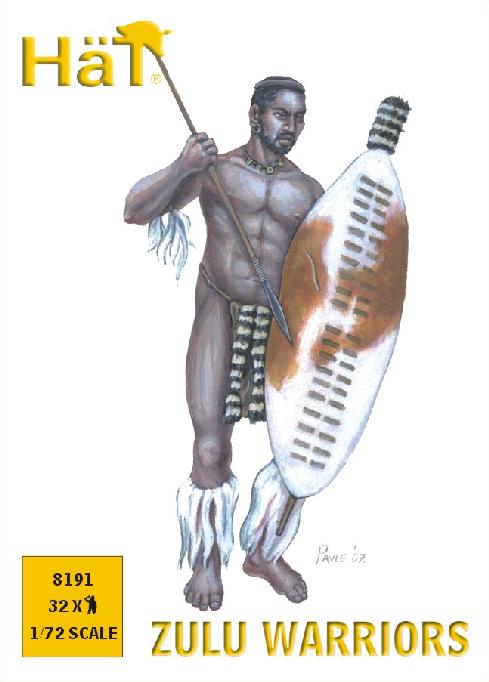
RE-RELEASED!!! Zulu Warriors The Zulu army of 1879 was one of the most formidable indigenous military forces that the British Empire encountered in the 19th century. Built upon the system created by Shaka earlier in the century, it was organized into age-based regiments or amabutho, each with its own identity, shield colours and traditions. Although often portrayed as a purely "tribal" force, the Zulu army was in fact a discip...




 Advanced Search