Cookies are small text files that are placed on your computer by
websites that you visit. They are widely used in order to make
websites work, or work more efficiently, as well as to provide
information to the owners of the site.
Here is a list of cookies this site uses:
Cookie name
Description
existing_user
Stores the email address used to previously log into the site, used to prefill forms like on the reset password screen
authchallenge
Authentication security checks
hcart
Stores the anonymous customer\'s cart token. If items are added to the card while not logged in, if you log in the items will be added to the customer\'s existing cart
hannants
Stores the session information while you remain on the site
pricer
Stores if the export or eu prices is selected on the catalogue page
hidefilter
Stores if the search filter panel is hidden or shown
AWSELB
Stores which server you\'re connected to so to access the same server while you navigate around the site
Bucker Bu-131/T-131 PK-TAF, OK-TAK D-EDYD USUALLY £22.99. NOW BEING CLEARED!! SAVE 1/3ED!!!
The Bucker Bu 131 Jungmann was a German two-seat biplane trainer used during World War II. The aircraft was designed by Swedish-born designer Ing. Anders J. Anderson, who led all design work at Bucker until 1939.
1. Tatra T-134.5, OK-TAF, Masarykova letecki liga, Olomouc-Holice, kveten 1938
2. Tatra T-134.9, OK-TAK, 104. kur½rni...
Avia Ba.322.1 1 decal v. for Czechoslovakia
1. Avia Bs.322.1, III. Nirodni let R£�S a II. Nirodni soutez v letecke akrobacii. Kbely 1937
The engine was a Castor II-A. During July 1937, Bs-122 machines were assigned to the training squadron of Air Regiment 4 and to the VLU. Modified Bs-322 and B-322 aircraft were built from two Bs-122s. The Bs-322 type was powered by an Rk-17 engine and had hooded wheels. He flew in red and...
Bucker Bu-131A/D 2 decal v. for RomaniaThe Bucker Bu 131 Jungmann was a German two-seat biplane trainer used during World War II. The aircraft was designed by Swedish-born designer Ing. Anders J. Anderson, who led all design work at Bucker until 1939.
1. Bucker 131A, Aeroclub Prahova 1939
2. Bucker 131D, Romanian AF, 1941
3. Bucker 131D, Romanian AF, 1942
The first flight of the prototype Bu 131 (D-3150) was made o...
Bucker Bu-131D 'Jungmann' GG+GK and KI+YU
The Bucker Bu 131 Jungmann was a German two-seat biplane trainer used during World War II. The aircraft was designed by Swedish-born designer Ing. Anders J. Anderson, who led all design work at Bucker until 1939.
1. Bucker 131D, GG+GK, Wr. Nr. 1672, Olomouc, Holice, 1941
2. Bucker 131D, KI+YU, Wr. Nr. 1672, Olomouc, Neredin, 1942
The first flight of the prototype Bu 131 (D-31...
Aero C-104 2 decal v. for Czechoslovakia
The Bucker Bu 131 Jungmann was a German two-seat biplane trainer used during World War II. The aircraft was designed by Swedish-born designer Ing. Anders J. Anderson, who led all design work at Bucker until 1939.
1. C-104.203, OK-BFW, Aeroklub Zbraslavice, 1953
2. C-104.143, MP-27, 50. kur½rni leteck½ pluk, 1952
The first flight of the prototype Bu 131 (D-3150) was made on 27...
Praga E-241 3 decal v. In the mid-1930s, the Praga BH-41 was the follow-on aircraft. However, there were no engines for the construction of other aircraft, so the aircraft was modernized and the ZOD-260 diesel engine was used. The aircraft flew under the designation Praga E-141.
1. Praga E-241.43, Piesl�any, srpen 1940
2. Praga E-241, Slovakia 1942
3. Praga E-241.37, Mokrad', Slovakia 1941
However, it did not prove to b...
Aero Ab-101 The Aero Ab-101 was a Czechoslovak bomber biplane, which was developed from the Aero A-100, or A-101, which was fitted with the Praga HS 12Ydrs engine. The prototype aircraft flew on 25 March 1936 and proved to be not a very successful type.
1. Aero Ab-101.49, 73. letka, 5.LP, Brno, 1938
There was not the expected increase in speed over its predecessor, although climb rate and range increased slightly. The ...
Yak-11 / C-11 The Yakovlev Yak-11 is based on the Soviet Yak-3 fighter aircraft, which flew with the AS-82FN radial engine on 10 November 1945. However, this machine did not make it into production, but was further modernized to create a new aircraft, which underwent trials in the spring of 1946.
1. C-11, akrobaticki skupina, v½robni c. 171721, £�SLA, 1958
2. Yak-11, OK-GFB, v½robni c. 40220, Aeroklub Spisski Novi Ves, 196...
Praga E-141 with tail skid/E-241 with tail wheel LIMITED!!! USUALLY £22.99. NOW BEING CLEARED!! SAVE 1/3RD!!!
In the mid-1930s, the Praga BH-41 was the follow-on aircraft.However, there were no engines for the construction of other aircraft, so the aircraft was modernized and the ZOD-260 diesel engine was used. The aircraft flew under the designation Praga E-141.
1. Praga E.141.1, Vojenske letecke uciliste, Prostejov 1936...
RE-RELEASED!!! Avia Ba.422 LIMITED!!! resin fuselage with injection moulded wings etc
The Avia Ba.422 aerobatic special was modified according to Novik's comments for the aerobatic competition held in Saint-Germain-en-Laye near Paris.It was built at the beginning of 1938 in two pieces 422.1 OK-AVB which was a backup and Novik's OK-AVC 422.2, powered by Avia Rk-17 engine with 350 hp.
1. Avia Ba.422.2 OK-AVC, Frantisek No...
NEARLY GOOD AS NEW!!! Avia B-222 Czechoslovak Acrobatic Aircraft LIMITED!!! resin fuselage with injection moulded wings etc
After the success of the Avie Ba.122, other variants were developed. B-222.1 was flown in August 1937. The machine was powered by a nine-cylinder Rk-17 engine which was covered with a NACA aerodynamic cowling, and the wheels were also cowled. The aircraft flew in white and red livery, with no matriculati...
Kawasaki Ki-100-I With the Ki-100 proving such a success, it was decided to initiate production of this aircraft, the resulting Ki-100-Ib differing only by having the cutdown rear fuselage and all-round-view canopy that had been designed for the proposed Ki-61-III
4 decal variants:
1. Ki-100, Akeno Flight Training Division (111th Air Regiment, flown by Mj. Yohei Hinoki (12 victories, Miki AF, Hyougo prefecture Japan, July...
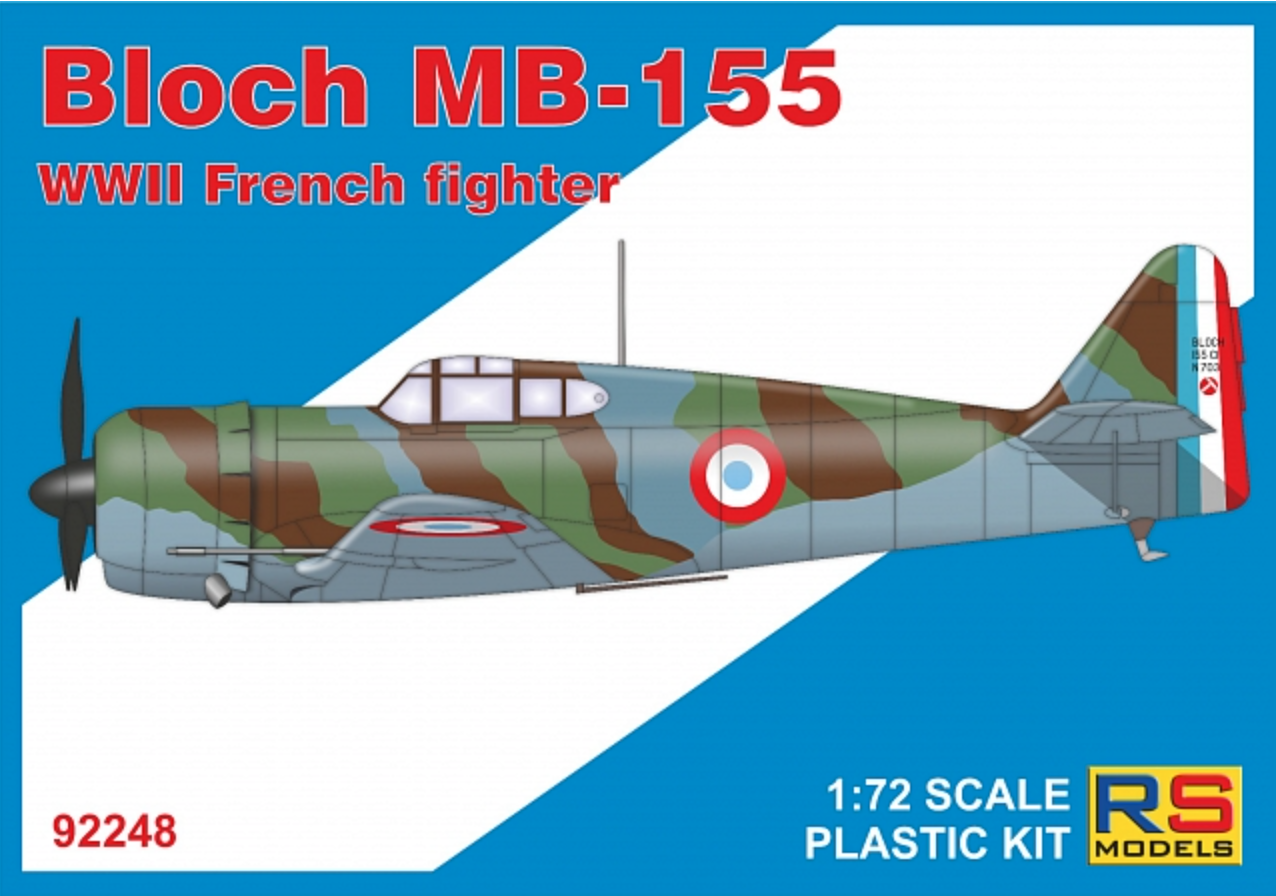
RE-RELEASED!!! Marcel-Bloch MB.155 5 decal variants
1. MB-155, No. 703, GC-1, Lt. Lefeuvre, Toulouse, June 1940
2. MB-155, No. 700, first prototype, France, December 1939
3. MB-155, No. 704, CO of 1 Escadrille, Capt. Coutaud, Agen, Algeria, June 1940
4. MB-155, No. 708, GC II/8, Vichy France Air-Force, 1941
5. MB-155, JG103, Luftwaffe, France 1943
The Bloch MB.152 proved the definitive production model with...
Dornier Do-17K
1. Do-17 Ka-1, 209 eskadrila, Skoplje, June 1940 Hungarian Air Force
2. Do-17 Ka-2, 1. �"nall�� tavolfeldelrito ostzaly, Ferihegy
3. Do-17 Ka-1, Mostarska eskadrila, Rajlovac, May 1945
4. Do-17 Ka, 5th Bomber Regiment, Bulgarian AF, 1941-42
After seeing the Do 17 M V1 at the Zurich air races in 1937, the Yugoslavian Air Force bought licence rights for production at the DFA factory in 1938. They equipped it...
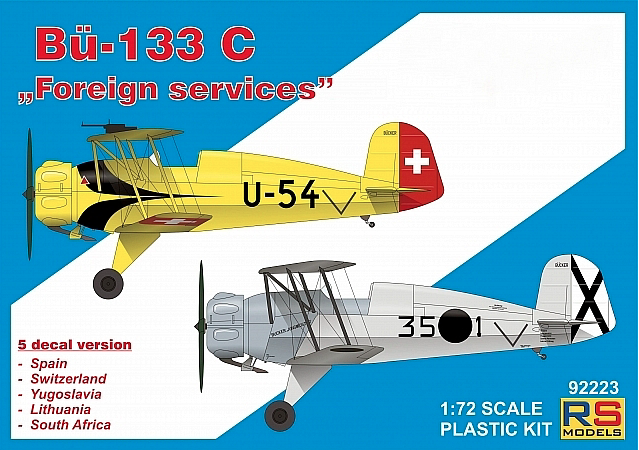
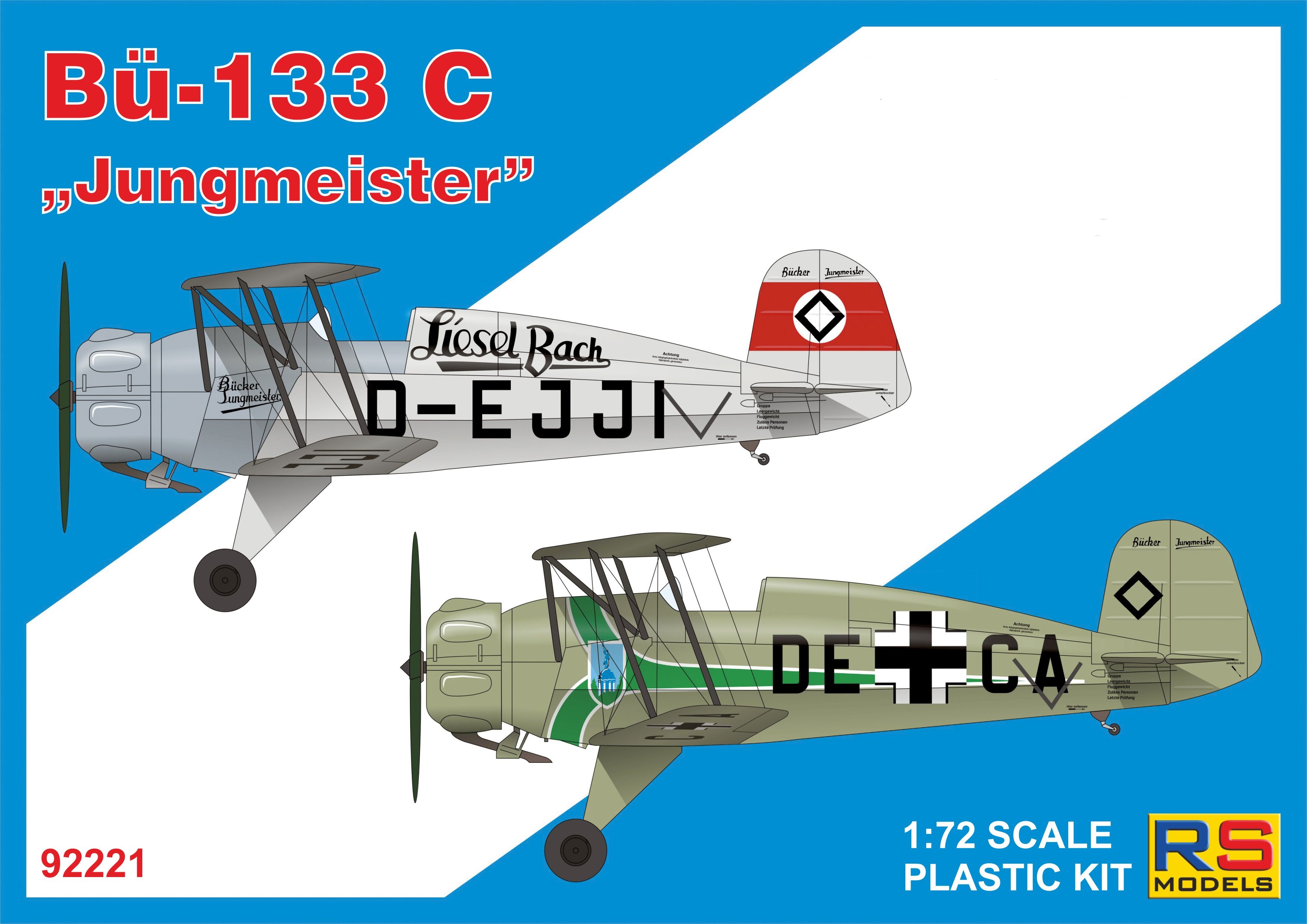
Bucker Bu-133C 'Foreign services' Product code: 92223
5 decal variants
1. Bu-133C, Legion Condor, Tablada, Spain 1936
2. Bu-133C, Swiss A.F., Thun, Schweiz 1946
3. Bu-133C, LY-LAD, Kaunas, Lithuania 1938
4. Bu-133C, Yugoslavia partyzan A.F., 1945
5. Bu-133C, SAAF, South Africa, 1945
The Bucker Bu 133 Jungmeister was an advanced trainer of the Luftwaffe in the 1930s. It was a single-engine, single-seat biplane of wood an...
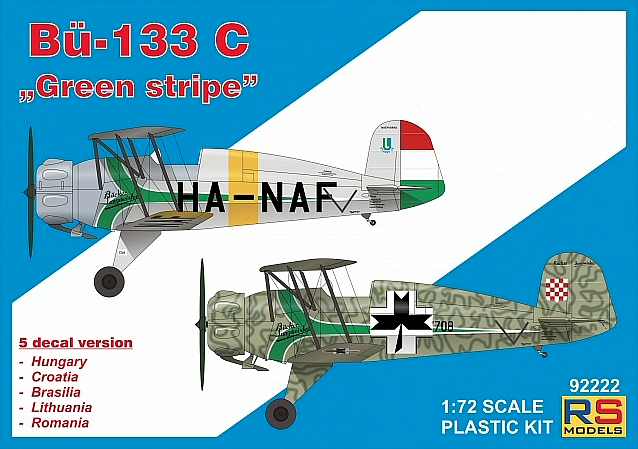
Bucker Bu-133C "Green stripe"
5 decal variants
1. Bu-133C, Croatin A.F., April 1945
2. Bu-133C, Hungarian Aeroclub, Budaors, Hungary1939
3. Bu-133C, OH-SEA, Gerd Achgelis, Finnland 1939
4. Bu-133C, PP-TDP, Artur Benitz, tour of South America, Brazil 1937/38
5. Bu-133C, Tokyo-Haneda, April 1938, Japan
The Bucker Bu 133 Jungmeister was an advanced trainer of the Luftwaffe in the 1930s. It was a single-engine, single-seat...
Bucker Bu-133A/B "Jungmeister"
5 decal variants
1. Bu-133B, YR-PAX, Alex Papana, Romania aerobat ace, Cleveland Air races 1937
2. Bu-133B, D-EAKE, Walo Hornig, 1936
3. Bu-133A, Legion Condor, Spain 1938
4. Bu-133A, Luise Hoffman, Rangsdorf 1935, Walo Hornig, Laussane 1935
5. CASA 1131L, Spain 1940
The Bucker Bu 133 Jungmeister was an advanced trainer of the Luftwaffe in the 1930s. It was a single-engine, single-seat bi...
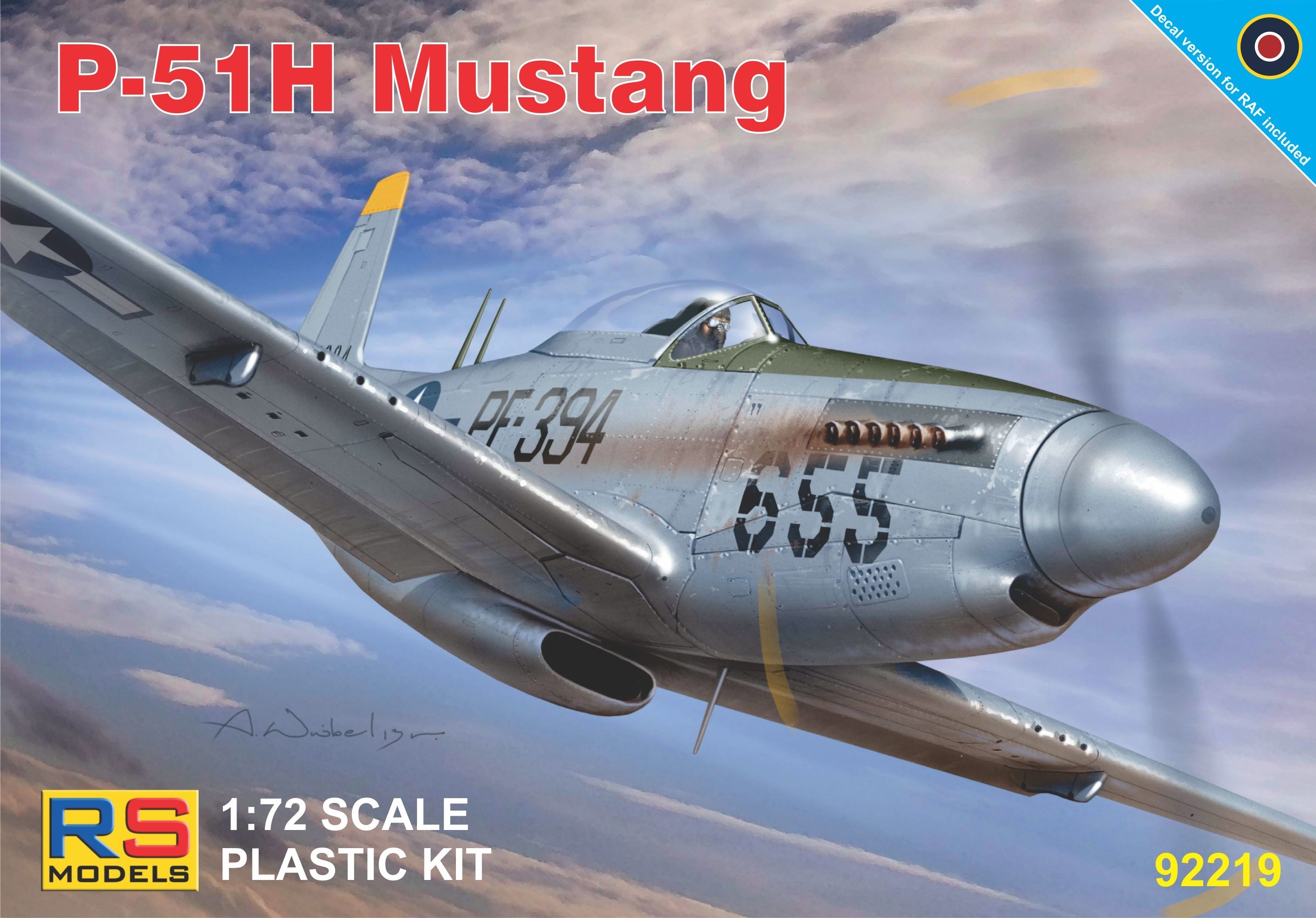
RE-RELEASED!!! North-American P-51H Mustang
1. P-51H, 412th, March Field, CA, August 1945
2. P-51H-1,prototype, Mines Field, Los Angeles, February 1945
3. P-51H, KN987, RAF, Boscombe Down 1945
4. P-51H from the 62th FS, 56th FG, Alaska Air Command, 1948
The P-51H was the final production Mustang and used the new V-1650-9 engine, a version of the Merlin that included Simmons automatic supercharger boost control with ...
Bell P-400 Airacobra
1. P-400 of 67th FS/347th FG, Guadlacanal autumn 1942
2. P-400 of 35th FG, New Guinea, 1942
3. P-400, 19GIAP, USSR 1943, pilot Captain Pavel Kutakhov
4. P-400, Laverton, Australia, RAAF, 1943
5. P-400 of 80th/8th FG, Milne Bay, New Guinea, January 1943
6. P-400 of 36th FS/8th FG, June 1943, Port Moresby, New Guinea
The Bell P-39 Airacobra was one of the principal American fighter aircr...
RE-RELEASED!!! Reggiane Re.2006 Together with both the Fiat G.56 and the Macchi C.206, the RE.2006 was a highly secret project. They were all modified versions of the Type 5 fighters, designed to be fitted with the DB.603 engine. Although the Macchi never got past the design stage (confirmed in the RE.2006 book), both the G.56 and RE.2006 did get built, although the RE.2006 never flew. With cramped working conditions and a fur...
Messerschmitt Me-509 "Nachtjager"
1. Me 509, Alternate marking NJG3, Luftwaffe 1944
2. Me 509, Alternate marking NJG2, Luftwaffe 1944
3. Me 509, Alternate marking 10.(N) JG53, Luftwaffe 1944
4. Me 509, Alternate marking NJG7, Luftwaffe 1944
The project Me 509 had been developer out of the Me 309. The main change was in transfer of the engine to the point of balance. The propeller of the Me 509 was run by a shaft...
Re-released! North-American NA-64 'Yale'
1. R.C.A.F., Borden February 1942, Canada
2. R.C.A.F., No.6 SFTS Dunnville June 1942, Canada
3. R.C.A.F., No.1 SFTS Camp Borden 1940, Canada
4. R.C.A.F., No.6 SFTS Dunville July 1942, Canada
The North-American NA-64 (NA-64 P-2 or NAA-64 P-2 in French service, Yale in Canadian service) is a low-wing single piston engine monoplane advanced trainer aircraft that was built fo...




 Advanced Search