Cookies are small text files that are placed on your computer by
websites that you visit. They are widely used in order to make
websites work, or work more efficiently, as well as to provide
information to the owners of the site.
Here is a list of cookies this site uses:
Cookie name
Description
existing_user
Stores the email address used to previously log into the site, used to prefill forms like on the reset password screen
authchallenge
Authentication security checks
hcart
Stores the anonymous customer\'s cart token. If items are added to the card while not logged in, if you log in the items will be added to the customer\'s existing cart
hannants
Stores the session information while you remain on the site
pricer
Stores if the export or eu prices is selected on the catalogue page
hidefilter
Stores if the search filter panel is hidden or shown
AWSELB
Stores which server you\'re connected to so to access the same server while you navigate around the site
Vickers Super VC-10/VC10 type 1151 BOAC he VC10 or to use its correct title the Vickers Commercial 10 was a long range British Airliner designed and built by Vickers and first flew in 1962. The Aircraft had a high subsonic speed and was specially designed to use 'Hot & High' Airports such as Nairobi on the African routes.
The fist Super VC10 that is the subject of this model was13ft 0in (3.96 m) longer, had upgraded Conway e...
Polikarpov I-16 /
1. I-16 tip 10, Major General Ivan Lakeyev. June 1941.
2. I-16 type 24. Defense of Leningrad, 1941.
3. I-16 type 29. 156 IAP winter 1941-1942.
4. I-16 Type 10 (or Type 18),1940-41. This plane was used army ruler Shchen Shih Tsai against Uighur Muslim separatist rebels.
5. And 16 type 10. Unidentified Air Force unit of the Kuomintang. Presumably the end of 1939.
6. I-16 type 24. One of the four...
BAe Harrier GR.3 'Laser Nose' The Hawker Siddeley Harrier "Jump Jet" is a British V/STOL aeroplane developed in the 1960s. The initial version was the Harrier GR.1, based on the P.1127 (RAF) fighter, and its upgraded variant was the GR.1A. Another upgrade implementing more powerful and reliable engine resulted in the GR.3 model, at first externally similar to previous GR.1/1As. Beginning from the spring of 1976 upgraded avioni...
BAe Harrier GR.1/VA.1 Matador The Hawker Siddeley Harrier "Jump Jet" is a British V/STOL aeroplane developed in the 1960s. The initial version, the Harrier GR.1, was based on the P.1127 (RAF) fighter and the first aircraft of a total of sixty for the RAF were delivered in the spring of 1969. The GR.1A was an upgraded version of the GR.1 having an uprated powerplant. 58 a/c of this model existed, of which 17 were new built and ...
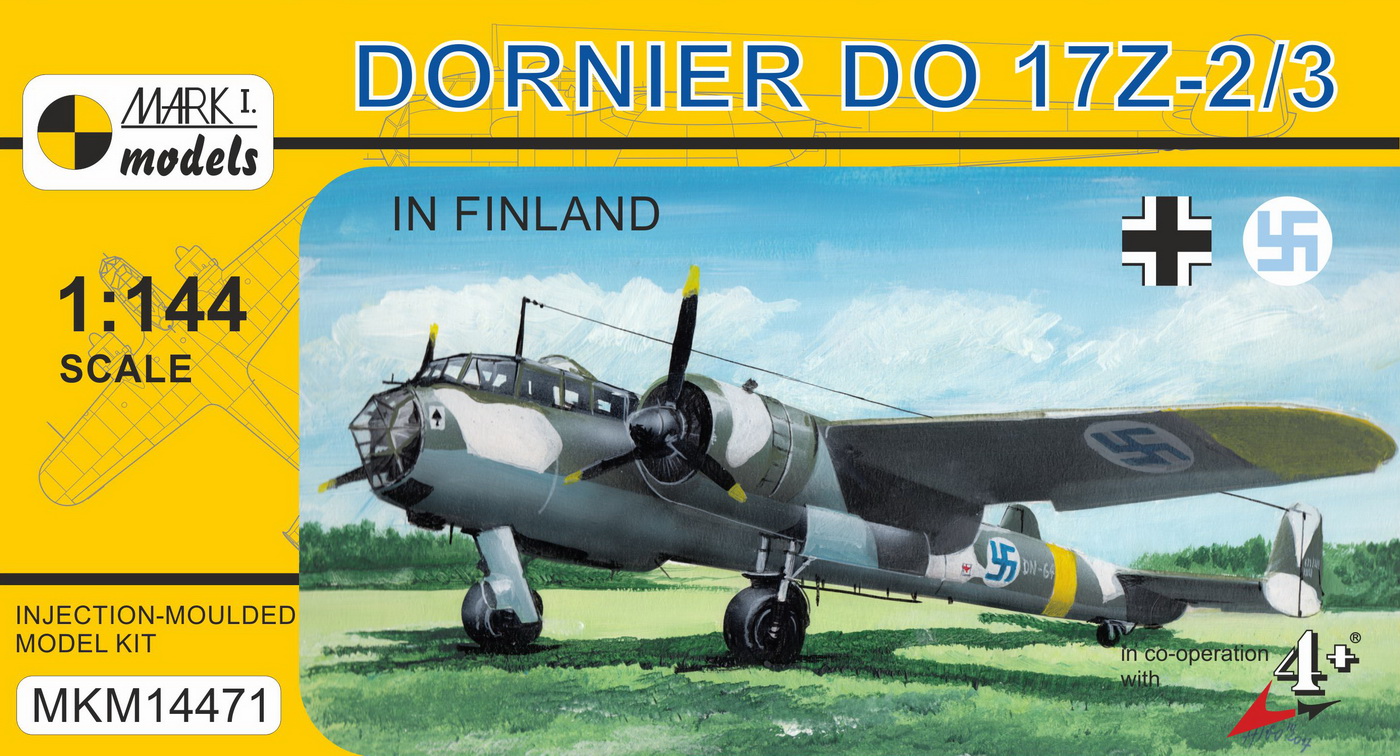
Dornier Do-17Z-2/3 'In Finland' The Do-17 was a German light bomber, designed in the early 1930s. It was originally intended as a fast six-passenger mail plane and its V1 prototype flew in November 1934. Following tests and design improvements in-line and radial engine powered aircraft were evolved, represented by the Do-17E/F and Do-17K/M/P, respectively. The most recognised and mass-produced variant was the Do 17Z series, wi...
Curtiss P-36 Hawk 'USAAC' (2in1 = 2 kits in 1 box) (USAAC)
The Curtiss P-36 Hawk, the firm's Model 75, was an American-designed and built fighter aircraft of the mid-1930s. Two variants, the P-36A and C, were produced in 1938-39 for the U.S. Army Air Corps, with the production totalling 210 aircraft (last 30 a/c were completed as P-36Cs).
It was a single-seat, all-metal low-wing monoplane with fabric-covered control surfa...
Dornier Do-17Z-2 'Balkan Operations' The Do 17 was a German light bomber, designed in the early 1930s. It was originally intended as a fast six-passenger mail plane and its V1 prototype flew in November 1934. Following tests and design improvements in-line and radial engine powered aircraft were evolved, represented by the Do 17E/F and Do 17K/M/P, respectively. The most recognised and mass-produced variant was the Do 17Z serie...
Dornier Do-17Z-2/3 'Western Front'
The Do 17 was a German light bomber, designed in the early 1930s. It was originally intended as a fast six-passenger mail plane and its V1 prototype flew in November 1934. Following tests and design improvements in-line and radial engine powered aircraft were evolved, represented by the Do 17E/F and Do 17K/M/P, respectively. The most recognised and mass-produced variant was the Do 17Z series...
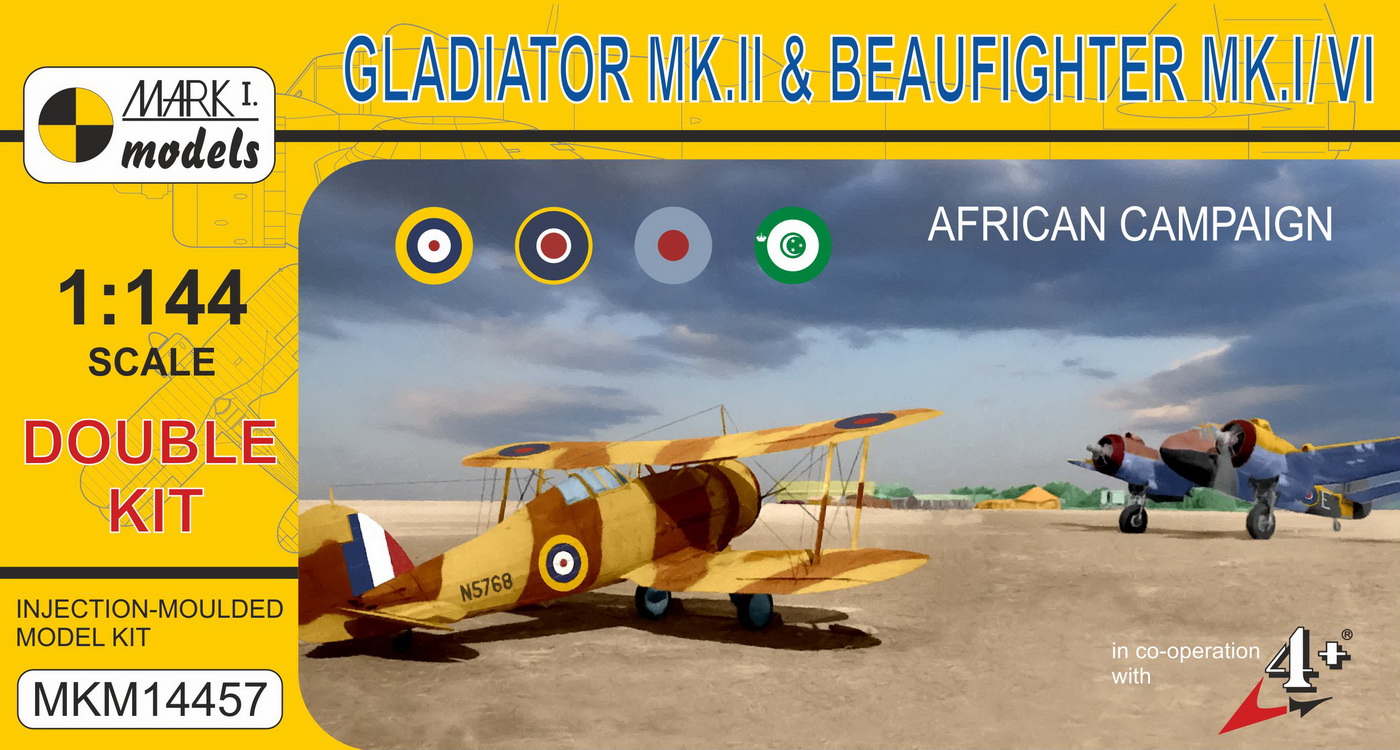
Gloster Gladiator Mk.II & Bristol Beaufighter Mk.IC/Mk.VIF 'North Africa' (double kits) The North African Campaign of WWII took place from June 1940 to May 1943. It included campaigns fought in the Libyan and Egyptian deserts, in Morocco, Algeria and Tunisia.
Both the Gladiator and Beaufighter aeroplanes were engaged in aerial battles over these territories.
The Bristol Beaufighter was a British heavy fighter, whose first pr...
Gloster Sea Gladiator 'Malta Defender' (decals RAF, FAA)
The Gloster Gladiator was a British-built biplane fighter developed from the Gauntlet and its prototype, designated SS.37, flew in September 1934. The first production model was the Mk.I, which became operational in January 1937. An improved Mk.II version followed in 1938 and eventually 270 aircraft of this Mark were built. A modified Mk.II, the Sea Gladiator, was dev...
Gloster Gladiator Mk.I/Mk.II/J8 Foreign Service (Swedish AF, Latvian AF, Soviet AF, Luftwaffe)
The Gloster Gladiator was a British-built biplane fighter developed from the Gauntlet and its prototype, designated the SS.37, flew in September 1934. The first production model was the Mk.I, which became operational in January 1937. An improved Mk.II version followed in 1938 and eventually 270 aircraft of this Mark were built.
...
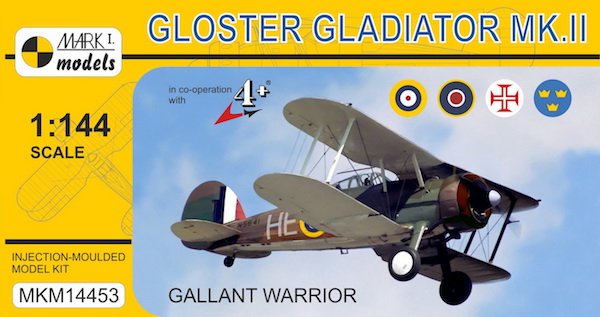
Gloster Gladiator Mk.II Gallant Warrior (decals RAF, Portuguese AF, Swedish AF)
The Gloster Gladiator was a British-built biplane fighter developed from the Gauntlet and its prototype, designated SS.37, flew in September 1934. The first production model was the Mk.I, which became operational in January 1937. An improved Mk.II version followed in 1938 and eventually 270 aircraft of this Mark were built.
The Gladiator Mk.II...
Gloster Gladiator Mk.I Last Biplane Fighter (decals for RAF, Belgian AF, Chinese Nationalist AF)
The Gloster Gladiator was a British-built biplane fighter developed from the Gauntlet and its prototype, designated SS.37, flew in September 1934. Following testing and minor modifications the first production model, the Mk.I, was delivered from July 1936 and became operational in January 1937.
The Gladiator Mk.I was a single-...
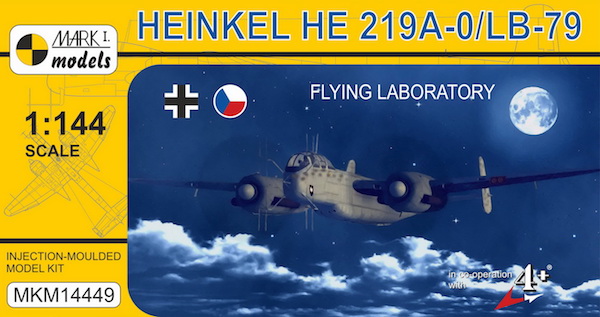
Heinkel He-219A-0/LB-79 'Flying Laboratory' (Luftwaffe, Czechoslovak AF)
The He-219 Uhu was a German heavy night fighter, employing a number of the then novel radar and antennae equipment, and was the first operational HYPERLINK "http://en.wikipedia.org/wiki/Military_aircraft" \o "Military aircraft" military aircraft to be fitted with HYPERLINK "http://en.wikipedia.org/wiki/Ejection_seat" \o "Ejection seat" ejection seats...
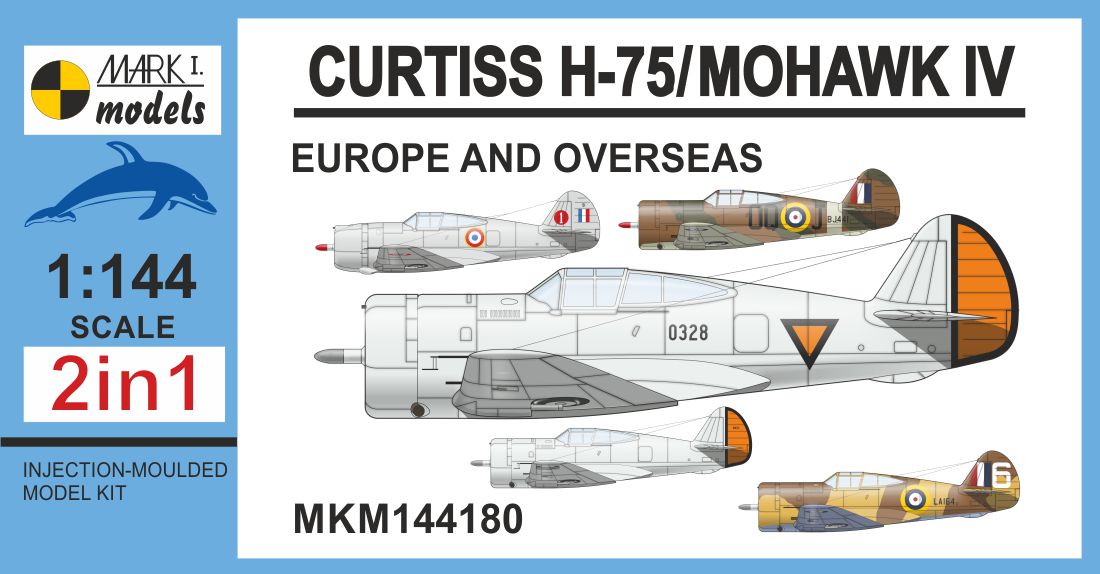
Curtiss H-751/75A-7/Mohawk IV 'Europe & Overseas'
The Curtiss H-75 was the export version of the American P-36 Hawk (Curtiss Model 75) fighter of the mid-1930s. The biggest foreign customer was France, taking deliveries of aircraft designated the H-75A-1, 2, 3 and 4, with the first planes entering service in the spring of 1939. They were modified for French Air Force usage and fitted with different equipment and armament. The...
Gloster Gladiator 'Mediterranean & Middle East' re-release, new decals. The Gloster Gladiator was a British-built biplane fighter developed from the Gauntlet and its prototype, designated the SS.37, flew in September 1934. The first production model was the Mk.I, which became operational in January 1937. An improved Mk.II version followed in 1938 and eventually 270 aircraft of this Mark were built.
The Gladiator was a single...
Re-released! Mil Mi-2 Hoplite 'Warsaw Pact' (2in1 = 2 kits in 1 box) (Soviet AF, Czechoslovak AF, Polish AF, East German AF)
Designed by the Soviet Mil Design Bureau in late 1950s and exclusively produced in Poland by the WSK "PZL-...swidnik" factory, the Mi-2 was a small transport and utility helicopter. The Mil' s prototype first flew in 1961, while the first ...swidnik-built example took to the air in November 1965. A numbe...
Mohawk IV/H-75A-7 'Overseas Service' (2in1 = 2 kits in 1 box) (RAF, NEIAAF, Portuguese AF)
The Curtiss H-75 was the export version of the American P-36 Hawk (Curtiss Model 75) fighter of the mid-1930s. The biggest foreign customer was France, taking deliveries of aircraft designated the H-75A-1, 2, 3 and 4, with the first planes entering service in the spring of 1939. They were modified for French Air Force usage and fitte...
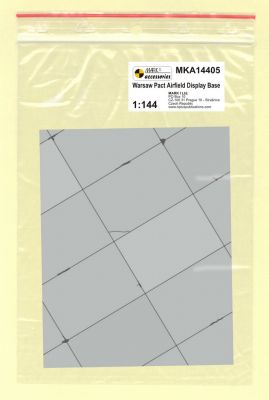
Warsaw Pact Base (rectangular concrete panels) A single 1:144 scale sheet depicting an actual military aircraft base or helicopter landing zone, and the terrain surroundings. Dimensions: length 4.53in/115mm, width 3.54in/90mm.
London Gatwick Airport Size 675mm x 675mm
Founding and early years
Today, Gatwick airport is one of the United Kingdom's major airport hubs, second only to Heathrow.
Originally, partially the area now occupied by the airport was a racecourse, and was founded in 1891. From 1907, a golf course was added but this closed shortly after the end of the Great War. During the late 1920's the land adjacent to the course was ...
London Heathrow Airport Size 675mm x 675mm
Early Days and the inter-war period
Today, one of the worlds' major airports, and the largest of the six airports surrounding London. Initially the site was located near the village of Heathrow and was known by several titles; the Great West Aerodrome, Heathrow Aerodrome (due to the nearby hamlet of Heathrow), or Harmondsworth Aerodrome (due to it being located in the civil pa...
Manchester Airport/Manchester International Airport/Ringway Airport Size 675mm x 675mm
Beginning and early days
What is now Manchester Airport traces its ancestry back to the 1930s. Construction of Ringway Airport as it was formerly known, in 1935, and the site partially opened in June 1937 before becoming fully operational in June 1938, officially opening with an air pageant to mark the occasion. The first scheduled fl...
Southend Airport Size 675mm x 675mm
Formation and early years
Southend Airport can trace its ancestry back to the Great War when it was established by the Royal Flying Corps (RFC) in 1915. It was briefly passed over to the Royal Navy Air Service (RNAS) in the same year with limited flying duties being carried out. In 1916 the airfield passed back to RFC control when it became RFC Rochford and used as a training centre f...




 Advanced Search