Cookies are small text files that are placed on your computer by
websites that you visit. They are widely used in order to make
websites work, or work more efficiently, as well as to provide
information to the owners of the site.
Here is a list of cookies this site uses:
Cookie name
Description
existing_user
Stores the email address used to previously log into the site, used to prefill forms like on the reset password screen
authchallenge
Authentication security checks
hcart
Stores the anonymous customer\'s cart token. If items are added to the card while not logged in, if you log in the items will be added to the customer\'s existing cart
hannants
Stores the session information while you remain on the site
pricer
Stores if the export or eu prices is selected on the catalogue page
hidefilter
Stores if the search filter panel is hidden or shown
AWSELB
Stores which server you\'re connected to so to access the same server while you navigate around the site
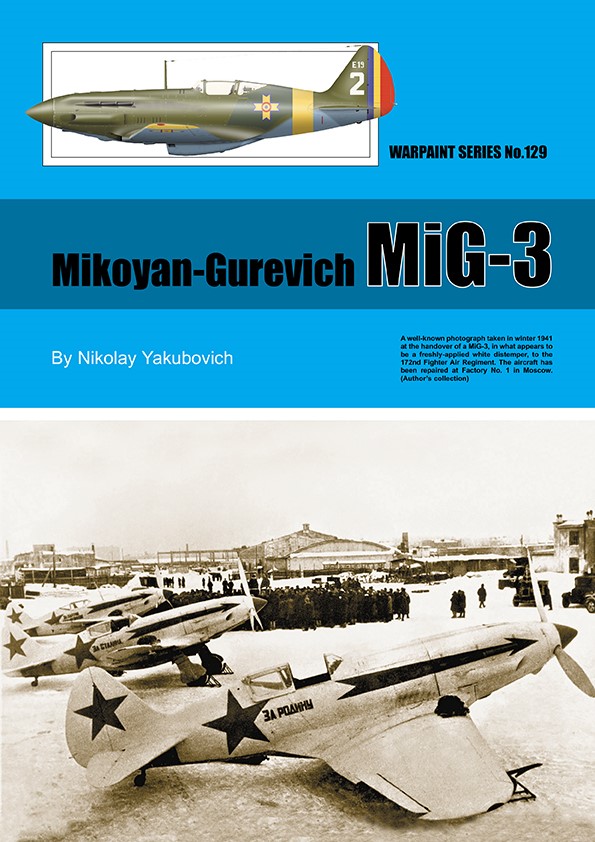
Mikoyan-Gurevich MiG-3 By Nikolay Yakubovich
By the time Operation Barbarossa unfolded on 22 June 1941 some 981 MiG-3s were in service with the Soviet Air Forces (VVS), the Soviet Air Defence Forces (PVO) and Soviet Naval Aviation, but the aircraft had undergone a difficult development and was an unforgiving machine to fly in combat. It had been designed for high-altitude but combat over the Eastern Front was generally at l...
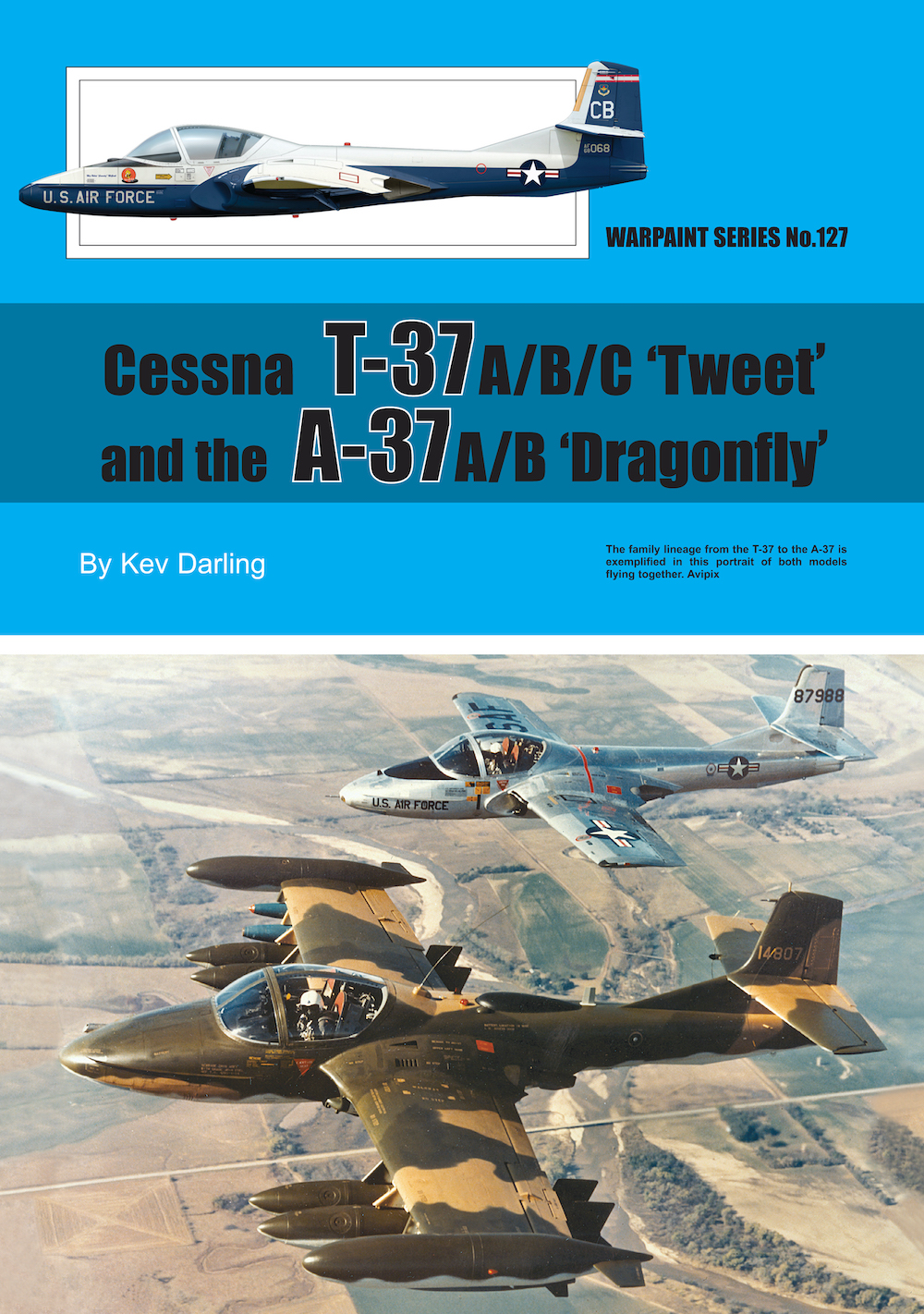
Cessna T-37 A/B/C 'Tweet' and the A-37A/B 'Dragonfly' By Kev Darling
When USAF went searching for a new jet trainer in the early 1950's to replace the Lockheed T-33, it came as a great surprise to all when Cessna, best known for producing light aircraft, actually won the competition. Little did anyone realise that the T-37, the new training aircraft's designation, would stay in service for fifty years. Along the way the fle...
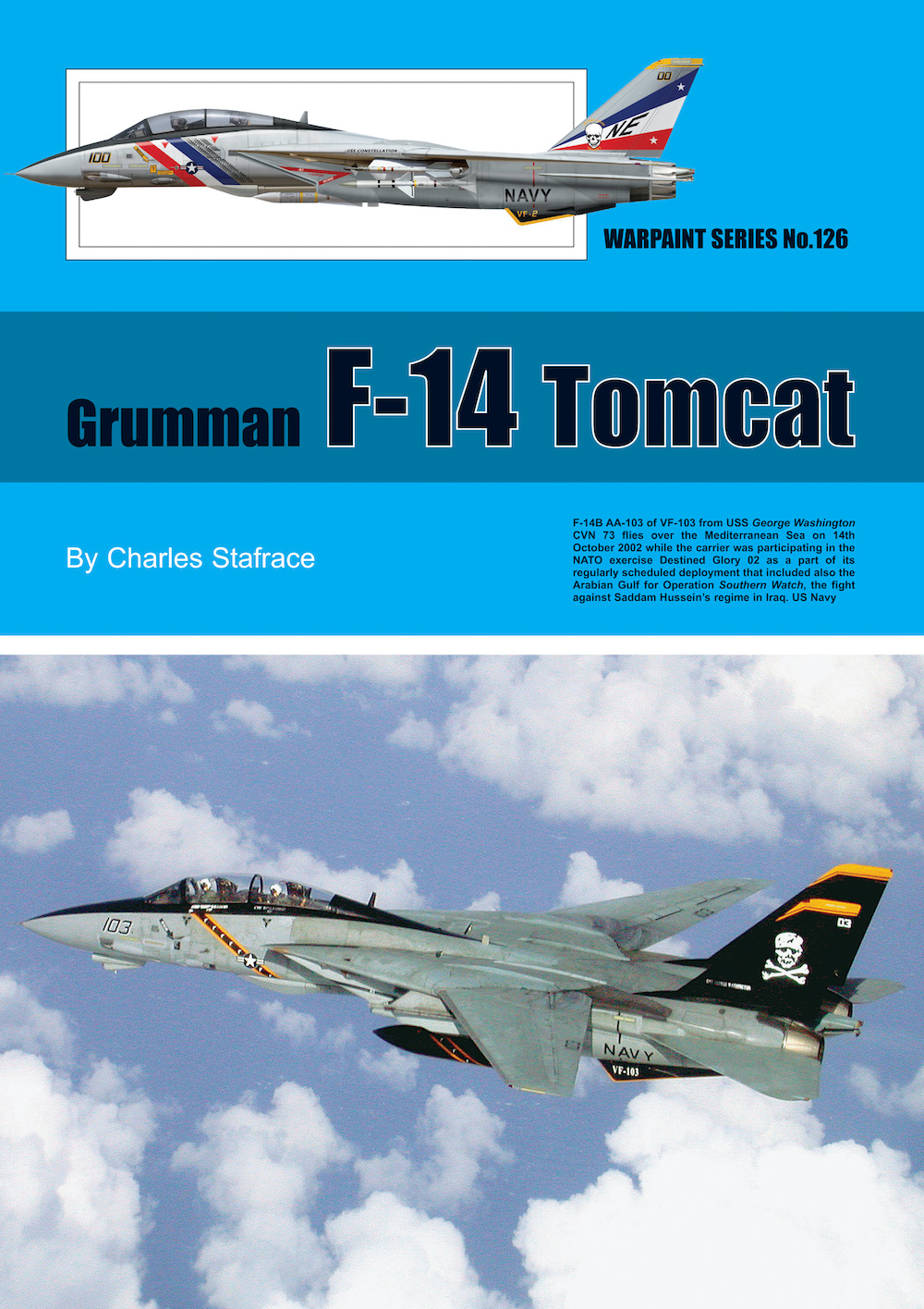
Grumman F-14 Tomcat By Charles Stafrace. The US Navy embarked on the VFX fighter programme when it became obvious that the weight, engine and manoeuvrability issues plaguing F-111B, the naval variant of the Tactical Fighter Experimental (TFX), would not be resolved to the Navy's satisfaction. The Navy requirement was for a fleet air defence fighter whose primary role was intercepting Soviet bombers before they could launch mis...
Bristol Britannia including the Canadair CP-107 Argus and CC-106 Yukon by Charles Starface.
The Britannia and its Canadian derivatives were not built in huge numbers - 39 Yukons and CL-44s, and 33 Argus were built in Canada. These and the 85 Britannias carried out useful work faithfully and reliably, and all over the world, the last civilian Britannia being retired in 1997. All versions of this interesting aircraft are desc...
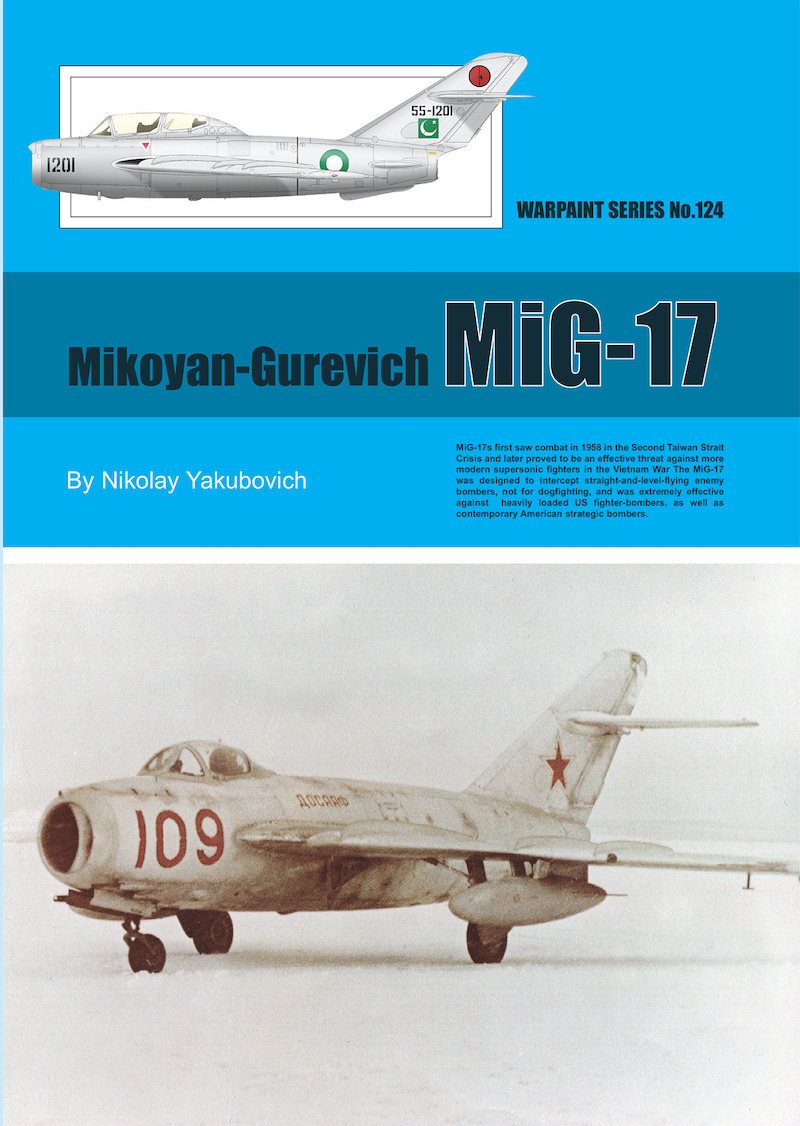
Mikoyan MiG-17 by Nikolay Yakubovich
The Mikoyan-Gurevich MiG-17 Fresco followed on from the successful MiG-15 design providing the Soviet air forces with a high-subsonic fighter aircraft that was able to hold
its own against many of the NATO aircraft of its day. MiG-17s first saw combat in 1958
in the Second Taiwan Strait Crisis and later proved to be an effective threat against more modern supersonic fighters of the ...
de Havilland (Canada) DHC-1 CHIPMUNK - by Adrian M Balch
The Chipmunk is probably the most famous and well-known post-war piston-engined basic training aircraft after the Tiger Moth, for which it was designed as a replacement by de Havilland in Canada. It first flew on 22 May 1946 and entered operational service that same year. During the late 1940s and 1950s, the Chipmunk was procured in large numbers for air arms around t...
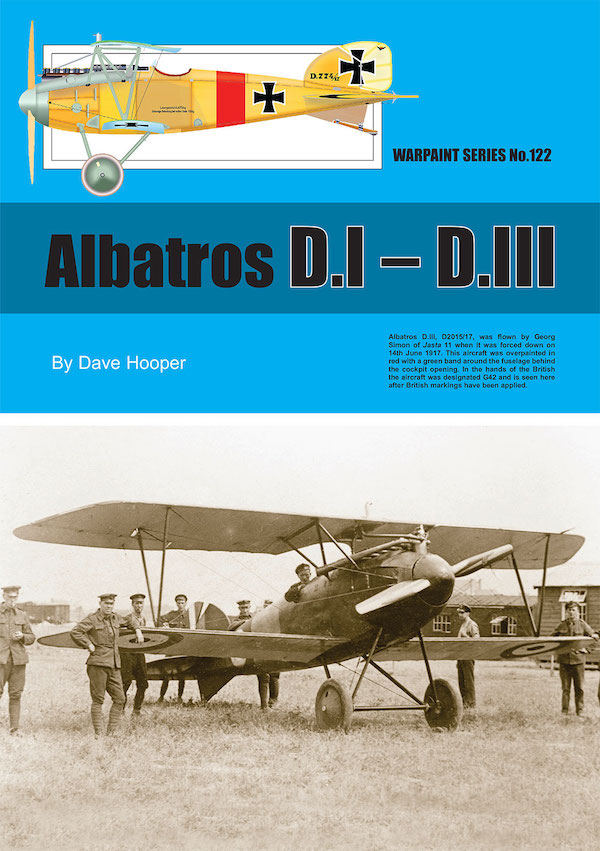
Albatros D.I - D.III By Dave Hooper The Albatros D.III was flown by many top German aces during World War One, including Wilhelm Frankl, Erich Lowenhardt, Manfred von Richthofen, Karl Emil Schafer, Ernst Udet, and Kurt Wolff and was the preeminent fighter during the period of German aerial dominance known as 'Bloody April' 1917. The D.III entered squadron service in December 1916, and was immediately acclaimed by German aircre...
Douglas A-4 Skyhawk 144 pages. Perfect bound
Born out of a United States Navy (USN) requirement for a carrier-based, tactical, nuclear strike aircraft and designed under the supervision of the Douglas Aircraft Company's Edward H.Heinemann, the Skyhawk went on to become one of the USN and United States Marine Corps (USMC) iconic aircraft of the Vietnam War. Based around Heinemann's concept of 'keep it light, keep it simple' ...
Mikoyan-Gurevich MIG-15.
Long overdue in the Warpaint range, the MiG-15 is one of the most important and influential aircraft to come out of the early years of the Cold War and was to see active service in a wide range of theatres and with a great many Soviet client states. The MiG-15 was a jet fighter aircraft developed by Mikoyan-Gurevich for the Soviet Union and was one of the first successful jet fighters to incorporate s...
Grumman F9F Panther
When the US Navy decided to enter the jet age it was no surprise that it turned to Grumman for its first carrier borne jet fighter bomber with a recon option. The first design produced by the company was a mighty beast, more akin to a bomber than a fighter. Unfortunately American jet engine development was concentrating mainly on the turbojet, a slow process as little was really known about manufacturing s...
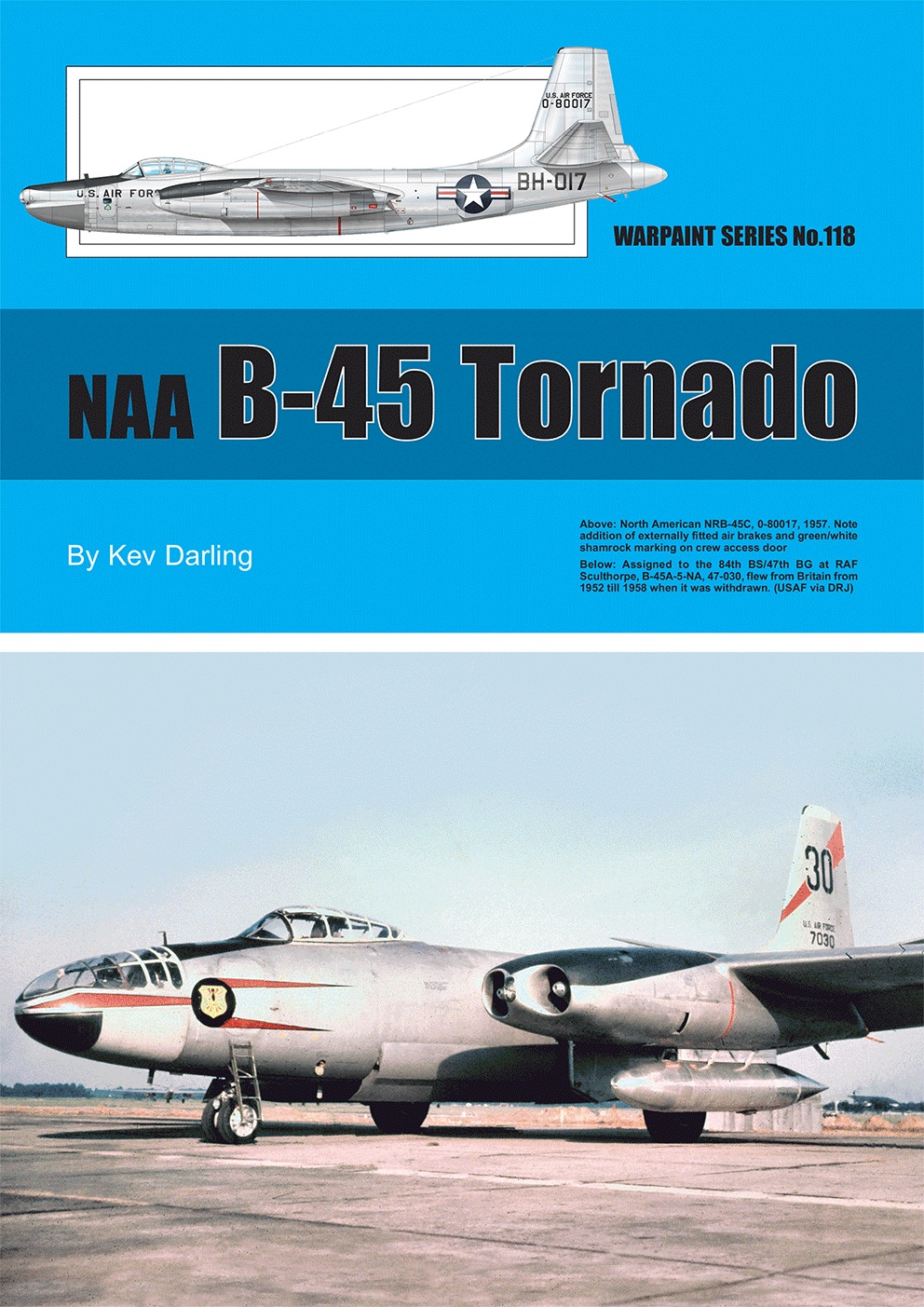
North-American B-45 Tornado. Like most nations America likes to celebrate its first's. Strangely enough this didn't seem to apply to the first jet bomber in USAF service, the North-American B-45 Tornado. Although the airframe layout bore some resemblance to WW2 aircraft this new boy on the block had many aerodynamic refinements commensurate with the newly emerging jet engines.
In common with many new designs the B-45 underwe...
Douglas F4D/F-6 Skyray and F5D Skylancer by Tony Butler.
The Douglas F4D Skyray (always known as the 'Ford' because of its designation) was intended to be the US Navy's first supersonic fighter, though in fact it was really a transonic aircraft. A very handsome machine it had a relatively short career but equipped quite a number of units both with the Navy and the US Marines. It was flawed and fell short of being a true all...
Hawker Fury and Nimrod Author: William Harrison The first RAF front line fighter to achieve more than 200 mph was the Hawker Fury, and its naval counterpart the Hawker Nimrod. These two attractive fighters came from the design office of the late Sydney Camm, Hawker's chief designer. The Fury started life as a private venture known as the Hornet but when this machine exceeded expectations the name was changed to Fury. Although ...
Armstrong-Whitworth Albemarle
By Tony Buttler AMRAeS
The Armstrong Whitworth Albemarle is something of an 'odd man out' in the list of British World War Two military aircraft. It was manufactured entirely in a special factory as sub-contract work, to save light alloys it was intended to make use of steel tube and wood in its construction, and its service career was undistinguished. As a result the Albemarle is a rather for...
McDonnell F-4 Phantom II. US navy- US marine corps and RAF F-4J (UK)
by Charles Stafrace
There was a little ghost like about the McDonnell F-4 Phantom 11. It's huge bulk, a hunched shape that exuded a wrestler's strength, the upward slant of it's wingtips contrasting sharply with the acute droop of its tailplane, all gave it a menacing appearance which some would call outright ugliness but most would call rare beauty.
Thi...
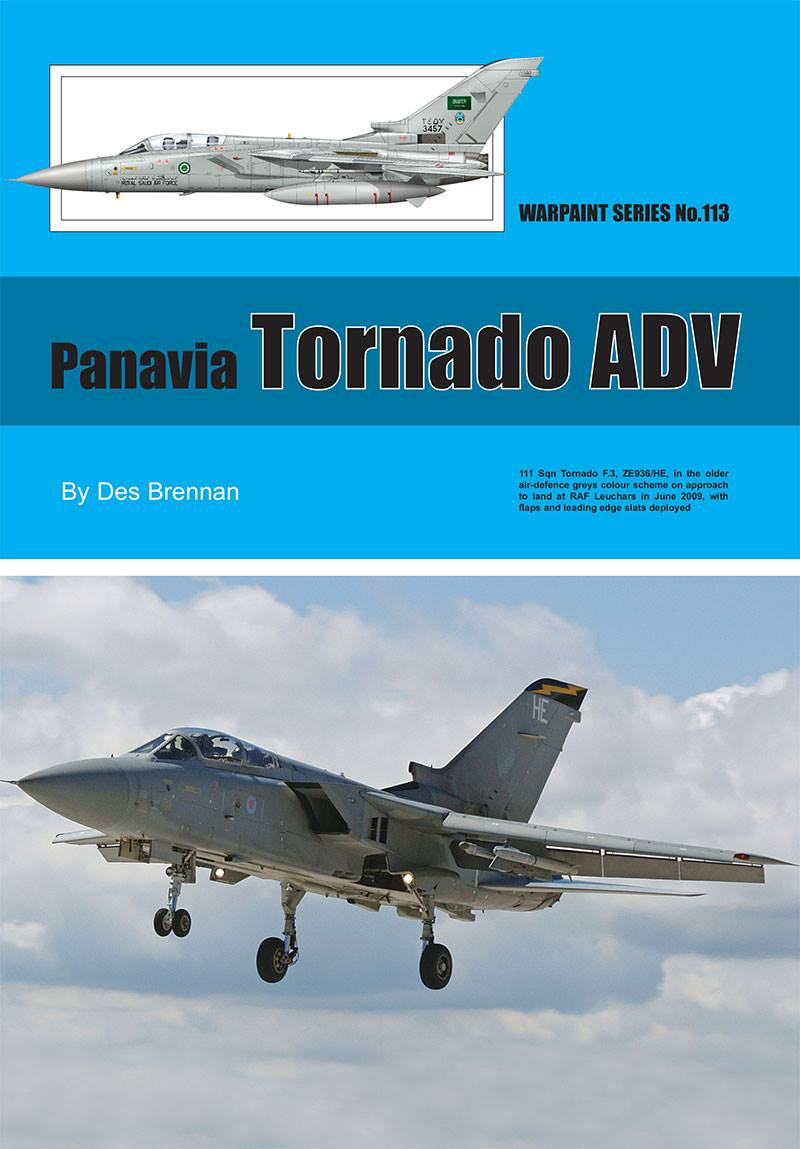
Panavia Tornado ADV by Des Brennan The Tornado F.3 spent just over twenty-three years in frontline operational service with the Royal Air Force compared to a similar period for air-defence Phantoms, and twenty-eight years for the Lightning. While every operational Tornado F.3 unit bar 25 Squadron had been operating one of those aircraft types before transitioning to the F.3 only 29 (as OCU) and 11 Squadrons along with 1435 Fli...
Douglas A3D Skywarrior. by Charles Stafrace
Never glamorous and not receiving the recognition showered on its deck mates, the shipboard Douglas A3D Skywarrior will be remembered by U.S. Navy fans and historians for many reasons, most of all because it figured prominently in the Cold War crises of the late 1950s and early 1960s, culminating in the Vietnam War that dragged on until the mid-1970s. The Skywarrior will also be rem...
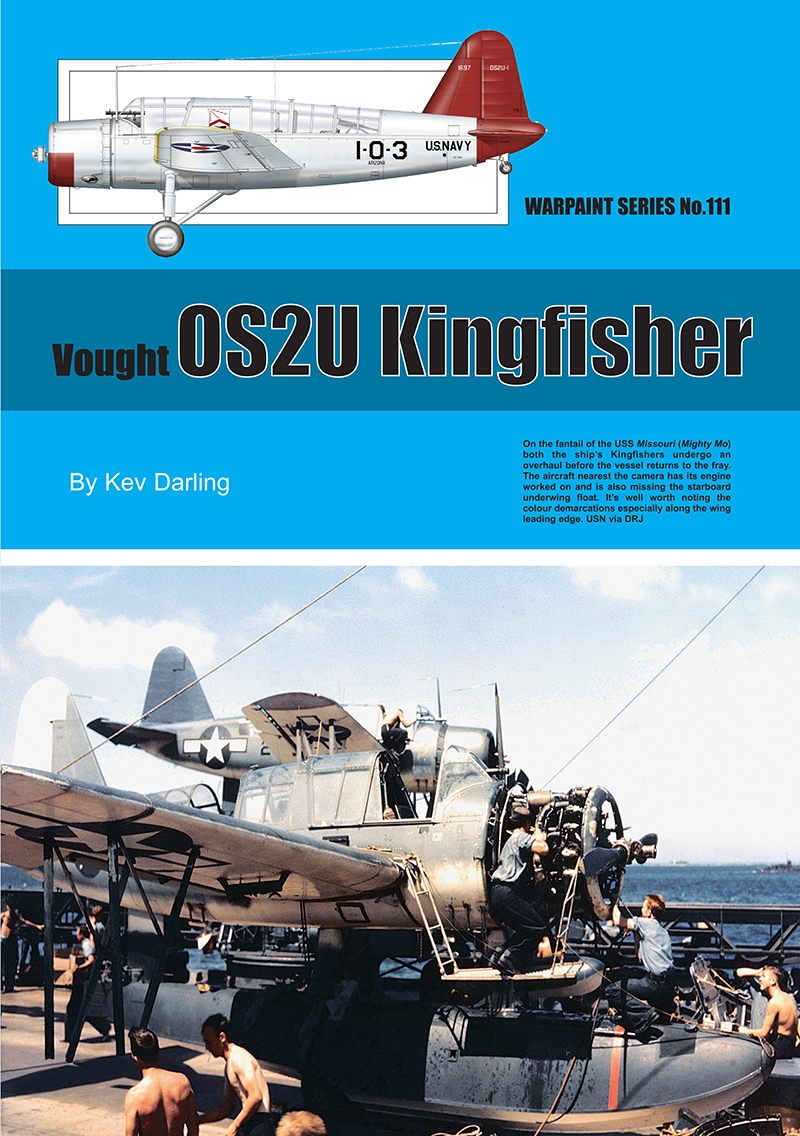
Vought OS2U Kingfisher by Adrian M Balch
As the mighty battlewagon ploughed through the waters of the Pacific few would have noticed the little aircraft perched on the ships stern. To many it was 'old, slow and ugly' while to others it was veritable life saver. The name of this unsung hero: the Vought OS2U Kingfisher. Designed initially for gunnery spotting duties the Kingfisher was lightly armed defensively although once Ame...
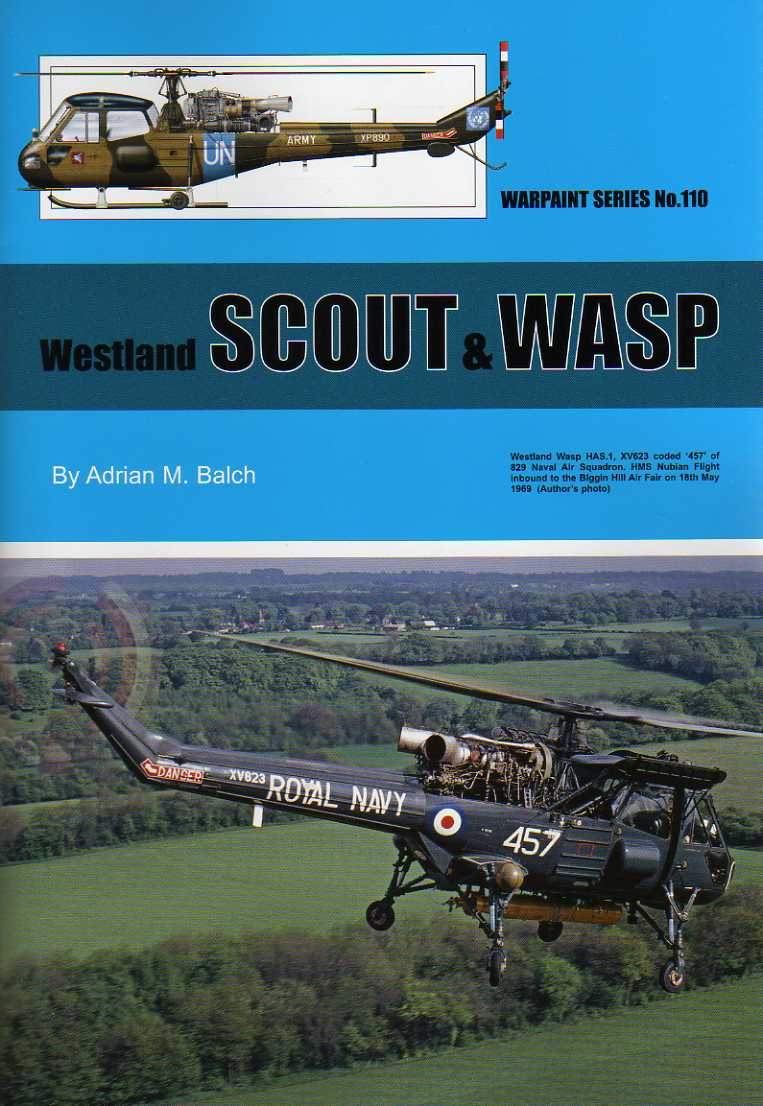
Westland Scout & Wasp. This book in the Warpaint series focuses on the development & service history of the Westland Scout & Wasp. The book contains colour & black & white photos, colour artwork profiles & scale drawings.
Balch
Edition: 2017, 48 pages.
Douglas C-54/R5D Skymaster and DC-4 The Douglas C-54 Skymaster, a direct adaptation of the civilian DC-4 while still on the production line, became the outstanding long-range four-engined transport aircraft of the Second World War. With its origins as a civilian airliner, it served chiefly on the long-distance haul of Air Transport Command of the United States Army Air Forces on the Atlantic and Pacific routes, where it cut fl...
Martin Mariner & Martin SP-5B Marlin. The Glenn L Martin company would produce the most successful range of seaplanes to enter US service. The first off the blocks was the PBM Mariner that would see extensive service with the U.S. Navy in various roles including general patrol duties, anti-submarine work, rescue duties and strangely enough for a purported patrol aircraft, as a bomber. So impressed was the USN with the Mariner ...




 Advanced Search