



 Advanced Search
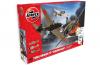
 Airfix AX50180
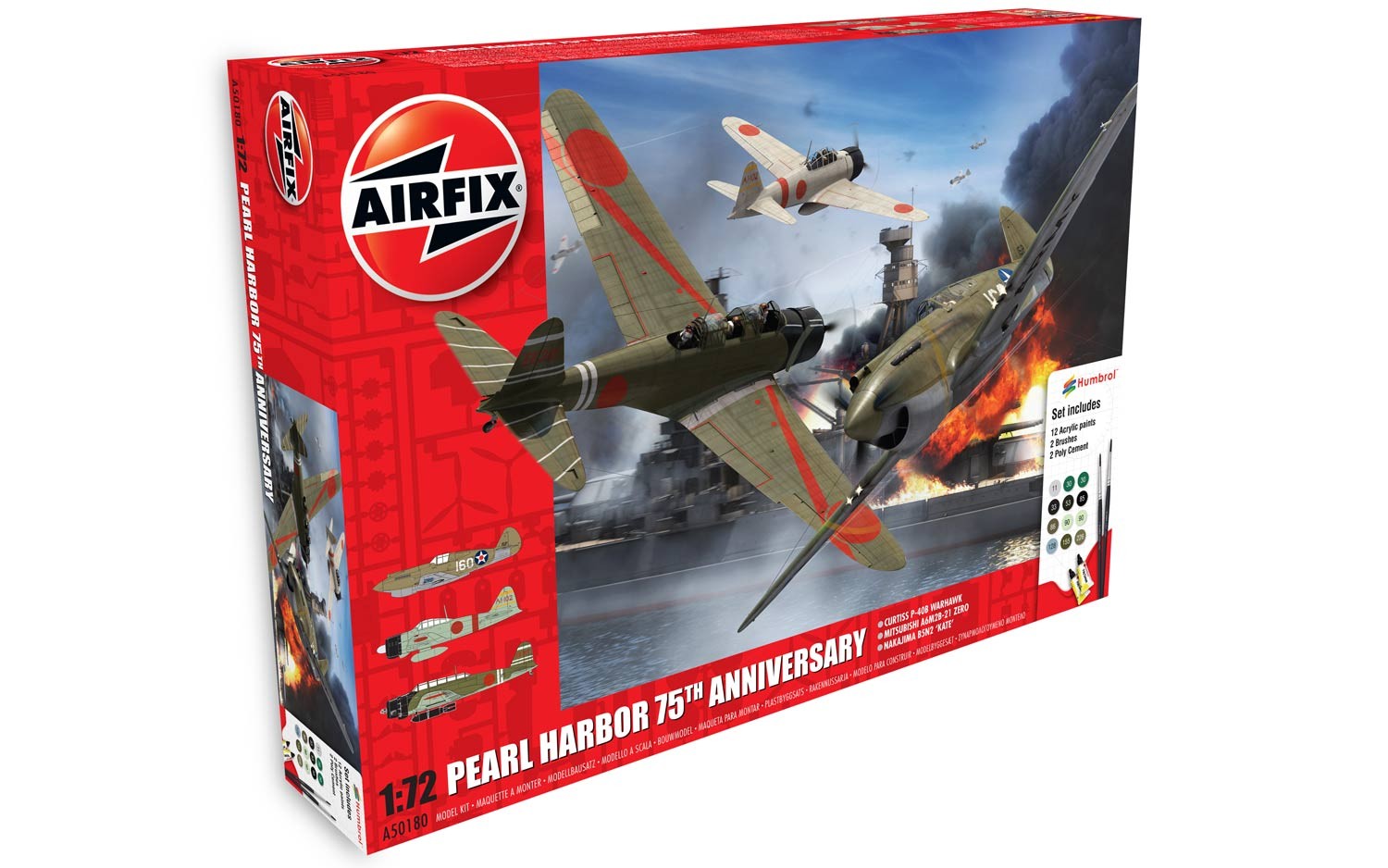
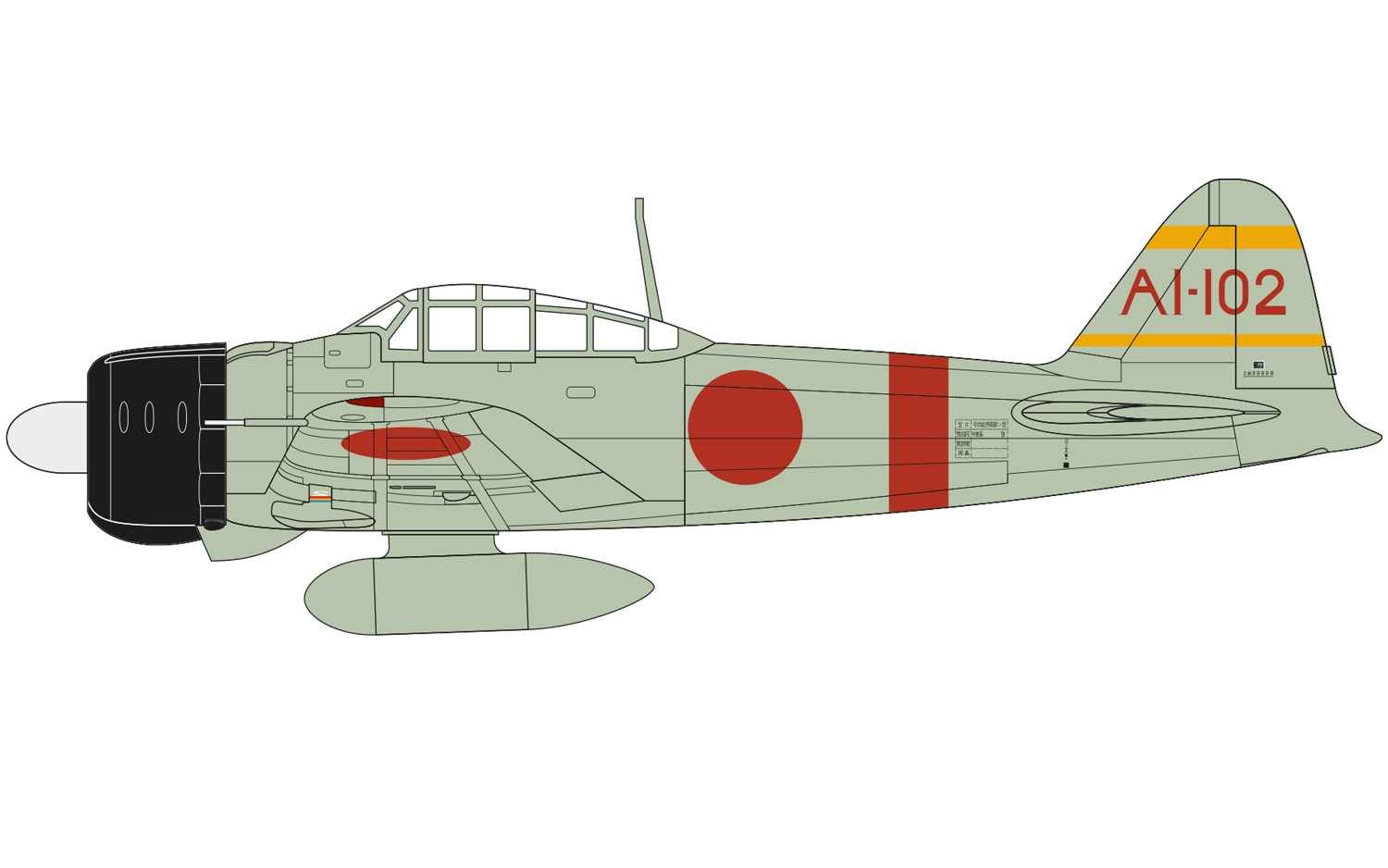
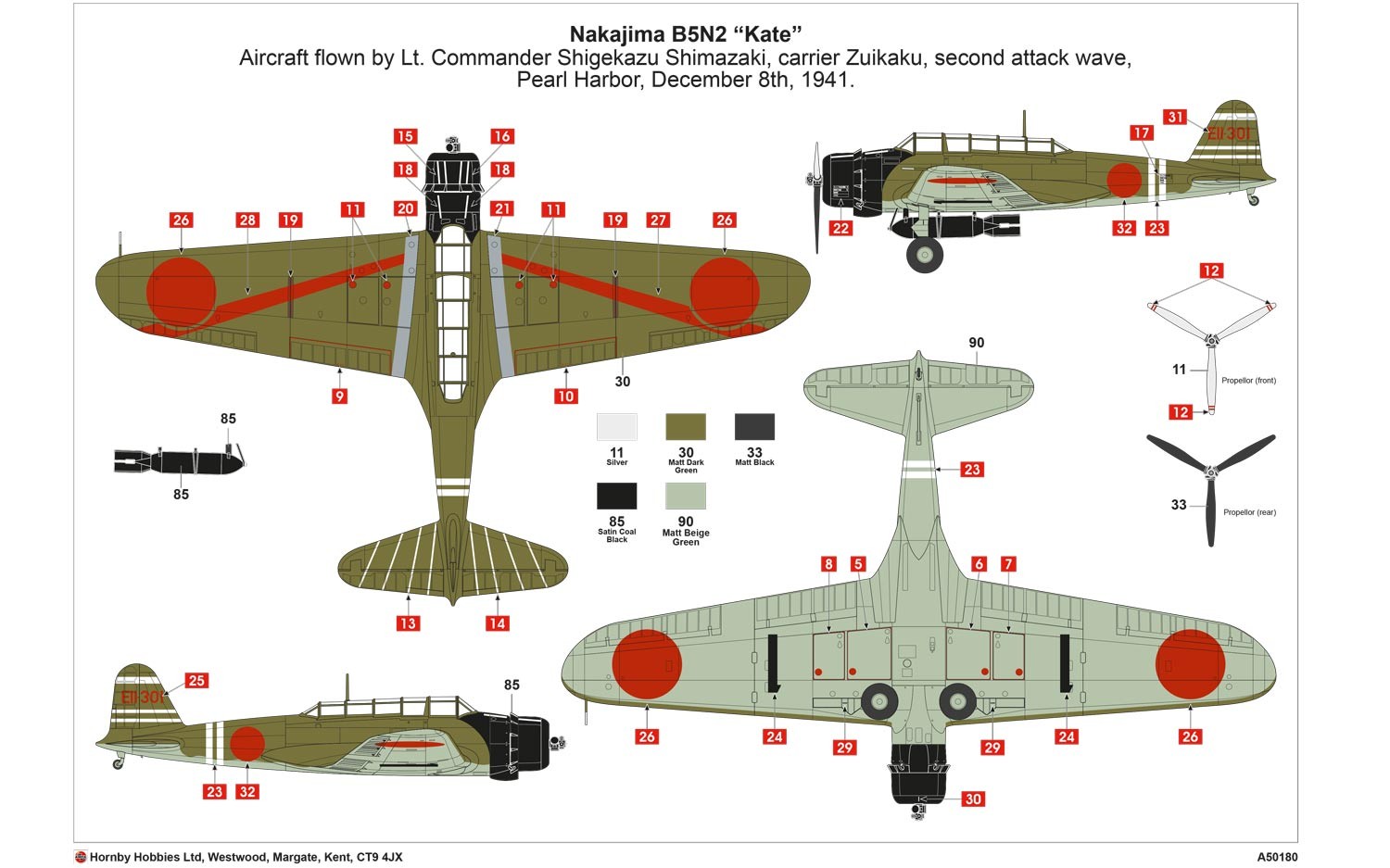
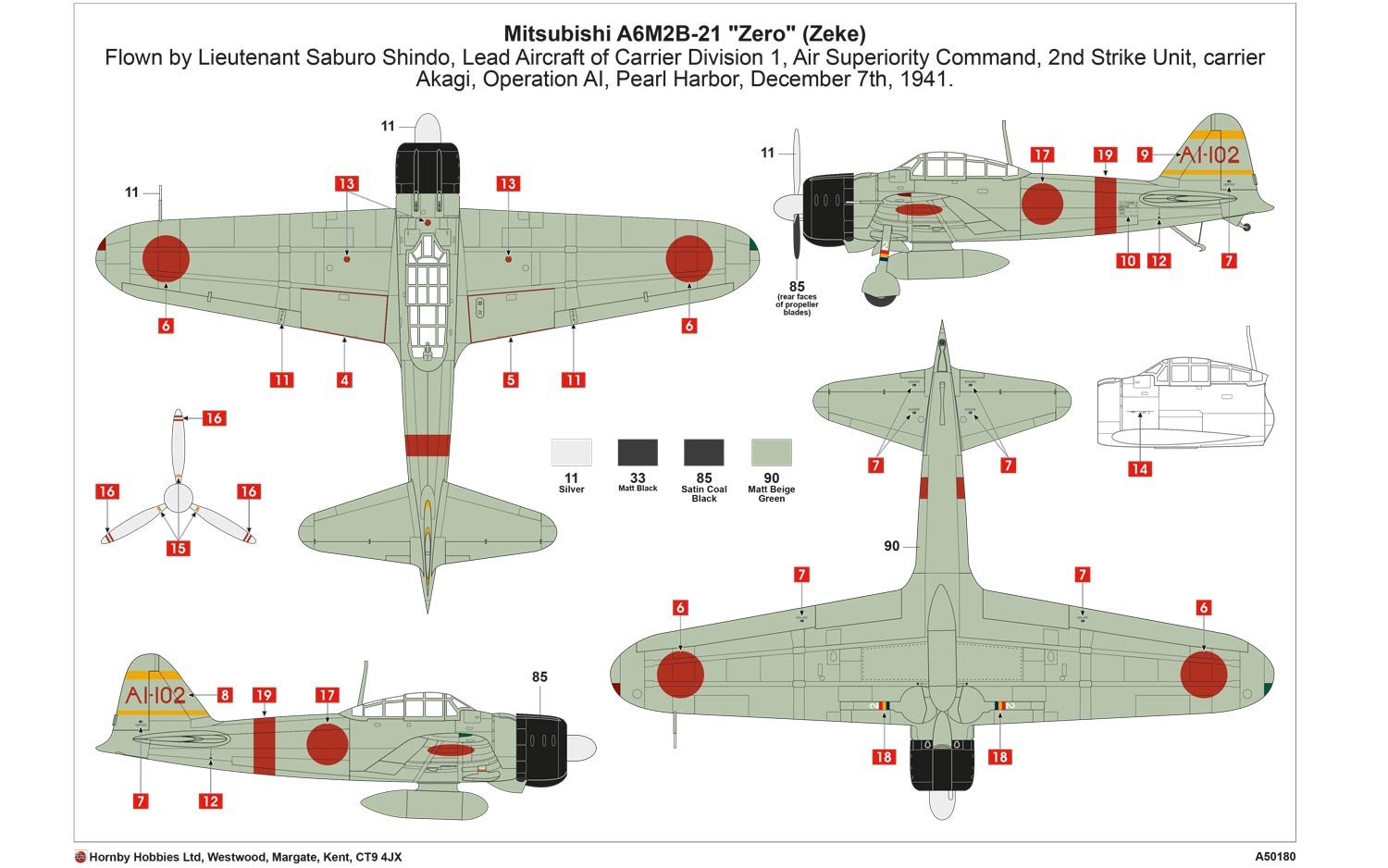
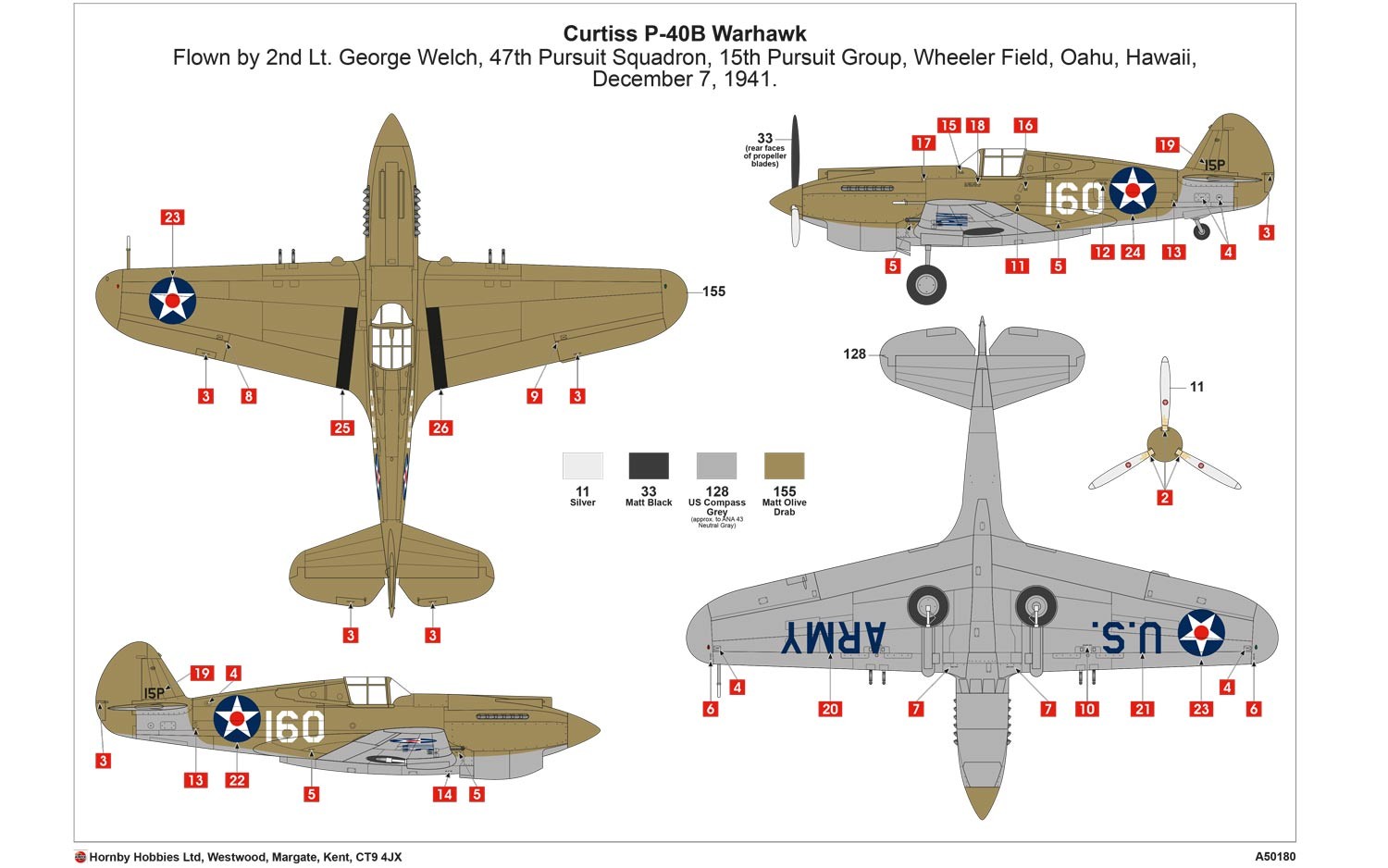

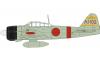
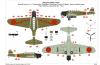
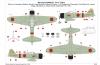
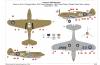
- Description:
-
Pearl Harbor Gift Set
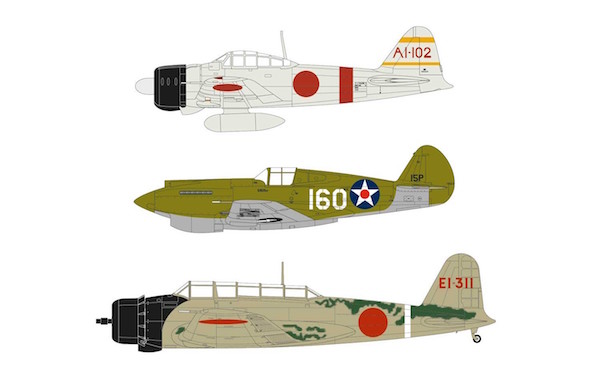
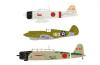
Contains
Mitsubishi A6M2b Zero
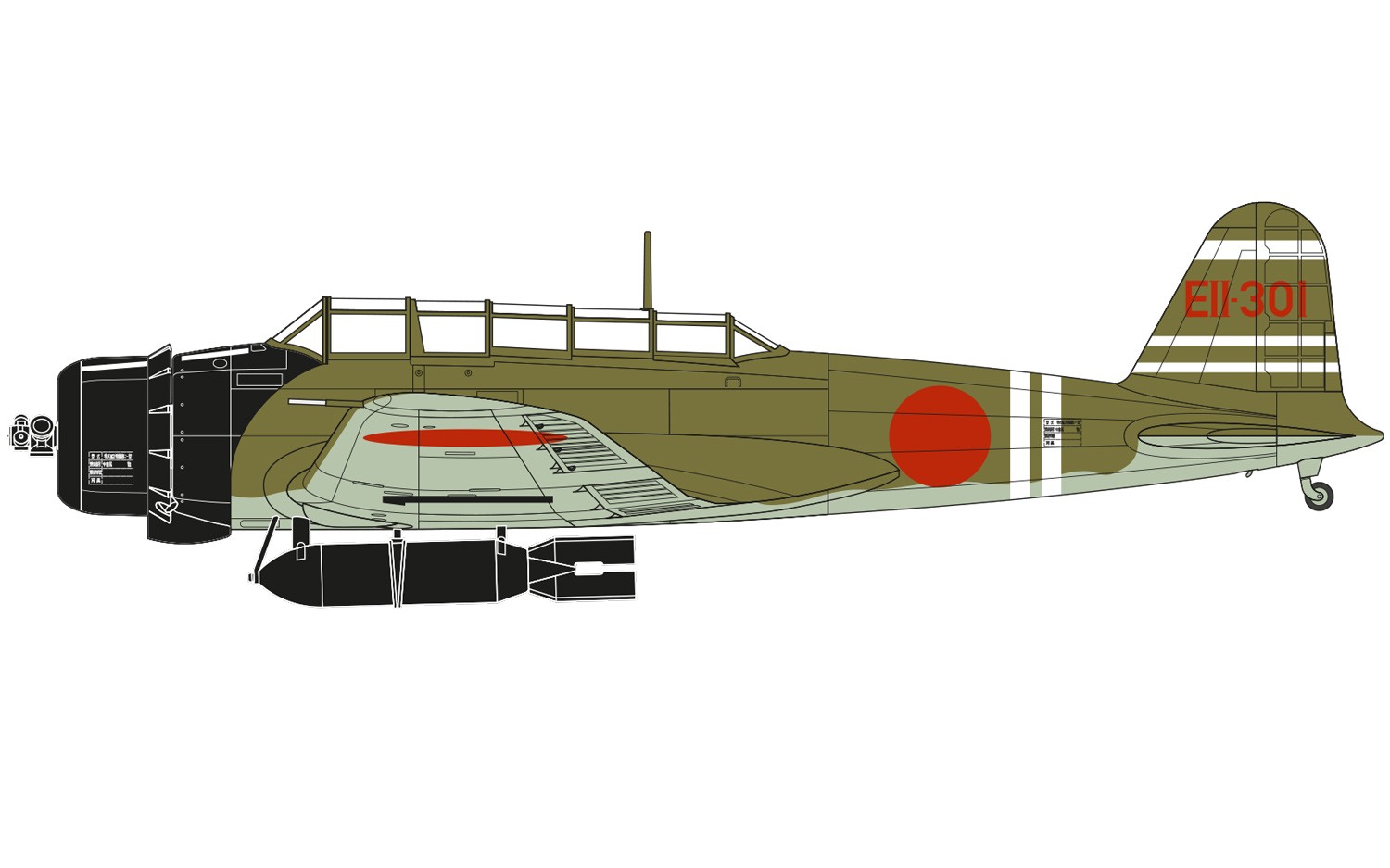
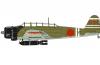
Nakajima B5N1 Kate
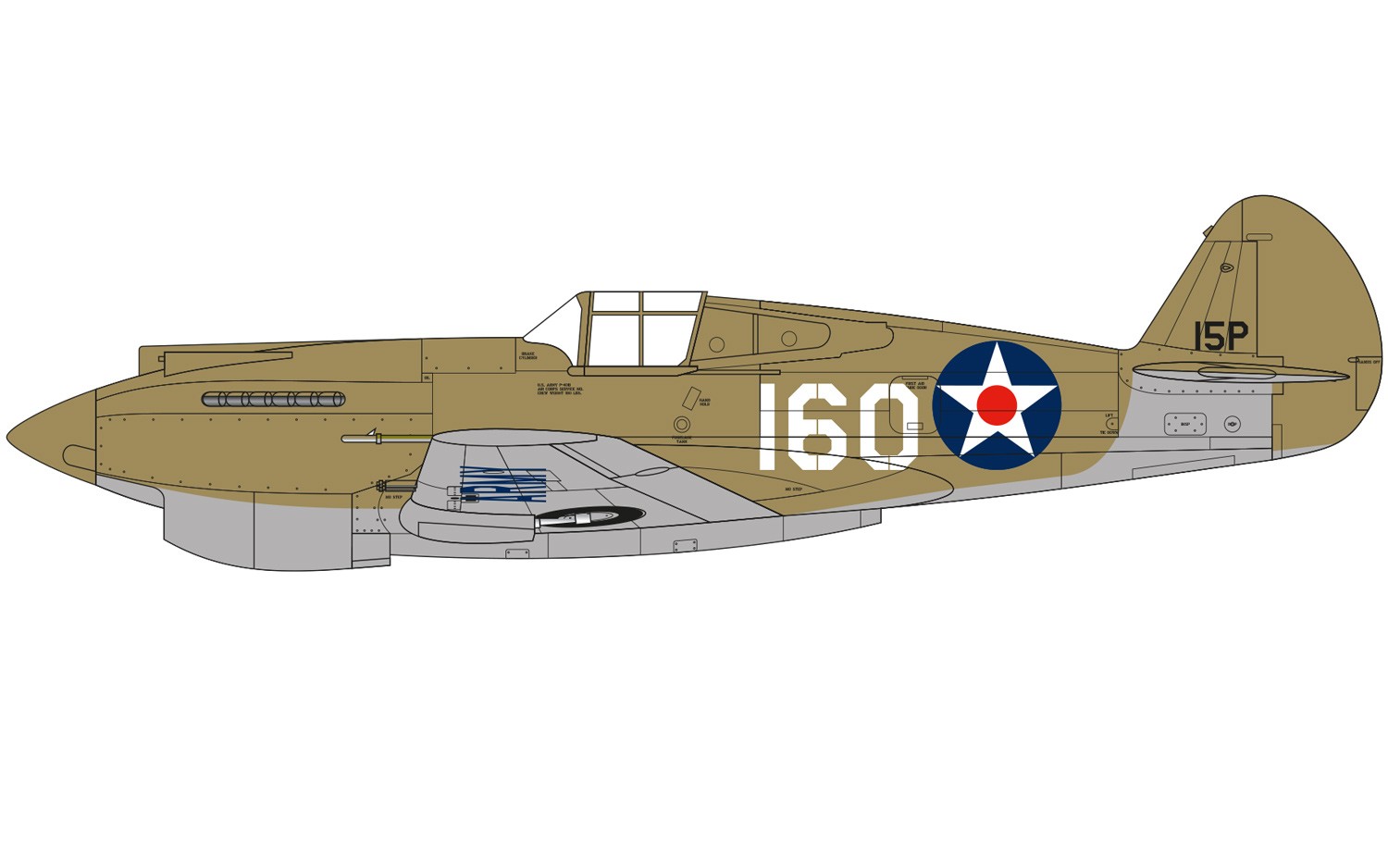
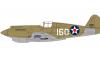
Curtiss P-40B
Oct-26 - Manufacturer:
- Airfix
- Code Number:
- AX50180
- Scale:
- 1:72
- Item type:
- Aircraft kits (injection)
- Price:
- £33.32 (Put this on Backorder and save 10%!)
- Order Quantity:
- Availability:
- 0
- Wish List:
- Department:
- Future Releases
GPSR information:- Manufacturer Email:
- [email protected]
- Manufacturer Address:
- Westwood Industrial Estate, Margate, Kent, CT9 4JX , 01843 233500
Here are some accessories you might find useful for this kit
Found 1 related products
 | Peewit - PEE72037 - 1:72 | Nakajima B5N2 'Kate' canopy frame paint mask (designed to be used with Airfix kits)[B5N1 'Kate' Pearl Harbor] More | Aircraft paint masks (self adhesive) | Catalogue | £3.90 |
Here are some books and decals you might find useful for this kit
Found 20 related products
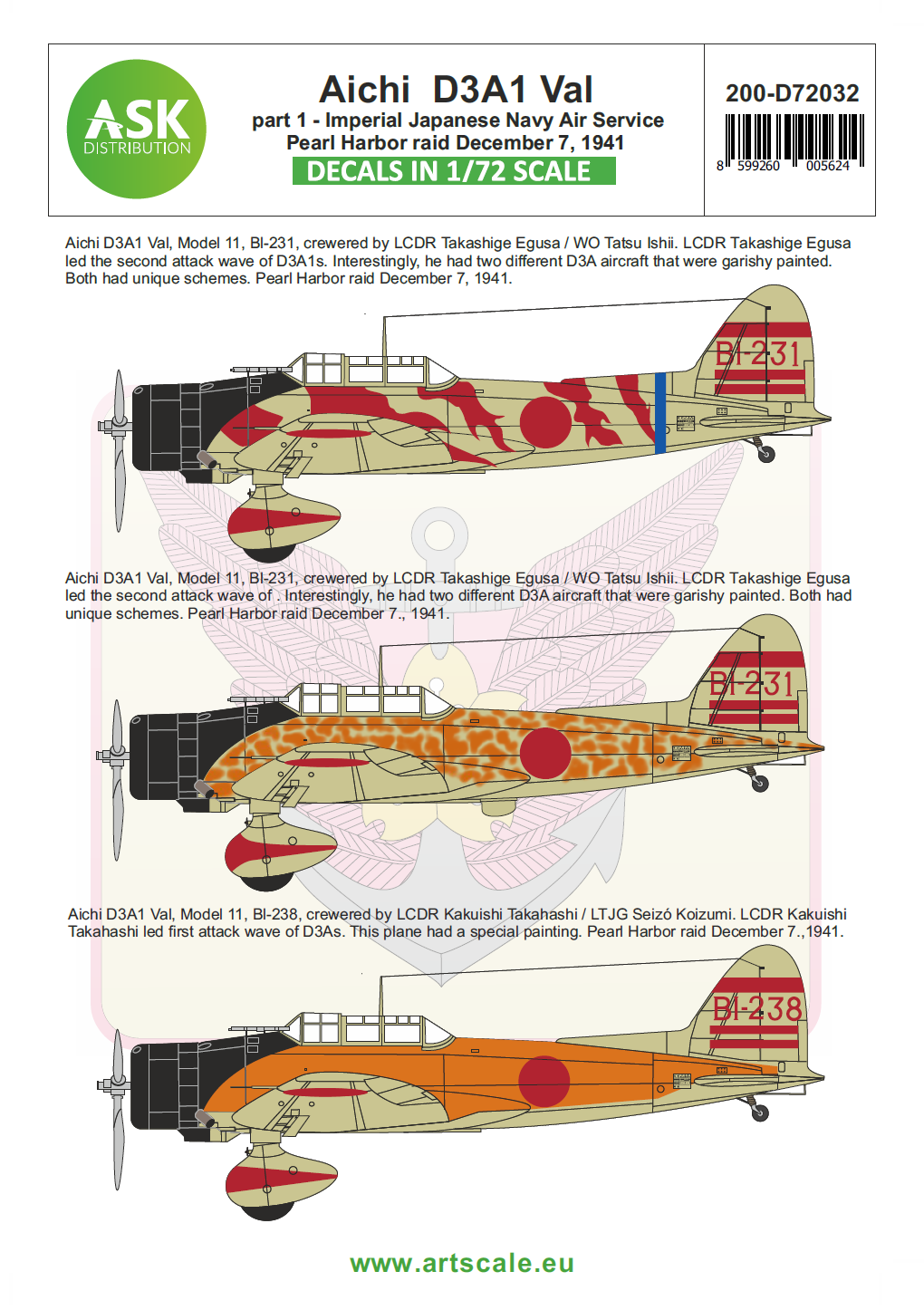 | Art Scale - 200-D72032 - 1:72 | Aichi D3A1 Val part 1 - Pearl harbor raid, 7. December 1941. Cat. number 200-D72032 The decal sheet contain follow markings: Aichi D3A1 Val, Model 11, Bl-231, crewered by LCDR Takashige Egusa / WO Tatsu Ishii. LCDR Takashige Egusa led the second attack wave of D3A1s. Interestingly, he had two different D3A aircraft that were garishy painted. Both had unique schemes. Pearl Harbor raid December 7, 1941. Aichi D3A1 Val, Model 11, Bl-231, crewered by LCDR Takashige Egusa / WO Tatsu Ishii. LCDR Takashige Egusa led the second attack wave of. Interestingly, he had two different D3A aircraft that were garishy painted. Both had unique schemes. Pearl Harbor raid December 7., 1941. Aichi D3A1 Val, Model 11, Bl-238, crewered by LCDR Kakuishi Takahashi / LTJG Seizo Koizumi. LCDR Kakuishi Takahashi led first attack wave of D3As. This plane had a special painting. Pearl Harbor raid December 7.,1941. More | Aircraft decals (military) | Catalogue | £13.99 | |
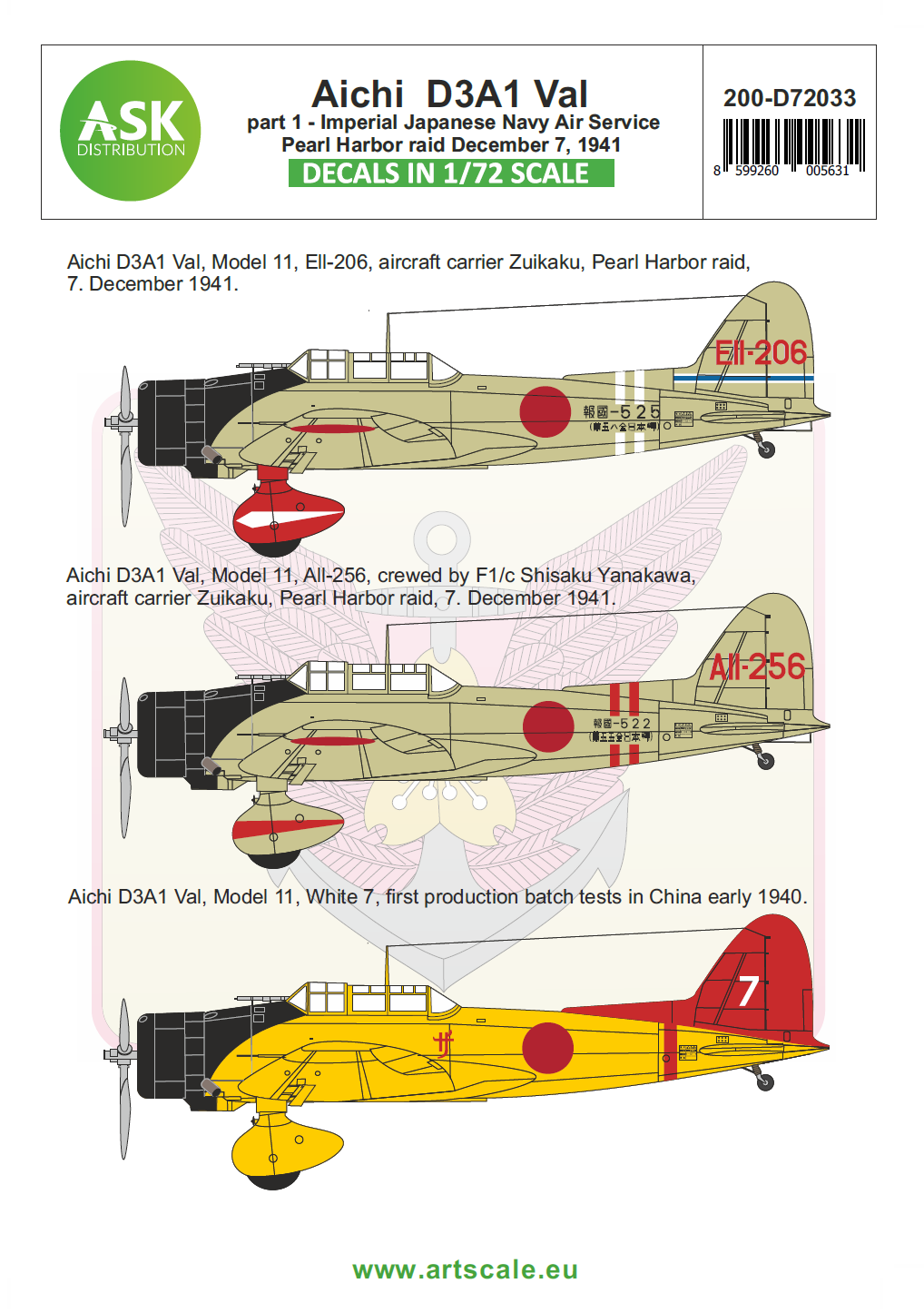 | Art Scale - 200-D72033 - 1:72 | Aichi D3A1 Val part 2 - Pearl Harbor raid December 7., 1941. Catalog no. 200-D72033 The decal sheet contain follow markings: Aichi D3A1 Val, Model 11, Ell-206, aircraft carrier Zuikaku, Pearl Harbor raid, 7. December 1941. Aichi D3A1 Val, Model 11, All-256, crewed by F1/c Shisaku Yanakawa, aircraft carrier Zuikaku, Pearl Harbor raid, 7. December 1941. Aichi D3A1 Val, Model 11, White 7, first production batch tests in China early 1940. More | Aircraft decals (military) | Catalogue | £13.99 | |
 | AML - AMLC9003 - 1:72 | Curtiss P-40B Tomahawk over Pearl Harbor x 2 More | Aircraft decals (military) | Catalogue | £4.40 | |
 | Guideline Publications - GPSAMCC4 - No Scale | Combat Colours 4: Pearl Harbor and beyond- December 1941-May 1942 This title depicts the camouflage and markings of a whole host of types belonging to the nations dragged into a Pacific War following the Japanese attack on Pearl Harbor. As usually a huge amount of well researched information is presented for the modeller and historian. 215 colour profiles. 27 black/white photos. More | Aircraft books | Catalogue | £11.95 | |
 | Naval Fighters - NF103 - No Scale | Sikorsky S-43/JRS-1 Amphibian By Steve Ginter 100-pages perfect bound 3 color and 232 b&w photos, 8 drawings. 53 S-43/JRS-1 "Baby Clippers" were produced (31 civil, 15 Navy, 2 Marine, and 5 USAAC). The book covers all users including civilian and post war users. 10 of the Navy's JRS-1s were at Pearl Harbor on December 7th, all survived the attack and one, BuNo 1063, is undergoing restoration at the Smithsonian today. Two civil S-43s have also survived, one originally owned by Howard Hughes and one at the Pima Air and Space Museum (painted as a Marine JRS-1). More | Aircraft books | Catalogue | £24.99 | |
 | Naval Fighters - NF106 - No Scale | Vought SB2U Vindicator by Steve Ginter with Joe Weathers, Jr. 248-pages, 89-color photos, 22-duotone photos, 506 b&w photos and 25-drawings. The Vought SB2U Vindicator Scout Bomber was the Navy's second production carrier monoplane to fly after the Douglas TBD and for a time was the fastest aircraft in the Navy's inventory. The extremely clean aircraft was a unique blend of the old stick-and-rudder fabric covered construction and that of the new all-metal monoplanes that followed. About half the aircraft was metal skined and half fabric covered and each fuselage structure was individually hand made from steel tubing. The SB2U was built in three models. The very simular SB2U-1 and SB2U-2 for the US Navy, and the long range SB2U-3 for the Marines. Aircraft were also supplied to France and the United Kingdom and are covered in the book. Equipped with folding wings and capable of carrying a 1,000 lb bomb, they were in service from 1938 to 1943. By the time of the Pearl Harbor attack, the Navy Vindicators had all been assigned to the Atlantic fleet, but the Marine SB2U-3 were on the East Coast and at Pearl Harbor and aboard the Lexington for delivery to Midway. The VMSB-241 Vindicators at Midway saw the planes only combat on 4-to-6 June 1942 during the Battle of Midway and Henderson Field was named after the squadron CO who lost his life during the squadron's attack on the Japanese fleet on 4 June. Maj Hendersons replacement Maj Norris was also lost on 4 June during the squadron's 2nd attack. On 5 june, Capt Fleming was also lost during his attack on the cruiser Mikumo, for which he received the Medal of Honor for his actions. This book has extensive first person narative from Vought test pilots and USN/USMC pilots as well as the French V-156-F commander gathered by Joe Weathers in 1966 through 1974 when their minds were still sharp and their memories strong. All of which are gone today. A truly interesting read. More | Aircraft books | Catalogue | £43.99 | |
 | Naval Fighters - NF112 - No Scale | Grumman F2F and F3F (pre-war Navy/Marine biplane fighters. 192-pages [ F3F-1 F3F-2 F3F-3] And Civilian Variants By Richard S. Dann Published by Ginter Books The 192-page F2F and F3F book is generously illustrated with over 440 photos, including 34 color photos, many not previously published. In addition, 39 illustrations and line drawings are included. The early 1930s was a time of great change in the field of military fighter aviation. At the beginning of the decade, the state-of-the-art in fighter manufacture was the use of traditional construction techniques of welded tube fuselages and fabric covered surfaces. Fixed landing gear and open cockpits were standard equipment. By mid-decade, the state-of-the-art was changing. Lightweight aluminum alloys were being developed that offered high strength and light weight. External bracing gave way to cantilevered aero surfaces. Enclosed cockpits, retractable landing gear and aerodynamic streamlining were becoming standard design features on civilian and military aircraft of the day. In the late 1920s, the U.S. Navy fighter market was dominated by Curtiss and Boeing with aircraft manufactured using conservative design and construction techniques that had been employed at the beginning of the decade. By the early 1930s, however, Boeing had updated their F4B/P-12 design, incorporating a stressed skin, semi-monocoque fuselage into later models of both. In the Autumn of 1929, three engineers from the Loening Aircraft Company on Long Island made the decision not to relocate to Pennsylvania during a merger. Instead, they resolved to form their own aircraft manufacturing company. Thus, Leroy Grumman , Leon "Jake" Swirbul and William Schwendler founded the Grumman Aeronautical Engineering Corporation, in December 1929. Following early successes with the FF-1/SF-1 naval aircraft, Grumman turned its attention to designing a single-seat naval fighter for use aboard the U.S. Navy's growing carrier fleet. With excellent performance attributes, the Navy purchased 55 F2F-1s. While performance of the F2F-1 were impressive, Grumman continued development, offering the Navy an improved design known as the F3F-1. With even better performance than the F2F, the Navy eventually ordered a total of 162 F3Fs in three major subvariants. Grumman 's stubby F2F and F3F airplanes dominated U.S. Navy fighter squadrons from 1935 to 1941, with the final operational F3Fs relinquished to the training command a mere two months before the Japanese attack on Pearl Harbor and surrounding facilities. The first half of this 192-page monograph covers the developmental history of the F2F and F3F. Individual aircraft histories are provided for each aircraft, listing assigned commands, mishaps and final disposition. Detailed period engineering photos show every aspect of the aircraft. This is followed by an operational history of each Navy and Marine Corps squadron that operated the F2F and F3F. More | Aircraft books | Catalogue | £37.50 | |
 | Naval Fighters - NFAF223 - No Scale | Douglas C-74 Globemaster By Nicholas M. Williams, 104 pages (88 in b&w, 16 in color), 141 b&w photos, 35 color photos, 22 illustrations. The Japanese attack on Pearl Harbor in December 1941 brought U.S. Army Air Corps strategists to the realization that a new global transport was needed to carry large loads over great distances. The Douglas Aircraft Company in Santa Monica, California, also quickly saw this need and design studies were begun immediately on an expanded version of the company's DC-4. The "C-74 Project Group" adopted a design philosophy to produce a "no frills" transport able to accommodate at least two of the Army's T-9 tanks, two 105mm Howitzers, or two angle dozers. Douglas contacted the Air Corps early in 1942 to determine their interest and a letter of intent was issued in March 1942 for procurement of the Model 415A, now designated the C-74. A contract of over $50 million was signed in June 1942 for fifty airplanes. To speed its delivery to operational units, the C-74 was designed to be released without the benefits of an experimental or prototype model, all aircraft being designated as C-74s with design features following conventional "state-of-the-art" practice. Originally, powered by Wright R-3350 engines, a decision was made in March 1943 to switch to the new, mammoth Pratt & Whitney R-4360 Wasp Major. The first C-74 was rolled out in July 1945 from the Douglas Long Beach factory. At rollout, the C-74 was the largest land-based transport in the world with a wingspan of 173 feet, length of 124 feet, and gross weight of 145,000 pounds. Able to carry 125 passengers, the C-74 was called the Globemaster as its 11,100-gallons of internal fuel gave it a maximum range of over 7,000 miles, enabling it to circumnavigate the world with only two refueling stops. In its final form, the C-74 was a remarkably efficient airplane, using a semi-laminar flow airfoil for its wings with a full-span flap arrangement. The pilots were enclosed by two teardrop-shaped, double-bubble canopies that provided them with a 360-degree view. Douglas had every intention of adapting the C-74 into a civil airliner once hostilities had ended. In 1944 Pan American World Airways ordered 26 examples of the civil version, the DC-7, for a route expansion program into Latin America. However, further development of this DC-7 design increased its gross weight to 162,000 pounds and the unit cost to $1.4 million and Pan American cancelled its order in October 1945, opting for smaller transports. The first C-74, 42-65402, made its maiden flight from Long Beach in September 1945, but with the end of World War II, most of the C-74 production order was cancelled and only 14 Globemasters were built. Unfortunately, during contractor demonstration flights the second Globemaster crashed. The fourth C-74 was subsequently diverted for static tests and its components tested to destruction at Wright Field, Ohio. Beginning in September 1946, the remaining twelve C-74s were flown for the next nine years by the Army Air Forces' Air Transport Command and the U.S. Air Force's Military Air Transport Service. Once in service, the C-74 Globemaster, based first in Memphis, Tennessee, then Morrison Field, West Palm Beach, Florida, finally at Brookley AFB, Mobile, Alabama, set many records for tonnage carried. In November 1949, a C-74 flew the Atlantic to England with a record 103 passengers aboard. One Globemaster set several records during the Berlin Airlift, averaging over 38,000 pounds of cargo and setting a new Airlift Task Force utilization record by flying 20 hours in a 24-hour period. Until one C-74 was converted to the prototype C-124A and the Globemaster II became available, the C-74 was the only Air Force transport capable of carrying outsized cargo. After the C-74's retirement from service in 1955, several were purchased surplus and began flying for a contract air carrier, Aeronaves de Panama, hauling prize cattle from Denmark to the Middle East, horses to Singapore, and ships' parts and vegetables throughout Europe. Unfortunately, after the tragic crash in 1963 of one C-74 in Marseilles, France, the airline suspended operations and its C-74s eventually were scrapped. Today, no examples of this record-setting transport exist. This monograph of the C-74 Globemaster is written by Nick Williams, an award-winning author of over two dozen articles published in the Journal of the American Aviation Historical Society and publications in the U.K. Nick has written two previous books in Steve Ginter's Naval Fighters series as well as his 1999 book published in the U.K., "Aircraft of The Military Air Transport Service 1948-1966". His new book on the C-74 is the result of nearly fifty years of research, containing comments from several of the C-74's engineers as well as former Douglas and Air Force pilots. More | Aircraft books | Catalogue | £27.40 | |
 | Print Scale - PSL72112 - 1:72 | Douglas SBD Dauntless 1. SBD-2 flown by CDR Howard Young, Commander of the Enterprise Air Group. Upper surfaces are Blue Gray over Light Gray lower surfaces. Red centered stars are carried in four locations. Pearl Harbor. 2. Douglas SBD-3 'Dauntless' Squadron VS-2 aircraft carrier 'Lexington', May 1942. 3. SBD-5 of Flottille 4FB, Aeronavale, Cognac January 1945. 4. Light bomber CAC CA-5/CA-9 Wirraway of the No.12 Sqn. RAAF (above) and A-24 Banshee of the No. 27 BAG USAAF (below) became victims of the Japanese strike to Darwin on February,19,1942. 5. Douglas SBD Dauntless representing GCB I/18 'Vendee' (Groupe de Chasse Bombardment), Armee de l'Air Serial: F/254543 operating from Vannes, November 1944. Note unit emblem right. 6. Douglas SBD-5 Dauntless,NZ 5057(BuNo 36925). of No25 Sqn. RNZAF, crewed by the squadron commander S/L T.J.Maclean de Lange and his radio operator F/O Sewell. Piva airfield, Bougainville, spring 1944. 7. Douglas SBD-5 Dauntless NZ 5056 (ex BuNo36924) of No 25 Sqn RNZAF, crewed by f/ Sgt C.N O'Neil and F/Sgt D.W. Gray. Piva airfield, Bougainville, spring 1944. 8. SBD-3 from the Air Group off the Wasp participated in attacks on Guadalcanal on7 August 1942.The roundels have been crudely enlarged by hand, while the stars have been left the original size. 9. Douglas SBD-5 Dauntless NZ 5048 of 25 Dive Bomber Squadron, Piva, Bougainville, April 1944. More | Aircraft decals (military) | Catalogue | £15.99 | |
 | Print Scale - PSL72122 - 1:72 | Vought OS2U Kingfisher 1. Vought Sikorsky OS2U-3 (Kingfisher) flown Lt J.G. John A. Burns who rescued nine downed pilots from Truk Lagoon in April 1944. 2. OS2U-3 Unit: Northern Fleet, No. 1 Two Kingfisher were served in Soviet Union. In Spring 1944 USSR temporary got ex-Italian light cruiser Milwaukee. It delivered on 24th August 1944 to Northern Fleet and renamed Murmansk. Onboard it carried 2 OS2U-3 Kingfisher, they still wore American White/Grey painting and re-coded '1' and used as trainers and liaisons. 3. OS2U-3,Unit: Fuerza Aerea de Chile No. 308,View of the OS2U-3 Kingfisher showing the Nr. 308, first FACH plane flew over the national Antarctic territory in 1947. Note: Chilean Kingfishers wore telescopic sights only for a brief time after its arrival to Chile. 4. Kingfisher Mk.I, Unit: 765 NAS, FAA ,No. Fn678 Sandbanks, England,1943. Seaplane pilot training unit. 5. OS2U-3 Unit: 107 Sqn, RAAF,Serial: JE-T, A48-18 (BuNo.5983) The RAAF Kingfisher in lightened and bare metal markings of 107 Squadron. The Light Grey codes were later all changed to Black. 6. OS2U-3 part: the RAAF Antarctic Flight number: A48-13 (BuNo. 5977) in 1947, the aircraft in the Antarctic wing Australian air force, was operated by the Australian Antarctic expedition and was used for reconnaissance flights around the Australian Antarctic base. 7. U.S. Navy NAVAL air base 100: Corpus Christi, Texas, 1942. 8. OS2U-2 Part: VS-5D4. US Navy: 5D4-S-3 (BuNo. 2190) NAVAL Base, Cape May New Jersey, 1942. 9. OS2U-2: PW-2, U.S. Navy BuNo. number: 2216 seaplane tender AV-8 USS Tangier, Pearl Harbor, Hawaii, 1941. 10. Voughi OS2U-2 of VS-2D1 (First Naval District - Inshore Patrol Squadron), NAS Quonset Point R.I.. soring 1941. Overall Aluminium Varnish with upper wing surfaces in Orange-Yellow. Cowl, Fusalago and pontoon stripes are insignia Red. 11. Vought O2SU-1 of VO-1 on the USS Pennsylvania (BB-38), October 1940. Overall Aluminum varnish, Orange-Yellow upper wing surfaces. True Blue cowling and fuselage stripes, and Insignia Red tail surfaces. More | Aircraft decals (military) | Catalogue | £15.99 | |
 | Print Scale - PSL72172 - 1:72 | Nakajima B5N 'Kate' 1. B5N1 Unit: 1st koku kantai, 4th koku sentai Serial: DI-362. Ryujo carrier, 1941. 2. B5N2 'Kate' Skokaku carrier, participated in the raid on Peal Harbor, 7th December 1941. 3. B5N1 Unit: 1st koku kantai, 3rd koku sentai Serial: CI-301 The Zuiho carrier. Early 1941. 4. B5N2 type 97 model 3 Unit: 1st koku kantai, 1st koku sentai. Serial: AI-316. Pilot - PO2c Yuichi Takizawa. Akagi carrier. Pearl Harbor raid, On 7th December 1941. 5. B5N2 type 97 model 3 Unit: 1st koku kantai, 1st koku sentai Serial: AI-311 Pilot - Lt.Commander Shigeharu Murata. Akagi carrier. Leader torpedo-bomber group at Midway. 6. B5N2 type 97 model 3 Unit: 1st koku kantai, 1st koku sentai. Serial: AI-307. Pilot - PO1c Shigeo Suzuki. Akagi carrier. Pearl Harbor Attack, On 7th December 1941. First wave. Its torpedo hits USS Oklahoma. 7. B5N2 Unit: 261st kokutai. Serial: Tora-310 The a/c in colours of the Flight Leader. 'Tora' = Tiger. 8. B5N1 Unit: Kanoya kokutai. Serial: ?-314. Circa 1941. 9. B5N2 type 97 model 3 Serial: 301 The a/c in which Cdr. Mitsuo Fuchida led the first wave of Japanese aircraft to attack Pearl Harbour on 7th December, 1941. Cdr. Fuchida was the General Commander Air of the Imperial Japanese Navy 1st Carrier Division; flying as observer in the second cockpit, he sent out the order to attack at 07.49 hrs. More | Aircraft decals (military) | Catalogue | £15.99 | |
 | Print Scale - PSL72180 - 1:72 | Aichi D3A1 Val 1. Aichi D3A1 Model 11 Unit/Location: 1. Koku Sentai, Carrier Akagi, Pearl Harbor, 07.12.41.Code: Red AI-210 Pilot: Zenji Abe. 2. Aichi D3A1 Model 11 Unit/Location: 5. Koku Sentai, Carrier Zuikaku. Pearl Harbour 07.12.1941. Code: Red EII-201, Pilot: Akira Sakamoto. 3. Aichi D3A1 Model 11 Unit/Location: 5. Koku Sentai, Carrier Zuikaku, Coral Sea, 07./08.05.1942. Code: Red EII-235. Pilot: Tamotsu Ema. Ema participated in the sinking of destroyer "Sims", Oiler "Neosho" and damaged carrier USS Yorktown. Ema survived the pacific war. 4. Aichi D3A1 Model 11 Unit/Location: 2. Koku Sentai, Carrier Soryu. Pearl Harbour, 07.12.1941 .Code: Red BI-231, Pilot: Takashige Egusa. 5. Aichi D3A1 Model 11 Unit/Location: 5. Koku Sentai, Carrier Shokaku, 20.01.1942 at "Operation R" (Attack on Rabaul).Code: Red EI-238, Pilot: Kakuichi Takahashi. Observer: Saizo Koizumi. 6. Aichi D3A1 Model 11 Unit/Location: 1. Koku Sentai, Carrier Kaga, Port Darwin 19.02.42 Code: Red AII-254 Pilot: Takezo Uchikado. Observer: Katsuyoshi Tsuru. Uchikado and Tsuru were shot down and killed during the attack on Port Darwin. 7. Aichi D3A1 Model 11 Unit/Location: 2. Koku Sentai, Carrier Soryu, Indian Ocean/Ceylon Raid, 05.04.1942. Code: White BI-231, Pilot: Takashige Egusa. Egusa participated in this plane in the sinking of carrier "Hermes" and the heavy cruisers "Cornwall" and "Dorsetshire". 8. Aichi D3A1 Model 11 Unit/Location: 1. Koku Sentai, Carrier Hiryu, Midway 04.06.1942 .Code: White BI-201, Pilot: Michio Kobayashi. Observer: Ono Yoshinori. Kobayashi led the retaliatory strike from Hiryu to heavily damage carrier USS Yorktown before it got sunk by the B5N2 Torpedo-Bombers of Hiryu. He was KIA in this action. More | Aircraft decals (military) | Catalogue | £15.99 | |
 | Print Scale - PSL72206 - 1:72 | Aichi E13A Type 0 Jake 1. E13A1. Unit/Location: Heavy Cruiser "Tone", Attack on Pearl Harbor, 07.12.1941. Code: Red JI-1. Pilot: Yoishi Takahashi. Historical occasion: 30 minutes prior to the first attacking wave this plane flew to the Lahaina-anchorage at Hawaii to find no American fleet units present. 2. E13A1. Unit/Location: Heavy Cruiser "Chikuma", Attack on Pearl Harbor, 07.12.1941. Code: Red JII-1. Pilot: Akira Ito. Historical occasion: 30 minutes prior to the first attacking wave this plane flew to Pearl Harbor/Hawaii to find the American fleet without the aircraft carriers present. In reporting this, it banked away to the open sea to search for the missing carriers. 3. E13A1. Unit/Location: Heavy Cruiser "Chokai", Battle of Palembang/Invasion of Sumatra, 15.02.1942. Code: Yellow Z-I. Historical occasion: At 09:23 hrs. this plane spotted the ABDA Naval Force first, that was later mauled from the Japanese invasion fleet. 4. E13A1. Unit/Location: Heavy Cruiser "Tone", Battle of Midway, 04.06.1942. Code: Red JI-4. Historical occasion: At 07:28 hrs. this plane discovers the American fleet but the observer does not identify the carriers at the outset which proves fatal in the end for the Japanese. 5. E13A1. Unit/Location: Heavy Cruiser "Chikuma", Battle of Midway, 04.06.1942. Code: Red JII-5. Pilot: Hara Hisashi. Historical occasion: At 10:45 hrs. this plane discovers USS Yorktown and shadows it for 3 hrs. Leading the carrier bombers that attacked and sank the aircraft carrier, it was shot down at 14:09 by VF-6's pilots Warden & Hoyle. 6. E13A1. Unit/Location: Heavy Cruiser "Chikuma", Battle of the Eastern Solomons, 24.08.1942 Code: Red JII-2. Pilot: Kzutoshi Fukujama. Historical occasion: At 14:25 hrs. this plane discovers the American task force to be shot down, but to radio back their successful sightings to the Japanese fleet before. 7. E13A1. Unit/Location: Heavy Cruiser "Nachi", Battle of the Komandorski Islands, 26.03.1943. Code: White WI-3. Historical occasion: This plane carried out artillery spotting duties during the action. The crew flew on to Attu/Aleutians in the end, crashed at landing but survived to return to Japan via submarine. 8. E13A1. Unit/Location: Heavy Cruiser "Maya", Battle of the Philippine Sea, 20.06.44. Code: Red EII-I. Historical occasion: At 16:35 hrs. this plane spotted a group of the U.S. Task Force 58. 9. E13A1. Unit/Location: Hybrid Carrier-Cruiser "Mogami", Battle of Leyte Gulf, 20.10.44 . Code: Yellow 380-02. Historical occasion: Launched at 06:50 hrs. this could have been the plane that informed the Japanese forces first in detail about the overall strength of the U.S. invasion forces in the Philippines. 10. E13A1b. Unit/Location: Saeki Kokutai, 5th Floating Chyrsanthemum-Operation, 04.05.45. Code: White ??-32. Historical occasion: This plane carried a special electronic magnetic device air-surface-radar to detect submarines & mines. It covered this "Kamikaze"-operation on American warships off Okinawa. 11. E13A1. Unit/Location: Sakigake Tai, 5th Floating Chyrsanthemum-Operation, 04.05.45. Code: White KiTa-50. Pilot: Sub-lieutenant Shikata Historical occasion: Carrying a 250kg bomb, this plane took part in this "Kamikaze"-operation on American warships off Okinawa. It never returned. 12. E13A1. Unit/Location: Sakigake Tai, 5th Floating Chyrsanthemum-Operation, 04.05.45. Code: White KiTa-51. Pilot: NCO Eiji Izuke. Historical occasion: Carrying a 250kg bomb, this plane took part in this "Kamikaze"-operation on American warships off Okinawa to be shot down by F6F-5 Hellcat fighters of VF-9, assigned to aircraft carrier USS Yorktown. 13. E13A1. Unit/Location: Seaplane Tender "Kamikawa Maru", Invasion of Malaya, 07.12.1941. Code: Red ZI-26. Pilot: Eiichi Ogata. Historical occasion: At 08:20 hrs. Ensign Eiichi Ogata was involved in the first dogfight of the Pacific war (more than 16 hrs before Pearl Harbor). In attacking and damaging the radio of 205. RAF SQN PBY Catalina "W8417/F-YW" of the Australian Pilot P.E. Bedell. The PBY could therefore not report the Japanese invasion fleet to Singapore. Around 09:00 hrs the PBY was attacked by five Ki-27 fighters of the 1st Sentai of the JAAF to explode mid-air and to become the very first casualties of the Pacific war. More | Aircraft decals (military) | Catalogue | £15.99 | |
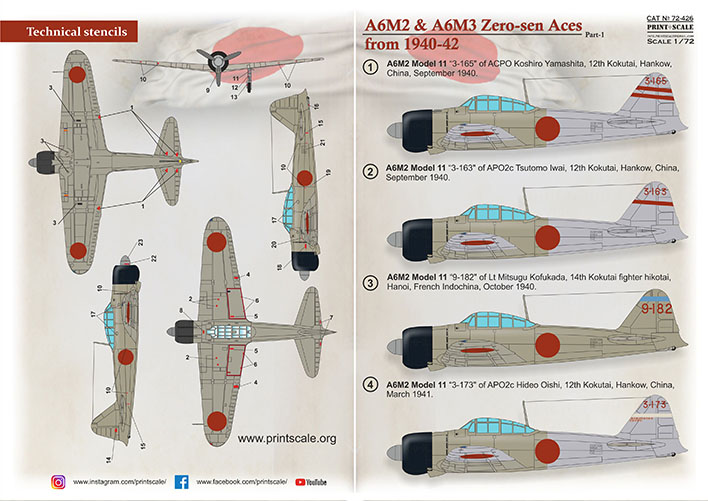 | Print Scale - PSL72426 - 1:72 | Mitsubishi A6M2 Zero-Sen Aces Part 1 1. A6M2 Model 11 "3-165" of ACPO Koshiro Yamashita, 12th Kokutai, Hankow, China, September 1940. 2. A6M2 Model 11 "3-163" of APO2c Tsutomo Iwai, 12th Kokutai, Hankow, China, September 1940. 3. A6M2 Model 11 "9-182" of Lt Mitsugu Kofukada, 14th Kokutai fighter hikotai, Hanoi, French Indochina, October 1940. 4. A6M2 Model 11 "3-173" of APO2c Hideo Oishi, 12th Kokutai, Hankow, China, March 1941. 5. A6M2 Model 21 "AI-158" of FPO1c Masao Taniguchi, Akagi, Operation Al (Pearl Harbor Raid), December 1941. 6. A6M2 Model 21 "AII-168" of FPO1c Akira Yamamoto, Kaga, Operation Al (Pearl Harbor Raid), December 1941. 7. A6M2 Model 21 "BI-150" of FPO1c Ki-ichi Oda, Soryu, Operation Al (Pearl Harbor Raid), December 1941. 8. A6M2 Model 21 "BII-121" of Lt Yasuhiro Shigematsu, Hiryu, Operation Al (Pearl Harbor Raid), December 1941. 9. A6M2 Model 21 "EII-102" of F1c Tetsuzo Iwamoto, Zuikaku, Operation Al (Pearl Harbor Raid), December 1941. 10. A6M2 Model 21 "X-108" of Lt Tamotsu, Yokoyama, 3rd Kokutai, Takao, Taiwan, December 1941. More | Aircraft decals (military) | Catalogue | £15.99 | |
 | Starfighter Decals - SFD72142 - 1:72 | USN Hit and Run Raids Spring 1942. Continuing with the USN Themed decal sheets, this set covers the aircraft participating in the US Navy's Hit and Run raids between the Pearl Harbor attack and the Battle of Coral Sea. Sheet covers F4F-3 Wildcats, SBD-3 Dauntless , Douglas TBD-1 Devastators, SOC-1 Sea Gulls, and Jimmy Doolittle's B-25B. More | Aircraft decals (military) | Catalogue | £11.99 | |
 | Starfighter Decals - SFD72161 - 1:72 | Fortress of the Sky Part 2 Boeing B-17B/C Flying Fortress (designed be used with the Academy kits) Sheet two in the the part series of Early B-17s. This covers B-17C and D models. Markings for 6 different aircraft. 2 Natural Metal birds, 3 OD over Neutral Gray birds, and a Hawaiian Depot scheme. Marking for 2-3 aircraft depending on schemes chosen. Planes from Hawaii, Philippines, CONUS, and one of the B-17s from Pearl Harbor attack. Designed for the 1/72 Academy or Minicraft kit More | Aircraft decals (military) | Catalogue | £14.99 | |
 | Starfighter Decals - SFD72165 - 1:72 | Curtiss P-40B/C/G in USAAF service For the Airfix Curtiss Hawk 81-A-2/P-40B kit. Markings for 9 different P-40B/C/G aircraft, including the 2 Pearl harbor Defenders. Also included in the mix are markings for a Philippine Defender, a P-40C in an ASW paint scheme, and 3 in colorful pre-war markings from the 20th Pursuit Group. Markings for 3 complete aircraft included. Placement guide is in full color as well with builders notes for the Pearl Harbor aircraft. More | Aircraft decals (military) | Catalogue | £11.99 | |
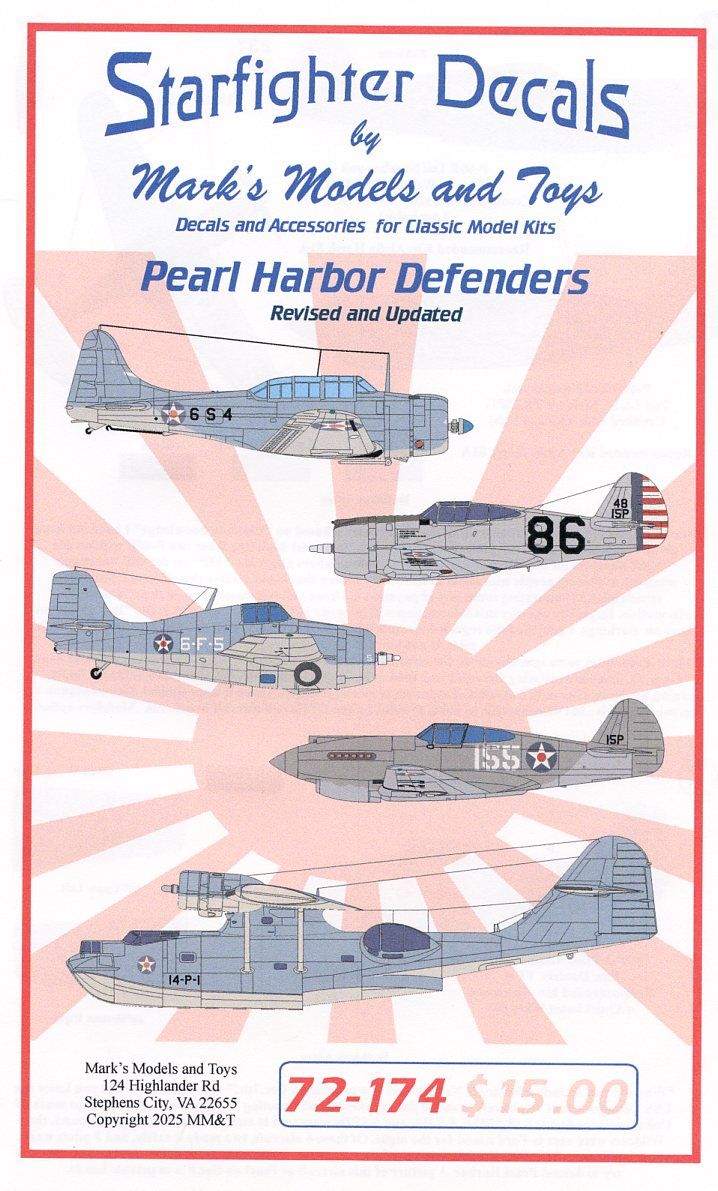 | Starfighter Decals - SFD72174 - 1:72 | Pearl Harbor Defenders Revised & Updated. Set contains markings for 9 different aircraft that were in and around Pearl Harbor on December 7, 1941. This includes USAAC and USN aircraft. Boeing P-26s, Curtiss P-36s, P-40s, B-17C, Grumman F4F-3, Douglas SBD-2, Vought OS2U-1, Consolidated PBY-5, and SOC-1. 2 decal sheets and color placement guides included. More | Aircraft decals (military) | New Arrivals | £14.99 | |
 | Squadron Signal - SQS10238 - No Scale | Douglas A-20 HAVOC IN ACTION Doyle. The Douglas A-20 Havoc was a light bomber, attack, and intruder aircraft of World War II. Used by the American Army Air Forces, nearly one-third of the aircraft served with the Soviet military, while many other A-20s fought with the RAF. Taking its first operational shape on the eve of the outbreak of the war in Europe, the 7B prototype actually crashed with a French observer aboard, kicking off a scandal in still-isolationist America where military aircraft were not to be exported. U.S. President Franklin Roosevelt pressed for a change in that restrictive rule and the French, impressed by the plane's rugged dependability and maneuverability, proceeded to place orders for 100 of the aircraft, albeit with modifications that resulted in the DB-7 version. Even before shipments began in November 1939, Paris had increased its order by another 170 aircraft. Many of those, however, found their way into the British RAF, which flew them under the nickname Boston, after the fall of France in June 1940. The U.S. Army Air Corps issued its first contracts for the aircraft they called the A-20 and A-20A, in May 1939, these were only delivered during the months from late 1940 through much of 1941. A dozen A-20As had recently arrived in Pearl Harbor when the Japanese surprise attack destroyed two of them on the ground. Modifications of the design continued and it was after the U.S. entry into the war when the A-20C version, produced by Douglas and Boeing, first were accepted. Of the first 515 A-20Cs, 108 were retained by the U.S. Army Air Forces, while 407 were shipped off to the Soviet Union. Numerous versions of the aircraft followed. About half of the A-20G were sent to the Soviet Union, as were many of the A-20H. In fact the Soviet air forces had more A-20s than the USAAF. Illustrated with 192 vintage photographs and detailed line drawings. 80 pages. (now out of print so be quick!) More | Aircraft books | Catalogue | £14.99 | |
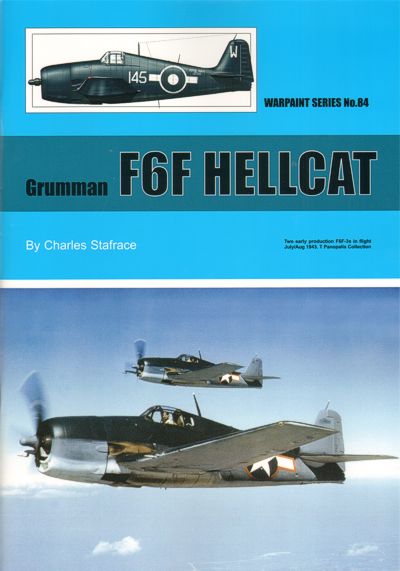 | Warpaint Series - WPS84 - No Scale | Grumman F6F Hellcat. Even before Pearl Harbor the U.S. Navy realised that it would be hard for its existing fighters, the F2A Buffalo and F4F Wildcat, to deal with Japan's shipboard fighters, especially the A6M Zero. The situation was such that in June 1941 the U.S. Navy placed orders with Grumman 's 'Iron Works' for the F6F Hellcat before the first prototype had even flown. It was the right decision for Grumman 's new fighter, although much larger and heavier than the Zero, proved to be the latter's nemesis, so that the American fighter's better fire-power, sturdiness, range and speed more than matched the Zero's agility. Its entry into service was also timely, for the much- awaited F4U Corsair suffered from a flawed carrier deck capability, so that the Hellcat remained the main carrier fighter of the U.S. Navy throughout the rest of the Second World War and established air superiority in the Pacific. Indeed, in barely two years of war it destroyed no less than 5,271 enemy aircraft of the 6,477 claimed by the U.S. fighters, attaining a fantastic kill-to-loss ratio of 19.1:1, and fully deserving the nickname of 'Ace-Maker'. It certainly was the most important Allied shipboard fighter of that world conflict. The Hellcat was used also by the Royal Navy's Fleet Air Arm, during the war, while in the postwar period it saw service with the French Aeronavale, which used them in Indochina, as well as with the Uruguayan Navy, the latter flying them until 1961. [F6F-3 F6F-5 F6F-3N F6F-5N] More | Aircraft books | Catalogue | £16.50 | |
Hannants Search Engine
Convert Currency
Copyright © 2001-2026 H. G. Hannant Limited. All rights reserved. | Website by Dessol
Privacy Policy | Cookie Information | Switch to Mobile Version