Cookies are small text files that are placed on your computer by
websites that you visit. They are widely used in order to make
websites work, or work more efficiently, as well as to provide
information to the owners of the site.
Here is a list of cookies this site uses:
Cookie name
Description
existing_user
Stores the email address used to previously log into the site, used to prefill forms like on the reset password screen
authchallenge
Authentication security checks
hcart
Stores the anonymous customer\'s cart token. If items are added to the card while not logged in, if you log in the items will be added to the customer\'s existing cart
hannants
Stores the session information while you remain on the site
pricer
Stores if the export or eu prices is selected on the catalogue page
hidefilter
Stores if the search filter panel is hidden or shown
AWSELB
Stores which server you\'re connected to so to access the same server while you navigate around the site
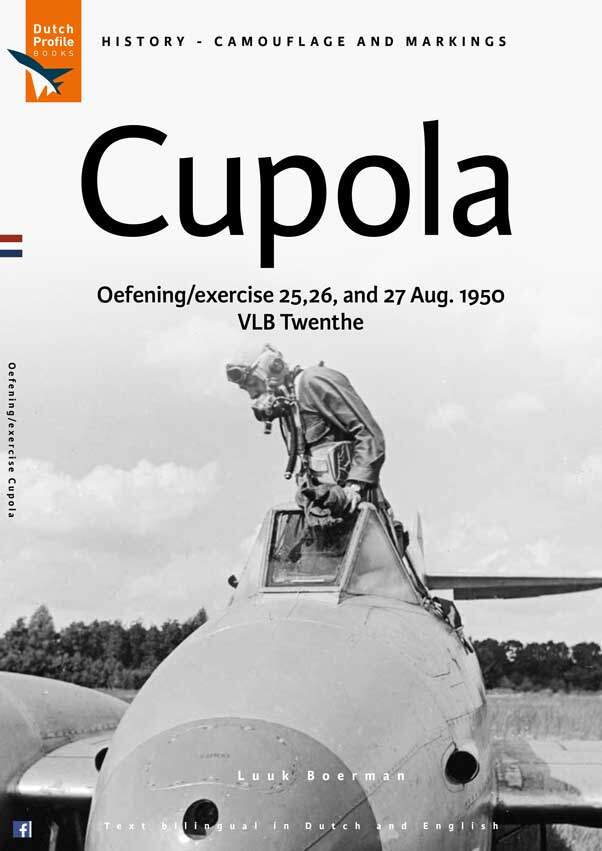
Exercise Cupola. Introduction. This publication finds its origin in a photographic album that was specially made for the C-LV of the Netherlands Air Force, and was presented to him in 1950 by the OC NethAF airbase Twenthe. Practically all photographs have been made by the photographic section of aforementioned airbase and relate to the Western Union Air Defence Exercise Cupola, which was held on August the 25th until the 27th, 1950. This was the first large-scale exercise of the combined Western air forces. For this occasion the air forces of Great Britain and the United States were controlled by the air staffs of France, Belgium, and the Netherlands. This particular exercise was intended to check out the air defence systems of these various countries. The attackers were called 'Blueland', while the defenders were dubbed 'Whiteland'.
Large formations Meteors, Vampires, Mosquito night fighters and Mosquitoes of the British Air Forces of Occupation, together with Wellingtons and Mosquitoes of RAF Flying Training Command, made up the attacking forces. During this exercise various European cities were 'attacked' by Washingtons of the RAF and B-29s and B-50s of the USAF. Based at Twenthe airfield were Meteors of the Horsham St. Faith Wing of 12 Group RAF Fighter Command, which consisted of Meteor F.Mk.4s of No. 74 Sqn, No. 245 Sqn (not in Twenthe), No. 257 Sqn, and No. 263 Sqn. The LSK, the Dutch air force (not Royal at that time), was represented by Meteor F.Mk.4s of 323 Jacht
Squadron-the unit which was responsible for gunnery training at the time-under command of kpt vl Jan van Arkel. For this exercise 322 JachtSquadron was reformed and re-equipped with Spitfires. These fighter planes were transferred from Twenthe air force base to naval air station Valkenburg, from which they operated during the exercise. Commanding officer of 322 JachtSquadron was kpt vl H.C. Asjes. RAF Vampires of No. 5 Sqn were stationed at Gilze-Rijen airfield. No anti-aircraft guns were involved in this exercise, but fire control units however did participate. Overall command of this exercise rested with Air Chief Marshal Sir James Robb KBE, CB, DSO, DFC, AFC, Commander-in-Chief Air Forces Western Europe. OC of the RAF detachment on Twente airfield was Group Captain K.K.B. Cross CBE, DSO, DFC. Other units of RAF Fighter Command were-among others-stationed at the French airbase Coulommiers, a few miles east of Paris. These units were under the command of Wing Commander D.C. Stapleton CBE, DFC, AF




 Advanced Search