



 Advanced Search
 Soar ART Workshop ST35002

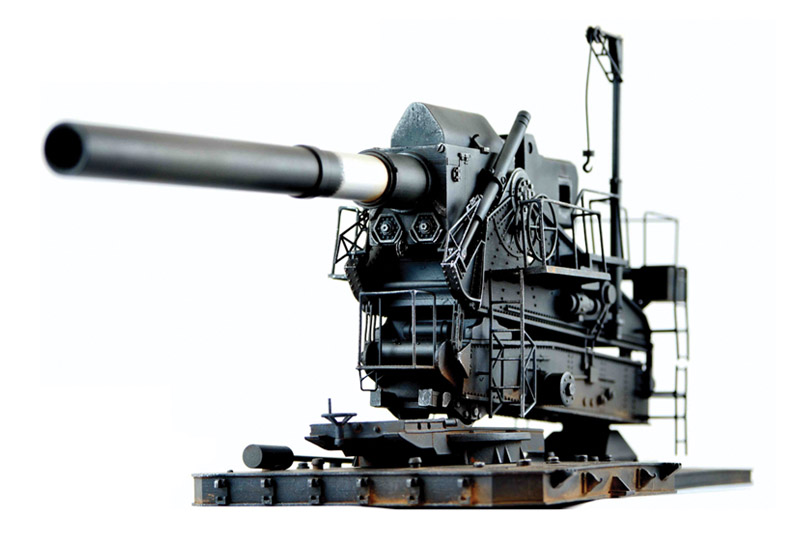
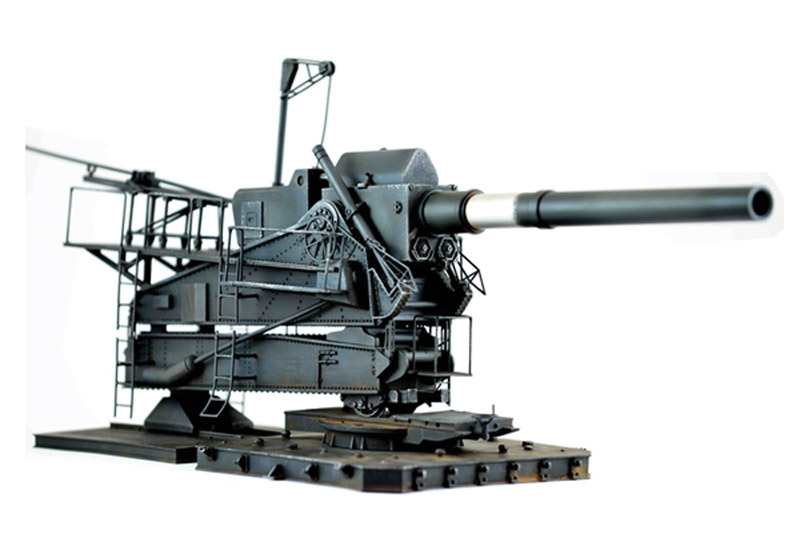
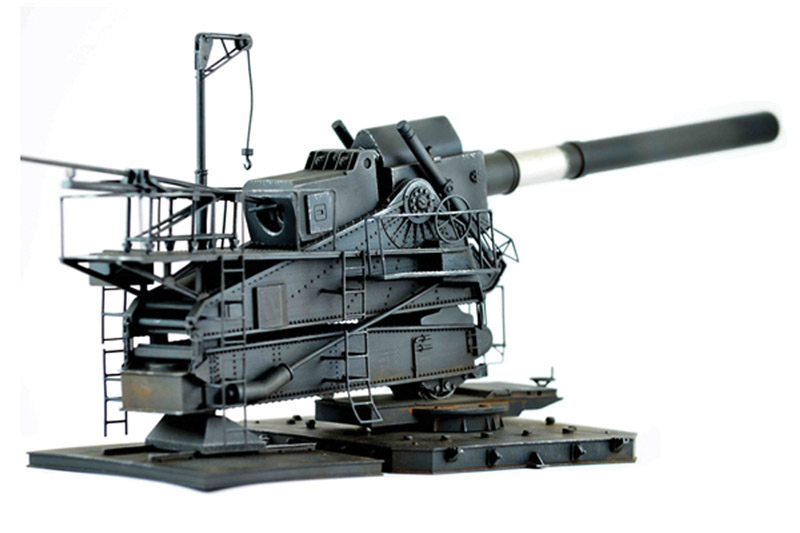
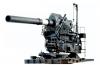
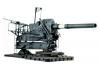
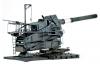
- Description:
-
M1 WWII German 35.5 cm Super Heavy Howitzer
Heavy gun built by Rheinmetall 1939-44.
2-piece base for 360° rotation. 30-page instruction book with gun history & archive photos. - Manufacturer:
- Soar ART Workshop
- Code Number:
- ST35002
- Scale:
- 1:35
- Item type:
- Military vehicle kits (injection)
- Price:
- £108.33
- Order Quantity:
- Quantity In Stock:
 3
3
- Availability:
- This will usually be dispatched within 24/48 hours of receiving your order
- Wish List:
- Department:
- Limited Availability
Either this kit is too big to be despatched by Royal Mail and can only be despatched by the more expensive Parcelforce parcel rate. Or this is a non-acrylic paint product and is now classed as ‘dangerous goods’ by our Royal Mail and they will not accept it. Our Parcelforce will accept it and can deliver it to the UK and to any EU countries that they transport to by surface. Parcelforce rates are more expensive as they only handle heavy parcels not small packets. All the available postage rates are shown. Please login and add it to your cart. If you cannot add it to your cart that means we are unable to post it to your address.
Here are some books and decals you might find useful for this kit
Found 9 related products
 | Echelon FD - D356246 - 1:35 | WWII German Early War AFV Markings More | Military vehicle decals | Limited Availability | £11.70 | |
 | Mark I Guide - MKD48010 - 1:48 | Messerschmitt Me-210/Messerschmitt Me-410B-2/U4 colours and markings. Designed in accordance with the 'Zerstorer' (heavy fighter-bomber) concept just prior WWII, the Me 210 was, however, a failure in terms of flying characteristics. Following extensive modifications, its successor, the Me 410 Hornisse (Hornet), was produced in substantial numbers and many variants and saw operational service in Italy and North Africa, and over Germany and Central Europe. The improved Me 210 was also licence-built in Hungary. The publication has 28 pages, including a total of 49 overall and detailed photographs, 12 pages with colour camouflage schemes and their description. Text in English. A comprehensive decal sheet is added for modellers' convenience. Following aircraft are depicted on each decal sheet: Luftwaffe (7x), Royal Hungarian Air Force (1x), Royal Air Force (2x), Soviet Air Force (1x) and Imperial Japanese Army Air Force (1x). More | Aircraft books with decals | Catalogue | £19.50 | |
 | Mark I Guide - MKD72010 - 1:72 | Messerschmitt Me-210/Me-410B-2/U4/Me-410A-1/U-2 & U4 colours and markings. Designed in accordance with the 'Zerstorer' (heavy fighter-bomber) concept just prior WWII, the Me 210 was, however, a failure in terms of flying characteristics. Following extensive modifications, its successor, the Me 410 Hornisse (Hornet), was produced in substantial numbers and many variants and saw operational service in Italy and North Africa, and over Germany and Central Europe. The improved Me 210 was also licence-built in Hungary. The publication has 28 pages, including a total of 49 overall and detailed photographs, 12 pages with colour camouflage schemes and their description. Text in English. A comprehensive decal sheet is added for modellers' convenience. Following aircraft are depicted on each decal sheet: Luftwaffe (7x), Royal Hungarian Air Force (1x), Royal Air Force (2x), Soviet Air Force (1x) and Imperial Japanese Army Air Force (1x). Messerschmitt Me-410 Hornisse More | Aircraft books with decals | Catalogue | £19.99 | |
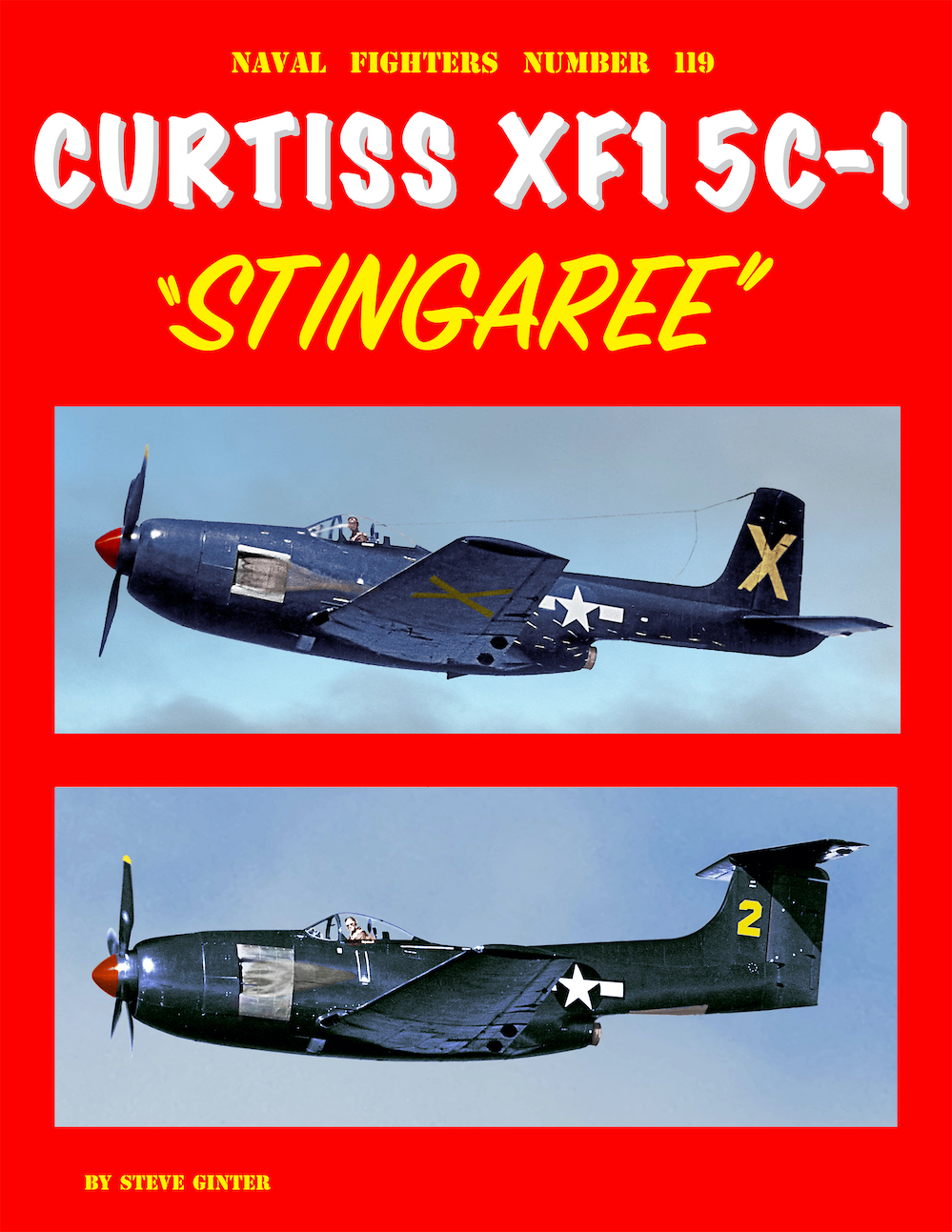 | Naval Fighters - NF119 - No Scale | Curtiss XF15C-1 "Stingaree" 36 b&w pages with color covers, 87 b&w and 4 color photos. During WWII, the Navy ordered two carrier capable composite powered fighters (each equiped with one prop and one jet engine) to counter the land based all jet aircraft being developed by the Germans. The first was the small Ryan FR-1 "Fireball" followed by the much larger Curtiss XF15C-1 "Stingaree" heavy fighter. Three XF15C-1s, BuNos 01213-01215 and a static airframe were ordered on 7 April 1944. They were powered by a Pratt & Whitney R-2800-34W prop engine of 2,100 hp in the nose and an Allis-Chalmers H-1B (J36) (British "Goblin') jet engine of 2,700 lbs thrust in the tail. Ship one's first flight was made on 27 February 1945. All three ships were completed with a conventional tail group. During flight testing of ship one it was decided to retrofit ships two and three with "T"-tails to improve overall performance and to increase the number of aircraft that could be spotted on the carrier's deck and hangar deck. The first aircraft was lost to fuel starvation caused by a faulty gage. The other two XF15C-1s were delivered to the Naval Air Test Center where they were flown until the program was cancelled in October 1946 by which time the Navy decided to go with the all-jet FD/FH-1 Phantom. More | Aircraft books | Catalogue | £16.60 | |
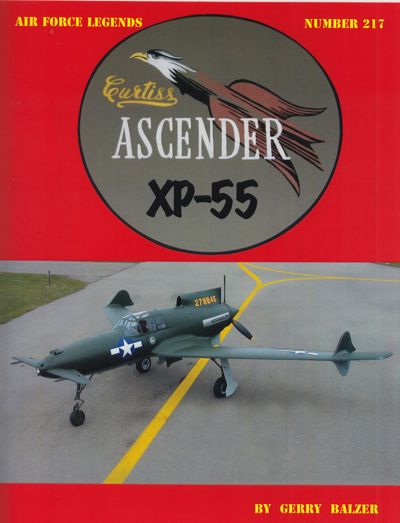 | Naval Fighters - NFAF217 - No Scale | Curtiss XP-55 Ascender By Gerry Balzer, 72-pages, 148-b&w photos, 4-color photos. The Curtiss XP-55 Ascender was a tailless swept-wing WWII pusher fighter design born out by the USAAC 1940 fighter competition. The USAAC was looking for a fighter to counter the threat of the German Bf-109 and the Japanese Zero and replace the obsolete P-35s, P-36s and the front line P-40s just entering service. From this competition three unusual pusher prototypes were ordered, the Consolidated XP-54, Curtiss XP-55, and the Northrop XP-56. A low powered full scale flying model (model CW 24B)was built out of wood and cloth to substantiate the flying qualities, and was first flown on 2 December 1941. The XP-55 mock-up was completed in August 1942, and the first of three XP-55s was completed on 26 June 1943 with its first flight being conducted on 13 July 1943. The first aircraft was destroyed on 15 November 1943. Changes deemed necessary were incorporated in the second airframe in which performance testing began on 16 September 1944. Although the much more capable P-38, P-47, and P-51 had entered service, research into the XP-55s unusual design continued. The third XP-55 had entered flight testing in April 1944 and was used at Eglin Field for armament tests before being lost during a war bond rally display on 27 May 1945. By then the program had been terminated. Today, the second XP-55 presides in restored condition at the Kalamazoo Air Museum. More | Aircraft books | Catalogue | £20.80 | |
 | Schiffer - SB240-2 - No Scale | WWII German Rocket Launchers. ISBN: 9780887402401 More | Military vehicle books | Limited Availability | £11.99 | |
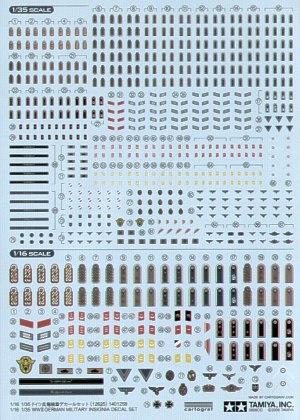 | Tamiya - TA12625 - 1:35 | German (WWII) military uniform insignia 1:35 AND 1:16 decals on the same sheet (designed to be used with Dragon, Italeri and Tamiya kits) More | Figures (decals) | Catalogue | £8.50 | |
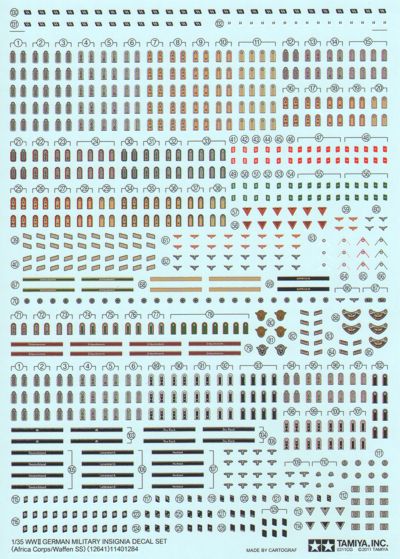 | Tamiya - TA12641 - 1:35 | WWII German Military Insignia (Africa Corps/Waffen SS) (designed to be used with Dragon, Italeri and Tamiya kits) More | Military vehicle decals | Catalogue | £8.50 | |
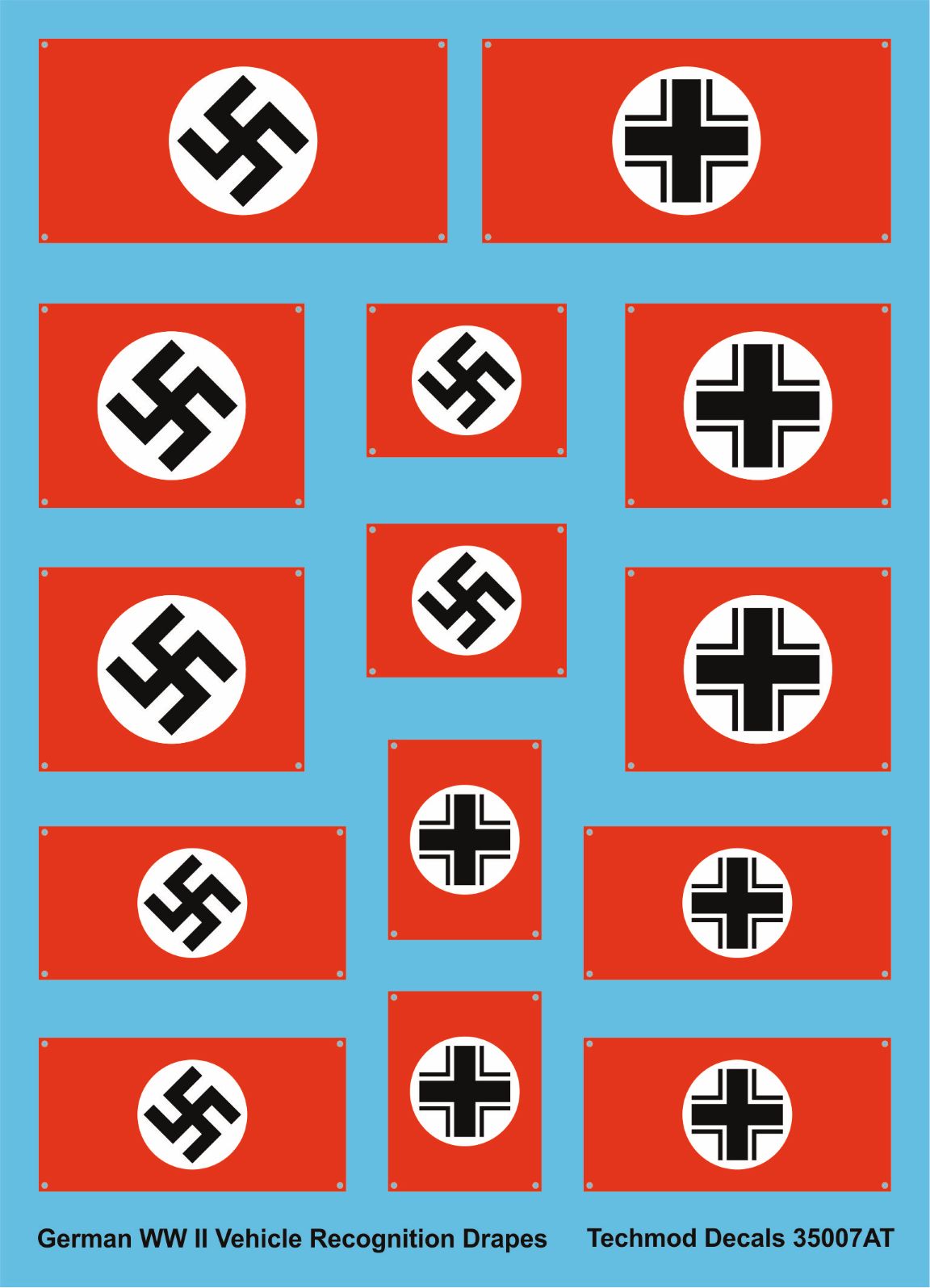 | Techmod - TM35007 - 1:35 | German WWII vehicle recognition flags. Single sided with mounting grommet in each corner More | Military vehicle decals | Catalogue | £7.20 |
Hannants Search Engine
Convert Currency
Copyright © 2001-2026 H. G. Hannant Limited. All rights reserved. | Website by Dessol
Privacy Policy | Cookie Information | Switch to Mobile Version