



 Advanced Search
 « Go back« Go backPrevious Product (TU05378)Next Product (ZVE9039)
Tamiya TA25218
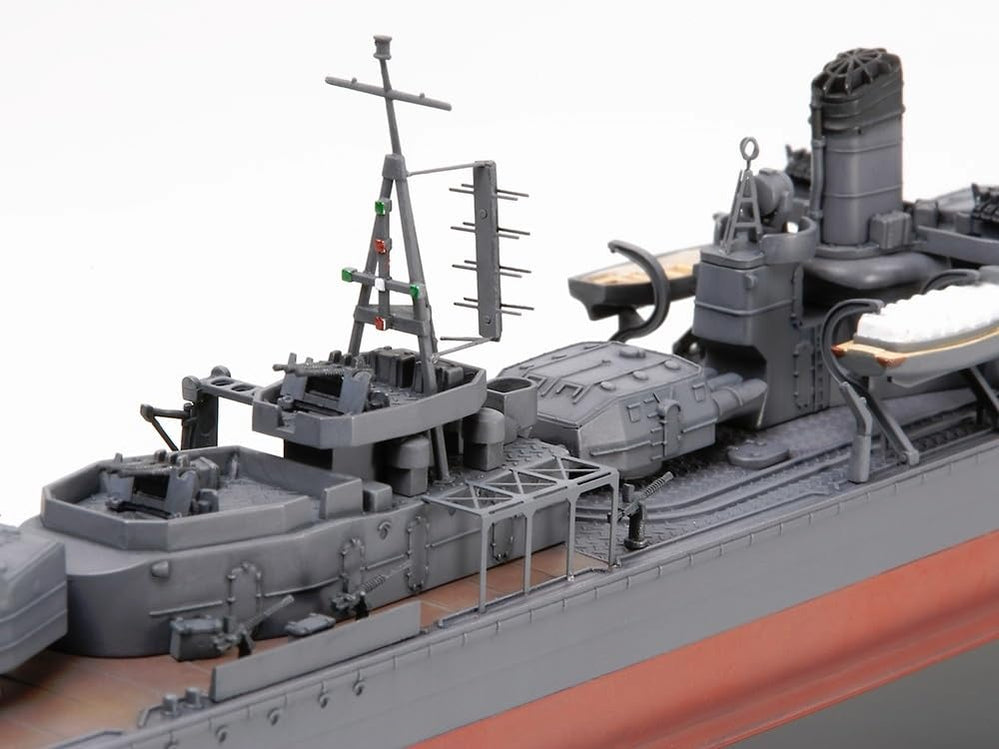

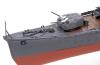
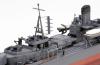
- Description:
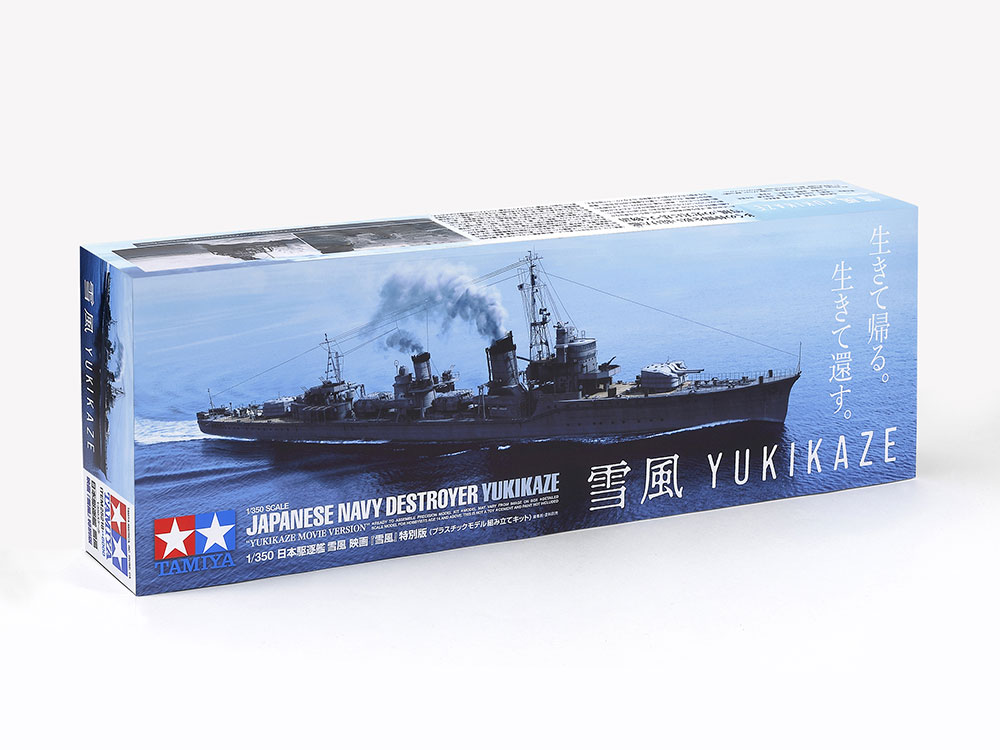
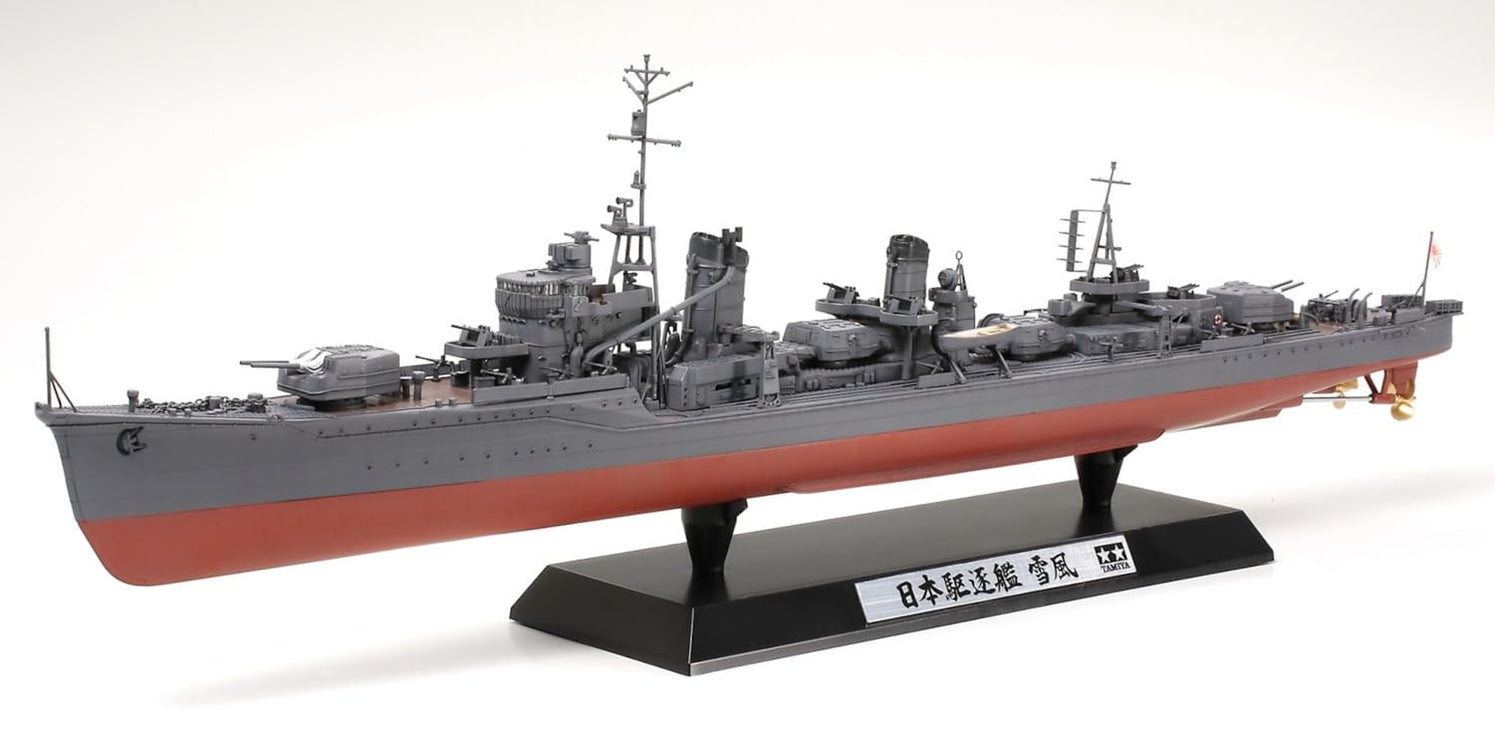
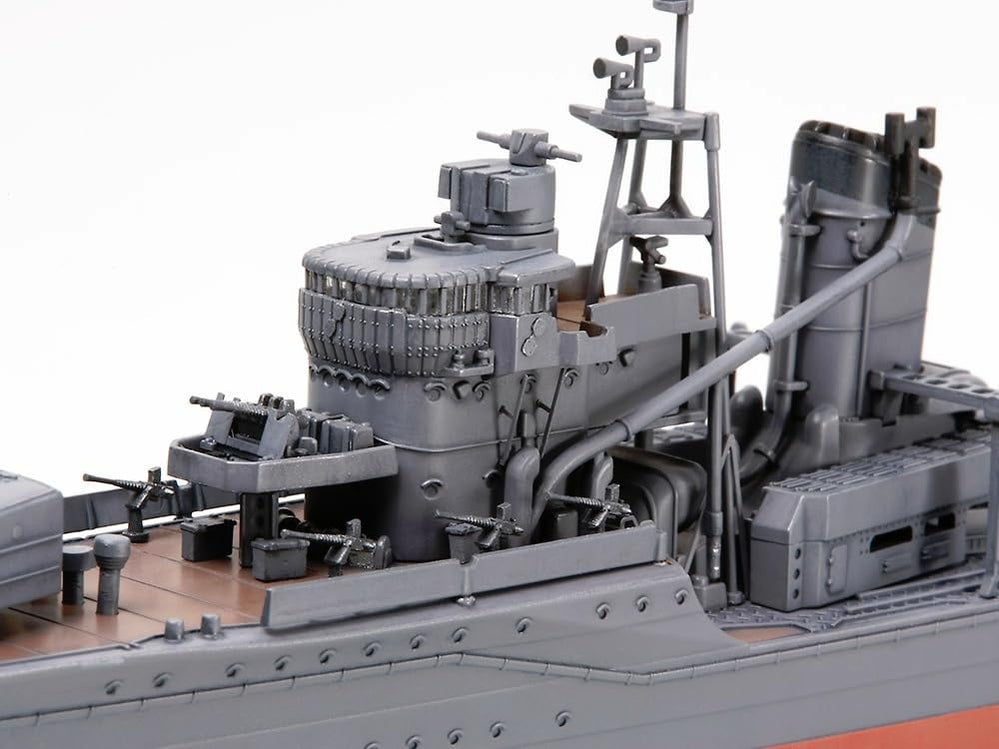
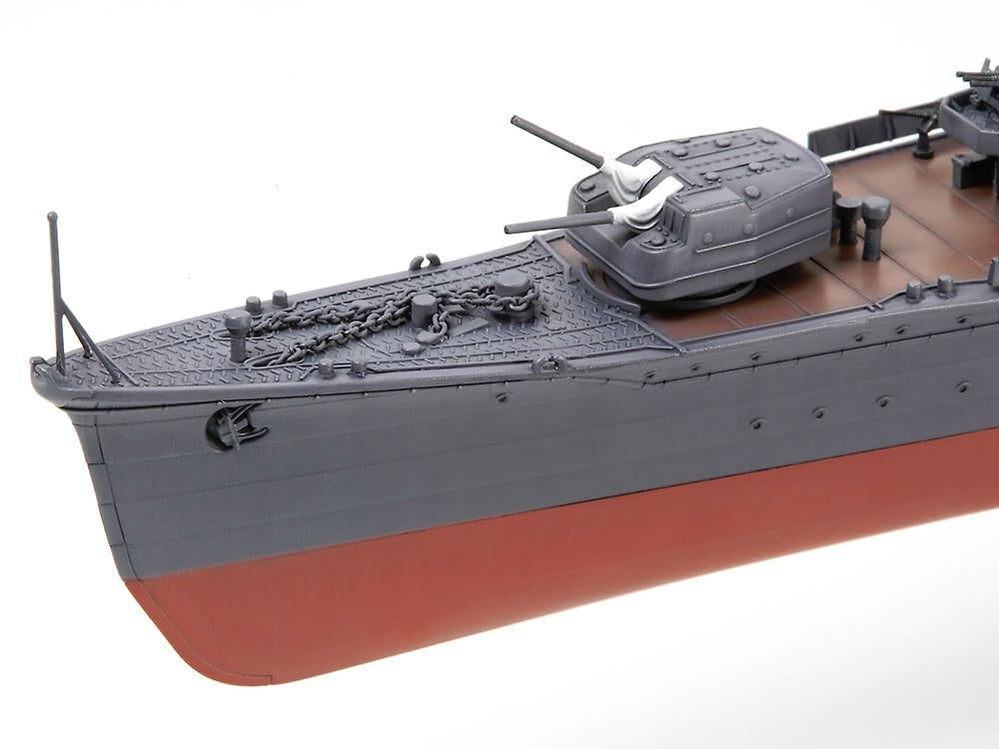
- Japanese Navy Destroyer Yukikaze
- Manufacturer:
- Tamiya
- Code Number:
- TA25218
- Scale:
- 1:350
- Item type:
- Ship kits (injection)
- Price:
- £64.99 (Put this on Backorder and save 10%!)
- Order Quantity:
- Quantity In Stock:
 0
0
- Availability:
- This has sold out but will be back in stock again soon
- Wish List:
- Department:
- Catalogue
Here are some accessories you might find useful for this kit
Found 2 related products
 | Eduard - ED53037 - 1:350 | I-400 IJN Japanese Navy Submarine (designed to be used with Tamiya kits) More | Ship detailing sets (etched) | Catalogue | £18.80 | |
 | Tamiya - TA12642 - 1:350 | Handrail SET A. Set includes 8 different kinds of photo-etched handrail posts, through which metal wires (0.1mmdia.) are passed to depict deck handrails. Set can also be used for TA78025 IJN Yamato as well as other 1/350 scale WWII Japanese Navy ship models. Set Contents Photo-Etched Handrail x 1pc. 0.1mm Diameter Metal Wire x 1pc (designed to be used with Tamiya kits) More | Ship detailing sets (etched) | Catalogue | £15.99 |
Here are some books and decals you might find useful for this kit
Found 5 related products
 | Naval Fighters - NF105 - No Scale | CONSOLIDATED PB4Y-1/1P LIBERATOR by Steve Ginter 241-pages, 4-color cover images, 72 drawings, and 511 b&w photos. The Navy's acquisition of the B-24D as a long range patrol bomber/sub hunter (PB4Y-1) and as a long range photo recon platform (PB4Y-1P) marked a major shift in patrol doctrine and the eventual end to the flying boat patrol plane. The Navy Liberators became a one ship strike forces as they roamed thousands of miles on sector searches and destroyed over a 1,000 ships and hundreds of aircraft. The original under-gunned early B-24Ds were up-gunned with bow turrets from Consolidated, ERCO, MPC, and Emerson and with Sperry ball turrets in their bellys when search radar was not fitted. The B-24Ds were replaced with B-24Js, B-24Ls, and B-24Ms all designated PB4Y-1/1Ps. The PB4Y-1P photo planes were used to map and surveil Japanese strongholds before invasions and discover new airfields and fleet movements. No mission was too far or too dangerous. It was in a remote control PB4Y-1 flying bomb that Joe Kennedy was killed over England. After the war, photo squadrons continued to operate the photo version into the early 1050s. The book covers all engineering details and structures and covers all the PB4Y-1 squadron's historys and most combat operations. 13-pages of modeling options are also provided. More | Aircraft books | Catalogue | £41.60 | |
 | Naval Fighters - NF106 - No Scale | Vought SB2U Vindicator by Steve Ginter with Joe Weathers, Jr. 248-pages, 89-color photos, 22-duotone photos, 506 b&w photos and 25-drawings. The Vought SB2U Vindicator Scout Bomber was the Navy's second production carrier monoplane to fly after the Douglas TBD and for a time was the fastest aircraft in the Navy's inventory. The extremely clean aircraft was a unique blend of the old stick-and-rudder fabric covered construction and that of the new all-metal monoplanes that followed. About half the aircraft was metal skined and half fabric covered and each fuselage structure was individually hand made from steel tubing. The SB2U was built in three models. The very simular SB2U-1 and SB2U-2 for the US Navy, and the long range SB2U-3 for the Marines. Aircraft were also supplied to France and the United Kingdom and are covered in the book. Equipped with folding wings and capable of carrying a 1,000 lb bomb, they were in service from 1938 to 1943. By the time of the Pearl Harbor attack, the Navy Vindicators had all been assigned to the Atlantic fleet, but the Marine SB2U-3 were on the East Coast and at Pearl Harbor and aboard the Lexington for delivery to Midway. The VMSB-241 Vindicators at Midway saw the planes only combat on 4-to-6 June 1942 during the Battle of Midway and Henderson Field was named after the squadron CO who lost his life during the squadron's attack on the Japanese fleet on 4 June. Maj Hendersons replacement Maj Norris was also lost on 4 June during the squadron's 2nd attack. On 5 june, Capt Fleming was also lost during his attack on the cruiser Mikumo, for which he received the Medal of Honor for his actions. This book has extensive first person narative from Vought test pilots and USN/USMC pilots as well as the French V-156-F commander gathered by Joe Weathers in 1966 through 1974 when their minds were still sharp and their memories strong. All of which are gone today. A truly interesting read. More | Aircraft books | Catalogue | £43.99 | |
 | Naval Fighters - NF112 - No Scale | Grumman F2F and F3F (pre-war Navy/Marine biplane fighters. 192-pages [ F3F-1 F3F-2 F3F-3] And Civilian Variants By Richard S. Dann Published by Ginter Books The 192-page F2F and F3F book is generously illustrated with over 440 photos, including 34 color photos, many not previously published. In addition, 39 illustrations and line drawings are included. The early 1930s was a time of great change in the field of military fighter aviation. At the beginning of the decade, the state-of-the-art in fighter manufacture was the use of traditional construction techniques of welded tube fuselages and fabric covered surfaces. Fixed landing gear and open cockpits were standard equipment. By mid-decade, the state-of-the-art was changing. Lightweight aluminum alloys were being developed that offered high strength and light weight. External bracing gave way to cantilevered aero surfaces. Enclosed cockpits, retractable landing gear and aerodynamic streamlining were becoming standard design features on civilian and military aircraft of the day. In the late 1920s, the U.S. Navy fighter market was dominated by Curtiss and Boeing with aircraft manufactured using conservative design and construction techniques that had been employed at the beginning of the decade. By the early 1930s, however, Boeing had updated their F4B/P-12 design, incorporating a stressed skin, semi-monocoque fuselage into later models of both. In the Autumn of 1929, three engineers from the Loening Aircraft Company on Long Island made the decision not to relocate to Pennsylvania during a merger. Instead, they resolved to form their own aircraft manufacturing company. Thus, Leroy Grumman , Leon "Jake" Swirbul and William Schwendler founded the Grumman Aeronautical Engineering Corporation, in December 1929. Following early successes with the FF-1/SF-1 naval aircraft, Grumman turned its attention to designing a single-seat naval fighter for use aboard the U.S. Navy's growing carrier fleet. With excellent performance attributes, the Navy purchased 55 F2F-1s. While performance of the F2F-1 were impressive, Grumman continued development, offering the Navy an improved design known as the F3F-1. With even better performance than the F2F, the Navy eventually ordered a total of 162 F3Fs in three major subvariants. Grumman 's stubby F2F and F3F airplanes dominated U.S. Navy fighter squadrons from 1935 to 1941, with the final operational F3Fs relinquished to the training command a mere two months before the Japanese attack on Pearl Harbor and surrounding facilities. The first half of this 192-page monograph covers the developmental history of the F2F and F3F. Individual aircraft histories are provided for each aircraft, listing assigned commands, mishaps and final disposition. Detailed period engineering photos show every aspect of the aircraft. This is followed by an operational history of each Navy and Marine Corps squadron that operated the F2F and F3F. More | Aircraft books | Catalogue | £37.50 | |
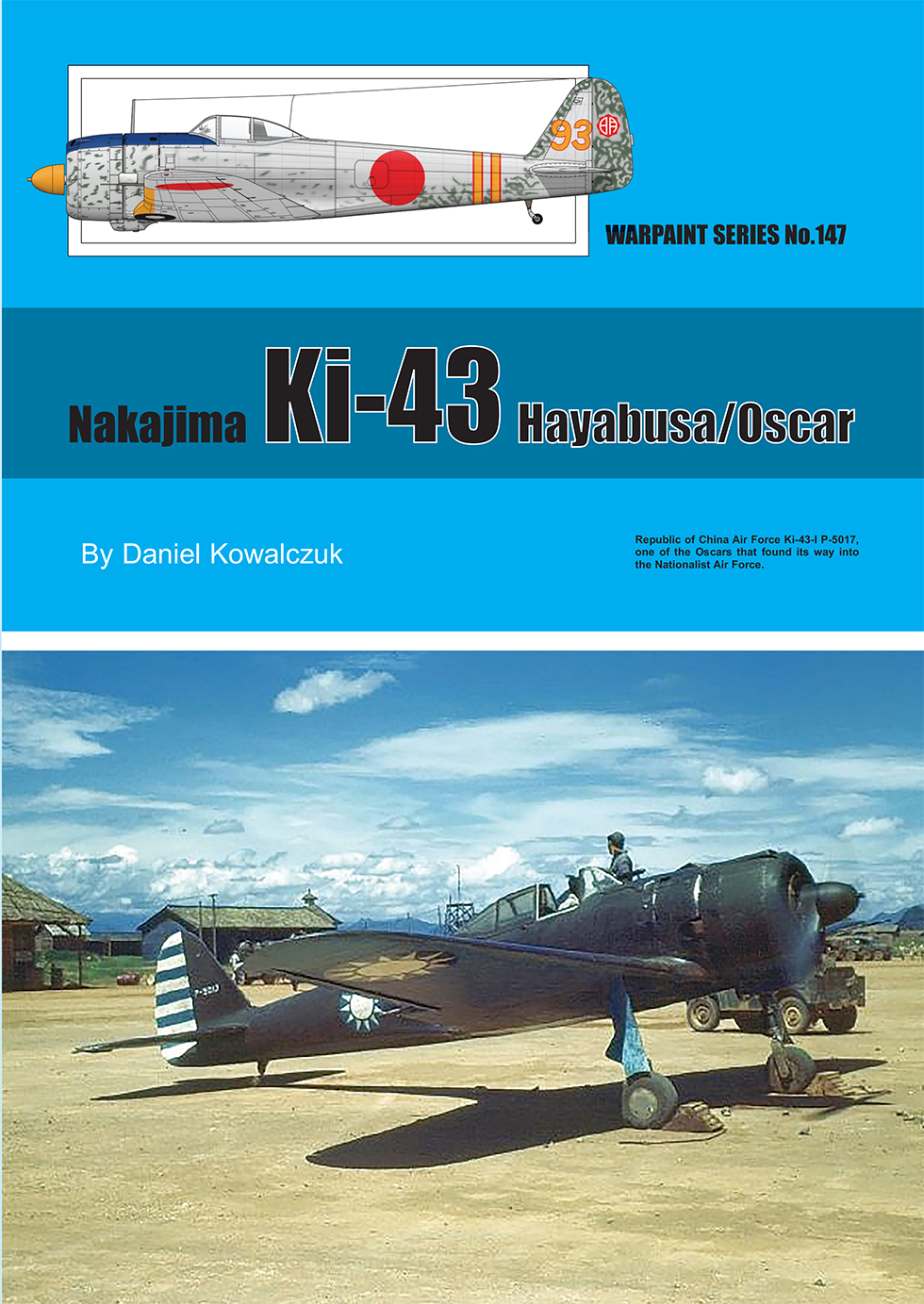 | Warpaint Series - WPS147 - No Scale | Nakajima Ki-43 Hayabusa By Daniel Kowalczuk One of the great unsung fighters of the Imperial Japanese Army Air Force was Nakajima's Ki-43 Hayabusa (Peregrine Falcon). Codenamed 'Oscar' by the Allies, the aircraft was frequently mistaken for the Navy's A6M2 Zero by those encountering it in combat, to the extent that it was widely referred to by its adversaries as the 'Army 0'. Highly regarded in Japan, where it was much more widely recognised than the Zero, the Ki-43 was the only Japanese fighter from the Pacific War to see active service with other air forces, being supplied to both Thailand and Manchukuo by the Japanese, but also seeing use by France in Indochina, and by the air forces of Indonesia, the Republic of China, and North Korea, who pressed abandoned but airworthy airframes into service, some of which survived into the early 1950s. Author Daniel Kowalczuk has compiled a compelling narrative that puts the aircraft in context, describes its development and active service history in detail, and explains how it came to be so widely regarded by the Japanese-so much so that it is the aircraft of choice for producers of Anime rather than its better known contemporary. More | Aircraft books | Catalogue | £17.00 | |
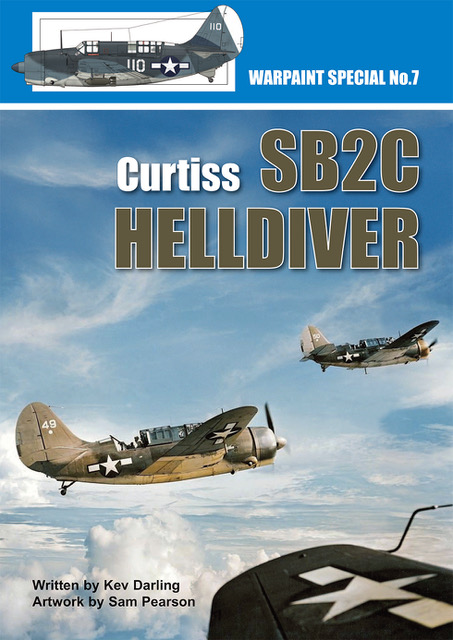 | Warpaint Series - WPSSP07 - None | Curtiss SB2C Helldiver Warpaint Special No.7 116 Pages The Curtiss SB2C Helldiver was one of those aircraft that was either loved or hated- there was no middle ground. Forged in a hurry for the forthcoming war the Helldiver was designed in a hurry, built by mostly by under skilled personnel while being bombarded by the customer with their extra changes and demands. Even under this pressure Curtiss managed to produce a prototype that flew, even though it would soon reveal strength and build problems. This is what prototypes are for, however, the first production model, the Dash-1, was beset by many problems that saw one carrier captain demanding that the Helldivers be removed and the off loaded Douglas Dauntless dive bombers be reinstated. From the SB2C-3 onwards, after undergoing a full modification programme, a competent combat aircraft would emerge. Used throughout 1944/45 the Helldiver squadrons, now operating from the fast carriers, took the war to the Japanese all the way to Tokyo. Post 1945 the Helldiver would stay on active service until replaced by the Douglas AD-1 Skyraider. Overseas usage would see later build models being operated by France, Greece, Italy ,Portugal and Thailand. The Royal Navy also formed a single squadron that would never deploy on active service. Undergoing flight testing in Britain, Eric 'Winkle' Brown would declare that the Helldiver was the worst aircraft he had ever flown. Artwork and scale drawings by Sam Pearson. More | Aircraft books | Catalogue | £25.00 |
Hannants Search Engine
Convert Currency
Copyright © 2001-2026 H. G. Hannant Limited. All rights reserved. | Website by Dessol
Privacy Policy | Cookie Information | Switch to Mobile Version